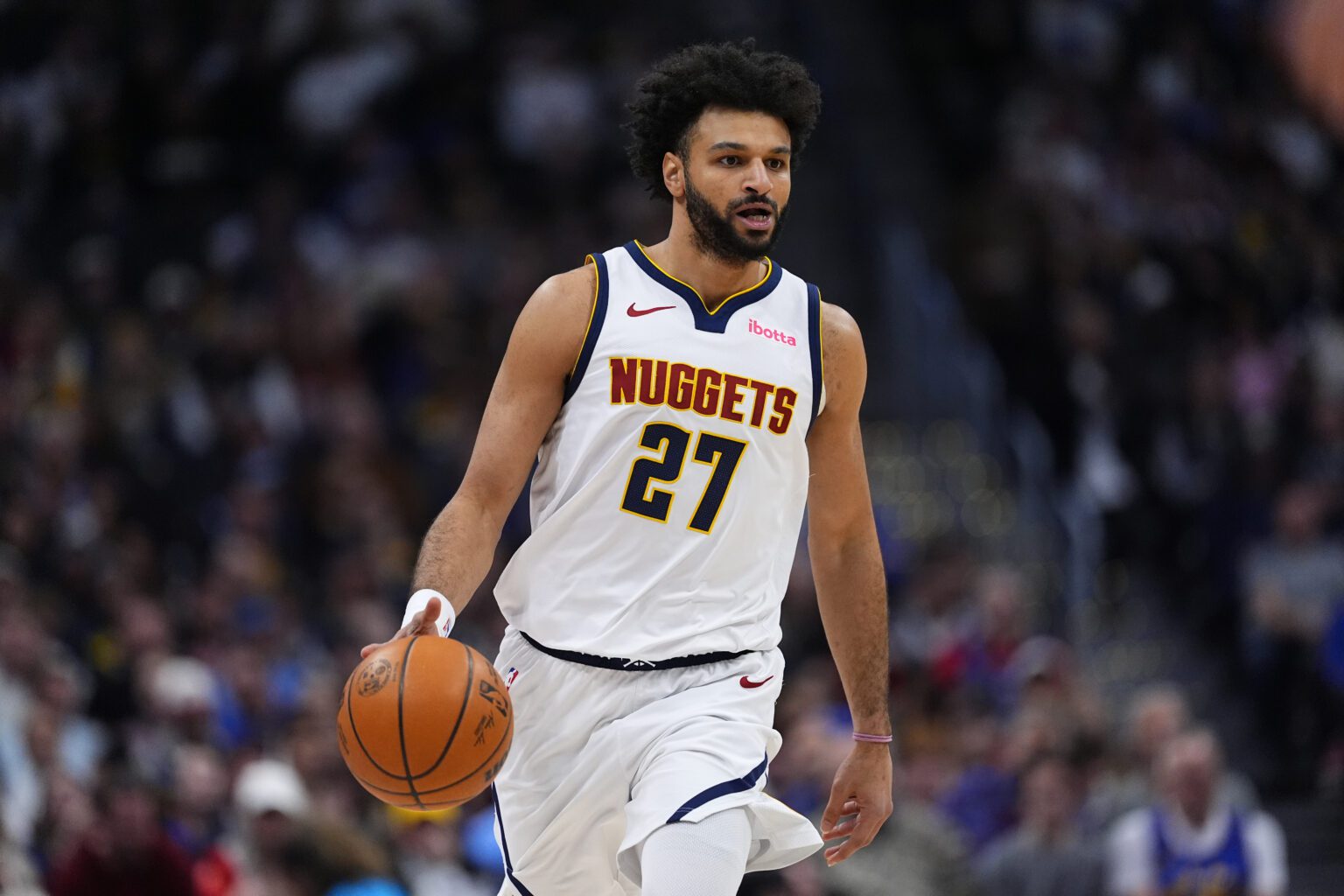
This wasn’t just a bad night for Denver because it was a full-on breakdown. From the opening tip, the Timberwolves dominated before ending the game with a 113-96 win. The Nuggets never led (yes, 0% time leading) and trailed by as many as 27 points in a game that felt over long before the final buzzer.
When a playoff game turns into a one-sided clinic like this, there are always layers to unpack, and for Denver, none of them are pretty. Here are the five things we learned after the final buzzer.
1. Nikola Jokic Got His Numbers… But Not His Impact
On paper, Nikola Jokic put up a monster line: 27 points, 15 rebounds, 3 assists, 11-11 from the line. That usually screams dominance.
But dig a little deeper, and it tells a different story.
He shot just 7-26 from the field (26.5%) and 2-10 from three, struggling to generate clean looks or impose himself in the flow of the game. Minnesota made every touch difficult, crowding him with size and physicality – especially Rudy Gobert, who anchored a defense that held Denver to 34.1% shooting as a team.
Even more telling: Jokic had just 3 assists, way below his usual playmaking standard. The Timberwolves didn’t just slow him down – they disconnected him from the rest of Denver’s offense.
2. Denver’s Offense Completely Fell Apart
This was ugly. No way around it.
The Nuggets shot 28-82 (34.1%) overall and 8-32 (25.0%) from three. Outside of free throws (32-40), they couldn’t buy a bucket.
Jamal Murray struggled badly: 16 points on 5-17 shooting, 0-5 from deep. Christian Braun? Just 2 points on 0-4. Cameron Johnson and Spencer Jones combined for 12 points total.
And then there’s the ball movement, or lack thereof. Denver finished with just 12 assists as a team. For comparison, Minnesota had 31. That’s not just a gap – that’s a completely different style of basketball.
Possessions felt stagnant, predictable, and way too easy to guard.
3. Minnesota Owned The Paint And The Glass
This is where the game was decided early and often.
The Timberwolves dominated inside, putting up 68 points in the paint compared to Denver’s 34. That’s a +34 margin in the most important area of the floor.
Rudy Gobert controlled the interior with 10 points, 12 rebounds, and 3 blocks, while Jaden McDaniels added 20 points and 10 boards, constantly attacking gaps.
As a team, Minnesota outrebounded Denver 53-40, including 12 offensive rebounds that led to second-chance opportunities and extended possessions.
Overall, Minnesota hit first, jumped higher, and played like every loose ball mattered more.
4. The Timberwolves Played Connected, Unselfish Basketball
If you want a blueprint for playoff offense, Minnesota basically put on a clinic.
They finished with 31 assists on 44 made field goals, meaning over 70% of their baskets were assisted. The ball didn’t stick; it popped.
Ayo Dosunmu was sensational off the bench with 25 points on 10-15 shooting and 9 assists, slicing up Denver’s defense and creating for everyone. Donte DiVincenzo added 7 assists, and multiple players chipped in as playmakers.
This wasn’t about one guy going nuclear – it was about five guys moving in sync. Every cut had purpose, every pass had intent.
Meanwhile, Denver looked like five guys taking turns.
5. Effort, Energy, And Urgency Were Miles Apart
This might be the most concerning part for Denver.
Minnesota looked like the team down in the series. Denver looked… flat.
The Timberwolves won the hustle categories that don’t always show up in headlines:
Fast break points: 21-7 advantage
Offensive rebounds: 12-6
Steals + blocks: 11 combined vs. Denver’s 7
Even defensively, they were flying around by contesting everything, rotating on time, and forcing Denver into uncomfortable spots all night.
And the scoreboard reflected it: Minnesota led for 97% of the game. The stats tell the whole story.