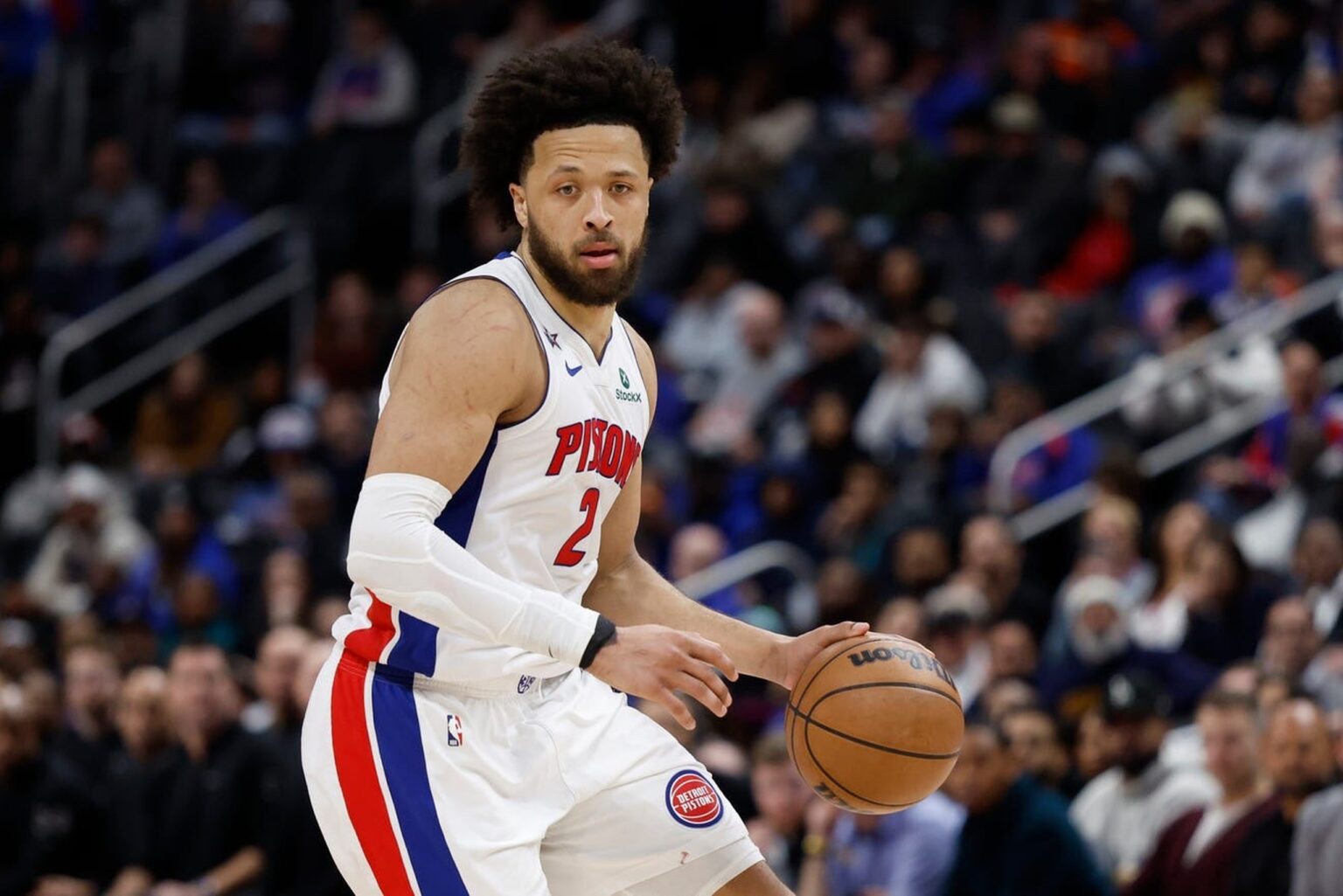
That question is fair after Game 1. The Pistons were the No. 1 seed in the East, won 60 games, finished with the league’s No. 2 defense, and looked all season like a team built for a long playoff run. Then the Magic came in, never trailed, won 112-101, and took home-court right away. Cade Cunningham scored 39, but the game still felt one-sided for long stretches. That is why the talk changed so fast.
One playoff loss does not make the Pistons a pretender. It does put pressure on the next 48 minutes. Game 1 did not look like bad luck. It looked like a team that got pushed into the wrong shots, got too little from its center, and let the other side’s wings control the flow of the game. The fix is not complicated. The Pistons need better spacing around Cunningham, a much bigger series from Jalen Duren, and a more focused plan against Paolo Banchero and Franz Wagner.
Here are three main adjustments the Detroit Pistons desperately need to beat the Orlando Magic in their first-round series.
Put More Shooting Around Cade Cunningham
Everything starts with Cunningham because the Pistons still have the best lead guard in the series. He averaged 23.9 points, 9.9 assists, and 5.5 rebounds in the regular season, and Game 1 showed both sides of that. He was good enough to keep scoring anyway. He was not getting enough help to open the floor for the rest of the offense.
The Pistons scored only 34 points in the paint in Game 1, which was their lowest mark of the season. That number says a lot. Their regular-season offense was built on getting downhill, living at the line, and finishing enough plays at the rim to make the rest of the floor work. They averaged 26.1 free-throw attempts per game and only 30.9 threes per game. That is not a spread-out offense. It is a pressure offense. When the paint gets crowded, the whole thing can stall.
That is what happened against the Magic. They put size on the wings, kept bodies near the elbows, and made Cunningham drive into traffic instead of into gaps. Once the ball came out, the Pistons did not punish them enough. The first pass was there sometimes. The second pass rarely hurt them. The floor stayed still.
This is where the Pistons have to help Cunningham more with lineups and with usage. Duncan Robinson cannot just stand in place and wait for the game to find him. He averaged 12.2 points and shot 41.0% from three this season. If he is on the floor, he has to be part of the action. Run him off pindowns. Use him in handoffs. Make his defender chase. The point is not just to get Robinson shots. The point is to move one extra defender and open one extra driving lane for Cunningham.
The same goes for the rotation balance around Cunningham. When the Pistons play too many non-shooters together, the Magic do not have to make a hard choice. They can shrink the floor, stay in front of the ball, and trust their size. That is fine in February. It is harder in a playoff game when the other team has time to load up on every touch. The Pistons need more minutes where Cunningham is playing with real spacing on both sides of him, not one shooter and two defenders sitting in the lane.
This does not mean they need to turn into a team that takes 45 threes. That is not who they are. But the first open shot cannot keep being a tough floater or a crowded layup. Against this defense, they need more possessions where the ball gets out, swings again, and finds a shooter with space. Cunningham is already drawing enough help. The rest of the group has to turn that help into better offense.
Make Jalen Duren Change The Series
The second adjustment is about Jalen Duren. Not because he has to score 25, but because the Pistons need him to affect the game in the places that decide playoff games.
Duren averaged 19.5 points and 10.5 rebounds while shooting 65.0% from the field in the regular season. That is not role-player production. That is All-Star production that should shape a series. In Game 1, he just shot four times. Cunningham had to carry too much of the offense, and Duren never became the kind of pressure point that could pull the Magic out of their shell.
That is the first thing that has to change. When Cunningham turns the corner, Duren’s roll has to pull in help. If the weakside defender can stay home and the center can stay planted, the possession dies. That is what the Magic got too often in Game 1. Cunningham beat the first man and still saw bodies waiting. Duren has to dive harder, earlier, and with more force so the back line has to react.
This is not just about pick-and-roll either. Duren has to dominate on the glass. He has to get deep seals before help arrives. He has to finish through contact. One lob, two putbacks, one early foul on Wendell Carter Jr., one possession where the weakside corner has to tag him and gives up an open three. That is what the Pistons need from him. If he stays quiet, Cunningham is left playing against a set defense over and over.
There is also the other end. The Magic did not win Game 1 because one player went for 40. They won because the Pistons never put enough pressure on the main scorers. Banchero had 23. Wagner had 19. Desmond Bane and Carter had 17 each. Jalen Suggs had 16. All five starters scored at least 16. That puts pressure on the whole defense, but especially on the center. Duren has to clean up more of those drives and finish more of those possessions with rebounds.
The Pistons were the No. 2 defense in the league for a reason. They defended with length, switched size onto the ball, and had enough back-line support to survive mistakes. Ausar Thompson finishing third in Defensive Player of the Year voting tells you how strong that defense looked all season. But that identity only works if the center gives you two-way production. Duren has to be that player in this series.
This is why Game 2 is such a big check on the Pistons. Cunningham will probably be good again. The real question is whether Duren can turn 10 or 12 plays in the paint. That is where this matchup changes. Not with speeches. Not with “energy.” With screens, rolls, rebounds, and finishes at the rim.
Build The Defense Around Banchero And Wagner
The third adjustment is the most important one. The Pistons have to stop reacting to the ball and start shaping where the ball goes.
Game 1 was too comfortable for Banchero and Wagner. They got to their spots, they played with pace, and once they got into the paint or to the elbows, the rest of the Magic offense opened up. That is how you end up with five starters all at 16 points or more. The Pistons were not forcing the game. They were chasing it.
Banchero averaged 22.2 points, 8.4 rebounds, and 5.2 assists. Wagner averaged 20.6 points, 5.2 rebounds, and 3.3 assists. Bane added 20.1 points and shot 39.1% from three. This is not a one-star offense. If the Pistons wait until the drive is already deep, they are already behind. They have to show bodies sooner, crowd the elbows sooner, and make Banchero and Wagner give the ball up before they get comfortable.
Ausar Thompson needs more of those matchups on Wagner and Banchero instead of sitting guarding Bane or Jalen Suggs, because he is the best point-of-attack defender on the roster. Cunningham has to be protected from too many size matchups. Robinson has to be covered. The Pistons have to know exactly what they are giving up and what they are taking away. In Game 1, too many possessions looked like the defense was deciding on the fly. That is how the ball finds the open man.
There is another problem here. The Magic live at the line. They averaged 27.5 free-throw attempts per game this season. If the Pistons get beat to spots and start reaching, the game slows down, and the Magic get the kind of offense they want. The right answer is to get in front earlier, chest the drive, and force kick-outs instead of fouls. If the Pistons let the game turn into Banchero and Wagner driving straight into the body of the defense, they are playing right into the Magic’s hands.
The Pistons also need to make this series feel faster without turning it loose. That starts on defense. Better ball pressure means fewer sets for the Magic. That means more broken-floor possessions the other way. Cunningham is much harder to guard when he is attacking on the break. In Game 1, too many of his touches came against a loaded half-court defense. That has to change.
And the biggest thing is this: the Pistons cannot let the Magic stay comfortable. Banchero has already struggled this season to find his usual spots on the floor, and the worst thing the Pistons can do is ease him into uncontested points. They need to force Banchero to play the one-on-one over the top against a quicker defender, lure him into contested elbow jumpers, and make him give it up at uncomfortable times, maybe the most underdeveloped part of his game.
So, Are They Just A Regular Season Team?
Not yet. One loss is not enough for that. But this is the point where a top seed has to look like one.
The regular season told us the Pistons were for real. They won 60 games. They earned the top seed. They finished with a 117.9 offensive rating, a 109.7 defensive rating, and the third-best net rating in the league. None of that was fake. But playoff series are tighter. Teams take away your first option and wait to see whether you have a second one. In Game 1, the Pistons did not have enough answers besides Cunningham.
The answers are still there. Put more shooting around Cunningham. Get Duren into the middle of the game on both ends. Build the defense around Banchero and Wagner before they get downhill. Those are basketball fixes. Not magic fixes. Not motivational fixes. Basketball fixes.
If the Pistons make those changes, this can still look like a No. 1 seed series. If they do not, then the question in the title is going to stick for a while.