Clutch scoring captures what players produce when the game is tight late. The NBA defines clutch time as the final five minutes of the fourth quarter or overtime with the score within five points. It is a small sample compared to full-game stats, but it is also the part of the game where possessions are most valuable, and defenses are most set.
This piece ranks NBA players by total points scored in clutch time this season. The focus is on volume, not highlights. Total clutch points reflect two things: how often a player is on the floor in close games, and how much of the late-game offense runs through him. It is shaped by role, minutes, usage, and team success.
Some stars will naturally appear lower because their teams play fewer close games, or because late-game touches are split across multiple creators. Others rise because they consistently carry the initiating workload, draw fouls, and take a large share of the attempts when possessions slow down.
Here are the NBA stars with the most points scored in the clutch this season.
10. Keyonte George
Keyonte George’s presence on the clutch points list is rooted in role and shot profile, not a hot streak. The Jazz are 18-43 and 14th in the West, which has turned many nights into late-game reps for a young primary handler.
In that environment, George has produced like a featured scorer all season, averaging 23.9 points, 3.8 rebounds, and 6.4 assists on 46.1% from the field at age 22. The roster context has shifted as well, with Lauri Markkanen as the established offensive hub and the deadline addition of Jaren Jackson Jr. adding another frontcourt scoring and defensive anchor.
In clutch situations, George has 89 points on 23-for-51 shooting (45.1%). The most important part of that line is how he gets there. His late-game possessions are largely built off high pick-and-roll and matchup selection, with the Jazz spacing the floor to remove early help and forcing the big defender to declare coverage.
When opponents sit in drop, George’s manipulation is about timing more than speed: he snakes the dribble back to the middle, keeps the screen defender pinned behind him, and rises into the pull-up before the low man can tag and recover. When opponents switch, the priority becomes paint touch. He attacks the top foot, gets shoulder-to-hip, then forces the second line to rotate from the corners, which is where the cleanest late-game outcomes are created: free throws, a dump-off, or a kickout that does not require a difficult pass.
There is a clean, outcome-based example of why that process translates. In a 131-129 win over the Pistons in late December, George scored 31 and hit the deciding floater with 2.1 seconds left, a possession that started with advantage creation and ended with a two-foot finish before the defense could fully load the lane.
The season arc reads like a breakout because the decision-making has caught up to the usage. If the efficiency holds while the Jazz stabilize the roster around Markkanen and Jackson, George’s production is already in the statistical range that usually precedes All-Star consideration.
9. James Harden
The Cavaliers’ deadline swing for James Harden has changed the shape of their late-game offense. They are 39-24 and fourth in the East, a tier where one or two possessions decide most nights.
Harden has played the season like a primary engine, averaging 24.5 points, 4.9 rebounds, and 8.1 assists, shooting 42.5% from the field and 36.1% from three. Since landing in Cleveland, the team has boasted an 8-1 record, with him posting 19.1 points and 7.9 assists next to Donovan Mitchell.
In clutch time, Harden ranks ninth in total points with 91, and the profile is familiar: 22-for-49 from the field, 10-for-27 from three, and a decisive edge at the line at 37-for-40. The “why” is structural. The Cavaliers do not ask him to freelance late. They use him to force coverage declarations, then let his passing punish the first rotation.
The staple is high pick-and-roll with a real roller in Jarrett Allen, spaced corners, and a shooter lifted on the weak side as Sam Merrill does. When opponents switch, Harden slows the possession down until the big’s feet are square, then creates separation with the stepback into a clean window because the help is occupied by the roller and the corner shooters. When opponents play drop, he attacks the level of the screen defender first, pulling the big just high enough to open the pocket pass or the short pull-up before the low man can tag and recover.
A clean example was the 119-117 win over the Nuggets in early February. Harden buried the tying three with 32 seconds left, a possession that started as a standard ball screen and ended with him getting exactly the switch and spacing he wanted.
That is why he keeps showing up on clutch leaderboards at 36. His late-game scoring is built on the same two levers that survive postseason defense: forcing a switch you can punish, and generating points at the line when the floor shrinks.
8. Deni Avdija
Deni Avdija has been the offensive center of gravity for the Trail Blazers, who have played themselves into the play-in picture at 29-33, good for 10th in the West. He is averaging 24.4 points, 7.0 rebounds, and 6.6 assists, and the efficiency is real: 46.3% from the field, 34.1% from three, and 80.0% at the line. The leap has been big enough that he is now carrying All-Star-level usage and responsibility, with the league naming him a reserve for the 2026 edition.
In clutch time, Avdija ranks eighth with 92 total points on 27-for-54 shooting. He has been selective from deep, 6-for-14, and the scoring is often produced by the same idea: create a paint touch first, then let the defense overreact.
Avdija is not a typical late-game guard. The Trail Blazers use him as a forward initiator, starting possessions with him at the top in delay, flowing into dribble handoffs, and then flipping into an empty-side ball screen when they want to remove help. When opponents switch, he does not settle for a bailout jumper. He drives into the chest, forces the low man to step in, and then reads the corner tag. When opponents stay home, he finishes through contact and lives with free throws.
The overtime win over the Kings on December 18 is the cleanest single-game proof of his late-game value. Avdija scored 35 and won it with two free throws with 1.5 seconds left in overtime, after creating the foul by driving into contact rather than drifting into a contested pull-up. That possession type is the point. Avdija’s clutch scoring is not built on low-percentage shotmaking. It is built on getting defenders into rotation, then turning the final decision into either a whistle or a pass to a spaced shooter.
7. Kevin Durant
The Rockets are 38-22 and third in the West, and Kevin Durant keeps showing he is an all-time superstar scorer, even in this later stage of his career. At 37, he is still producing like a top option: 26.3 points, 5.4 rebounds, and 4.5 assists per game, shooting 51.0% from the field, 40.1% from three, and 89.1% at the line while playing 36.6 minutes a night.
In clutch time, Durant ranks seventh with 100 total points. The line explains how: 31-for-66 shooting with 30-for-32 at the stripe. The Rockets do not need complicated possessions to access his scoring. Their best late-game sequences are designed to control where he catches. They bring him to the elbow off a zipper cut, flow into a quick pindown into a catch, then clear a side so the help has to come from the far corner.
If opponents switch the initial action, the Rockets re-screen to force a second switch or create a moment of indecision, and Durant’s first dribble becomes the trigger. If the big is late, it is a pull-up. If the wing is smaller, it is a mid-post turn and a rise before the double arrives.
The All-Star break game against the Hornets captured the formula. Durant scored 35 on 14-for-20 shooting, then closed with shots and free throws as the Rockets sealed a 105-101 win with a 35-point game.
The key detail was not the total. It was the shot diet in the last possessions: controlled catches, one-dribble decision-making, and free throws that removed variance. That combination is why he stays high on any clutch list, regardless of age.
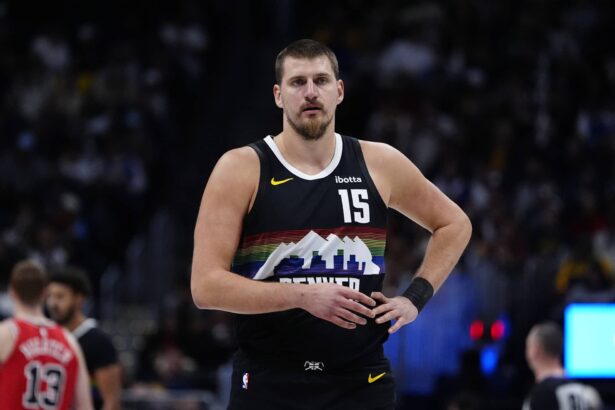
6. Nikola Jokic
Late-game scoring usually belongs to guards who can separate late in the clock. Nikola Jokic breaks that model because the Nuggets’ endgame offense is built around decision-making, not burst.
With the Nuggets 38-24 and fifth in the West, Jokic is again operating as the offense’s center of gravity, averaging 28.7 points, 12.6 rebounds, and 10.3 assists on 57.0% shooting after coming back from a 16-game absence through January.
In clutch time, Jokic has 111 points on 29-for-63 shooting (46.0%), with a lower three-point efficiency (5-for-24) but heavy production at the stripe (48-for-57). The shot distribution tells the story.
Late possessions are rarely about Jokic “getting to a move.” They are about forcing the defense to declare help and then punishing the first rotation. When opponents switch, the Nuggets will often flow into a rescreen or a guard-to-big exchange that pulls a smaller defender into Jokic’s catch area with Jamal Murray operating as the main threat. When opponents stay in drop, Jokic’s touch points shift higher, into elbow catches and short rolls, where he can see the low man and the nail helper at the same time.
The clutch part is not just the scoring; it is the control. Jokic’s best late-game possessions start before the shot: he drags the big into uncomfortable depth, keeps the weak-side corner occupied with a shooter, and makes the tag decision expensive. If the low man tags early, it is a corner three. If the low man stays home, it is a direct finish or a quick putback off his own miss. That is why his free-throw volume holds up even when the jumper mix is volatile.
A tight fourth-quarter example came against the Grizzlies early February, when a 15-point lead shrank into a one-possession game late. Jokic scored four points to push the margin back to 116-111, then added a putback as the Nuggets steadied in the final minutes with a triple-double from Jokic.
Interior touches, second-chance points, and scoring created by positioning and reads, not speed. That profile is why Jokic can sit sixth on a clutch points list while functioning as the organizer of virtually every important late possession.
5. Jamal Murray
Jamal Murray’s clutch scoring is a study in how the Nuggets weaponize two-man chemistry late. When the game tightens, the Nuggets do not hunt variety. They hunt for the same advantages repeatedly, until the defense breaks its own rules.
Murray is averaging 25.7 points and 7.3 assists on 48.4% shooting, and his clutch gene is well-documented throughout his Nuggets tenure, finally earning him an All-Star spot this season in what’s become a superstar campaign in his own terms.
In clutch time, Murray has 121 points on 35-for-68 shooting (51.5%), with 9-for-24 from three and 42-for-53 at the line. The efficiency is tied to how he gets his looks. The Nuggets’ late-game staple is still the Murray-Jokic partnership, but the details are coverage-specific.
Against switch, the Nuggets will often force the second defender to switch twice, using a re-screen or a “flip” that changes the angle and prevents the on-ball defender from sitting on Murray’s pull-up. Against drop, Murray gets to his preferred range by dragging the big into the level he wants, then stopping short for midrange pull-ups before the low man can shrink the floor.
The most revealing aspect of Murray’s clutch shot-making is the timing. He is not waiting for a perfect look. He is taking the first clean window created by Jokic’s screening gravity, because late-game defenses are designed to deny second windows. That is why the best possessions frequently end with Murray getting into a pull-up, or forcing contact on a drive once the big’s feet are committed.
The Jazz game on Monday captured the template. Murray scored 45 and hit the go-ahead free throws with 31.8 seconds left, with the Nuggets ultimately escaping 128-125. The late sequence mattered because it was not improvisation: the Nuggets lived in the same action family, Murray generated contact when the defense crowded his space, and the closing points came from line pressure rather than a low-percentage shot.
In a season where the offense has plenty of options with an improved supporting cast, Murray’s clutch production reflects something specific: the Nuggets can manufacture a high-quality decision late, and Murray consistently converts the advantage it creates.
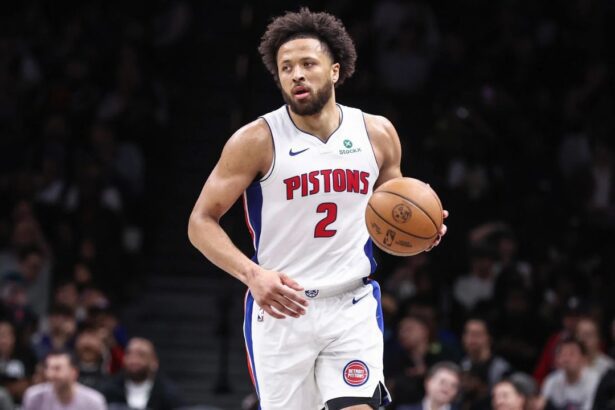
4. Cade Cunningham
The Pistons’ rise to the top of the East has required a clear late-game identity, and Cade Cunningham has become the player dictating it. With the team marching atop the East, Cunningham has suddenly risen from All-Star status to a potential MVP-winning season, as the gap between him and Shai Gilgeous-Alexander feels like it’s shrinking every game.
The Pistons are 45-15 and first in the conference, and Cunningham’s season line reflects both creation burden and stability: 25.2 points, 5.8 rebounds, and 9.9 assists per game in one of the best guard seasons in recent history for a top seed.
In clutch time, Cunningham has 121 points on 39-for-78 shooting (50.0%). The striking detail is where the scoring is not coming from: he is 1-for-15 from three in those minutes. That is not a weakness so much as a footprint of role and shot diet.
Late possessions are built to get Cunningham into the paint or into midrange decision points, where his size can force switches and his passing can punish the helper. The Pistons’ best late-game actions tend to reduce early help by clearing a side, then bringing a Jalen Duren screen into an empty-corner alignment, which makes the low man choose between tagging the roller and conceding a layup line.
Cunningham’s job is to get to the first defender’s hip, keep the dribble alive, and wait for the help commitment before making the pocket or dunker-spot pass.
That is why his clutch free throws matter as much as the field goals. Cunningham has 42 makes on 53 attempts at the line in clutch time, a reflection of how often his attacks end with contact rather than a bailout jumper.
When the team needs a stopgap possession, he can also shift into a controlled post-up look against smaller guards, which forces a double from a predictable angle and opens the weak side.
The Thunder win on February 26 offered a practical example of how the Pistons close without needing highlight shooting. The Thunder cut the margin to 108-105 with 5:06 left before they settled, generated multiple offensive rebounds on one trip, and then Cunningham found Jalen Duren for a dunk in the final 30 seconds to end it.
That is the Cunningham clutch profile in one game: pressure the paint, manage the defense’s help rules, and close possessions with decisions that create points even when the three-ball is not part of the plan.
3. Shai Gilgeous-Alexander
Shai Gilgeous-Alexander’s clutch scoring is built on one idea that holds up when defenses stop conceding advantages: repeated paint touches without turning the possession into a scramble. He ranks third in the NBA in total clutch points with 131.
The Thunder are 48-15 and first in the West, so these minutes are often shaped by playoff-level shot selection and deliberate execution rather than track meets.
Gilgeous-Alexander’s season line explains why the Thunder have been so dominant this season. He is averaging 31.8 points, 4.4 rebounds, and 6.4 assists on 55.0% from the field, with 38.1% from three and 89.2% at the line.
The clutch scoring follows the same template. The Thunder keep him in the middle of the floor with spacing that discourages early help, then use high ball screens to force the big to choose depth. When the big is low, the possession is designed to end at the elbow with a controlled pull-up before the nail defender can stunt. When the big is higher, the first dribble is downhill into the lane line, forcing the low man to commit late. That is where the free throws and short-range finishes come from, because the help arrives on the body, not on the ball.
A clean example came in the overtime win over the Jazz on January 8, when Gilgeous-Alexander scored 46 and forced overtime with a buzzer-beating jumper. That finish matched the process: organized spacing, a controlled middle-floor shot, and no reliance on a broken possession.
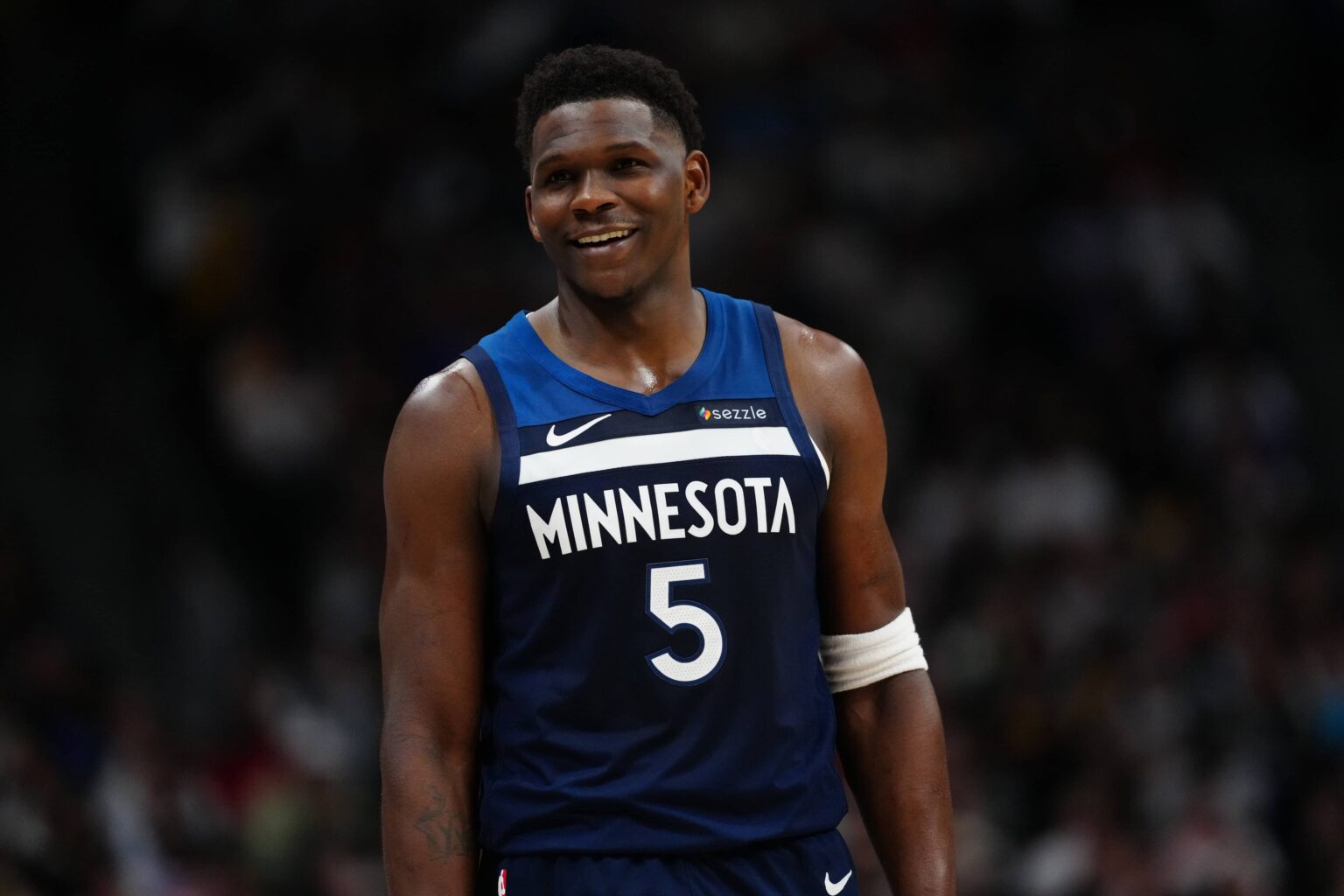
2. Anthony Edwards
Anthony Edwards closes games with pressure that starts before the shot. He ranks second in the NBA in total clutch points with 132. The Timberwolves are 39-23 and fourth in the West, and their late-game possessions often tilt into half-court creation where one decision at the top controls the entire possession.
Edwards is averaging 29.7 points, 5.2 rebounds, and 3.7 assists, shooting 49.4% from the field and 40.2% from three, with 7.1 free-throw attempts per game. That balance is the reason his clutch scoring travels. The Timberwolves do not need to manufacture complicated sets to get him a look. They need a screening angle and a clean side.
A common late-game structure is an empty-corner ball screen that removes the strongest help and forces the low man to either tag the roller or stay glued to the corner shooter. When the big plays drop, Edwards is comfortable taking the pull-up three early in the window because the contest is typically late and from behind. When the defense switches, the possession becomes a stance attack.
Edwards drives into the top foot, gets shoulder-to-hip, and forces a second defender to step in. The late-game value is that the next read is simple: finish through contact, or kick to the lifted shooter when the corner defender tags.
The comeback win over the Raptors on February 5 showed the exact profile. Edwards scored 13 of his 30 in the fourth quarter, and the swing was created by a short run built on stops, paint pressure, and quick scoring windows rather than slow, contested isolations. Last night against the Grizzlies, he closed with free throws late for a 41-piece, which is often the result when he goes to work late in games: efficiency, production, and the ultimate win.
1. Tyrese Maxey
The NBA’s clutch scoring leader this season is a guard whose advantage is speed, but whose finishing work is built on timing. Tyrese Maxey leads the league in total clutch points with 141. The 76ers are 33-28 and sixth in the East, living in a standings range where late possessions are constant and often decide whether a week feels stable or volatile.
Maxey’s season production matches a top-option workload: 29.0 points, 4.2 rebounds, and 6.7 assists per game on 46.1% from the field, with 37.5% from three and 89.0% at the line. The clutch scoring is not about deep-shot variance. It is about how the 76ers generate a first step that forces the big man to defend in space.
Late, the 76ers lean into spread pick-and-roll and re-screening to prevent defenses from comfortably switching into their preferred matchup. The first screen tests the coverage. The second screen punishes the coverage rule. If the defense drops, Maxey uses the defender’s trail position to stop short into a pull-up around the nail. If the defense switches, the re-screen often forces a moment of indecision, which is enough for Maxey to turn the corner and force help from the low man. That help is late by design, and it is where the free throws and layups are created.
The overtime win over the Rockets in late January is the clearest single-game example. Maxey scored 36, put up 11 points in the final four minutes of regulation, then closed overtime with a go-ahead layup, two free throws, and a transition dunk.
That sequence reflected what his clutch season has looked like: repeated advantage creation off ball screens, and possessions ending with paint decisions before the defense can fully load the floor.