The second round of the 2026 NBA playoffs is underway, with Knicks vs. 76ers, Thunder vs. Lakers, Timberwolves vs. Spurs, and Cavaliers vs. Pistons setting the stage for the next stretch of the postseason.
At this point, the field is smaller, and the level is higher. Regular-season status no longer carries the same weight. Some stars have already confirmed their place, while others are still trying to match their usual standard under playoff pressure.
This ranking looks at the 20 best players who are still performing in the playoffs based only on their performance in this postseason. Scoring matters, but it is not the only factor. Efficiency, creation, defense, role, workload, and team context are also part of the evaluation.
Here is our ranking of the 20 best NBA players still remaining in the 2026 playoffs, based on who has actually delivered when the games got tighter.
20. Jarrett Allen – Cavaliers
Jarrett Allen is not in this ranking because of scoring volume. He is here because his interior work has been steady enough to help the Cavaliers survive a difficult first round.
Allen is averaging 11.4 points, 8.3 rebounds, 1.3 steals, and 2.3 blocks in 28.5 minutes through seven playoff games. The scoring is modest, but the efficiency is strong. He is shooting 65.3% from the field, mostly through rim finishes, rolls, offensive rebounds, and short paint touches. His free throws remain a problem at 47.1%, but his value has still been clear.
His best game came when the Cavaliers needed it most. In Game 7 against the Raptors, Allen finished with 22 points, 19 rebounds, three blocks, two steals, and two assists in a 114-102 win. He scored 14 points in the third quarter alone and grabbed 10 rebounds in that period, helping the Cavaliers turn the game with a 38-19 quarter.
That performance is why Allen stays in the top 20. He is not carrying the Cavaliers’ offense like Donovan Mitchell or James Harden. He is not as versatile as Evan Mobley. But his screen setting, rebounding, rim protection, and physical presence have been reliable. He has 16 blocks in seven games, and the Cavaliers need that back-line defense behind their perimeter creators.
19. Ayo Dosunmu – Timberwolves
Ayo Dosunmu is low on this list for one reason: availability. His production has been strong enough for a higher spot, but he played only five games in the first round and missed the Game 1 win over the Spurs.
When he has played, the numbers have been excellent. Dosunmu is averaging 21.8 points, 2.8 rebounds, and 4.0 assists in 32.5 minutes. He is shooting 60.9% from the field, 54.5% from three, and 95.0% from the line. That is not normal bench scoring. That is elite efficiency on real volume. He has also kept the turnovers down at 1.4 per game.
His postseason peak was Game 4 against the Nuggets. Dosunmu scored a career-high 43 points on 13-for-17 shooting, including 5-for-6 from three, after the Timberwolves lost Anthony Edwards and Donte DiVincenzo to leg injuries. That performance helped the Timberwolves take a 3-1 series lead and was the highest-scoring playoff game by a bench player in 50 years.
The ranking still has to be strict. Dosunmu has not carried the same scouting burden as the stars above him, and his current injury status lowers his place. But his first-round shot-making changed the Timberwolves’ ceiling. Without that 43-point game and his overall efficiency, they may not even be in this position.
18. Deandre Ayton – Lakers
Deandre Ayton’s case is simple. He has not been a high-usage scorer, but he gave the Lakers exactly what they needed in the first round: rebounding, size, and efficient finishing.
Ayton averaged 11.8 points, 10.8 rebounds, 1.0 assists, and 1.0 blocks in six games against the Rockets. He shot 60.4% from the field and had three double-doubles. His 10.8 rebounds per game ranked third among all playoff players entering the second round. That rebounding volume is why he belongs here, even with limited shot creation.
His Game 6 was the clearest example of his role. Ayton scored only seven points, but he grabbed 16 rebounds and added one block in the Lakers’ 98-78 closeout win. That game was about defense, physicality, and finishing possessions. The Rockets shot 35.0% from the field and 17.9% from three, and Ayton’s rebounding helped the Lakers keep control once the game slowed down.
The limitation is obvious. Ayton is dependent on others to create his offense. He is not spacing the floor. He is not running offense through the post. He is not giving the Lakers a second star-level scoring option. That keeps him behind the creators on this list.
Still, playoff basketball values role execution. Ayton has protected the glass, finished at a high rate, and held his place in the rotation while the Lakers played without Luka Doncic and four games without Austin Reaves. That is enough for a top-20 spot.
17. Jaden McDaniels – Timberwolves
Jaden McDaniels belongs here because his postseason has become more than defense. The Timberwolves already expect him to take difficult perimeter assignments. What has changed is the scoring volume.
McDaniels is averaging 17.6 points, 6.6 rebounds, 2.6 assists, 0.6 steals, and 0.7 blocks in 36.0 minutes through seven playoff games. He is shooting 49.5% from the field and 82.6% from the line. The three-point number is poor at 10.0%, but he has still found ways to score through cuts, transition, offensive rebounds, and straight-line attacks.
His best game came in the first-round closeout against the Nuggets. McDaniels had 32 points, 10 rebounds, three assists, two steals, and one block in nearly 45 minutes. He shot 13-for-25 from the field and finished plus-23. That is not role-player filler. That is a major playoff game in a series-clinching setting.
He followed that with 16 points, five rebounds, two assists, one steal, and one block in Game 1 against the Spurs. That was a huge line because Anthony Edwards was limited, and the Timberwolves needed scoring from multiple places to steal the opener.
The only reason McDaniels is not higher is the shooting. A wing hitting 10.0% from three gives opponents a clear adjustment point. Still, his defense, minutes load, and improved scoring have been too important to ignore. He has played like a real two-way playoff piece.
16. Chet Holmgren – Thunder
Chet Holmgren has been efficient, protected the rim, and given the Thunder a second frontcourt scoring option without needing many touches. That is why he sits at No. 15, even before the Thunder’s second-round series has started.
Holmgren is averaging 17.3 points, 8.5 rebounds, 1.3 assists, 1.3 steals, and 2.0 blocks in four playoff games. He is shooting 59.1% from the field, 38.9% from three, and 90.9% from the line. His true shooting is 70.6%. That is a very strong offensive profile for a player also anchoring large parts of the defense.
The Thunder swept the Suns in four games, and Holmgren’s best performance came in the closeout. He had 24 points and 12 rebounds in the 131-122 Game 4 win, giving the Thunder needed interior production while Shai Gilgeous-Alexander controlled the offense.
His ranking is capped by role. Holmgren has not had to carry a series. The Thunder’s first round was controlled enough that his workload stayed contained, and Shai remains the main offensive force. Holmgren is more of a high-efficiency second pillar.
That is still valuable. He stretches the floor, finishes inside, blocks shots, and rebounds without needing plays run for him every trip. For a No. 1 seed trying to repeat, that kind of low-maintenance production is a major reason the Thunder look so stable.
15. Paul George – 76ers
Paul George should not be treated like a normal third option in this ranking. His scoring role is smaller than Joel Embiid’s and Tyrese Maxey’s, but his first-round value was much bigger than a basic box score shows.
George averaged 17.4 points, 4.0 rebounds, 3.0 assists, and 1.3 steals in the first round against the Celtics. The shooting was excellent: 48.9% from the field, 55.0% from three and 77.8% from the line. He made 3.1 threes per game, which gave the 76ers needed spacing.
But the main reason he deserves No. 15 is defense. George was one of the most important defensive players in that series. He spent long stretches on Jayson Tatum and Jaylen Brown, and his size allowed the 76ers to defend without sending constant double teams. That helped protect the rest of the floor and limited the Celtics’ usual drive-and-kick rhythm.
His Game 6 was probably the best example of his two-way value. George scored 23 points, hit 5 of 9 from three, and helped force the series to a Game 7. He was not the first option, but he gave the 76ers efficient shooting, veteran control, and high-level wing defense in the same game.
Game 1 against the Knicks was ugly for the team, but George was still one of the few functional pieces. He scored 17 points on 6-for-11 shooting and went 4-for-6 from three. That did not change the result, but it kept his own postseason profile strong.
George is not above the main stars because he is not carrying the same offensive load. But as a two-way playoff wing, he has been excellent. The 76ers ask him to defend elite scorers, space the floor, and stay efficient as a lower-usage option. He has done that at a high level.
14. Evan Mobley – Cavaliers
Evan Mobley has been one of the Cavaliers’ most stable playoff pieces because his value has not depended on one area. He has scored, rebounded, defended, and added secondary passing from the frontcourt.
Mobley is averaging 18.1 points, 8.6 rebounds, 3.4 assists, 0.7 steals, and 1.0 blocks in 33.4 minutes. The efficiency is strong: 58.0% from the field, 39.1% from three, and 65.3% true shooting. For a big man who is defending, spacing, rolling, and passing, that is a very useful playoff line.
The reason he is not higher is that his impact has not always been dominant. He has had inefficient games, and his overall plus-minus is still negative through seven playoff games. But his versatility keeps him in this range. The Cavaliers can use him as a finisher, short-roll passer, weak-side defender, and occasional floor spacer.
Mobley is not carrying the offense like Donovan Mitchell or James Harden. He is not the loudest player in this run. Still, 18.1 points, 8.6 rebounds, and strong efficiency from a two-way big is enough to place him above most role players still alive.
13. James Harden – Cavaliers
James Harden’s postseason has been flawed, but the workload is serious. The Cavaliers need him to run offense, score, create advantages, and pressure passing lanes. That is a larger job than several players around this part of the list have had.
Harden is averaging 20.6 points, 5.3 rebounds, 6.1 assists, 2.1 steals, and 0.6 blocks in 37.0 minutes. He is shooting 45.3% from the field, 37.5% from three and 83.3% from the line, with a 62.0% true shooting mark. Those numbers are strong enough for a top-15 spot. The problem is turnovers. He is averaging 5.1 turnovers per game, which is too high for a player with this much control of the offense.
Harden had 28 points, five rebounds, four assists, five steals, and one block in a 115-105 win against the Raptors in Game 5. That was the version the Cavaliers need: scoring, playmaking and defensive disruption in the same night.
Harden also gave the Cavaliers 18 points, six rebounds, three assists, and three steals in their Game 7 win. Jarrett Allen and Mitchell carried the biggest moments, but Harden’s pressure on the ball and secondary creation still had value.
The ranking is fair because Harden has not been fully in control. His assist-to-turnover balance is not good enough. But he is still producing 20-plus points, six assists, and two steals per game with efficient scoring. That is real playoff impact.
12. Tobias Harris – Pistons
Tobias Harris has been one of the best non-star stories of the postseason. The Pistons needed a second scorer next to Cade Cunningham, and Harris gave them more than steady support. He gave them real playoff production.
Harris is averaging 21.6 points, 8.1 rebounds, 1.3 assists, 1.6 steals, and 0.9 blocks in 35.4 minutes. He is shooting 45.5% from the field and 78.9% from the line. The only weak area is the three-point shooting at 28.9%, but the volume and consistency still stand out.
His Game 7 was the main reason he belongs this high. Harris scored 30 points and grabbed nine rebounds in the Pistons’ 116-94 win over the Magic. Cunningham had 32 points and 12 assists, but Harris gave the Pistons the second scoring pillar they needed to complete the 3-1 comeback.
The broader series also matters. The Pistons became only the 15th team in NBA history to overcome a 3-1 series deficit. Harris was not a passenger in that comeback. He averaged more than 21 points, defended with size, and kept giving the Pistons a half-court option when Cunningham drew the strongest coverage.
His ranking is not about reputation. It is about this postseason. Harris has outplayed his regular-season role by a wide margin. He has been the Pistons’ second-best playoff player, and that is why he sits just outside the top 10.
11. Julius Randle – Timberwolves
Julius Randle is not here because of efficiency. He is here because of role difficulty. The Timberwolves need him to create offense, rebound, absorb physical matchups, and carry possessions when Anthony Edwards is limited or off the floor.
Randle is averaging 19.4 points, 7.7 rebounds, and 3.9 assists in 34.9 minutes. He is shooting 42.5% from the field, 30.8% from three and 71.1% from the line. His 51.2% true shooting is not strong, and his 3.0 turnovers per game are part of the concern. But his workload is heavier than the efficiency suggests.
Game 1 against the Spurs showed why the Timberwolves still need him badly. Randle led them with 21 points and 10 rebounds in the 104-102 road win. Edwards returned from injury but played only 25 minutes, so Randle had to be the main frontcourt scorer and one of the main pressure points in the half-court.
His value also comes from the type of game the Timberwolves want to play. Randle gives them strength. He can attack switches, force contact, create second-side passing, and keep the offense from becoming too dependent on Edwards. That is not always pretty, but it is useful in playoff basketball.
The flaws are real. Randle can hold the ball too long, take difficult shots, and lose efficiency against length. Still, his size, scoring load and rebounding have been central to the Timberwolves’ run. That gives him the edge over cleaner but lower-burden players below him.
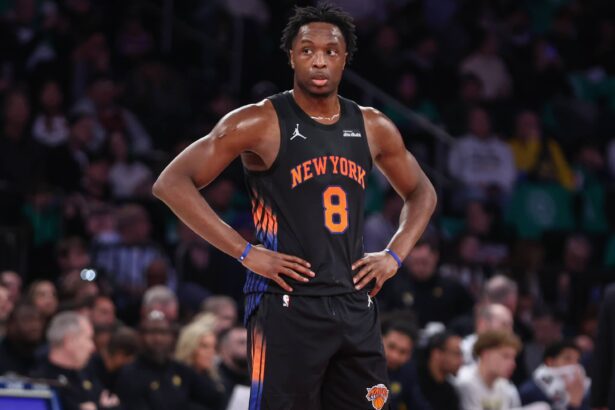
10. OG Anunoby – Knicks
OG Anunoby has played his way into the top 10 because his postseason has been absurdly efficient. This is not about a one-game hot stretch. He has been one of the most reliable two-way players still alive.
Anunoby is averaging 21.0 points, 7.9 rebounds, 1.1 assists, 1.6 steals, and 1.1 blocks in 34.9 minutes. The shooting is the main reason he is this high: 63.7% from the field, 59.4% from three, and 77.8% true shooting. He has also committed only 0.6 turnovers per game. That is elite role execution with real scoring volume.
His Game 1 against the 76ers continued the same pattern. Anunoby scored 18 points on 7-for-8 shooting in only 30 minutes during the Knicks’ 137-98 win. Over his last three games, he has shot 23-for-30 from the field and 8-for-11 from three. That is not normal playoff efficiency.
The value is also defensive. Anunoby gives the Knicks size on the wing, strength at the point of attack, and the ability to guard without changing the entire scheme. He does not need high usage to influence games. He spaces, cuts, attacks tilted defenses, and defends top assignments.
The only reason he is not higher is creation. Anunoby is not running the offense. He is not carrying late-clock possessions like the guards above him. But as a two-way playoff wing, his production has been nearly perfect.
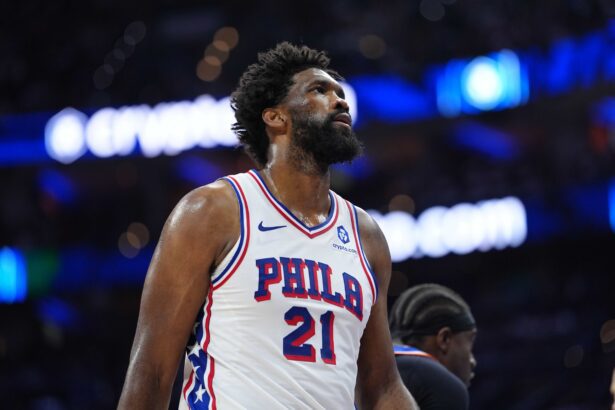
9. Joel Embiid – 76ers
Joel Embiid is still inside the top 10 because the numbers remain strong. He is not higher because his postseason has not matched his usual level of control.
Embiid is averaging 25.2 points, 8.0 rebounds, 5.8 assists, 0.4 steals, and 0.6 blocks in 34.2 minutes. That is still star production. But the efficiency is a concern: 42.4% from the field, 13.6% from three, and 52.8% true shooting. For Embiid, that is below standard. He is also minus-18 through five playoff games.
The ranking is influenced heavily by Game 1 against the Knicks. Embiid scored 14 points on 3-for-11 shooting and finished minus-24 in the 137-98 loss. He made 8 of 9 free throws, but he did not control the game from the field, on the glass or as a defensive anchor. The 76ers needed him to change the matchup. He did not.
That does not erase what he did before. Embiid helped the 76ers survive the first round, and his passing numbers show he has done more than score. A center averaging nearly six assists per game in the playoffs is still putting major stress on defenses.
But this list is not about talent. It is about this postseason. Embiid’s volume keeps him high. His efficiency, health questions, and Game 1 drop-off keep him below players who have been more stable.
8. Donovan Mitchell – Cavaliers
Donovan Mitchell has not been at his sharpest, but his scoring load still puts him in the top 10. The Cavaliers needed shot creation in a seven-game first round, and Mitchell gave them enough to advance.
Mitchell is averaging 23.1 points, 4.9 rebounds, and 3.0 assists in 35.0 minutes. He is shooting 43.8% from the field, 33.3% from three and 87.5% from the line. The true shooting is 52.9%, so the efficiency is not elite. The volume is the reason he remains this high.
The issue is that Mitchell has not dominated the way his reputation suggests. His 2.7 turnovers per game are manageable, but the shot profile has been uneven. He is taking 20.9 field-goal attempts per game and 8.6 threes per game, but the percentages are only average for a lead scorer. That matters when comparing him with players who have been more efficient in similar roles.
Still, the Cavaliers do not reach this point without his scoring. Mitchell remains the main perimeter scorer on a team that just survived a long first-round series. He can create against set defenses, hit difficult pull-ups, and force opponents to load help toward him.
That is why he sits above Embiid here. Embiid has better raw star status, but Mitchell has been more available across seven games and has carried a steady scoring burden. It has not been a brilliant postseason from him. It has been productive enough.
7. Karl-Anthony Towns – Knicks
Karl-Anthony Towns is this high because he has changed the Knicks’ offensive structure without needing high shot volume. His scoring is not the whole case. His passing, spacing, and efficiency are.
Towns is averaging 18.4 points, 10.6 rebounds, 6.0 assists, 1.4 steals, and 1.7 blocks in 30.3 minutes. He is shooting 58.0% from the field, 47.8% from three and 92.7% from the line. His 74.1% true shooting is elite, and his plus-103 is one of the strongest marks among players in the second round.
His first-round series against the Hawks showed the full version of his role. Towns averaged 18.7 points, 11.3 rebounds, and 6.0 assists, and he recorded his first two playoff triple-doubles. That is a rare profile for a big: efficient scoring, high-end rebounding, and real playmaking.
Game 1 against the 76ers added another layer. Towns had 17 points, six rebounds, six assists, and two blocks in only 20 minutes. He shot 7-for-11 from the field and 3-for-5 from three. He did not need a large role because the Knicks destroyed the game early.
Towns ranks below the heavier creators because Brunson still drives the Knicks’ offense. But his efficiency and versatility have been excellent. He has given the Knicks a frontcourt hub who can shoot, pass, and punish slow defensive rotations. That is one of the main reasons their offense looks so difficult to guard.
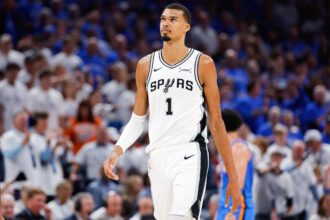
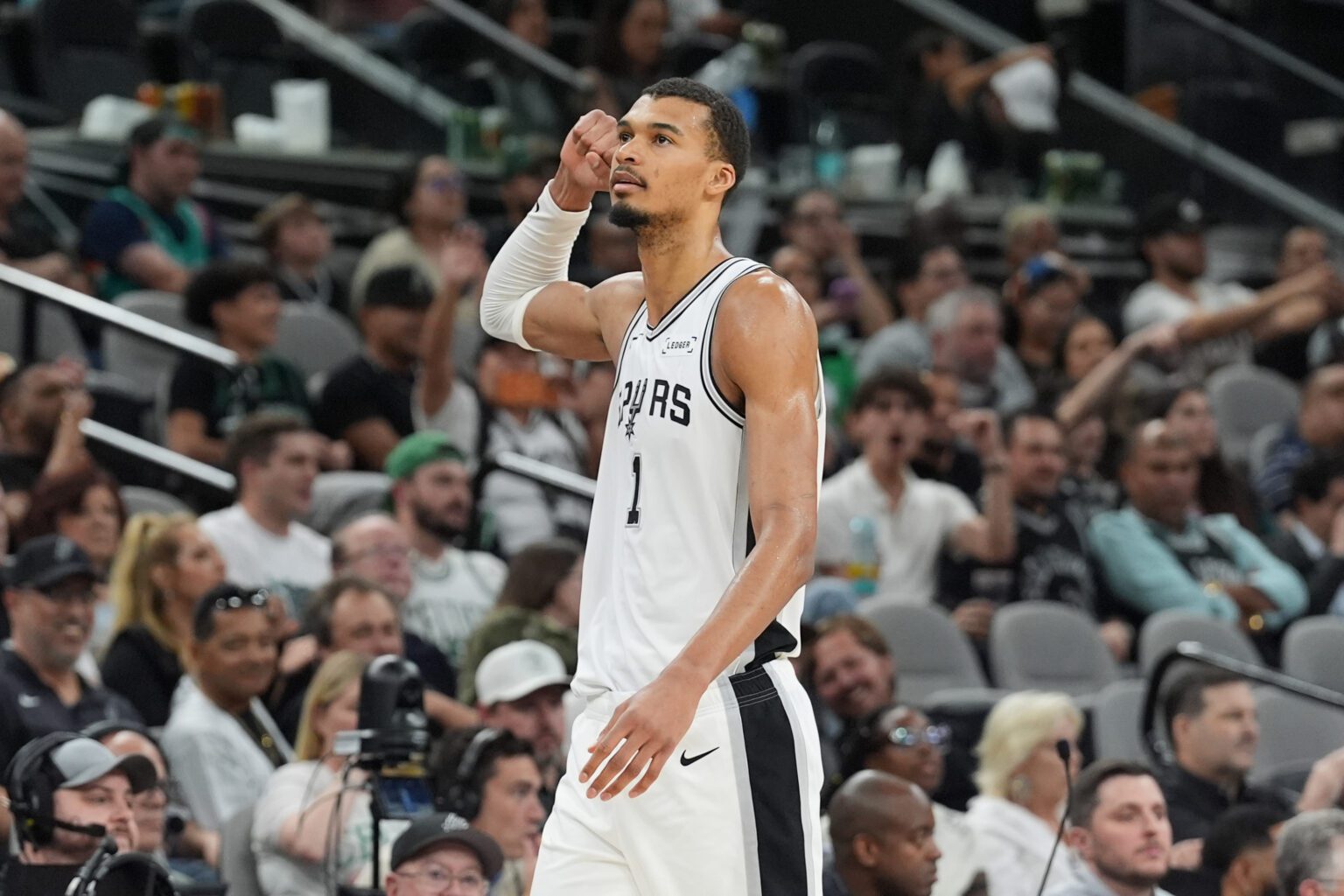
6. Victor Wembanyama – Spurs
Victor Wembanyama is the hardest player to rank because Game 1 against the Timberwolves showed both sides of his postseason. His defense was historic. His offense was inefficient.
Wembanyama is averaging 19.0 points, 10.0 rebounds, 2.6 assists, and 5.6 blocks in 30.4 minutes. He is shooting 50.8% from the field, 33.3% from three and 88.0% from the line, with a 62.5% true shooting mark. The 5.6 blocks per game are the separator. No other remaining player changes the court defensively like him.
His Game 1 against the Timberwolves was historic, even in a loss. Wembanyama had 11 points, 15 rebounds, and 12 blocks. The 12 blocks set an NBA postseason record, and he became only the third player with a playoff triple-double, including blocks, since the league began tracking blocks in 1973-74.
The concern is offensive struggles. He shot 5-for-17 and went 0-for-8 from three in that loss. The Timberwolves made him catch farther from the rim, live on perimeter attempts, and spend major energy defensively. That is why he is not in the top five.
Still, Wembanyama’s defensive ceiling is unmatched. A player averaging 19.0 points, 10.0 rebounds, and 5.6 blocks while already owning a postseason record game cannot be pushed lower. The Spurs need more efficient offense from him, but his playoff impact is already massive.
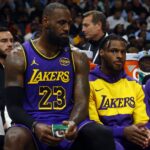
5. LeBron James – Lakers
LeBron James is still dominating at 41 years old. As unbelievable as this could sound, his postseason has been more than scoring. The Lakers entered the playoffs without Luka Doncic, and nobody expected James to turn the clock back for another postseason round.
James is averaging 23.2 points, 7.2 rebounds, 8.3 assists, and 1.3 steals in 38.7 minutes. The efficiency has not been elite: 43.2% from the field, 30.0% from three, and 53.0% true shooting. But the total workload is the argument. He is leading the Lakers in points and assists while also carrying a large late-game decision-making role.
The Rockets series was not built on one explosive game. It was built on control. James had 50 assists in six games, and the Lakers survived a physical first round because he could still organize half-court offense, punish switches, and get Deandre Ayton, Rui Hachimura, and the shooters into usable spots. That is difficult at this stage of his career, especially with Doncic still out due to a left hamstring strain.
The shooting keeps him below the top four. He has not been as efficient as the best guards in this ranking, and the turnovers are high at 4.3 per game. Still, the Lakers do not reach the second round without him controlling the series as he did.
James is no longer being ranked based on reputation. This is a current-playoff ranking. A player averaging 23.2 points, 8.3 assists, and 7.2 rebounds while carrying a shorthanded offense belongs in the top five. And once again, he is 41 years old.
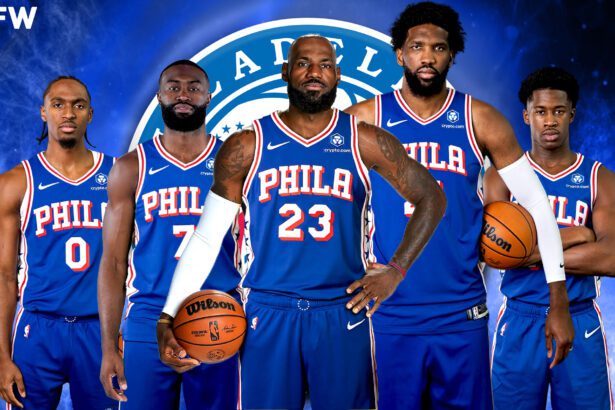
4. Tyrese Maxey – 76ers
Tyrese Maxey stays ahead of several bigger names because his overall playoff production has been strong, even with a poor Game 1 against the Knicks.
Maxey is averaging 25.1 points, 4.6 rebounds, and 6.0 assists in 39.1 minutes. He is shooting 45.6% from the field, 39.7% from three and 97.0% from the line, with a 57.6% true shooting mark. He has also kept turnovers low at 1.6 per game. For a guard handling this much pace and pressure, that assist-to-turnover profile is very strong.
The Knicks opener hurt his case. Maxey had only 13 points, two assists, and four turnovers in the 137-98 loss. He shot 3-for-9 from the field and 0-for-3 from three. That cannot happen again if the 76ers want the series to turn.
But the full postseason still keeps him high. Maxey has been the 76ers’ most reliable perimeter engine. Embiid’s efficiency and health have moved up and down. Paul George has been excellent as a two-way third option, but he is not carrying the same creation burden. Maxey is the player who has had to create speed, collapse the defense, and keep the offense from becoming too stationary.
The reason he is not in the top three is control against elite defense. The Knicks exposed that in Game 1. Still, 25.1 points and 6.0 assists with strong shooting and low turnovers is one of the best playoff guard profiles still alive.
3. Shai Gilgeous-Alexander – Thunder
Shai Gilgeous-Alexander has the best statistical case for No. 1. The only reason he is third is context. The Thunder swept the Suns, and he did not have to carry the same pressure load as Cade Cunningham or Jalen Brunson.
The numbers are elite. Gilgeous-Alexander is averaging 33.8 points, 3.8 rebounds, 8.0 assists, and 0.8 blocks in 35.8 minutes. He is shooting 55.1% from the field, 31.3% from three and 89.8% from the line. His 67.8% true shooting is absurd for a guard taking 19.5 shots and 12.3 free throws per game.
He was in total control against the Suns. He had 31 points and eight assists in Game 4’s closeout, and he scored 42 in Game 3 to put the Thunder on the edge of a sweep. The Thunder did not need chaos from him. They needed efficient scoring, free-throw pressure, and late-clock calm. He gave them all of it.
That is why the third is not a criticism. Gilgeous-Alexander has been the most efficient high-volume scorer left in the playoffs. He has also been the best player on the team with the strongest first-round result.
The debate is a burden. The Thunder were good enough to handle the Suns without asking him to play 40 minutes or solve every defensive scheme. Cunningham and Brunson have faced heavier individual responsibility. That is the only reason Gilgeous-Alexander is not first.
2. Jalen Brunson – Knicks
Jalen Brunson has already stamped the second round. That is why he is ahead of Gilgeous-Alexander here, even without the same raw efficiency.
Brunson is averaging 27.6 points, 2.3 rebounds, and 5.7 assists in 34.3 minutes. He is the Knicks’ scoring leader, and his control of the offense has been the foundation of their postseason run. The Knicks have not just advanced. They have started to bury opponents early, and Brunson is the player creating the first punch.
His Game 1 against the 76ers was the clearest statement. Brunson scored 35 points on 12-for-18 shooting in 31 minutes. He had 27 points in the first half alone, and the Knicks won 137-98. The Knicks became only the second team in NBA history to win consecutive playoff games by at least 30 points across two series.
The way he did it is why the ranking is this high. Brunson attacked different coverages, punished pick-and-roll mistakes, and forced the 76ers to change defenders. He did not need one type of possession. He scored off pull-ups, drives, screen actions, and late-clock reads.
The Knicks have more help than the Pistons. That keeps Brunson below Cunningham. But his combination of scoring, control, and second-round early dominance is enough to put him above everyone else except the heaviest offensive engine still alive.
1. Cade Cunningham – Pistons
Cade Cunningham is No. 1 because no remaining player has carried a heavier postseason ecosystem. The Pistons’ offense is built around his scoring, passing, pace control, and late-game decision-making.
Cunningham is averaging 32.4 points, 5.7 rebounds, 7.1 assists, 0.9 steals, and 0.9 blocks in 40.4 minutes. He is shooting 46.2% from the field, 39.6% from three and 83.8% from the line, with a 60.2% true shooting mark. The turnovers are high at 5.9 per game, but that is connected to usage. He has been asked to create almost everything.
His Game 7 against the Magic decided the top spot. Cunningham had 32 points and 12 assists in a 116-94 win, helping the Pistons complete a comeback from a 3-1 series deficit. That is the difference between his case and others. Gilgeous-Alexander has been more efficient. Brunson has the stronger team dominance case. Cunningham has the biggest burden. The Pistons need him to score 30, run the offense, absorb pressure, create for everybody else, and still close games while the five opponents are solely focused on him.
This ranking is based only on the current postseason. On that basis, Cunningham has the strongest case. He has produced like a superstar, carried the hardest offensive role, and led the Pistons out of a 3-1 deficit. That is enough for No. 1.