From the opening tip, this never felt like a game the Houston Rockets were going to let slip. There was a sharpness to everything they did – every pass had purpose, every defensive rotation was on time, and every possession seemed to end in a quality look. On the other side, the New York Knicks looked a step behind all night, unable to match Houston’s pace or precision.
By the time the second half settled in, the game was firmly in the Rockets’ control, the product of a complete two-way performance that left little room for doubt. Let’s get into the five main things we learned after a surprising result.
1. Kevin Durant Set The Tone
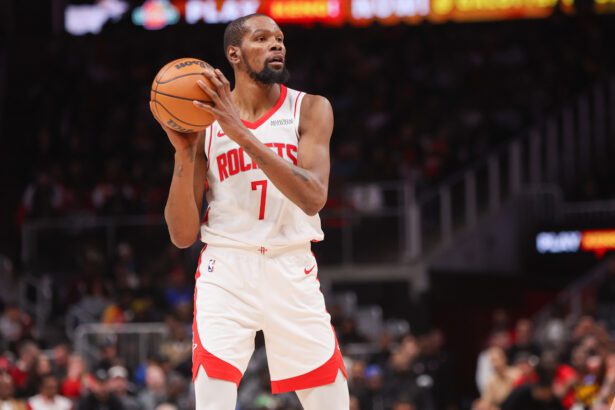
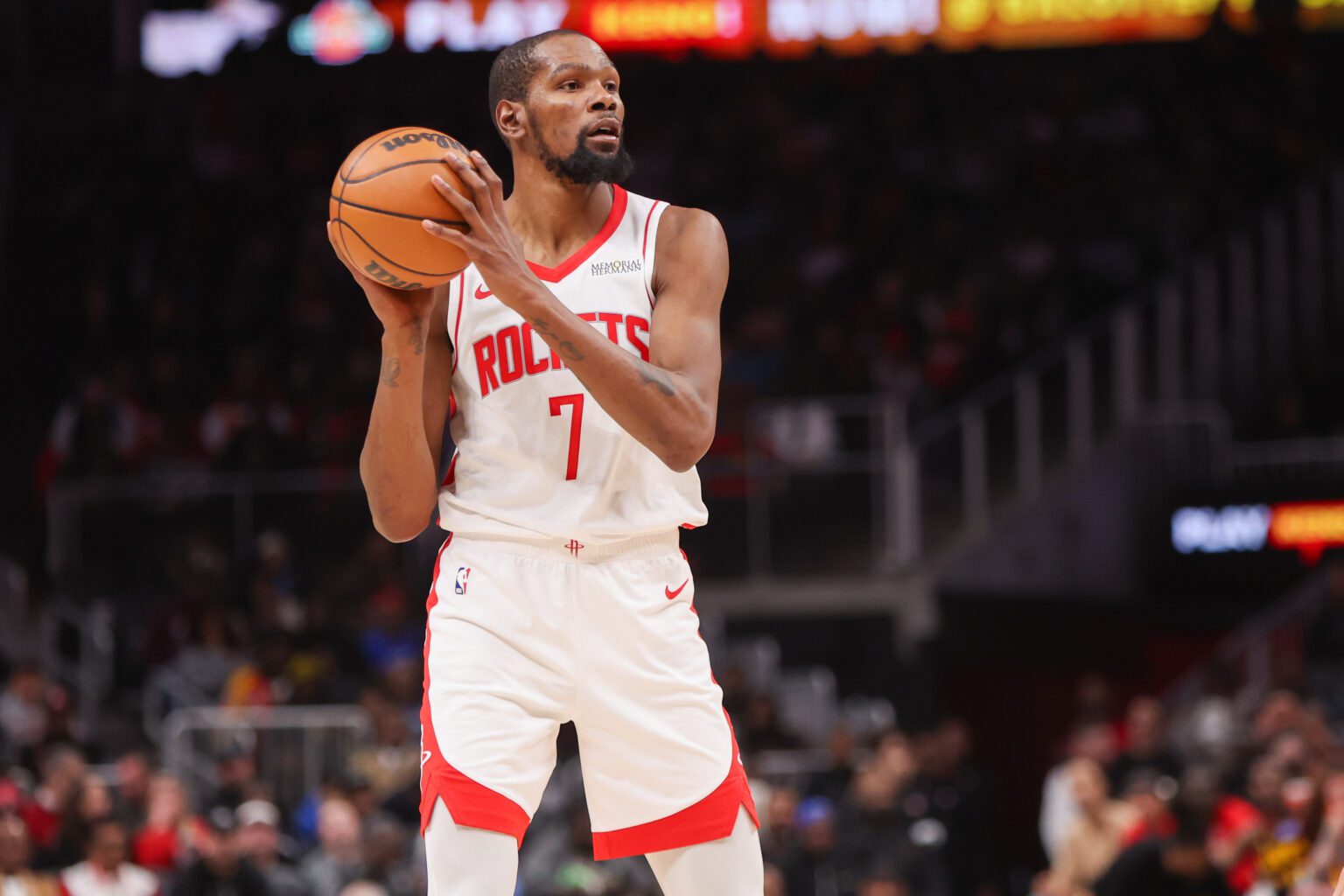
This was one of those nights where Kevin Durant dictated the entire rhythm of the game, more than just scoring. He had 27 points on 10-18 shooting (56%), went 4-7 from three (57%), and added 8 assists, 6 rebounds, and 2 blocks. He also finished with a game-best +28 plus/minus.
What stood out most was the efficiency paired with playmaking. Durant wasn’t forcing shots; he was reading the floor, picking apart mismatches, and creating easy looks. When New York tried to load up, he calmly found open shooters. When they stayed home, he went to work one-on-one. There was no defensive answer.
2. Houston’s Ball Movement Completely Broke Down New York’s Defense
The Rockets didn’t rely on isolation; they carved the Knicks up with precision passing and quick decisions. They generated 35 assists on 42 made field goals, as five players had 3+ assists, and multiple starters posted 8+ assists. Alperen Sengun was at the center of it with 13 points, 10 assists, and 5 rebounds.
Amen Thompson added 17 points and 8 assists on 8-14 shooting. This wasn’t random ball movement – it was intentional, layered offense that kept shifting the defense until something broke. After a ton of criticism about their ball movement, the Rockets were at it tonight.
3. Knicks’ Offense Fell Apart Outside Of Karl-Anthony Towns
For stretches, the New York Knicks looked completely stuck offensively. The team shot just 42.4% from the field and 29.4% from three (10-34). Only one starter shot above 50%. To his credit, Karl-Anthony Towns did his part with 22 points and 8 rebounds on 7-17 shooting.
But the rest of the core struggled badly, and it shows here:
- Jalen Brunson: 12 points on 5-14, -26
- OG Anunoby: 8 points on 3-9
- Josh Hart: 13 points, -22
There was no flow, no consistent creation, and too many empty possessions against a locked-in defense. With so many poor performances, the Knicks were always going to lose.
4. Houston’s Two-Way Impact Showed Up In Every Category
This wasn’t just an offensive clinic – the Rockets dominated defensively and physically as well. They held New York to 94 total points, forced inefficient shooting across the board (42.4% FG, 29.4% 3PT), and added 6 steals and 6 blocks.
Tari Eason embodied that two-way presence with 17 points, 8 rebounds, 2 steals, and 1 block. And as a team, Houston consistently turned defense into offense or early-clock opportunities, even without a massive fast-break edge.
5. Shooting Efficiency Gap Made This A One-Sided Game
At the end of the day, the math was overwhelming. The Rockets had 53.8% FG, 42.9% from three (15-35), while the Knicks posted 42.4% FG, 29.4% from three (10-34). That’s six more made field goals despite fewer attempts (42 vs. 36) and five more made threes.
And it showed in control of the game since Houston led for 98% of the game and built a lead as large as 21 points. When one team is that much more efficient while also sharing the ball at a high level, the outcome usually isn’t competitive.