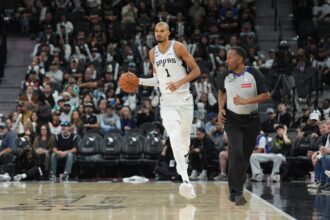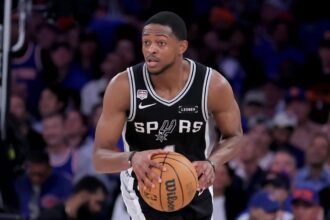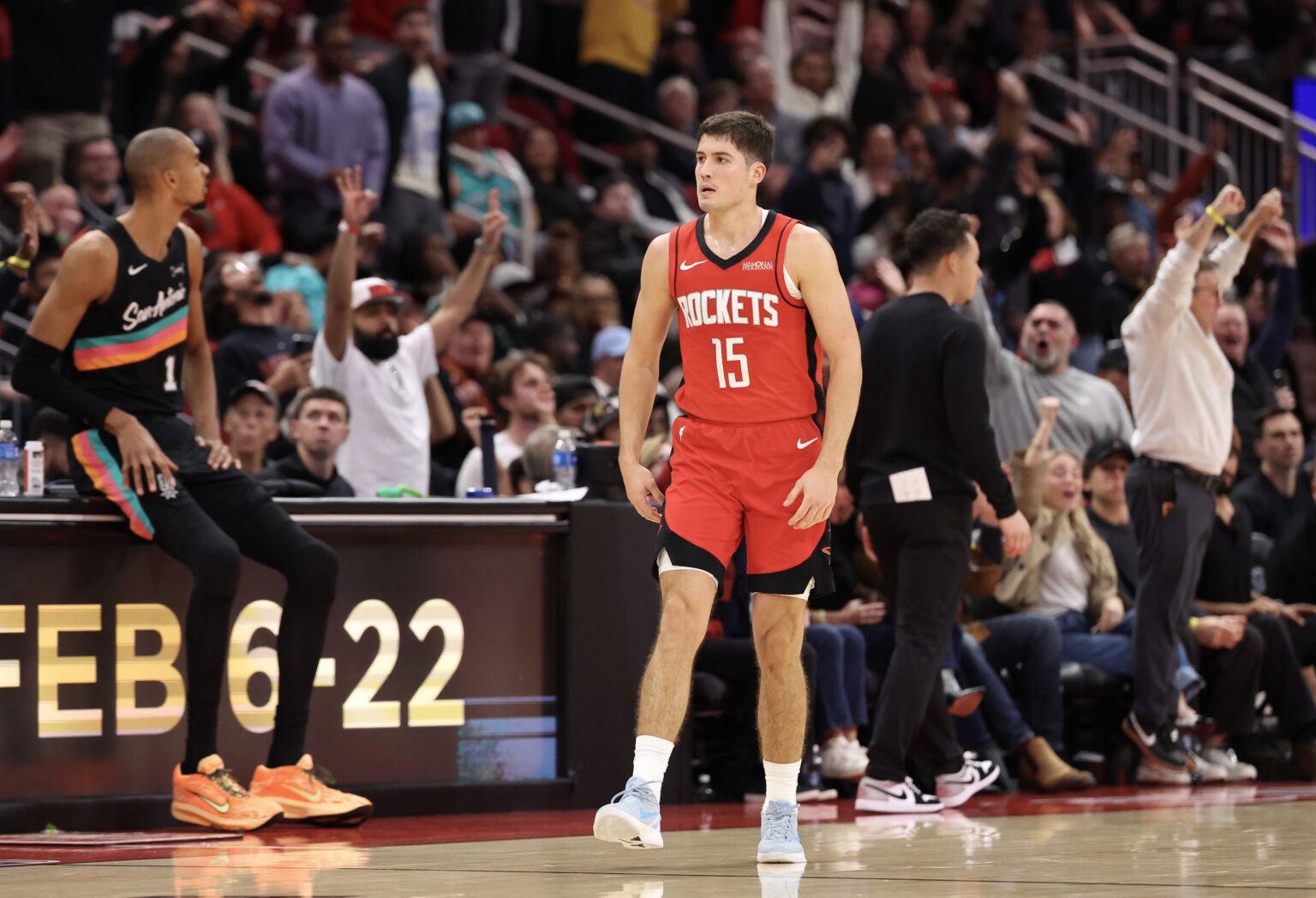
Nothing about this game followed a clean script. Houston spent most of the night chasing, misfiring, and reacting while San Antonio controlled the pace and the scoreboard. The Spurs built a comfortable lead, hit shots from everywhere, and looked firmly in control well into the second half. Then, almost without warning, the game tilted.
Houston showed true grit. The Rockets snagged one defensive rebound from the Spurs, then the Spurs sank some rather ugly jumpers, and just like that, the Rockets climbed back into the possession battle. At the final buzzer, they finished a phenomenal 16-point comeback. They escaped the Spurs with a 111-106 win after leading hardly any of the contest.
1. The Rockets Turned Defense Into Survival Mode Late
Houston’s comeback began with defense rather than offense. After surrendering 88 points over three quarters, the Rockets again unlocked the fourth quarter, limiting San Antonio to 18 points, while the Spurs shot 6-22. Every drive was shot contested, and the paint was an area to avoid.
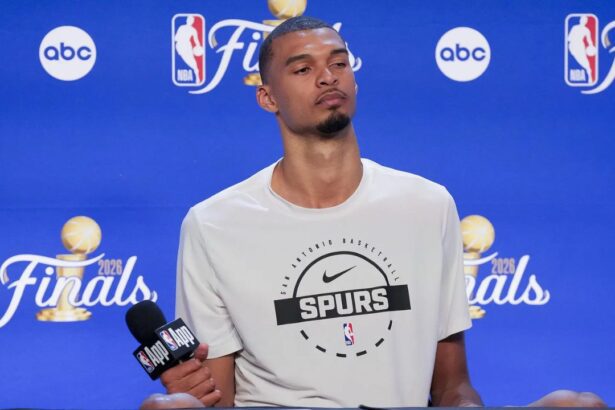
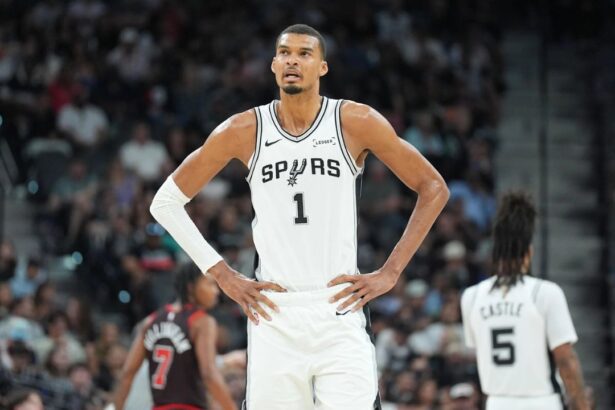
Spurs center Victor Wembanyama was the most affected. He ended the game with 14 points and 10 rebounds, but needed 21 shot attempts; he also missed all 7 of his three-point shots. Houston’s defense closed out to him, causing bad decisions and hurried shot attempts. Wembanyama couldn’t save the rim on his part, while Houston’s defense added 9 blocked shots.
2. Kevin Durant Slowed The Game When Houston Needed Calm
Kevin Durant didn’t take over the game; he steadied it. While others pushed the pace, Durant played chess, picking moments rather than forcing action. He ended the night with 18 points on 7-of-12 shooting, but his seven assists mattered just as much as any bucket.
As San Antonio’s offense stalled, Durant repeatedly found cutters and shooters instead of settling for contested jumpers. Houston finished with 29 assists, and Durant’s fingerprints were on most of their late execution. It wasn’t loud. It was controlled, exactly what the Rockets needed.
3. Sengun Was The Backbone Of The Comeback
Alperen Sengun was everywhere during Houston’s rally. He scored 20 points, grabbed 13 rebounds, and handed out nine assists, serving as both a scorer and a release valve when the offense bogged down. When Houston needed something steady, the ball found him.
San Antonio dominated the glass early and collected 14 offensive rebounds, but Sengun’s presence helped flip that trend late. He battled inside, protected the rim, and kept possessions alive long enough for Houston to finally capitalize. The Rockets outscored the Spurs 52-46 in the paint, a gap that grew wider as the fourth quarter wore on.
4. Reed Sheppard Changed The Game With Confidence, Not Volume
Reed Sheppard didn’t wait for permission. Coming off the bench, he attacked his shots decisively and never hesitated, finishing with 21 points in 29 minutes. His four made threes accounted for nearly half of Houston’s total from beyond the arc.
At a time when the Rockets were struggling to score efficiently, Sheppard delivered exactly what they lacked – timely spacing and fearlessness. While San Antonio bricked jumper after jumper late, Sheppard’s shot-making flipped the pressure entirely onto the Spurs.
5. San Antonio Let Control Slip Through Its Fingers
This was San Antonio’s game for most of the night, and that’s what made the loss sting. The Spurs led for 82% of the contest, built a 16-point cushion, and had Houston scrambling for answers. Julian Champagnie was outstanding, pouring in 27 points and hitting eight threes, but the support dried up when it mattered.
San Antonio finished the night shooting just 39.0% overall and 28.0% from three, despite launching 50 attempts from deep. The Spurs scored only seven fast-break points, committed costly empty possessions late, and couldn’t manufacture offense once Houston tightened up defensively.