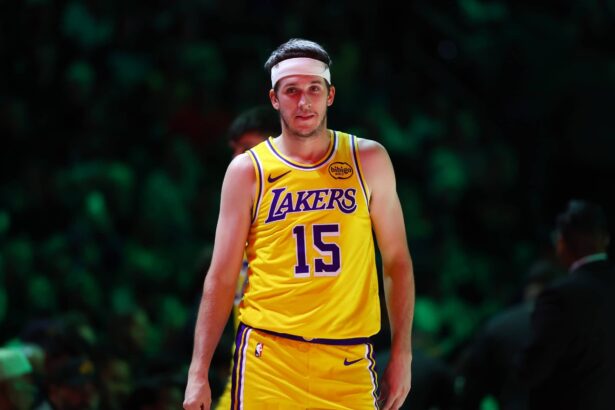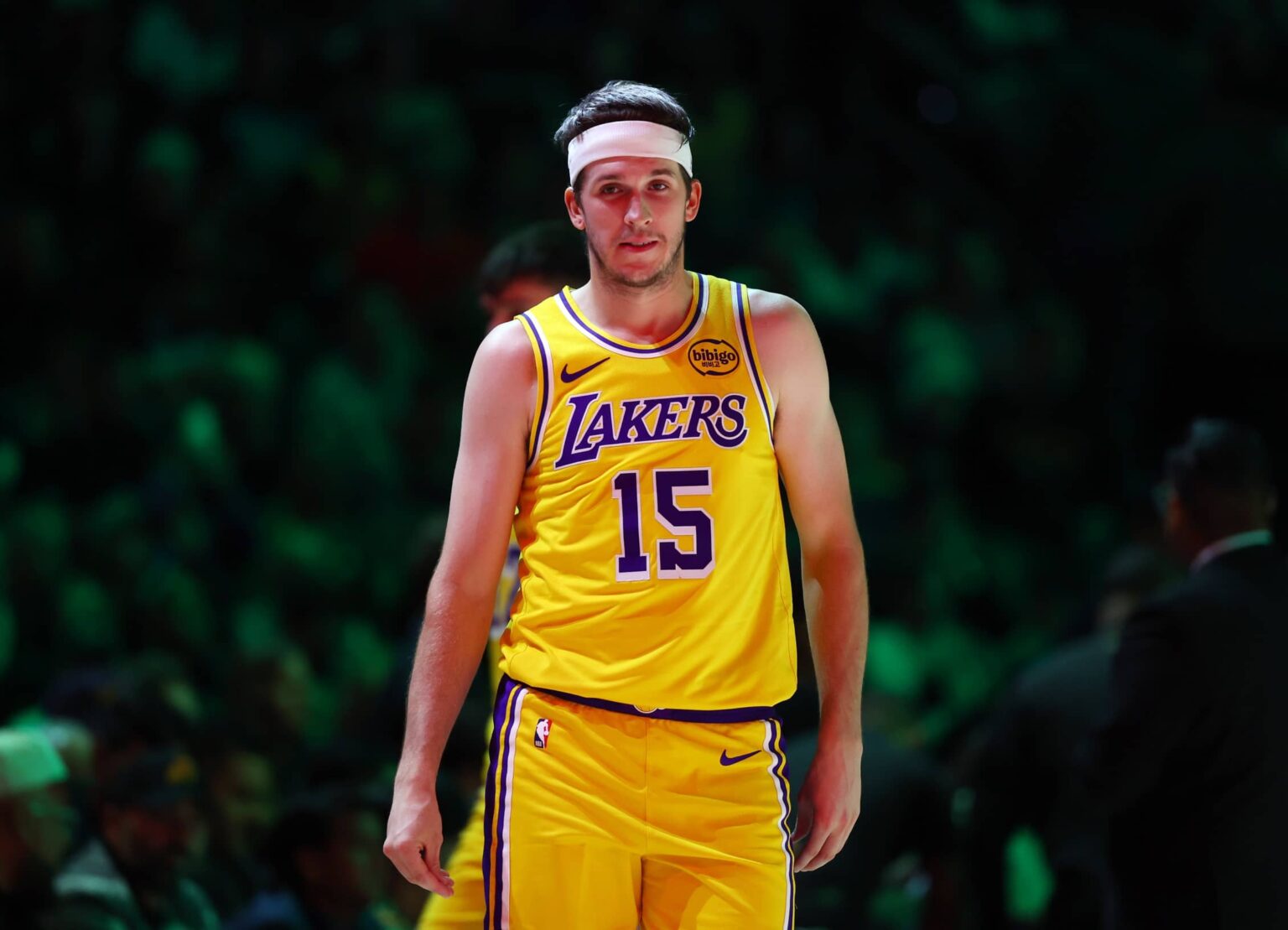
Austin Reaves has gone from being an undrafted afterthought out of Oklahoma to one of the NBA’s best success stories. He fought his way into the Lakers’ rotation and turned into a 20+ PPG star while sharing the floor with superstars.
That success could make things difficult for the Lakers. Reaves is expected to command massive money on the open market, potentially receiving an estimated four-year, $178 million offer from another team or as much as $241 million over five years if Los Angeles decides to keep him long term. It has been reported that Reaves isn’t interested in taking a discount, either.
At the same time, the franchise is navigating LeBron James’ uncertain future while building around Luka Doncic as its cornerstone for the next decade. It seems Reaves is ahead of LeBron in terms of priority, especially since the Lakers might already be preparing for life after The King.
The issue isn’t whether Reaves is a good player. He absolutely is, but is he a max player? Those are two very different conversations.
Reaves is an excellent secondary creator and high-level starter, but paying him superstar money could become one of the biggest mistakes the Lakers make during the Luka era. With many teams swirling around Reaves, and particularly one team looking to pay him big, this is a critical offseason for the Purple and Gold.
Here are six reasons why Reaves doesn’t deserve a max contract yet.
1. Defensive Liabilities
Austin Reaves competes defensively, and nobody questions his effort. He averaged 1.1 SPG over the last two seasons and put up a career-high 0.4 BPG. It’s just that he’s limited in that regard.
Reaves lacks the elite lateral quickness, strength, and length needed to consistently stay in front of explosive guards and physical wings. He holds a career 117.2 defensive rating, which signals limited defensive ability. The Lakers as a team ranked 19th in defensive rating (116.4) and allowed 114.6 PPG, which was 11th in the NBA.
Opposing teams have repeatedly targeted him in playoff games. For those looking closely, the Lakers have frequently needed to send help, which compromises the entire defense. JJ Redick knows this, and Lakers fans know this.
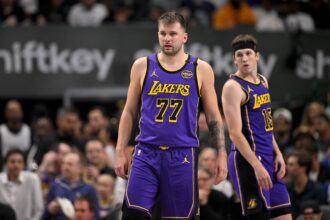
The fit becomes even more problematic alongside Luka Doncic, no matter what the Lakers say. Luka is a transcendent offensive talent, but defense has never been his calling card. Pairing two below-average perimeter defenders in a backcourt dramatically lowers a team’s defensive ceiling.
Championships are won with balance, and committing max money to a player who can be targeted defensively creates major concerns.
2. Inconsistent Playoff Production
Regular-season basketball and playoff basketball are completely different. That’s where max players are supposed to separate themselves from high-end role players.
Reaves has had impressive postseason moments throughout his career, but inconsistency has become a recurring issue. Looking over his four playoff runs, his efficiency dropped dramatically during recent playoff runs.
He has averaged 17.3 PPG, 4.4 RPG, and 4.5 APG on 44.4% FG, 35.7% 3-PT FG, and 88.1% FT. This latest postseason run, Reaves averaged 20.0 PPG, 4.0 RPG, and 5.8 APG but on 40.7% FG, 25.7% 3-PT FG, and had 4.3 turnovers per game. Overall, those aren’t max-caliber numbers.
Generally, when jump shots stop falling, elite stars find other ways to dominate. So far, Reaves hasn’t possessed those traits consistently enough, and he has looked a little loose with the ball as well.
For a player seeking superstar money, disappearing offensively during important playoff moments raises legitimate concerns.
3. Durability Concerns
Availability matters. Reaves has dealt with numerous injuries over the last several seasons that should give the Lakers pause before offering a long-term max commitment.
Over five seasons, the 28-year-old has played at least 65 games twice. This past season, he suited up for only 51 games. As he gets nearer to the 30s, that isn’t going to get any better. The Lakers need their Luka Doncic sidekick to be available at all times, and Reaves hasn’t been the most durable.
Calf strains, hamstring tightness, ankle issues, and oblique injuries have interrupted stretches of his career. While none have necessarily been catastrophic, it raises some concerns. That is natural.
A five-year commitment worth over $240 million requires confidence that a player can withstand the physical demands of deep playoff runs year after year. Reaves has proven he can play through pain and compete at a high level, but durability questions cannot linger in a critical year.
4. How High His Ceiling Is
One of the most remarkable aspects of Reaves’ story is how much he has improved. Undrafted players aren’t supposed to become borderline All-Stars.
However, at this point in his career, Reaves may already be close to the best version of himself.
He isn’t an above-the-rim athlete capable of generating easy offense when defenses tighten up, so it might be tough for him in certain matchups. Reaves averaged 23.3 PPG, 4.7 RPG, and 5.5 APG on 49.0% shooting and 36.0% from three in the regular season. Those are excellent numbers, but the dip in the playoffs (20.0 PPG, 4.0 RPG, 5.8 APG on 40.7% FG, 25.7% 3-Pt FG) shows where his limits might lie.
Teams are betting on another level. It’s fair to wonder whether Reaves has another level physically. If this is already close to who he is, and that’s a very good player, then paying him like a perennial superstar becomes much more difficult to justify.
5. A Max Contract Limits Roster Flexibility
Perhaps the strongest argument against paying Reaves a max contract has nothing to do with his talent. It has everything to do with team building.
The new collective bargaining agreement punishes teams that spend irresponsibly. Once franchises move above the second apron, roster-building flexibility disappears.
Luka Doncic is already expected to command enormous money moving forward. If the Lakers choose to retain LeBron James or replace him with another star, paying Reaves between $45 million and $50 million annually could severely limit their ability to build a championship-caliber supporting cast.
A contract in the $25-$30 million range feels much closer to his actual value and would allow Los Angeles to maintain flexibility moving forward. The problem is, Reaves wants to get paid, and the Lakers need to see if that’s worth it.
6. He Relies Heavily On Drawing Fouls
Reaves deserves credit for mastering one of basketball’s best skills in the modern era: getting to the free-throw line. He has impeccable timing and loves getting the whistles that were only offered to the highest level of superstars in previous eras.
This past season, Reaves attempted 7.3 free throws per game, making 6.3 of them, a significant jump from last season (4.4 FTM on 5.0 FTA). Reaves has even been called out for flopping a little too much, but that’s part of the game right now.
However, relying on getting fouls to score won’t work in the playoffs, even in this era. Slight contact that produces whistles in January often gets ignored in May and June. When those calls disappear, Reaves will struggle.
Much of his offensive value stems from manipulating defenders into contact and capitalizing at the line. For a max player expected to carry an offense under playoff pressure, that is an issue.
Still, Austin Reaves is exactly the type of player championship teams need. That means the Lakers should absolutely want Austin Reaves back. They just shouldn’t want him back at any price.