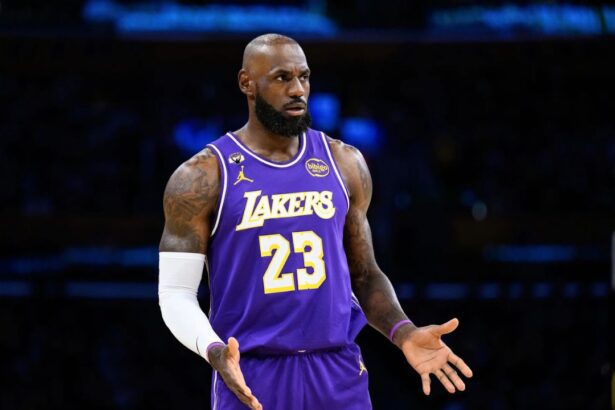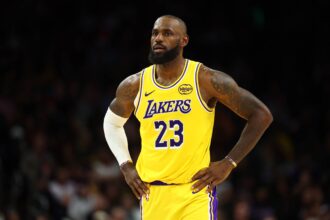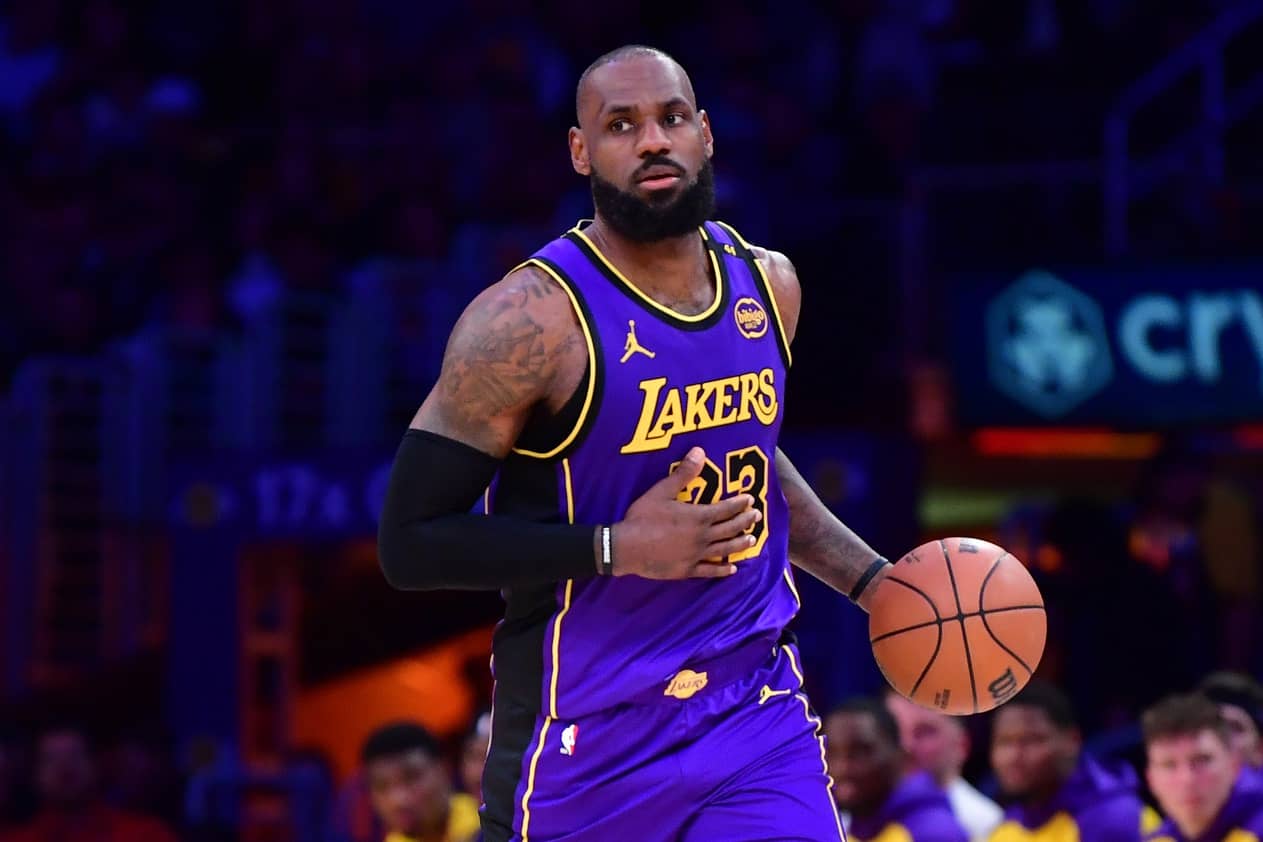
LeBron James has built a career on consistency. Now there is a stat that puts that consistency into perspective.
Through his first 806 NBA games, LeBron averaged 27.8 points, 7.4 rebounds, and 6.9 assists. He shot 48.1% from the field and 32.8% from three. The King also won four MVP awards, two championships, and two Finals MVPs, made nine All-Star teams, and nine All-NBA teams. LeBron also earned five All-Defensive First Team selections and won a scoring title, along with two Olympic gold medals.
Now look at his last 806 games.
LeBron has averaged 26.5 points, 8.1 rebounds, and 8.0 assists. He is shooting 52.3% from the field and 35.4% from three. In that span, he added two more championships and two more Finals MVPs. He made 14 All-Star teams and 13 All-NBA teams. He also led the league in assists, won an NBA Cup, earned another Olympic gold medal, and was named Olympic MVP.
The numbers are almost identical. The impact is just as strong.
That is the story.
Most players decline after their first decade, but that wasn’t the case for LeBron. The Akron Hammer evolved. He was an explosive scorer and elite defender. LeBron attacked the rim, played above the rim, and overwhelmed teams with athleticism.
That version dominated with the Cleveland Cavaliers and later became even more complete with the Miami Heat. In Miami, he turned into a two-way force. He won his first two titles there and reached his peak as a defender and finisher.
The second half of his career tells a different story.
LeBron became more of a playmaker. His scoring dipped slightly, but his efficiency improved. His three-point shooting improved, rebounding and assists increased. He controlled games with pace and decision-making instead of pure athleticism.
That shift started late in Miami, peaked during his return to Cleveland, and carried into his time with the Los Angeles Lakers.
In Cleveland, he delivered one of the most important titles in NBA history in 2016. He led a 3-1 comeback and gave the franchise its first championship in 52 years. That alone defines his second phase.
In Los Angeles, he adjusted again. He won another title in 2020. Now, in Year 23, he has taken on a different role. He’s now the third option behind Luka Doncic and Austin Reaves. LeBron picks his spots but still produces at an elite level.
This season, he is averaging 21.1 points, 5.8 rebounds, and 6.8 assists while shooting 51.4% from the field. Those are elite numbers for any player. For someone in his 23rd season, they are unmatched.
He also recently passed Robert Parish for the most games played in NBA history. Add that to his all-time scoring record, and the resume becomes overwhelming.
The key point is simple.
LeBron did not just last. He stayed dominant. The first 806 games built the foundation. The last 806 games proved the longevity. Both halves look different on tape, but the production holds. That is what separates him.