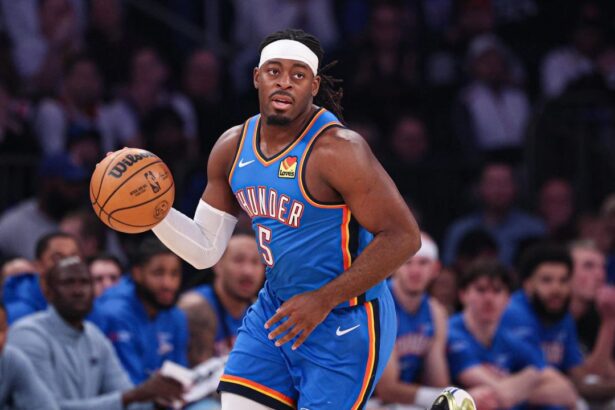
The Oklahoma City Thunder didn’t just start hot, they started “this might be the best regular-season team ever” hot. They opened the year 24-1, and the craziest part is that it didn’t feel fluky, it felt repeatable.
They were smashing teams with defense, forcing chaos, and turning games into track meets where they got extra possessions and cashed them in.
But the run flipped fast. Since that 24-1 start, the Thunder have played .500 ball over the next 12 games, going 6-6.
They’re still 30-7 and sitting on elite profile stats like a 120.0 offensive rating (5th), a 106.5 defensive rating (1st), and a ridiculous +13.5 net rating (1st).
That’s the funny thing, even “bad Thunder” is still basically the best team in the league on paper.
So what’s actually happening? The real issue isn’t effort or “they stopped caring.” It’s that the Thunder’s historic start was fueled by extreme advantages that are hard to sustain forever: they were creating a ton of live-ball chaos, getting out in transition nonstop, and hitting enough threes to make every mistake by the opponent feel fatal.
Let’s break it down properly.
The Thunder’s 24-1 Start Was Built On A Blueprint
If you want the cleanest explanation for why the Thunder looked historic early, it’s this: they were winning the possession battle by a mile, then stacking efficiency on top of it.
After the first month, they had the best point differential through 25 games in NBA history at +17.5. That’s not “good,” that’s “you’re playing a different sport” good.
How do you get there?
First, they were forcing turnovers like it was their job description. The Thunder have been around the top of the league in creating takeaways, with numbers like 18.1 turnovers forced per game and 24.8 points off turnovers per game showing up in their game notes. That combo is basically a cheat code because it creates free points without having to run offense against a set defense.
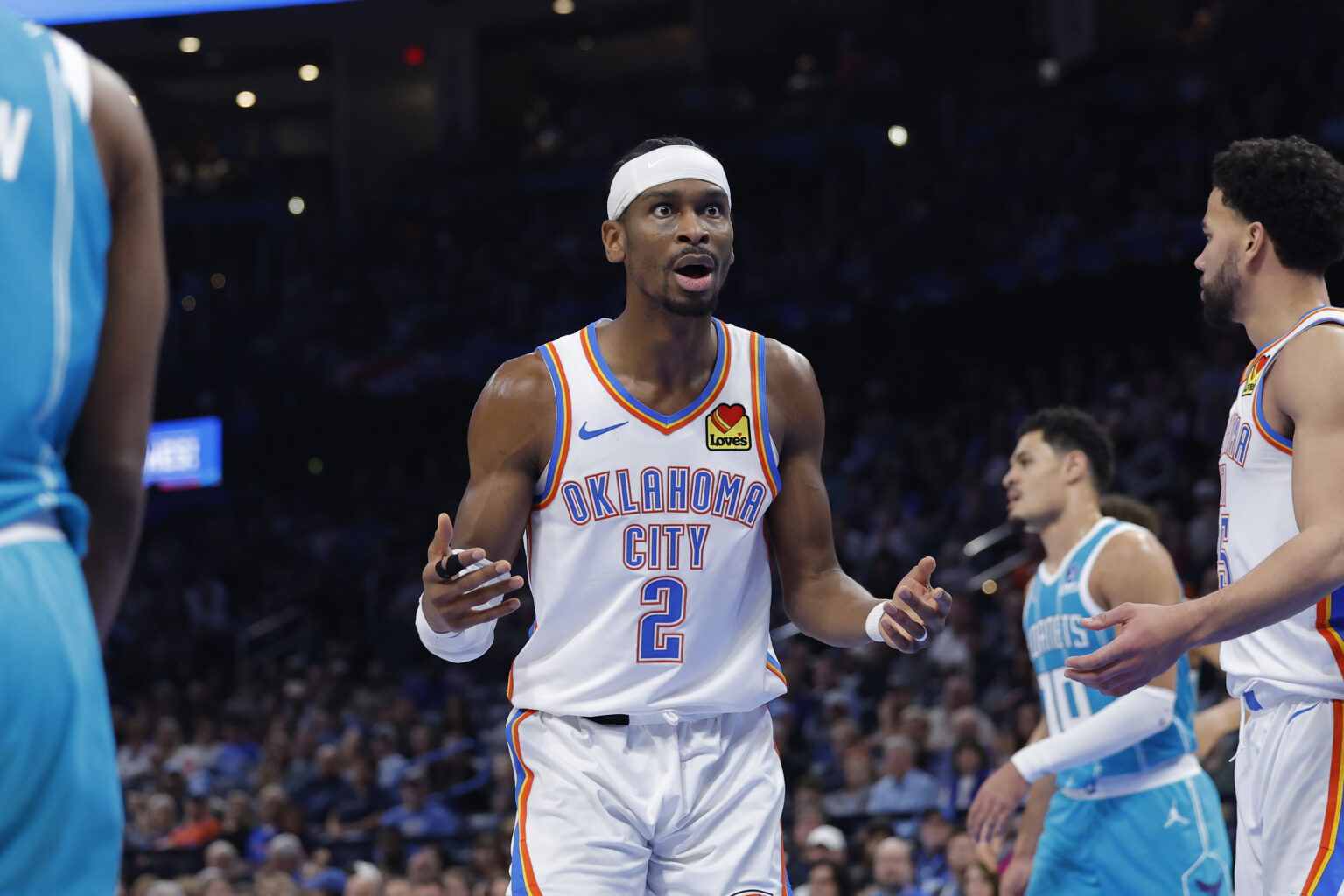
Second, Shai Gilgeous-Alexander has been playing like a “fine, I’ll just be the best scorer in the league” guy. He’s at 32.1 points, 4.7 rebounds, and 6.4 assists this season, and the efficiency is cartoonish: 56.3% from the field, 42.0% from three, and 68.1% true shooting. If your superstar is scoring 32 a night on that kind of efficiency, you can survive a lot of ugly possessions.
Third, the Thunder weren’t just defending, they were turning defense into offense instantly. It wasn’t “get a stop and walk it up,” it was “steal, sprint, corner three, goodnight.” Even their hustle profile shows why this team is such a nightmare to play cleanly, they’ve been sitting at the top of the league in deflections per game (22.9). Deflections are basically a proxy for how annoying and disruptive your defense is possession-to-possession.
That’s the DNA of a 24-1 start. It wasn’t fragile, it was violent.
And then the league adjusted, the schedule tightened, the shots got a little colder, and the Thunder stopped winning every little battle.
The 12 Games That Flipped The Script
This 12-game sample is exactly where the Thunder stopped feeling invincible, not because they fell off a cliff, but because the games stopped handing them easy answers.
Over these 12, they still went 6-6 and still scored 116.3 points per game, but the shooting dip is loud: just 33.0% from three on 36.9 attempts per night. And the whistle started to matter more too, with 19.7 fouls per game in this stretch.
December 13 vs. Spurs (L 109-111) was the first “uh-oh” game. The Thunder got 109 points, but they shot 24.3% from three (9-for-37) and finished with 15 turnovers. That’s the exact combo that kills their spacing and their pace. When the threes don’t fall, the gaps shrink. When the turnovers creep up, the game slows into a half-court grind, and the Thunder stop playing their favorite version of basketball.
December 18 vs. Clippers (W 122-101) was the reminder of what the ceiling looks like even in this “messy” stretch. They won by 21 while piling up 18 steals, hit 36.1% from three, and kept it clean with 9 turnovers. That’s the Thunder blueprint in one night: pressure you into mistakes, turn those mistakes into instant offense, and suddenly the game ends early.
December 19 at Timberwolves (L 107-112) felt like a different sport. The Thunder shot 37.0% from the field, 28.2% from three, and got dragged into a whistle-heavy, physical game with 30 fouls. That matters because it breaks rhythm. You can’t string stops together if you’re constantly sending guys to the line or playing tentative defense to avoid the next call. Even though they went 28-for-30 at the line, the shot-making just wasn’t there.
December 22 vs. Grizzlies (W 119-103) was the “we’re still nasty” defensive flex. They hit 15 threes at 38.5%, stole the ball 14 times, and controlled the game without needing some perfect Shai takeover night.
December 23 at Spurs (L 110-130) was the true warning flare. Here’s why it’s scary: the Thunder actually shot well, 54.1% from the field and 40.0% from three. And they still got smoked. That’s what a matchup loss looks like. They only had 36 rebounds, gave themselves zero margin for error, and the Spurs turned it into a track meet on their terms, not the Thunder’s. When you’re scoring 110 on strong shooting and you still lose by 20, that’s not “shots didn’t fall,” that’s structure getting exposed.
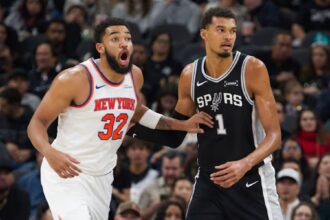
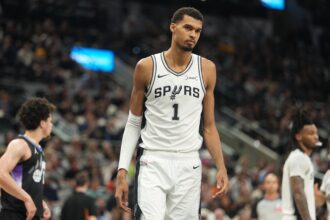
December 25 vs. Spurs (L 102-117) was the opposite problem. This time the Thunder protected the ball, only 7 turnovers, but they shot 38.9% overall and just 25.0% from three (11-for-44). That’s a pure spacing death. It’s also why the Spurs games keep popping up in this stretch. They’re comfortable guarding high to contest threes and living with the results, because they have Victor Wembanyama, who will erase any shot at the rim if the defense overshoots the closeouts.
December 28 vs. 76ers (W 129-104) was the “reset” game. 57.5% from the field, 27 assists, and 129 points. That’s the Thunder when the offense flows and the defense creates runway.
December 29 vs. Hawks (W 140-129) was the funhouse mirror version of the Thunder. They scored 140 on 54.1% shooting and 37.5% from three, but they also gave up 129. That’s how you know this stretch isn’t only offense.
December 31 vs. Trail Blazers (W 124-95) looked like the Thunder reasserting control. The three-point percentage wasn’t crazy, 32.7% on massive volume (16-for-49), but the defense was ridiculous: 15 steals and 10 blocks. That’s not normal. That’s the Thunder turning the game into a turnover-and-rim-protection clinic.
January 2 at Warriors (W 131-94) was the peak “we’re fine” response. They shot 52.2% overall, 42.1% from three, and racked up 34 assists.
January 4 at Suns (L 105-108) is the most instructive loss of the whole run. The Thunder didn’t implode. They didn’t turn it over much, only 9 turnovers. They just got crushed in the part of the game that ends possessions. They grabbed only 29 total rebounds and only 2 offensive boards. You can’t win close road games when you’re giving yourself two extra chances all night and letting the opponent breathe on every miss.
January 5 vs. Hornets (L 97-124) was the outlier disaster. The Thunder shot 36.6% from the field and 28.2% from three, and the game completely broke when the Hornets started bombing threes at 51.4% while the Thunder coughed it up 21 times. That’s how you get blown out at home even when you’re supposed to be the bully every night: cold shooting plus live-ball giveaways equals free points the other way, and the night ends fast.
So yeah, this isn’t “they went 6-6, shrug.” It’s showing you the exact pressure points: the three-point dip that shrinks the floor, the foul-heavy nights that disrupt the defense, and the specific matchups that can beat the Thunder even when they shoot well.
The Possession Battle Is Slipping
This is the real story with the Thunder; it’s not “they turn it over a lot now.” It’s that their best version is built on stacking hidden advantages: they steal extra possessions with ball pressure, then they cash those possessions as transition points or free throws before the opponent can even get set.
On the season, the Thunder still profile like a possession bully. They force 18.1 opponent turnovers per game while committing 12.5 themselves, that’s a massive differential edge before you even talk shot-making. And when they do get to the line, they convert, they’re at 83.2% as a team, which turns those chaotic possessions into clean points.
So what’s slipping in this 6-6 stretch? The margins, not the identity. The Thunder haven’t suddenly become careless with the ball overall. The bigger change is that opponents are doing a better job of playing “boring,” protecting the ball, getting into their offense earlier, and forcing the Thunder to defend longer possessions instead of living off deflections into runouts. When that happens, the Thunder lose their easiest points.
The other leak is finishing possessions on the glass, especially in tight games. Look at the Suns loss, 108-105. The Thunder only grabbed 29 rebounds, while the Suns finished with 49 boards. The Thunder only had 9 turnovers, so this wasn’t about sloppiness. They simply lost the extra-shot battle, and in a three-point game, that’s fatal.
That’s why the “struggling” narrative even exists. When you don’t win by stealing possessions through turnovers and you don’t steal them back on the offensive glass, you’re living on shot-making alone. And if your three-point shooting is at 33.0% recently, those games stop feeling easy fast.
The Shooting Dip Is Making Everything Feel Crowded
The Thunder are still a top-10 three-point team on the season at 36.5% (9th), but the last 12 games tell you the mini-problem: 33.0% from three.
That sounds small until you understand what it does to their spacing.
The Thunder offense is built around:
- spread floor
- Shai getting downhill
- Jalen Williams attacking tilted defenses
- bigs screening and slipping into space
- shooters punishing help
When the shooters are hot, defenders stay hugged. When the shooters cool off, defenses sit in the gaps and crowd the paint.
That’s when you start seeing the “Thunder can’t score in the half-court” conversations pop up. It’s not that they can’t score, it’s that the easy versions of their offense disappear. And once you remove easy points, you’re forcing the Thunder to win with execution every single trip.
Even the Hornets game is the nightmare version of this. Thunder shot 36.6% from the field and 28.2% from three in a 97-124 loss. That’s not just missing, that’s missing so hard your defense never gets set because you’re always taking the ball out of the net or scrambling after long rebounds.
The Spurs Problem Is Real And Dangerous
If you’re looking for the “this is what a playoff series might feel like” warning sign, it’s the Spurs games.
The Thunder dropped three games to the Spurs in this stretch: 109-111, 110-130, 102-117.
That’s not a coincidence. That’s a matchup.
The Spurs force you into half-court possessions, and they don’t let you live off chaos. They’re also comfortable making games ugly, physical, and deliberate. That matters because the Thunder’s defense thrives on speed, pressure, and opponents making rushed decisions.
When a team doesn’t rush, the Thunder have to win with pure half-court shot creation. And yes, Shai can do it. He’s basically an automatic bucket this season.
But if your entire plan becomes “Shai saves us again,” you’re playing a thinner game than the Thunder want to play.
This is where roster construction comes in, too. The Thunder are not a giant rebounding team. On the stat sheet, they’re 18th in rebounds per game at 43.9. So when you’re not forcing turnovers and you’re not splashing threes, you don’t have that “fine, we’ll just grab 15 offensive boards” counterpunch.
That’s why the Spurs losses sting. They show a real route to making the Thunder look human.
The Thunder Need Clean Execution, Not Hero Ball
Shai is doing his job. If anything, he’s doing too much of it. Again, 32.1 points on 68.1% true shooting is superstar-grade production.
The real question is what happens when teams load up on him, and the Thunder need the rest of the machine to punish that extra attention.
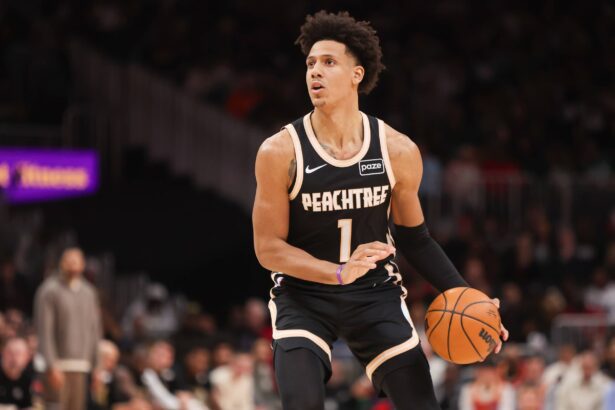
Jalen Williams is the biggest swing piece here, because he’s the guy who can punish a defense that overcommits to Shai without needing a play call. He’s at 22.8 points, 5.5 rebounds, and 4.7 assists, shooting 51.4% from the field. That’s an All-Star level secondary engine.
Chet Holmgren is the other one, because he changes what the Thunder can run. He’s at 18.4 points and 8.3 rebounds with 2.6 blocks, and he’s hitting 36.6% from three. That shooting matters because it’s what keeps the floor spaced when the opponent wants to pack the paint.
Then you’ve got the role guys who basically decide whether the Thunder look like a video game or a grind:
- Isaiah Joe: 10.3 points per game on 41.7% from three
- Aaron Wiggins: 10.3 points per game on 39.6% from three
- Cason Wallace: 7.7 points, 2.2 assists, and 2.1 steals per game
- Isaiah Hartenstein: 11.2 points, 10.4 rebounds, 3.0 assists, shooting 64.4%
When those guys are hitting shots, defending without fouling, and keeping possessions clean, the Thunder feel inevitable.
When they aren’t, you get the last 12 games: still good, still dangerous, but suddenly beatable on any night when the defense has to scramble on multiple possessions.
The Fix Is Not Panic, It’s Maturity
Here’s where I’m planting my flag: the Thunder aren’t “struggling so bad,” they’re going through the exact midseason correction that most historically hot teams eventually hit.
But the losses do matter, because they’re teaching them what playoff basketball is going to demand.
If the Thunder want to look like the Thunder again, the adjustment list is pretty clear:
They need to cut the live-ball turnovers. Not all turnovers, live-ball ones. The ones that give up runouts and easy points. You can survive a dead-ball turnover. You can’t survive gifting teams layups in transition when your offense is already in a shooting dip.
They need to manufacture “easy threes” again. Not desperation late-clock threes, early rhythm threes. More actions that force help and generate corner looks for Joe and Wiggins, because those two are the difference between “tight game” and “blowout” when they’re rolling.
They should lean into Hartenstein as a stabilizer. A center who rebounds, screens, and makes the simple pass matters when your guards are turning it over. His 10.4 rebounds and 3.0 assists don’t just show production, they show structure.
And they have to treat the Spurs matchup as a homework assignment. Because if one opponent can repeatedly drag you into mud and beat you there, that’s the exact type of opponent you see in the playoffs.
My read on the Thunder right now is simple: they’re still the scariest team in the league, but the last 12 games exposed the one truth about them, they have to win possessions to look unstoppable.
When they don’t create opponent turnovers as much, they’re still great, but they’re not immune to bad shooting nights, ugly turnovers, and a team that’s willing to turn the game into a grind.
Final Thoughts
The Thunder’s “problem” isn’t effort, and it isn’t Shai. It’s that opponents finally stopped playing the Thunder’s game. Early on, teams fed them chaos. Lazy passes, soft ball pressure, slow floor balance, bad spacing. The Thunder punished all of it. Now teams are coming in with a very specific plan: slow the pace, keep two back in transition, protect the ball, and force the Thunder to win in the half-court against a loaded paint.
You can see where it gets sticky. Defenses are shrinking the floor on Shai. They’re stunting hard from the nail, tagging the roller early, and living with “prove it” threes. When the Thunder miss a couple, the defense gets even more aggressive about sitting in gaps. That’s when Shai’s drives turn into kick-outs that aren’t automatic anymore, and suddenly every possession feels like you’re grinding for a decent look instead of generating a great one.
The first adjustment is simple: create easier advantages before the defense is set. More early drag screens in transition, more empty-corner pick-and-roll, and more “pistol” action to flow straight into a second-side attack.
The goal is to make the defense rotate twice, not once. One rotation is easy to cover. Two rotations is where you get the corner three, the dunk, or the short-roll playmaking.
The second adjustment is using Chet and Hartenstein as decision hubs, not just screen-and-dive guys. Run more Delay actions, more DHO into a re-screen, and more Spain pick-and-roll to force communication breakdowns.
If teams are loading up on Shai, punish them with the short roll. Put Chet at the elbow, run split cuts, make help defenders choose between tagging and giving up a layup cut. That’s how you turn “they’re sitting in gaps” into “they’re scrambling.”
The third adjustment is lineup and role clarity. When the game turns into a half-court chess match, you need a second handler initiating real offense, not just catching the ball and reacting late. Give Jalen Williams more reps as the first option in certain stretches, run inverted pick-and-roll with Shai screening to force switches, and hunt the weakest defender with purpose instead of drifting into late-clock bailouts.
Defensively, it’s about controlling the terms. If teams want to slow it down, the Thunder can’t foul and they can’t lose the glass. That’s when the pressure defense stops creating momentum and starts creating free throws and second chances for the opponent. Mix coverages more, show a blitz once or twice to change the read, ICE side pick-and-rolls to keep the ball out of the middle, and pre-switch guards out of the post early before the mismatch turns into a collapse.
The Thunder didn’t “fall off.” They ran into the part of the season where everyone treats you like a playoff opponent. The fix is execution, not panic. Win the possession details without needing chaos, generate second-side advantages on purpose, and make the half-court offense feel inevitable again. That’s the jump from a historic start to a team that actually finishes the job.