Christmas Day games tend to reveal truths. There’s nowhere to hide, no load management, no empty gym energy to lean on. On this stage, the San Antonio Spurs might have outplayed the Oklahoma City Thunder and also exposed them. From the opening quarter through the final horn, San Antonio looked sharper, more composed, and far more comfortable dictating how the game would be played.
The final score says 117-102, but the gap felt wider than that. The Spurs led for nearly 80% of the game, built a lead as large as 17, and never let Oklahoma City find sustained momentum. This wasn’t about one hot stretch or a lucky shooting night. It was a methodical win rooted in execution, efficiency, and control.
Here are the five biggest reasons San Antonio walked away with a convincing Christmas Day victory.
1. De’Aaron Fox Completely Controlled The Game
When a guard shoots 12-of-19 from the floor, hits 3-of-4 from deep, and turns the ball over just once in 33 minutes, that’s not just scoring – that’s command. De’Aaron Fox finished with 29 points, and nearly every basket felt timely. Each Thunder run was met with a Fox response, whether it was a straight-line drive or a pull-up that quieted the floor.
Oklahoma City tried multiple looks, but none slowed him. Fox scored at all three levels, added a steal and a block, and consistently attacked mismatches before the Thunder could rotate. San Antonio outscored Oklahoma City in fast-break points 17-7, and Fox was the engine behind that advantage, turning defensive stops into immediate pressure.
Beyond the numbers, Fox dictated tempo. The Spurs never looked rushed, even when OKC tried to speed the game up. That control showed up in the scoreboard: San Antonio shot 54% overall while Oklahoma City finished at just 39%. When your lead guard plays that efficiently and decisively, everything else falls into place.
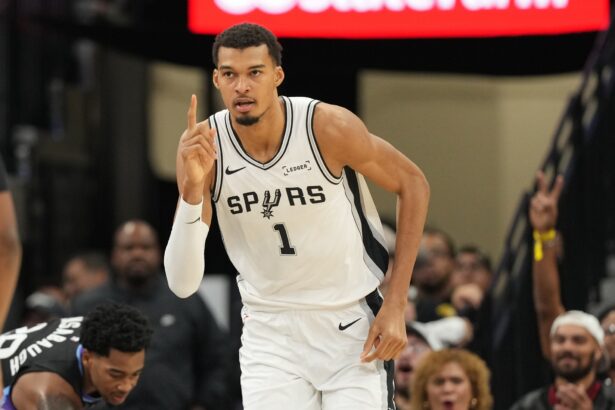
2. Victor Wembanyama Tilted The Floor On Both Ends
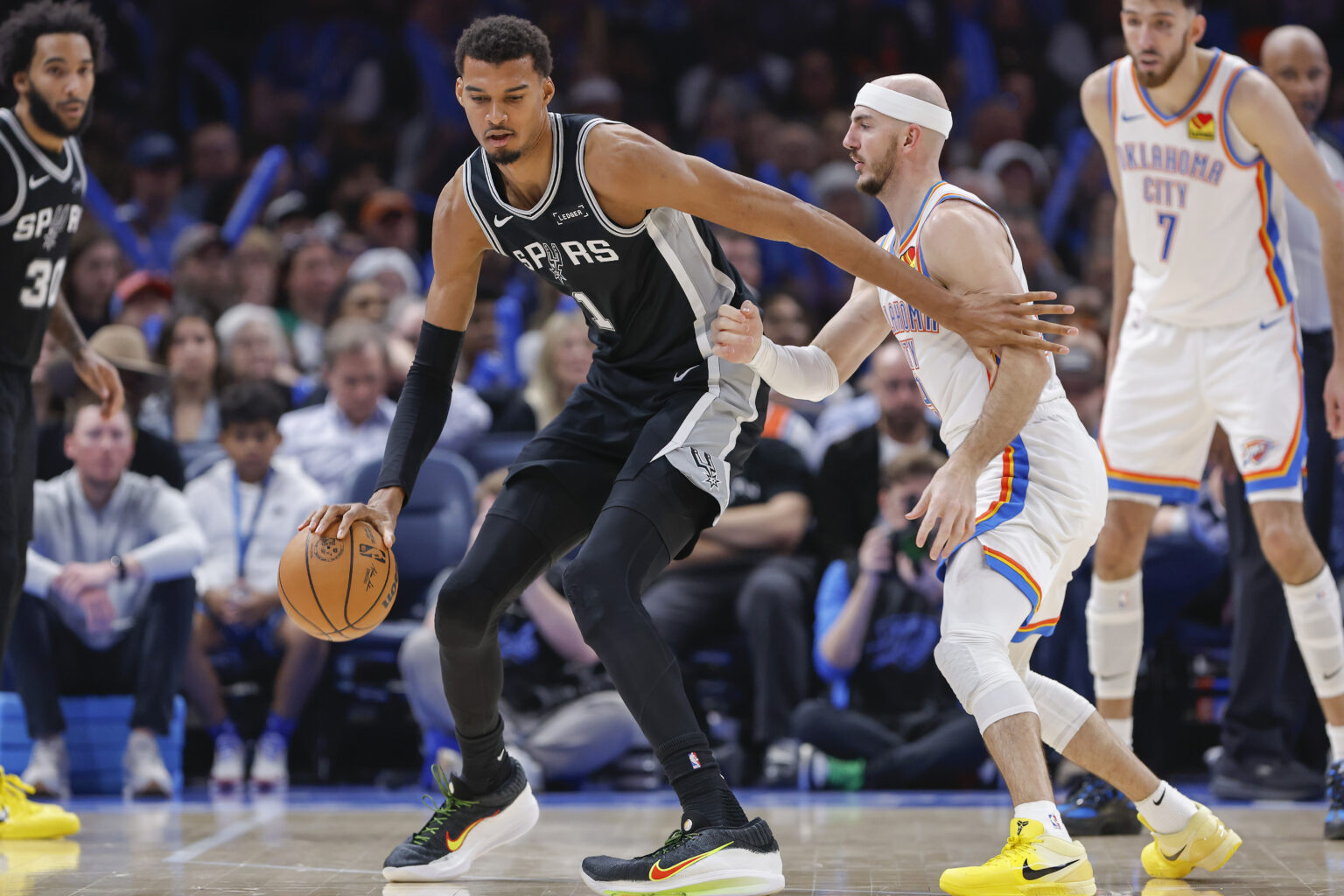
Victor Wembanyama didn’t need a massive scoring total to dominate the game. His 19 points came efficiently – 6-of-12 shooting, 2-of-3 from three, and a perfect 5-of-5 at the free-throw line – but his real impact was felt defensively and on the glass. He pulled down 11 rebounds and altered countless shots that won’t show up in the box score.
Oklahoma City managed just 46 points in the paint compared to San Antonio’s 52, and much of that difference came from Wembanyama’s presence near the rim. Shai Gilgeous-Alexander, usually surgical inside, was held to 7-of-19 shooting. The Thunder shot just 25% from three, often settling for perimeter attempts when drives disappeared.
Spacing also shifted when Wembanyama stepped beyond the arc. His ability to hit threes forced Oklahoma City’s bigs away from the basket, opening lanes for Fox and Castle. San Antonio didn’t just use Wembanyama as a scorer – they used him as gravity, and the Thunder never solved the equation.
3. San Antonio Shot The Ball Exceptionally Well
The Spurs didn’t rely on volume shooting. They relied on quality. San Antonio finished the game shooting 45-of-84 from the field (54%), compared to Oklahoma City’s 37-of-95 (39%). That gap wasn’t accidental; it reflected shot selection, ball movement, and patience.
While both teams hit 11 three-pointers, the difference came in efficiency. The Spurs hit 38% from deep (11-29), while the Thunder struggled at 25% (11-44). Oklahoma City took 15 more shots overall, but still scored 15 fewer points. That’s what happens when one team generates clean looks and the other settles.
San Antonio also capitalized at the free-throw line, shooting 76% compared to Oklahoma City’s 68%. It wasn’t a massive edge, but in a game where momentum mattered, the Spurs converted when chances were there. Efficient offense turned into scoreboard separation.
4. The Spurs Won The Physical Battle On The Glass
Rebounding was supposed to favor Oklahoma City. Instead, San Antonio matched them step for step. The Spurs finished with 49 total rebounds to the Thunder’s 48, including a 39-32 edge on the defensive glass. That mattered, especially against a Thunder team that grabbed 16 offensive rebounds.
Despite giving up extra possessions, San Antonio limited the damage. Oklahoma City struggled to convert second chances efficiently, and the Spurs consistently closed possessions with defensive rebounds. Wembanyama’s 11 boards led the way, but Harrison Barnes and Keldon Johnson chipped in timely work inside.
San Antonio also limited fouling, committing just 16 fouls to OKC’s 18. Physicality didn’t turn into sloppiness, and that discipline helped keep Oklahoma City from living at the free-throw line or controlling tempo through whistles.
5. Oklahoma City Never Found Offensive Rhythm
This was one of the rougher offensive performances Oklahoma City has had this season, and the numbers tell the story. The Thunder shot under 40% from the field, turned the ball over seven times, and managed just 102 points despite taking 95 shots. That inefficiency bled into every quarter.
Shai Gilgeous-Alexander led the way with 22 points, but it came on high usage and modest efficiency. Jalen Williams shot 5-of-13. Chet Holmgren finished with just 10 points and missed both free throws. Outside of brief stretches, the Thunder never strung together stops and scores.
San Antonio led for 79% of the game and pushed the lead to 17 at its peak. That’s not luck – that’s sustained control. The Spurs defended with purpose, forced difficult decisions, and made Oklahoma City play uphill basketball for most of the afternoon.