The Houston Rockets host the Phoenix Suns at Toyota Center on Monday, January 5 (8:00 PM ET).
The Rockets come in 21-11 and fifth in the West, while the Suns are 21-14 and seventh. The Rockets have been ridiculous at home (10-2), and the Suns have been basically coin-flip on the road (9-9).
These teams are both walking in off emotional games. The Suns just stole one from the Thunder, 108-105, with Devin Booker drilling a game-winning three with 0.7 seconds left to cap an 18-point comeback.
The Rockets, meanwhile, dropped their last one 110-104 against the Mavericks.
This is also a real “prove it” spot because the Rockets already lead the season series 2-0. If the Suns want to stop the bleeding in this matchup, it has to start now.
Star-wise, Booker is doing his thing at 25.7 points, 4.2 rebounds, and 6.4 assists per game. His main running mate has turned into Dillon Brooks, who’s weirdly become a legit volume piece this year at 21.4 points, 3.1 rebounds, and 1.7 assists.
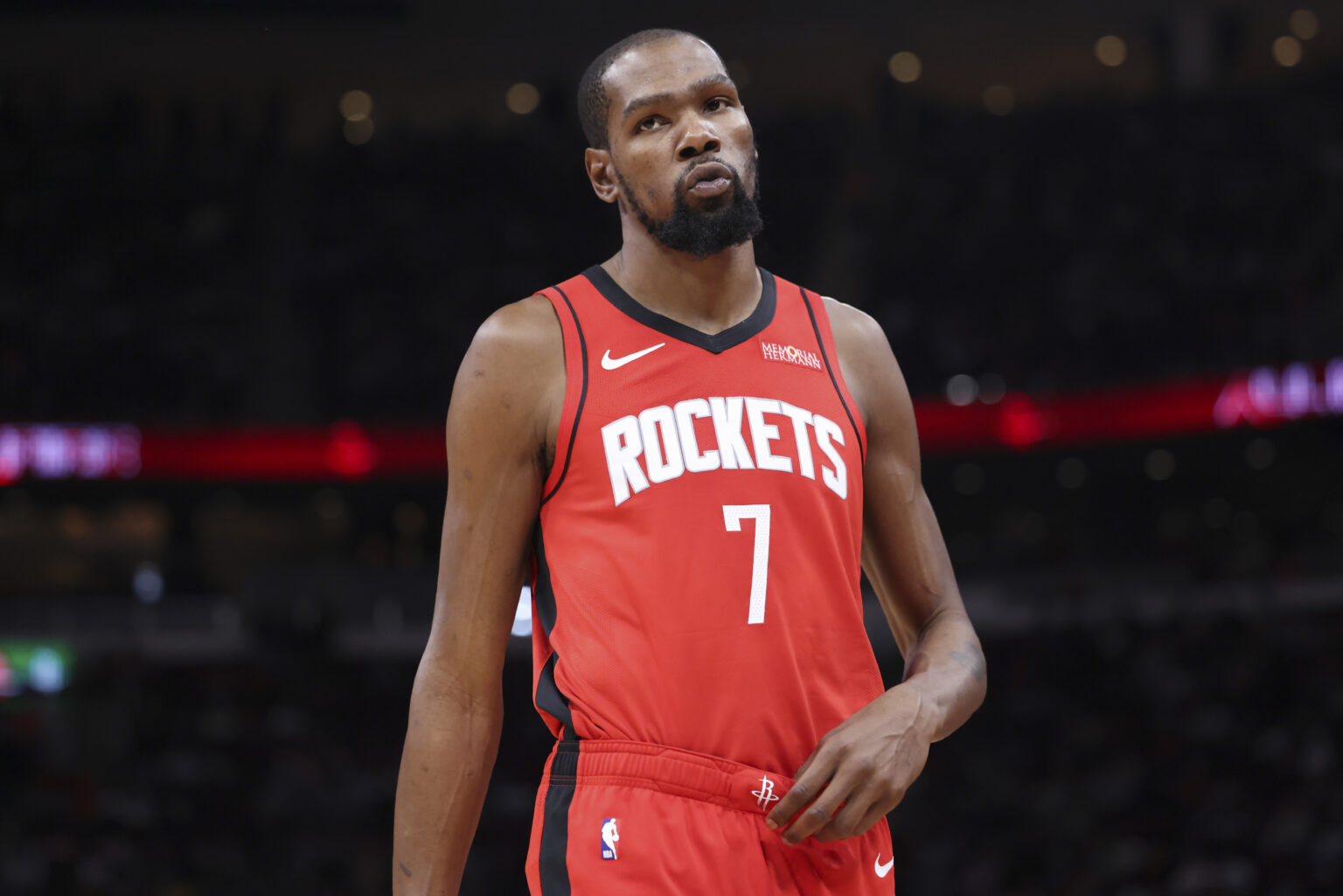
For the Rockets, Kevin Durant is still a cheat code at 25.7 points, 5.0 rebounds, and 4.6 assists on 52.3% from the field. And Amen Thompson has taken a real leap, putting up 18.0 points, 7.4 rebounds, and 5.2 assists.
The Suns still don’t have Jalen Green (hamstring), the big piece they got from the Rockets in the Durant deal, and the Rockets are missing Alperen Sengun (ankle), who’s been their engine at 21.8 points, 9.0 rebounds, and 6.5 assists.
Injury Report
Rockets
Alperen Sengun: Out (right ankle sprain)
Fred VanVleet: Out (right knee ACL repair)
Steven Adams: Questionable (right ankle sprain)
Suns
Jamaree Bouyea: Out (concussion protocol)
Jalen Green: Out (right hamstring strain)
Grayson Allen: Probable (right knee injury management)
Mark Williams: Probable (right knee injury management)
Jordan Goodwin: Available (jaw sprain, mask)
Why The Rockets Have The Advantage
The Rockets’ baseline is just nastier right now. They score 120.0 points per game, they allow only 111.4, and they shoot 49.0% from the field. That’s not “pretty offense,” that’s “we’re bigger, we’re faster, and we’re getting better shots than you.”
The first swing is the glass. The Rockets pull down 48.8 rebounds per game, best in this matchup by a mile, and they’ve built an identity around extra possessions. If they turn this into a rebounding and transition night, the Suns’ half-court rhythm gets choppy fast.
The second swing is the math. The Rockets hit 39.3% from three, and they’re good enough defensively that they don’t need a heater to win. If Durant gets to his elbow spots and the Rockets’ wings keep the Suns off the free-throw line, this can look like the first two meetings again.
And even without Sengun and VanVleet, the Rockets can still win minutes with size and pressure. They’ve got a 10-2 home record for a reason, they don’t give away games in that building.
Why The Suns Have The Advantage
The Suns’ path is simple: shot-making and spacing, then survive the possession war. They’re at 115.3 points per game, they shoot 46.6% from the field, and they can absolutely rip off a 10-0 run in two minutes when Booker gets downhill and the wings hit threes.
Also, the Suns are coming in feeling themselves. They just beat the Thunder, snapped an eight-game skid against them, and did it with a massive rebounding edge in that game plus a barrage of threes. That’s the exact emotional juice you want before walking into a tough road spot.
And here’s the matchup angle I actually like for them: the Rockets want to bully you, the Suns can counter by dragging bigs into space. If Mark Williams plays, his rim pressure helps. If Grayson Allen plays, his shooting bends the defense. If the Suns get the Rockets rotating, Brooks suddenly has lanes to attack instead of taking tough twos all night.
The problem is the margin. The Suns allow 113.2 points per game, and if they cough it up (15.6 turnovers per game), the Rockets will sprint straight into layups and corner threes.
X-Factors
Grayson Allen is the swing piece, giving the Suns 16.3 points, 2.7 rebounds, and 4.1 assists, and his shooting changes how aggressively the Rockets can load up on Booker. If Allen plays and hits early, the Suns’ spacing looks totally different, and the Rockets can’t just crowd the nail and dare the “other guys” to beat them.
Jordan Goodwin is pure chaos, and the Suns need that against a bigger team. He’s at 9.2 points, 4.6 rebounds, and 2.2 assists, but the real value is that he can pressure the ball and turn a slow possession into a scramble.
Mark Williams is the other key if he’s active. He’s averaging 12.7 points, 8.2 rebounds, and 1.1 assists while shooting 65.6% from the field, and that’s exactly the kind of interior efficiency the Suns need when the Rockets’ defense locks in.
For the Rockets, Reed Sheppard is the “break the game open” guy. He’s at 13.3 points, 2.8 rebounds, and 3.4 assists, and his job is simple: punish the Suns for sending extra help at Durant.
Tari Eason is the ugly-work X-factor. He’s putting up 12.1 points, 5.6 rebounds, and 1.4 assists, and this is the type of matchup where his physicality swings a quarter. If Sengun sits, the Rockets need somebody to win “effort possessions,” and Eason can do that with offensive boards and deflections that don’t show up as highlights.
And Jabari Smith Jr. is the matchup glue. He’s at 15.5 points, 6.9 rebounds, and 1.9 assists, and he’s the guy who can guard up a position, then stretch the floor on the other end. If he wins his minutes against the Suns’ forwards, the Rockets can survive the no-Sengun stretches without bleeding points in the paint.
Prediction
I’m taking the Rockets because the profile makes more sense: better defense, better rebounding, elite home record, and Durant gives them the cleanest “late-game shot” option in the building. The Suns can absolutely steal it if Booker gets hot and Allen plays, but I trust the Rockets to win the possession battle again.
Prediction: Rockets 118, Suns 111