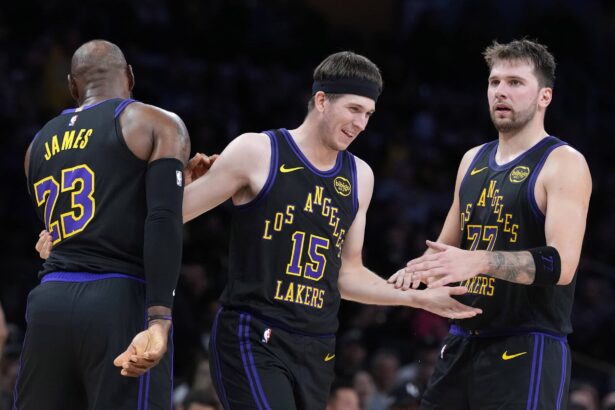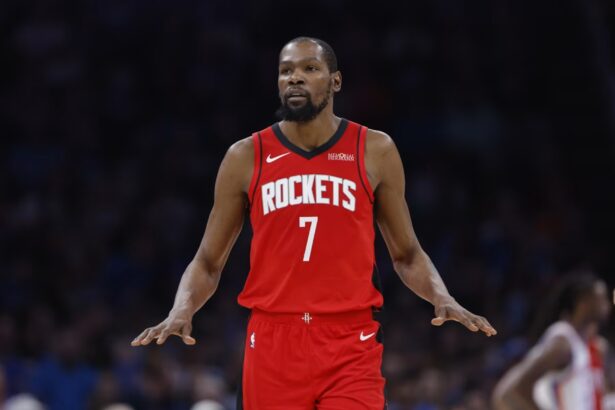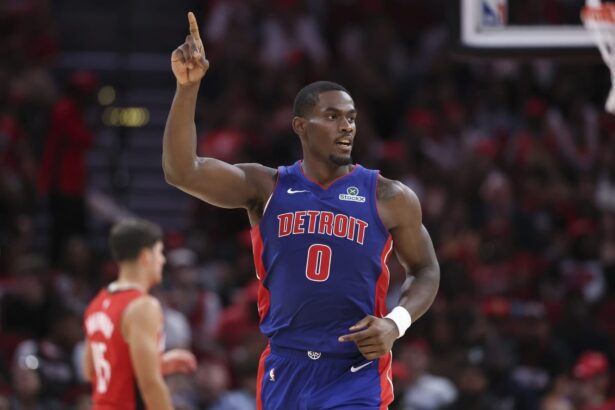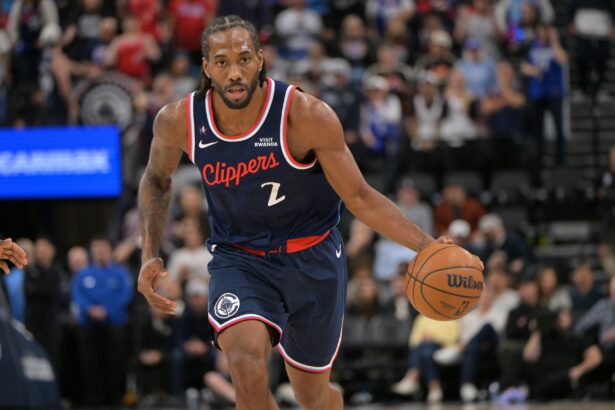
The 2026 trade season already started with a bang, because the Hawks shipped Trae Young to the Wizards, and that move basically lit the trade-talk fuse for everybody else. One deal like that changes the league’s mood fast, teams stop pretending, and the calls get a lot more direct.
Even with that chaos, the league vibe is still “don’t expect a total fireworks show.” The new apron rules have made front offices way more careful, and ESPN’s latest intel has execs basically saying this deadline might be calmer than fans want.
Shams has also been framing it like there’s plenty of smoke, but only a few actual fires that can turn into real deals.
The problem is those fires are loud. Ja Morant has legit buzz again, and rival execs expect the Grizzlies to want young players and picks if it gets real. Then you’ve got the Bucks sitting there as the pressure-cooker contender with an obvious need for a star swing, and ESPN’s own deadline file has people around the league basically saying they can get creative if they choose to go for it.
And on the West side, the Warriors-Kuminga situation is the clearest “this is heading somewhere.” Kuminga demanded a trade on the first day he became eligible, and ESPN has had the Warriors canvassing the league and exploring all options, which is front-office code for “we’re listening to everything.”
So yeah, maybe the league doesn’t expect 12 trades in 48 hours. But we’ve got enough real storylines to build a very believable set of predictions.
Let’s call our shot and map the deals that feel like they’re actually coming.
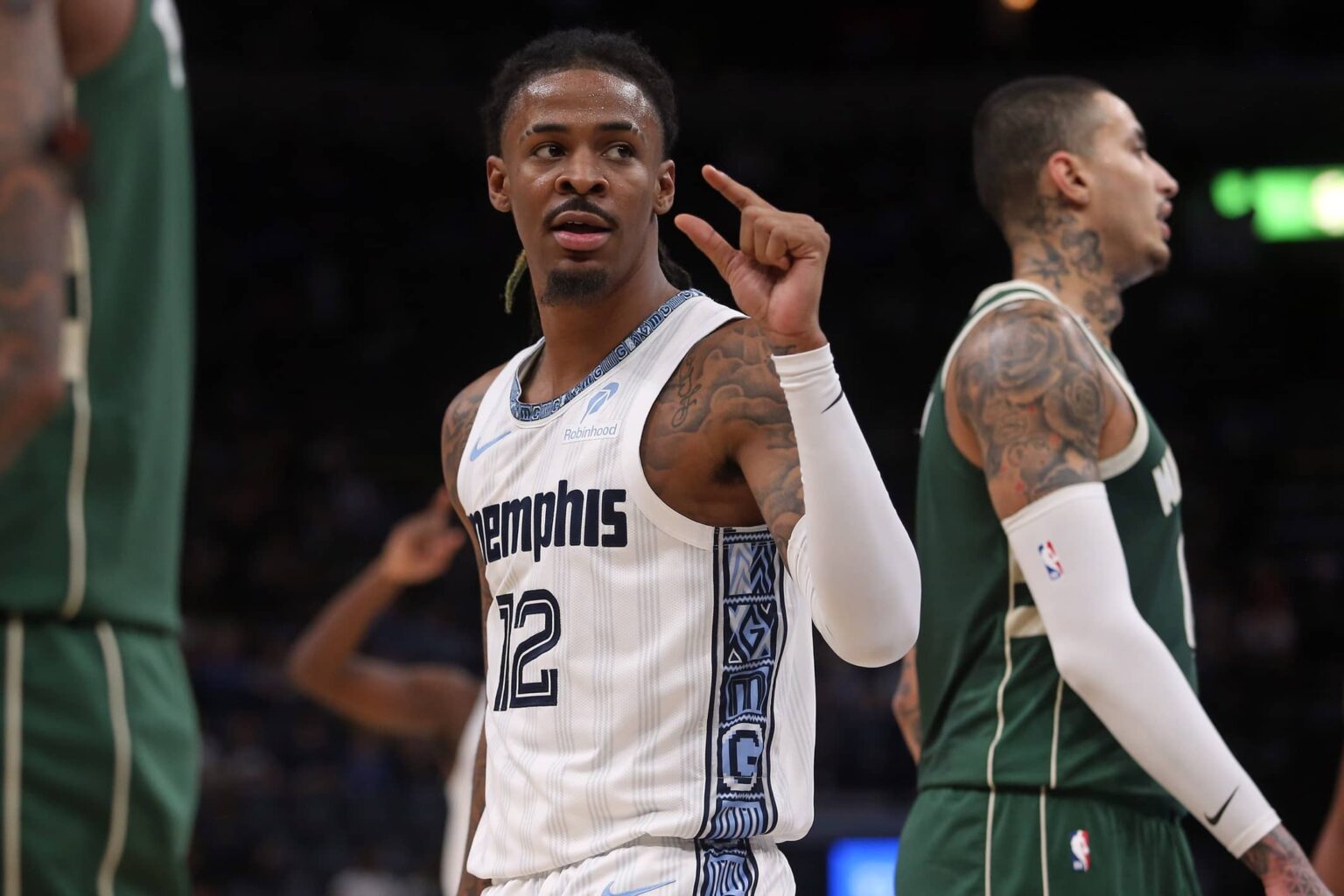
Ja Morant Becomes The Giannis Co-Star Swing For The Bucks
Milwaukee Bucks Receive: Ja Morant
Memphis Grizzlies Receive: Kyle Kuzma, Bobby Portis, Ryan Rollins, 2031 first-round pick (top-5 protected), 2030 second-round pick
This is the kind of blockbuster that only happens when two things are true at the same time: the Grizzlies actually open the door, and the Bucks finally admit a “normal” deadline isn’t saving them.
The Ja Morant buzz is real right now. ESPN reported the Grizzlies are entertaining trade offers for him ahead of Feb. 5, with multiple teams pursuing him, and rival execs expecting them to prioritize picks and young players.
The Miami Heat have been the loudest “destination” whisper because it’s the easiest storyline to sell, star wants Heat Culture, etc. Rachel Nichols even claimed that Morant may prefer the Heat. But the most important update is that the Heat angle is getting cooled off by league intel.
Tim Bontemps and Brian Windhorst have framed it like the Heat’s interest has been overstated because they’re focused on keeping long-term cap flexibility, especially eyeing 2027. That’s why the Bucks lane matters. The Bucks aren’t playing the “maybe in 2027” game. They’re playing the “right now” game.
And the Bucks actually have a clear “star-only” lever. ESPN and Shams Charania have both noted the Bucks have one first-round pick they can realistically trade, and rival executives believe they’ll only put it on the table for a star. Ja Morant is exactly the kind of name that makes them stop being cute.
This specific package also keeps the Bucks from stumbling into the usual mistake, tossing random pieces that don’t help the other side’s plans. Kyle Kuzma gives the Grizzlies a movable mid-tier contract and a real rotation forward, Bobby Portis gives them a big who can score and rebound, Ryan Rollins is the young guard chip, and the first is the actual “yes or no” asset.
Morant makes $39.4 million in 2025-26. Kuzma makes $22.4 million, Portis makes $13.4 million, and Rollins makes $4.0 million in 2025-26. That’s clean matching without needing fantasy filler.
My take: the Heat chatter will keep screaming, but the Bucks are the team built to actually overpay the way the Grizzlies reportedly want, picks plus young value, no patience required.
The Lakers Pivot From Big Names To The Perfect “Dirty Work” Guard
Los Angeles Lakers Receive: Keon Ellis
Sacramento Kings Receive: Dalton Knecht, 2032 second-round pick
This is the kind of deadline move that actually happens when Plan A and Plan B both get laughed off the phone.
The Lakers spent weeks living in the 3-and-D wing fantasy land. Herb Jones was the dream because he’s the exact type of defender every contender wants, but the Pelicans have basically signaled he isn’t going anywhere, which nukes that lane completely.
The other name that kept floating around was Andrew Wiggins, and that one hit the same wall, the Heat didn’t budge, and the price has been framed as too steep for what the Lakers are willing to actually pay.
So if you’re the Lakers and you still want to fix the same problem, perimeter defense that holds up in playoff minutes, you pivot to the “cheaper, cleaner, realistic” target. That’s Keon Ellis.
Ellis isn’t a headline scorer, he’s a role player who wins you possessions. This season he’s at 5.3 points, 1.3 rebounds, 0.6 assists, plus 1.1 steals in 17.3 minutes, and he’s shooting 35.7% from three.
That stat line looks small until you remember what the Lakers actually need. They don’t need another guy who wants 12 shots. They need a guard who can defend his tail off, fight over screens, and make life miserable for opposing ball-handlers, so the Lakers aren’t constantly bleeding at the point of attack.
Ellis is exactly that archetype, and because he doesn’t need the ball, he fits next to high-usage stars without messing up the offense.
Now the Kings’ side is where the negotiation gets spicy. The reporting around Ellis has been all over the place. One lane says the Kings have been trying to get a protected first for him. Another lane says evaluators are split and the realistic return could be much closer to “matching salary plus a couple seconds” because he’s on a small, expiring number.
That’s why a Dalton Knecht plus a second prediction isn’t insane. It’s basically the Lakers betting the Kings blink, especially if the Kings decide they’d rather take a young shooter swing than risk losing Ellis with nothing but vibes.
Knecht, for all the hype he had, has been used in the exact way front offices use rookies they’re willing to move, minutes come and go, and his role has felt like a constant audition. He’s at 5.1 points and 1.7 rebounds per game this season, and he’s at 31.1% from three, so the value argument is mostly “buy low on a shooter prospect.”
That’s still a sellable pitch for the Kings, because their roster needs cheap scoring upside and controllable contracts more than it needs another win-now specialist if they’re pivoting their direction.
Ellis makes $2.3 million and Knecht makes $4.0 million in 2025-26, so the salary math is painless, no five-contract circus, no weird cap gymnastics, just a clean swap that’s actually doable in a deadline market where teams keep trying to duck long-term money.
After the Herb Jones and Wiggins paths don’t materialize, the Lakers taking the Ellis route makes a ton of sense. It’s not glamorous, but it’s the exact kind of “one small move that changes a playoff series” play that smart contenders actually make.
The Kings Finally Pay The Kuminga Price
Sacramento Kings Receive: Jonathan Kuminga
Golden State Warriors Receive: Malik Monk, Dario Saric, 2028 first-round pick (top-10 protected)
If the Warriors are actually going to move Jonathan Kuminga, this is the Kings package that makes the most sense as a real prediction, because it solves the Warriors’ two biggest needs in one shot: they get an actual rotation scorer, and they get a first-rounder that keeps the whole thing from feeling like a forced sale.
The awkward part, and it’s been out there in the reporting, is that the Warriors have not been eager to take on Malik Monk’s long-term money in Kuminga talks, and that’s been one of the main sticking points with the Kings going back to the summer.
That’s why the first-round pick is the real pivot here. If the Kings want to win this bidding war, they can’t just offer “useful guys,” they have to add an asset that changes how the Warriors feel about swallowing the contract.
From the Warriors’ side, Monk is still a basketball fit even if the contract makes them hesitate. He’s the kind of guard who can juice a second unit, create shots late in the clock, and keep the offense afloat when the game turns into mud.
That matters because moving Kuminga is not just losing talent, it’s losing a chunk of athletic pressure and transition juice. Monk gives them a different kind of attack, more perimeter creation, more instant scoring, and he does it without needing the ball every possession like a true heliocentric star.
Kuminga’s on-court case is the reason the Kings would push this hard. Even in a choppy year, he’s at 11.8 points, 6.2 rebounds, and 2.6 assists per game, and his profile still screams “bigger role somewhere else.”
The Kings are basically betting that their environment gives him a clearer lane, more consistent usage, and a better chance to turn those flashes into a real every-night impact. And if they’re going to pay for upside, they might as well pay for a wing with size and pop, because that archetype always costs more than you want it to.
On the Warriors’ side, the pick protection is what makes this realistic. Top-10 protected that rolls is the type of compromise teams actually agree to, it lets the Kings protect themselves if things go totally off the rails, but it still gives the Warriors a real first that can be used again in a follow-up deal.
That’s the underrated angle here: the Warriors don’t have to treat this as the final move. They can treat it as an asset conversion, Kuminga into pick plus tradable contracts, then flip again.
Money-wise, this is clean enough to be believable. Kuminga makes $22.5 million in 2025-26. Monk makes $18.8 million and Saric makes $5.4 million. That’s why this deal works as a real deadline call.
It isn’t a six-team puzzle, it’s a straightforward swap where the Kings pay the “Monk tax” with a first-rounder, and the Warriors can tell themselves they didn’t just dump Kuminga, they cashed him into flexibility and an asset.
The Celtics Buy A Playoff Big Without Touching The Core
Boston Celtics Receive: Nikola Vucevic, Jevon Carter
Chicago Bulls Receive: Anfernee Simons, 2028 second-round pick, 2029 second-round pick
This is the exact kind of “deadline trade that feels boring until it wins you two playoff games” move. The Celtics don’t need another star. They need a center they can trust to hold the paint minutes, rebound, punish switches, and keep the offense from stalling when teams load up on the wings.
Nikola Vucevic fits that, and the reporting around him makes this feel like a real market play, not a random name.
Jake Fischer has been pushing the idea that Vucevic’s trade market has “enhanced appeal” compared to past years, and multiple outlets have been framing him as a legitimate name to monitor heading into the deadline.
The timing makes sense too, he’s on an expiring deal, and the Bulls have every reason to listen if the offer includes future value and clean flexibility.
On the court, Vucevic has been steady all season: 16.9 points, 9.2 rebounds, and 3.7 assists per game on 50.3% from the field. And he’s still capable of those “oh right, this guy can actually take over” nights, like the 35-point game where he hit the late winner against the Jazz.
For the Celtics, that matters because it gives them a frontcourt scoring option that doesn’t require a system overhaul. He can punish small lineups, he can run two-man stuff, and he can keep bench units functional when games get ugly.
Anfernee Simons is the pivot piece that makes the whole structure believable. The Celtics can treat him like an asset, not a necessity, because they already have enough shot creation in the top of the rotation.
But to the Bulls, Simons is a real scorer who can carry the offense and also becomes a flexible contract slot. Plus, he’s been hot lately, including that ridiculous 39-point eruption against the Heat that basically screamed “I’m not just salary.” If the Bulls are retooling, getting a high-usage guard and a couple of seconds is a very Bulls kind of deadline return.
The money works cleanly, which is why this is a good “prediction” trade. Simons is at $27.7 million, expiring in 2025-26. Vucevic is at $21.5 million, and Carter is at $6.8 million, so you’re basically matching $27.7 million with $28.3 million on the other side.
My take: this is a win for the Celtics because Vucevic solves a real problem without touching the stars, and it’s a win for the Bulls because it turns an expiring center into a scoring guard and future flexibility. It’s not a headline-grabber, but it’s exactly the kind of deadline move smart contenders make when they want to be better in May.
The Cavaliers Quietly Fix A Real Problem With A Cheap Wing Bet
Cleveland Cavaliers Receive: Saddiq Bey
New Orleans Pelicans Receive: Dean Wade, 2026 second-round pick, 2028 second-round pick
This is one of those deadline deals that looks small, then you watch a playoff series and realize it matters. The Cavaliers don’t need another ball-handler experiment, they need a wing who can actually play real minutes without the offense dying or the defense getting hunted. Saddiq Bey checks that box, and he’s exactly the kind of “good player on a reasonable number” who tends to move when a team pivots toward long-term flexibility.
The trade buzz angle is simple: Bey is widely viewed as a legitimate deadline chip, not a “never getting moved” guy. On the other side, Dean Wade has been floating around as a movable rotation piece, and you’ve had coverage pointing to him as a potential trade candidate too.
From the Cavaliers’ perspective, the basketball fit is clean. Bey gives you a real wing body who can slide between lineups, hit enough shots to stay on the floor, and give you something when the first option gets taken away.
He’s putting up 15.1 points, 5.8 rebounds, and 2.3 assists per game this season. That’s not star production, but it’s exactly the kind of “stabilizer” line that turns into a huge deal when playoff rotations tighten.
For the Pelicans, this is a classic value play. Wade is a legit rotation forward, plus you grab two seconds and keep your books clean. Wade has been treated like a useful piece around the league before, including reporting that another team tried to trade for him previously. The picks are the real point, though. Two seconds aren’t sexy, but when you’re trying to stay flexible and keep options open, they’re ammo.
Bey makes about $6.1 million. Wade makes about $6.6 million. That’s why this works as a real deadline prediction. It’s not a cap headache, it’s basically a clean swap with draft sweeteners.
My take: this is the kind of move contenders should spam. It’s not a headline, but Bey gives the Cavaliers another playable wing, and that’s the currency every serious team is chasing in February.
The Knicks Go Full Pesky With A Real Bench Guard
New York Knicks Receive: Jose Alvarado
New Orleans Pelicans Receive: Guerschon Yabusele, Pacome Dadiet
If the Knicks are going to make a deadline move, this is the exact type I expect. Not a star. Not a fireworks trade. Just a mean, annoying, playoff-built guard who changes the energy of the second unit, and helps them survive the minutes when the starters sit.
There’s real smoke here too. James Edwards III has reported Knicks interest in Jose Alvarado, and that buzz has been making the rounds in deadline coverage. That’s why this doesn’t feel like random Trade Machine fan fiction. It feels like the Knicks circling a specific archetype: pressure defense, ball security, pace, and a guy who doesn’t shrink when the game gets physical.
Alvarado’s production fits the role. He’s at 7.9 points, 2.8 rebounds, and 3.3 assists per game this season, shooting 42.4% from the field. He’s also had recent noise around availability and temperament, including the league suspension after that fight, which is the kind of thing that can quietly nudge a team toward listening on calls.
For the Pelicans, the return makes sense if they’re reshaping the rotation and trying to get something tangible back. Guerschon Yabusele is a physical frontcourt body on a reasonable number, and Pacome Dadiet is the flyer.
Plus, there’s already been reporting that Dadiet has been shopped for salary/cap reasons, which makes him a believable “attached” piece in these kinds of deals. And Yabusele himself has popped up as a likely trade possibility in deadline guide coverage.
Money check: Alvarado makes $4.5 million. Yabusele makes $5.5 million. Dadiet makes $2.8 million. The structure is the whole point, the Knicks turn two pieces they can live without into one player who actually fills a need.
I like this one a lot for the Knicks. Alvarado is the kind of player who makes opponents miserable for 14 minutes a night, and those 14 minutes can swing a playoff game.
The 76ers Grab A Cheap Center Upgrade
Philadelphia 76ers Receive: Nick Richards
Phoenix Suns Receive: Trendon Watford, 2027 second-round pick
This is the “deep in the weeds” deadline move that good front offices make. The 76ers don’t need to win the deadline, they need to patch the roster in a way that doesn’t cost a first-rounder or force a bigger rotation trade. Nick Richards is exactly that: a low-cost big body who can soak up center minutes, rebound, and keep the scheme intact.
The reporting lane exists, too. There’s been coverage framing Richards as the kind of center a team like the 76ers could target with a second-round pick as the price. And on the Suns side, he’s been viewed as a potential trade chip since the team guaranteed his $5 million for 2025-26, with reporting tied to that decision. That’s the key, he’s useful, but he’s also movable.
On the floor, Richards isn’t putting up big counting stats this season, but that’s not really what this trade is about. He’s at 3.2 points and 3.3 rebounds per game in limited minutes, and the fit is mostly role-based: finish plays, rebound, don’t mess up. The 76ers just need another playable big option so they don’t get forced into weird small-ball minutes when matchups get ugly.
Trendon Watford is the Suns’ return because he’s actually a useful forward who can move the ball and keep possessions alive. He’s at 7.1 points, 3.8 rebounds, and 3.2 assists per game, shooting 52.7% from the field. That’s a real rotation stat line for a low-usage connector, and the Suns get a second on top.
This is exactly the type of “February housekeeping” deal I expect. It’s not glamorous, but it’s logical, it matches real reporting, and it’s the kind of move that quietly matters when rotations tighten.
Final Thoughts
I’m not expecting a Giannis trade at this deadline. The Bucks drama will always generate noise, and I do think the league will spend the summer poking around, because that’s just how it works when a contender wobbles.
But right now, Giannis has basically shut the door on the “I’m out” angle. He’s been loud about playing for his people and his teammates, even in the middle of the booing mess, and that tells me this is an offseason conversation at the earliest, not a Feb. 5 explosion.
Plus, if the Bucks actually land Morant, there’s zero logic to moving Giannis now. That’s an all-in swing to compete immediately, not a teardown. You don’t trade for a star guard and then turn around and pull the plug on the face of the franchise. If Morant happens, it’s the Bucks planting a flag and going for it.
Anthony Davis is the opposite. The Mavericks might want to move him, and you can feel the temptation to reset the timeline. But with the left hand ligament damage and the real possibility of missing 3 months, it just doesn’t make sense to sell now.
If anything happens with Davis, it feels like a summer thing where the market has time to breathe and teams aren’t panicking on the clock.
The one that’s genuinely spicy is Domantas Sabonis to the Raptors, because the idea itself is very real. ESPN has already floated the concept that if Davis isn’t truly on the market, Sabonis becomes the best big swing teams can chase.
And the Raptors’ interest has been in the rumor mix too. But here’s the catch, and it’s a massive one: Sabonis has been out 27 games with a partial meniscus tear. That kind of absence makes him a volatile asset right now. I don’t see the Raptors paying the full “healthy Sabonis” price when the knee is still the headline.
That’s exactly the sort of deal that gets revisited in the offseason, when he’s either proven he’s fine, or the Kings have to accept a discounted return.