Over the last five seasons, the NBA has entered a new era of roster volatility. The league still runs on stars, but the way teams acquire and move them has changed. Front offices are more aggressive, timelines are shorter, and the idea of a “core” has become far less sacred than it used to be. What once took years of buildup now happens in a single decision, and the ripple effects can reshape an entire conference overnight.
The result is a constant state of uncertainty that fans can feel in real time. One week, a franchise looks stable, the next it’s pivoting into something totally different. Contracts, player empowerment, and the arms race for contention have created a market where even the most unlikely outcomes are suddenly plausible, and the line between “rumor” and “reality” has never been thinner.
This list focuses on the moments that captured that shift, the moves that made the league feel unpredictable again, and the deals that instantly reset expectations across the NBA.
10. Mikal Bridges’ Unexpected Move To Manhattan
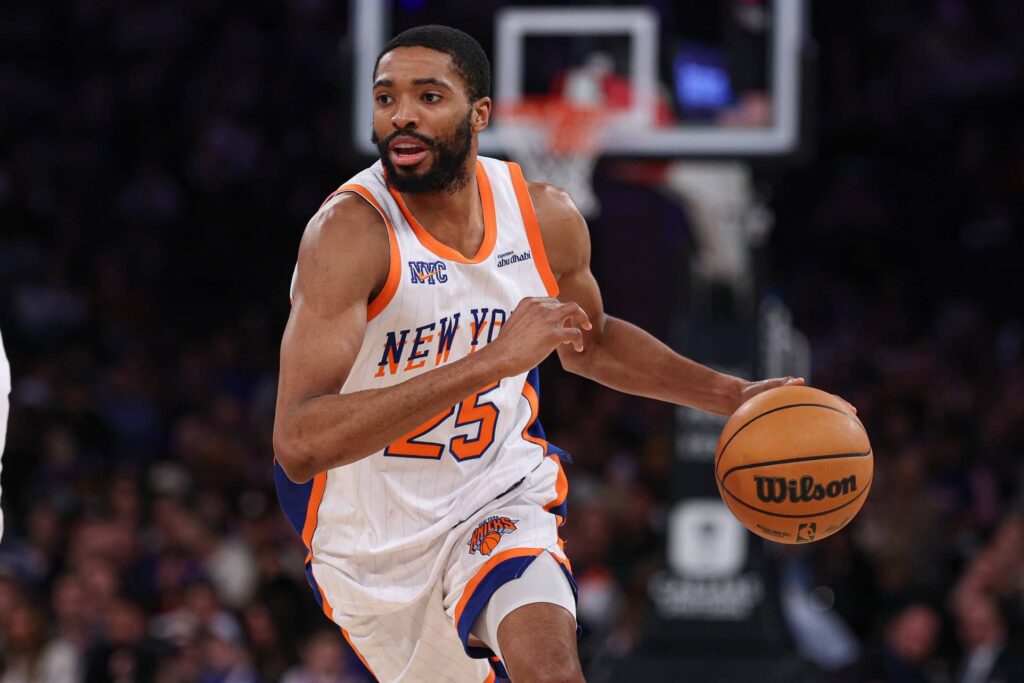
Trade Details
New York Knicks Receive: Mikal Bridges, Keita Bates-Diop, 2026 second-round pick
Brooklyn Nets Receive: Bojan Bogdanovic, Shake Milton, Mamadi Diakite, unprotected first-round picks (2025, 2027, 2029, 2031), unprotected pick swap (2028), top-four protected 2025 first-round pick (via Bucks), 2025 second-round pick
When the notification hit that the Knicks had swung a deal with the Nets for Bridges, the first reaction wasn’t even about fit. It was disbelief that it happened at all. These teams do not trade with each other, and when they do, it’s never supposed to look like a full-blown franchise-shaping heist. ESPN noted it was the first trade between the two since 1983, which is exactly why the move landed like a thunderclap.
The second reaction was the price. This wasn’t “a couple picks and a good player.” The Knicks basically wrote a blank check in draft capital: four unprotected firsts, a premium swap, and an extra first via the Bucks, on top of Bogdanovic and salary filler. That kind of package usually only shows up when you’re chasing a top-five player.
Mikal Bridges isn’t that, but he is the kind of high-minute, two-way wing teams spend years hunting, and the Knicks were buying certainty. Availability, defensive versatility, and a clean plug-and-play profile around their creators.
The basketball logic was obvious. Bridges slid into a roster that wanted to win right now, in a building that demands it. His first season with the Knicks (2024-25) was steady and heavy-minutes by design: 17.6 points, 3.2 rebounds, 3.7 assists across 82 games. The Knicks backed it up in the standings, going 51-31 and reaching the Eastern Conference Finals.
This season (2025-26), Bridges’ box score has tilted a bit more toward connector work than pure scoring punch: 15.6 points, 4.4 rebounds, 4.2 assists on 49.5% from the field and 38.9% from three. The Knicks are still right in the mix at 27-18, which is the entire point of a trade like this.
For the Nets, the meaning was harsher but cleaner. The Bridges era was supposed to be a bridge to something, and instead, it became the moment they finally admitted the timeline wasn’t real. Turning a popular, durable, prime-age wing into that level of draft control was a hard reset. The record reflected it fast: 26-56 last season, and 12-31 this year.
That’s why this trade belongs on a “shocking” list. Not because Bridges is the loudest star on the page, but because of what it represented. The Knicks chose obsession, the Nets chose oxygen, and the league got a reminder that even the coldest rivalries melt when the stakes get high enough.
9. Donovan Mitchell’s Out-Of-Nowhere Cavaliers Blockbuster
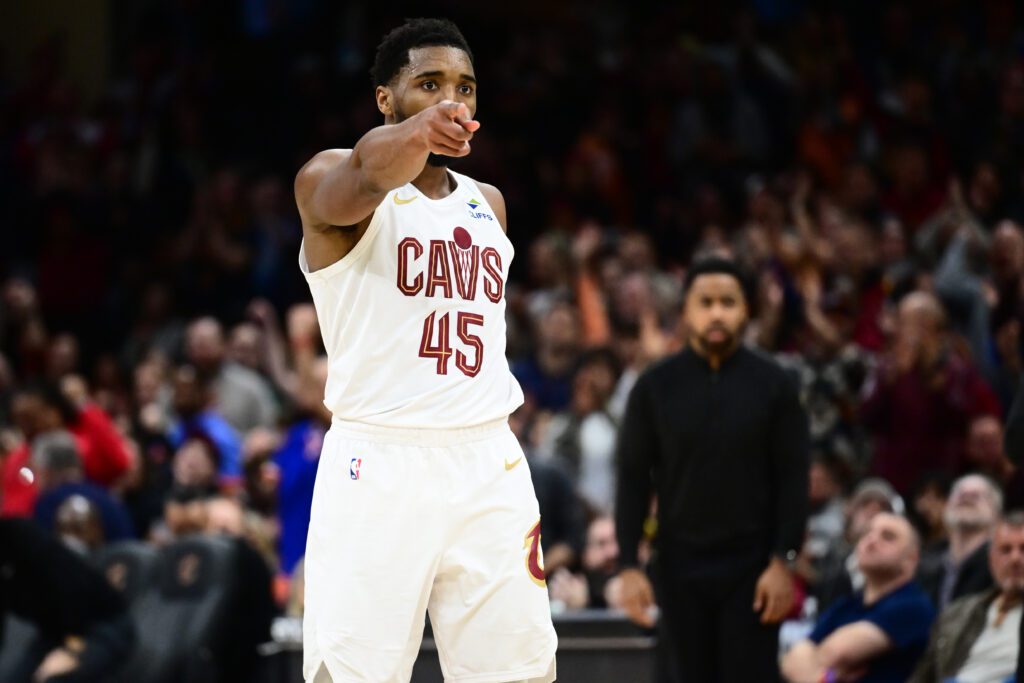
Trade Details
Cleveland Cavaliers Receive: Donovan Mitchell
Utah Jazz Receive: Collin Sexton, Lauri Markkanen, Ochai Agbaji, 2025 first-round pick, 2026 first-round pick swap, 2027 first-round pick, 2028 first-round pick swap, 2029 first-round pick
What made this one legitimately shocking wasn’t just that Donovan Mitchell got moved, it was the destination. The entire league conversation that summer revolved around him ending up on the Knicks. It was treated like the obvious landing spot, the hometown angle, the slow-burn chase, the kind of saga you could see coming from months away.
That’s why the Cavaliers popping up as the winner felt like a jump scare. Even Mitchell has admitted after the fact that he thought he was headed to the Knicks.
And the other layer that made it feel insane: the Cavaliers just weren’t a franchise that did this kind of thing in the post-LeBron era. They built young, they stayed patient, they didn’t play the “empty the vault for a superstar” game.
ESPN framed the move as a true “checks notes” moment, highlighting how jarring it was in the context of the team’s timeline since LeBron’s 2018 departure. That’s why it landed as “out of nowhere,” it wasn’t only a star changing teams, it was the Cavaliers changing their personality.
On the court, the trade instantly reclassified the Cavaliers. Mitchell’s first season with them (2022-23) was immediate validation: 28.3 points, 4.3 rebounds, 4.4 assists in 68 games, with 48.4% from the field and 38.6% from three. He wasn’t a finishing piece, he was a new ceiling. The Cavaliers weren’t trying to be cute anymore. They were trying to win playoff series, right now.
Fast forward and it’s even easier to understand why the front office pushed the button. The Cavaliers went 64-18 in 2024-25, the type of regular-season dominance that basically doesn’t happen by accident. This season (2025-26), they’re 27-20, far away from the top, but Mitchell is still doing superstar things at 29.1 points, 4.8 rebounds, 5.8 assists with 48.2% from the field and 38.0% from three. The “shock” of the trade has aged into “yeah, that’s exactly why they did it.”
For the Jazz, it was the clean pivot into the reset. After the Rudy Gobert move, this was the full confirmation that the era was over, and the return was about draft control, long-term flexibility, and the ability to pick their next timeline instead of getting stuck in the middle.
That’s why this deserves a mention on the list. The league expected the Knicks. Mitchell expected the Knicks. And then the Cavaliers, a team that basically never moves like that, came out of nowhere and changed the entire direction of their franchise in one night.
8. Kyrie Irving’s Sudden Mavericks Gamble
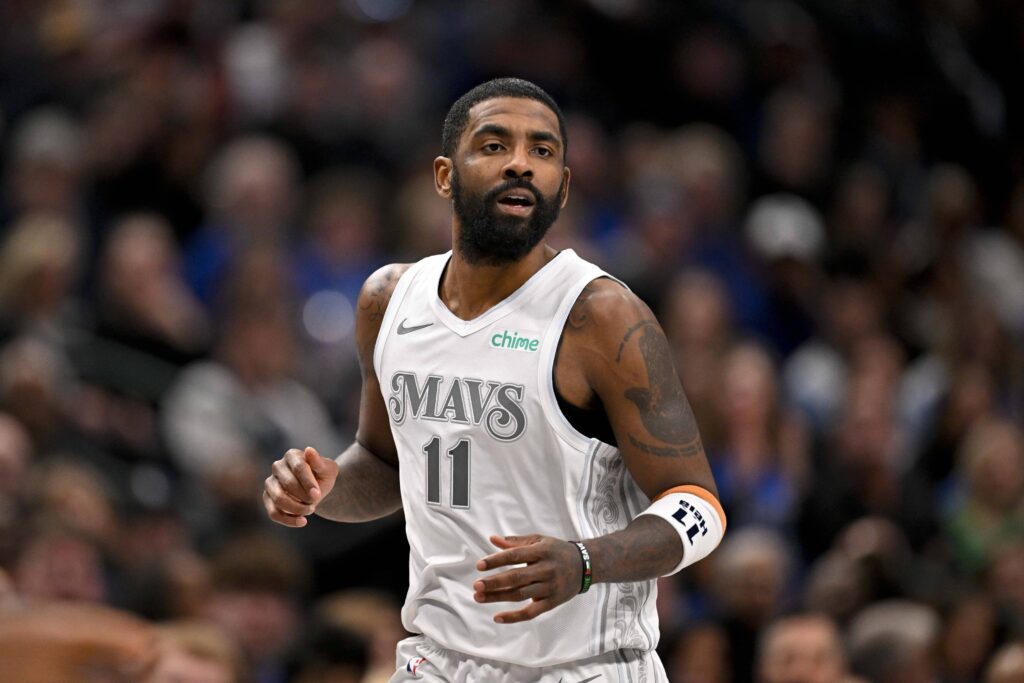
Trade Details
Dallas Mavericks Receive: Kyrie Irving, Markieff Morris
Brooklyn Nets Receive: Spencer Dinwiddie, Dorian Finney-Smith, 2029 first-round pick (unprotected), 2027 second-round pick, 2029 second-round pick
When Kyrie Irving hit the trade market in the middle of the season, it already felt surreal. But the part that made people do a double-take was the landing spot.
The loudest chatter was spinning around the Lakers, and then the Mavericks came flying in with a package that basically screamed “we’re done watching Luka carry everything alone.” It was a classic NBA whiplash moment: the Nets were still a real team in the standings, Kyrie was still Kyrie on the floor, and then it was over in a blink.
From the Mavericks’ perspective, the logic was simple and risky at the same time. They were chasing a second star who could actually handle the ball, create in the half-court, and punish defenses when Luka Doncic sat.
Kyrie checked every basketball box, and also came with the biggest volatility label in the league. That’s why it was shocking. The Mavericks weren’t trading for a “piece,” they were trading for a full-blown headline, knowing the contract situation and the baggage were part of the deal.
On the court, Kyrie immediately looked like the dream version of the bet. In his first Mavericks stint that season, he averaged 27.0 points, 5.0 rebounds, and 6.0 assists in 20 games, with video-game splits of 51.0% from the field, 39.2% from three, and 94.7% at the line.
But the real “this league is broken” part came later. The Mavericks didn’t just stabilize, they went all the way to the NBA Finals in 2024 with Kyrie and Luka Doncic running the show.
And then, less than a year after that Finals run, they still traded Luka anyway, sending him to the Lakers in February 2025. That’s what makes the whole Kyrie swing feel even crazier in hindsight.
It wasn’t a short-term rental for a team stuck in neutral. It became the backbone of a Finals team, and it still didn’t stop one of the most shocking franchise pivots we’ve ever seen.
For the Nets, it was a hard switch from drama management to asset management. They got back two veterans who could play right away, but the real prize was the draft control, especially that unprotected 2029 first, the kind of pick that can swing wildly depending on how a star partnership ages.
In a league where stars can change their minds overnight, those far-out unprotected picks are the closest thing to a franchise safety net.
The “now” context makes the trade feel even more dramatic. The Mavericks went 39-43 last season and entered this season trying to stabilize, but Kyrie Irving is currently rehabbing the torn ACL he suffered in March 2025. The Mavericks are 19-27 in 2025-26, and you can feel how much the roster is still searching for footing without him available.
This is why the trade belongs on a “shocking” list. It wasn’t just a star changing jerseys. It was a contender-level team cutting bait midstream, and a franchise swinging for a second superstar with maximum risk attached, all at once, with almost no runway.
7. De’Aaron Fox Landing With The Spurs Was A Plot Twist
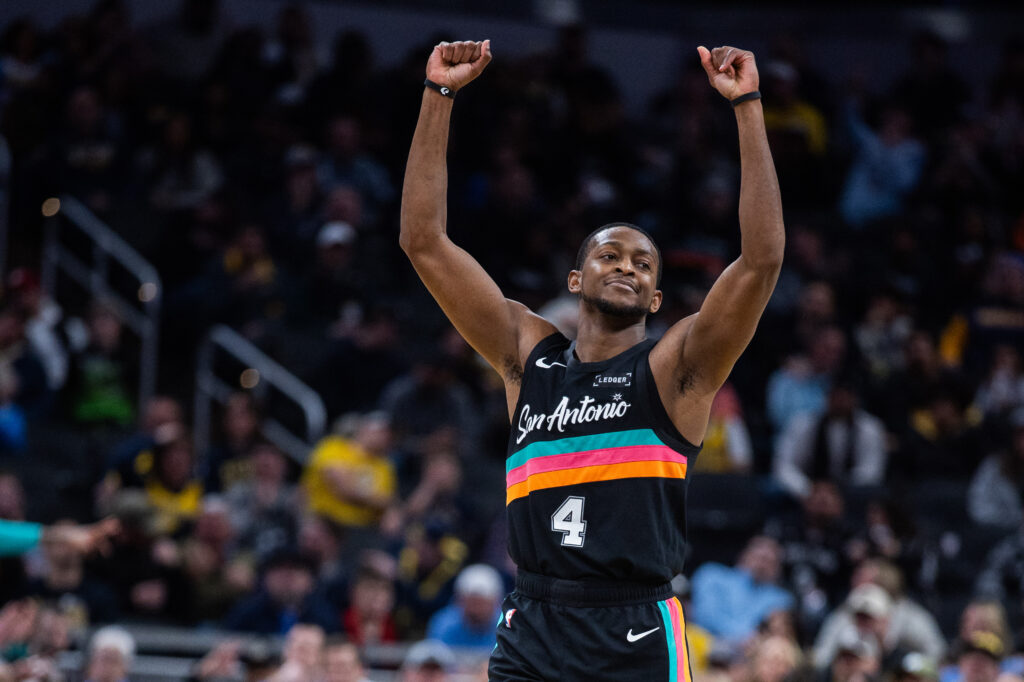
Trade Details
San Antonio Spurs Receive: De’Aaron Fox, Jordan McLaughlin
Sacramento Kings Receive: Zach LaVine, Sidy Cissoko, 2025 first-round pick (via Hornets), 2027 first-round pick (via Spurs), 2031 first-round pick (via Timberwolves), 2025 second-round pick (via Bulls), 2028 second-round pick (via Nuggets), 2028 second-round pick (via Bulls)
Chicago Bulls Receive: Zach Collins, Tre Jones, Kevin Huerter, 2025 first-round pick (their own, via Spurs)
This one hit like a curveball because of the timing and the optics. The league was still spinning from the Luka Doncic bombshell when, almost immediately, another franchise guard got yanked out of his team’s identity and dropped into a brand-new timeline. The De’Aaron Fox move landed the same day as that Luka deal, which only amplified the “wait, what is happening right now?” energy around the league.
For the Spurs, it was a loud statement that the rebuild was over. They weren’t just collecting prospects around Victor Wembanyama anymore, they were actively hunting a lead guard who could bend defenses, push pace, and make life easier for a generational big. The shocking part is how quickly it accelerated. One minute the Spurs were “interesting,” the next minute they were acting like a team that expects to matter immediately, and they did it without a months-long public chase.
For the Kings, it felt like the end of an era even if the return was massive. Fox had been the face of the franchise, and the idea of him actually leaving still felt like something that belonged in rumor territory, not real life. And yet, the Kings flipped him in a three-team structure that reshaped multiple backcourts at once.
The context matters here: the Kings went 40-42 in 2024-25, a frustrating middle-ground season that ended without a playoff spot. This season has been uglier, with the Kings sitting at 12-34. A trade like this reads like a hard admission that the previous direction had run out of road.
Fox’s first taste of the Spurs uniform in 2024-25 was basically a preview of the fit, not a full rollout. He played 17 games after the deal and averaged 19.7 points, 4.3 rebounds, and 6.8 assists. It was incomplete, but you could already see what the Spurs were buying: rim pressure, tempo, and a guard who can get two feet in the paint without needing a perfect screen every possession.
Now in 2025-26, Fox has been exactly what that roster needed, a real engine next to Wembanyama. He’s at 20.2 points, 4.1 rebounds, and 6.0 assists per game, shooting 47.9% from the field. And the standings punchline is what makes the deal feel even more seismic in hindsight: the Spurs were 34-48 last season, then jumped into the contender lane this year at 31-14.
That’s why this trade belongs this high on a “shocking” list. It wasn’t just a star moving. It was a franchise changing its posture overnight, and another franchise admitting the old plan was finished, all in one compressed, chaotic deadline moment.
6. Jimmy Butler’s Heat Breakup Saga Turned Into A Stunner
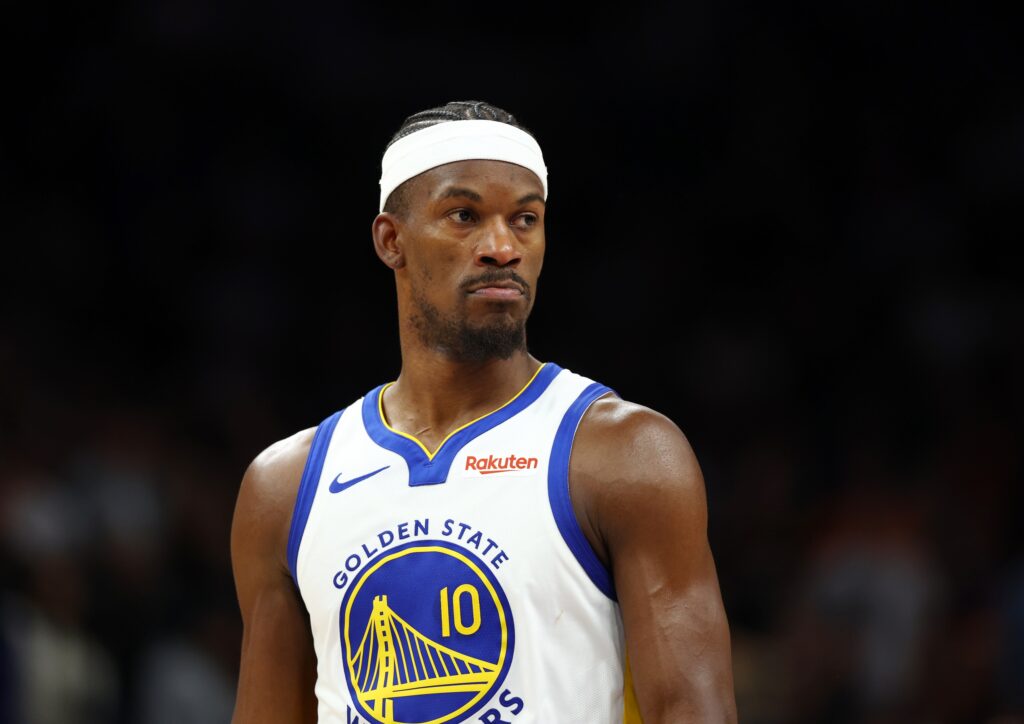
Trade Details
Golden State Warriors Receive: Jimmy Butler, two second-round picks, cash considerations
Miami Heat Receive: Andrew Wiggins, Kyle Anderson, Davion Mitchell, 2025 first-round pick (protected)
This move felt shocking because it wasn’t just a star changing jerseys, it was a full-on relationship collapse playing out in public and then ending with the Warriors of all teams cashing in at the deadline. The Heat went from publicly insisting they weren’t moving Jimmy Butler to stacking suspensions and basically daring the situation to end, and it finally did in a messy, multi-team deal.
From the Warriors’ side, the shock was the sheer aggression, because this franchise basically hasn’t operated like a deadline gunslinger. For years, they’ve been the team that flirts with the big swing, then backs off to protect flexibility and younger assets. That’s what made the Butler move feel like a different
The best example is the prior offseason. The Warriors were heavily linked to Lauri Markkanen, but weren’t willing to meet the cost, especially when it meant touching core young pieces and premium control, and the talks never became a finish.
Then February hits, the Heat situation goes nuclear, and suddenly the Warriors are the team that actually pulls the trigger on a massive multi-team deadline deal to land a star anyway. That contrast is why it felt so jarring in real time.
Butler also didn’t arrive as some hypothetical playoff weapon, he arrived and immediately became a real stabilizer next to Curry and Green. In his first Warriors stretch (2024-25), Butler averaged 17.9 points, 5.5 rebounds, and 5.9 assists across 30 games. Even more telling, the Warriors went 23-7 in games he played after the trade, which is basically contender pace.
That immediate impact matters because the Warriors weren’t a juggernaut entering the Butler era. They finished 48-34 last season, good but not terrifying, and the whole point of grabbing Butler was to add a second high-leverage decision-maker who can get to the line, control tempo, and let Curry breathe.
This season (2025-26), Butler’s production has actually been louder: 20.0 points, 5.6 rebounds, 4.9 assists on 51.9% from the field, 37.6% from three, 86.4% from the line in 38 games. The Warriors are 26-21 as of January 26, 2026, still in the playoff mix, but now dealing with the brutal twist that Butler’s season is over after a torn ACL.
For the Heat, the trade was a hard reset that also doubled as a relief valve. They moved off the daily drama and brought back a real two-way wing in Andrew Wiggins, plus extra pieces and a protected first, which is a very “recalibrate without fully bottoming out” kind of return.
The record context explains why both sides acted like they had to do something: the Heat went 37-45 last season, and they’re 24-22 this year, stuck in that familiar middle where one bad month turns the whole season into a grind.
That’s why this trade belongs in the top half. It wasn’t a slow rumor that eventually landed. It was a star-public breakup, a contender making a late-era desperation swing, and a move that instantly changed how both franchises had to think about their next two years.
5. James Harden For Ben Simmons Was The Heist Nobody Should’ve Pulled Off
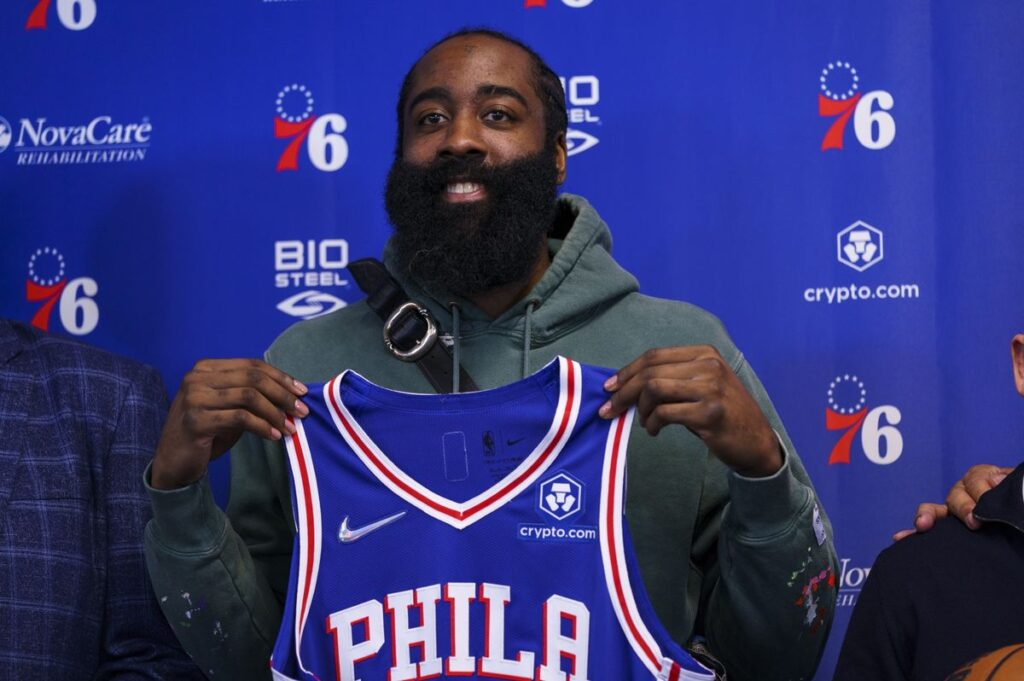
Trade Details
Philadelphia 76ers Receive: James Harden, Paul Millsap
Brooklyn Nets Receive: Ben Simmons, Seth Curry, Andre Drummond, 2022 first-round pick (unprotected), 2027 first-round pick (protected)
This trade was shocking for one simple reason: the 76ers somehow turned a player who wasn’t even playing into James Harden, who was still operating at near-peak “I can run your whole offense” level. That’s not normal trade math. That’s a front office pulling juice from rocks.
The Ben Simmons side of this needs the full context, because the league wasn’t just low on him, it was exhausted by him. The last image in a 76ers uniform was the 2021 playoff meltdown, capped by the infamous passed-up dunk against the Hawks, the moment that basically became a meme and a referendum at the same time.
After that, the standoff swallowed an entire season. Simmons didn’t play in 2021-22, and the situation turned into months of holdout drama and “is he ever coming back” chaos.
So when the deadline finally arrived, the wild part wasn’t that the 76ers moved him. Everyone knew that marriage was over. The wild part was the return. Harden was still a star, still a top-shelf table-setter, still the type of name you usually only get by giving up either a legitimate franchise cornerstone or a treasure chest of elite assets. Yet the 76ers got him anyway, while Simmons was literally sitting on the sideline and the whole league knew it.
And Harden didn’t arrive as some washed “name value” piece. In his 2021-22 stint with the 76ers, he put up 21.0 points, 7.1 rebounds, and 10.5 assists in 21 games. The 76ers finished 51-31 that year, and the message was clear: they’d rather ride with a real half-court engine next to their superstar center, Joel Embiid, than keep waiting for a broken situation to magically un-break itself.
On the Nets’ side, the gamble was obvious. They were betting that Simmons would re-emerge as an impact defender and transition playmaker, and they cushioned it with two real rotation pieces and draft capital. But the way this trade has aged is exactly why it belongs this high. Simmons’ career trajectory never recovered. He struggled to stay on the floor after the move, and by the start of 2025-26 he was still unsigned with his NBA future openly uncertain.
Even the team arcs since then underline how bizarre the whole thing was. The 76ers cratered to 24-58 in 2024-25, then bounced back to 24-20 this season. The Nets went 26-56 last year, and they’re still sinking in 2025-26.
A deadline deal this big is supposed to feel like a clean pivot. This one felt like a magic trick, and the punchline is that it still looks unbelievable in hindsight.
4. Damian Lillard’s Heat Desire Ended With A Bucks Ambush
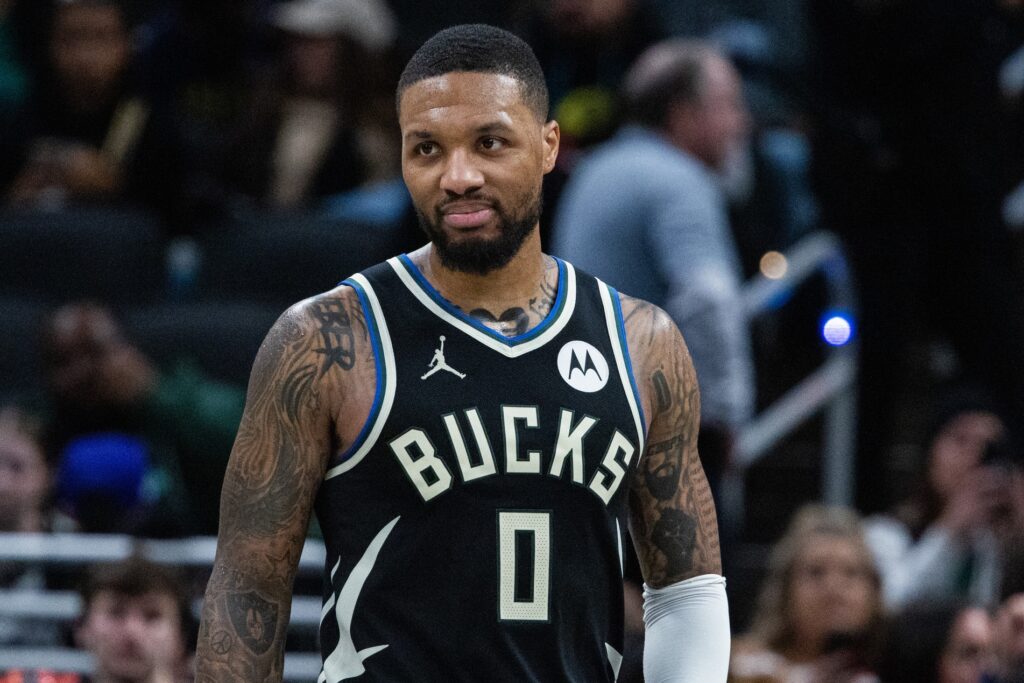
Trade Details
Milwaukee Bucks Receive: Damian Lillard
Portland Trail Blazers Receive: Jrue Holiday, Deandre Ayton, Toumani Camara, 2029 first-round pick, 2028 first-round pick swap, 2030 first-round pick swap
Phoenix Suns Receive: Jusuf Nurkic, Grayson Allen, Nassir Little, Keon Johnson
This was the rare trade where the shock wasn’t the player moving, it was the direction of the blast. For months, the entire league treated it like a straight line: Damian Lillard wanted the Heat, the Heat wanted Lillard, and everybody else was basically background noise.
ESPN reported Lillard’s preference was the Heat, and Shams Charania explicitly put out that Lillard wanted a trade “specifically” there, which is about as direct as it gets in NBA rumor language.
Then the Bucks came out of nowhere and stole the whole story.
That’s why this belongs so high on a “shocking” list. It wasn’t just that the destination flipped, it was that it flipped after a summer where the messaging felt locked in. The Heat angle wasn’t subtle. The reporting got so loud the league literally warned Lillard and his agent about the Heat-specific push. When a saga gets to that point, fans stop thinking “where will he land?” and start thinking “when does the paperwork happen?” And that’s exactly why the Bucks swoop felt like a jump scare.
Basketball-wise, the Bucks’ pitch was pure chaos in the best way: “You want help for Giannis Antetokounmpo? Here’s Damian Lillard.” It was an instant title-swing attempt, and the kind of pairing that changes how teams build their entire game plan.
The move also hit harder because Lillard wasn’t coming off some quiet season. He was coming off 2022-23 averaging 32.2 points, 4.8 rebounds, 7.3 assists for the Blazers, basically reminding everyone he could still be the whole offense by himself. The Blazers went 33-49 that year, stuck in the bottom, and the trade request was the moment the franchise admitted the timeline was done.
For the Bucks, it was a different kind of urgency. They’d already won with Giannis, but the fear was obvious: wasting years of a generational prime while the East got deeper. The first season after the trade, the Bucks went 49-33, still a top-tier regular-season team. Lillard’s production dipped from his Blazers peak, but it was still star-level: 24.3 points, 4.4 rebounds, 7.0 assists in 2023-24.
The cruel part, in hindsight, is how fast it went from “Giannis finally gets his superstar co-pilot” to “this got cursed.” In both seasons, in the first round against the Pacers, he suffered injuries, and the nightmare outcome came in 2025 with a torn left Achilles tendon in Game 4.
And then came the part nobody would’ve believed when the Bucks first ambushed the Heat for him: they waived Lillard in July 2025, using the stretch provision after the Achilles injury and the expectation he’d miss the entire 2025-26 season. That is an insane sentence for a player you traded for to pair with Giannis less than two years earlier.
3. Chris Paul Joining The Warriors Was The Weirdest “Core Reset” Of The Era
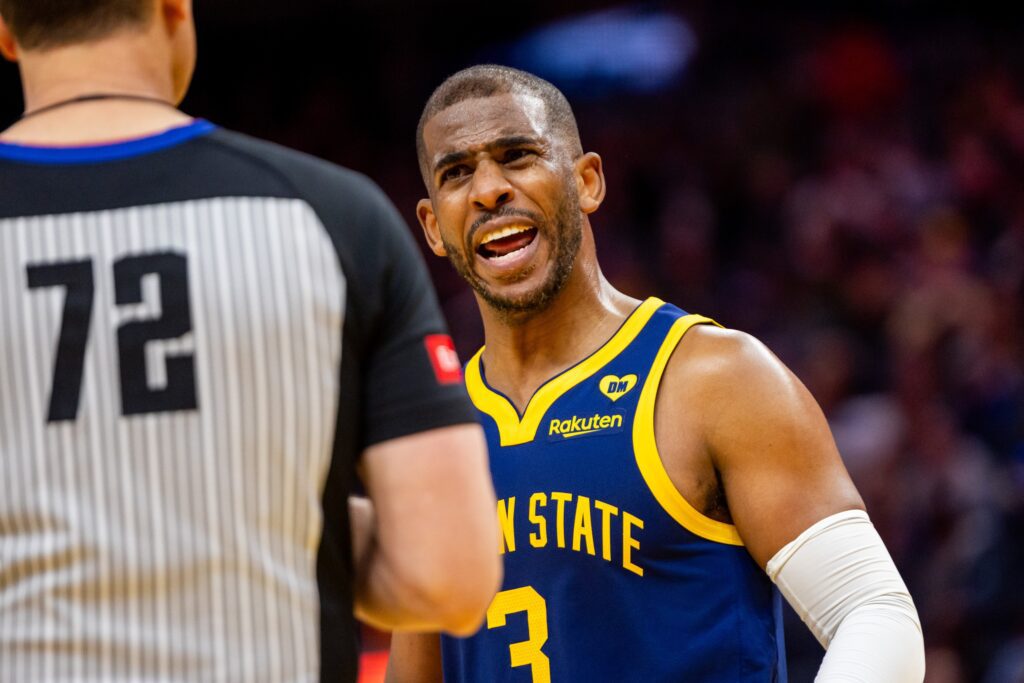
Trade Details
Golden State Warriors Receive: Chris Paul
Washington Wizards Receive: Jordan Poole, Patrick Baldwin Jr., Ryan Rollins, 2030 first-round pick (protected), 2027 second-round pick, cash considerations
This one was shocking because it came from two places at once: the Jordan Poole–Draymond Green fallout, and the Warriors doing something that didn’t even look like them.
The context starts with the punch. In October 2022, Draymond Green struck Jordan Poole at practice, and the whole thing detonated into a national story immediately. The Warriors tried to move forward, but everyone could feel the chemistry tax.
And yet, even with the drama, Poole still didn’t feel like a guy they’d actually move. He was young, he was paid, and he was a real part of the 2022 title run, averaging 17.0 points, 3.8 assists, and 2.8 rebounds in 22 playoff games.
In the 2021-22 regular season, he put up 18.5 points, 4.0 assists, and 3.4 rebounds, then followed it with 20.4 points the next season. That’s why it felt unreal that the Warriors basically dumped the “future scoring guard” piece for an older point guard who didn’t align with what people thought they needed.
Because the Chris Paul part was the other shock. Not only was it a weird schematic fit next to Stephen Curry and Klay Thompson, but it also wasn’t vintage Chris Paul anymore. In the 2020-21 season with the Suns, he was still playing at that Finals-leader level, averaging 16.4 points and 8.9 assists, and in the 2021 playoffs, he averaged 19.2 points and 8.6 assists.
By 2022-23, he was already trending down to 13.9 points and 8.9 assists. So when the Warriors attached draft capital and sent out Poole for Paul, it read like a move for a team that was prioritizing control, steadiness, and “stop the chaos,” even if it meant getting older and clunkier.
Paul’s first season with the Warriors basically confirmed the “this is not 2021 Chris Paul” reality. He averaged 9.2 points, 6.8 assists, 3.9 rebounds in 2023-24. The Warriors went from 44-38 the year before the trade to 46-36 that first Paul season, so it wasn’t a disaster, but it still felt like an awkward solve for a team that needed juice, size, and athleticism more than another table-setter.
And the “nothing in return” emotion is what really sells the shock. Poole wasn’t some random contract. He was a championship contributor, and the Warriors essentially cashed him out for a declining veteran whose timeline was always going to be short. Meanwhile, Poole became the Wizards’ scoring guard during a full rebuild, with the Wizards going 18-64 last season and trading him to the Pelicans last offseason.
The craziest epilogue is where Paul is now: in 2025-26 he’s with the Clippers but remains away from the team, averaging 2.9 points, 1.8 rebounds, 3.3 assists in 16 games while awaiting for a resolution. The Warriors, meanwhile, are 26-21 as of January 26, 2026, still trying to squeeze contention out of the late-era core.
That’s why this trade is a top-tier “wait, what?” moment. The Warriors took a title-era piece, swallowed the chemistry fallout, and responded by making a move that looked like it belonged to a totally different team-building philosophy.
2. Karl-Anthony Towns’ Knicks Bombshell After The Wolves’ Breakthrough
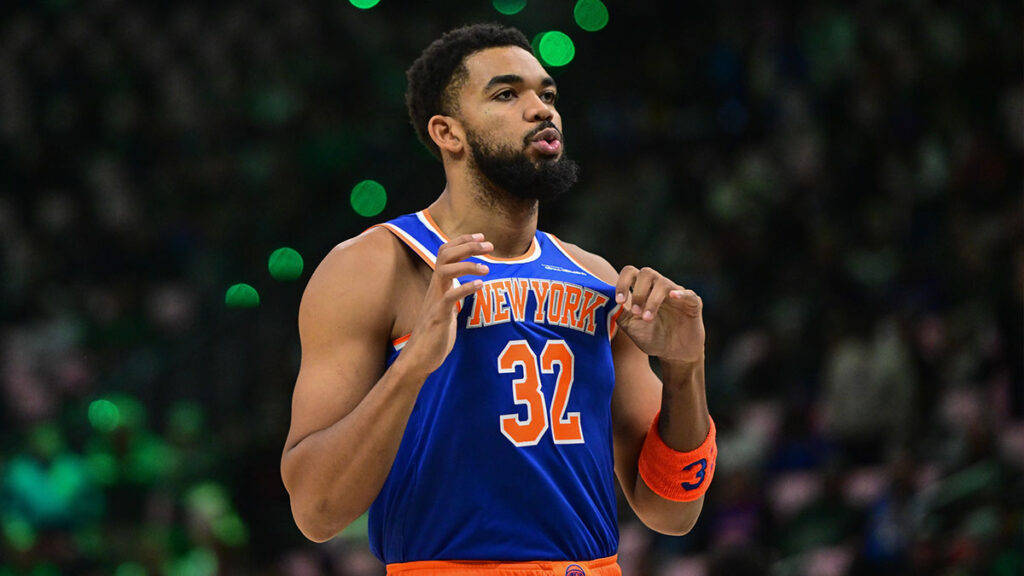
Trade Details
New York Knicks Receive: Karl-Anthony Towns
Minnesota Timberwolves Receive: Julius Randle, Donte DiVincenzo, Keita Bates-Diop, 2025 first-round pick (via Pistons)
Charlotte Hornets Receive: Charlie Brown, DaQuan Jeffries, Duane Washington Jr., two future second-round picks, 2025 second-round pick, cash considerations
The reason this trade landed like a total blindside is simple: the Timberwolves had just proven the blueprint worked. They’d reached the Western Conference Finals, and Karl-Anthony Towns still looked like the ideal “second sword” next to Anthony Edwards, even with the occasional rough playoff night that comes with being a high-usage big in the postseason. That’s why the timing felt surreal. It didn’t read like a team panicking, it read like a team that was one step away.
Then, out of basically nowhere, Towns was gone.
That shock got even louder because the Knicks weren’t being framed publicly as the team about to drop a franchise-level upgrade at that exact moment. They were already a real East factor, coming off a 50-32 season in 2023-25. And instead of making the type of incremental move most people expected, they hit the button on a star big, right into the middle of an identity that already revolved around Jalen Brunson’s control and physicality. It wasn’t a slow-burn rumor that finally happened. It was a “wait, Towns… now?” moment.
The basketball case in New York was immediate. Towns’ first season with the Knicks (2024-25) was massive production: 24.4 points, 12.8 rebounds, 3.1 assists in 72 games. That’s not “nice fit” output, that’s “we’re changing our ceiling” output. And it’s why the move instantly came off like an organizational flex, even if it cost real, beloved pieces. Donte DiVincenzo was a fan favorite, Julius Randle was the emotional anchor of the turnaround, and the Knicks still decided the upgrade was worth the pain.
This season (2025-26), Towns has been a little lower-volume but still a nightly problem: 21.0 points, 11.6 rebounds, 3.0 assists through 40 games. The Knicks are 27-18, holding strong in the East mix, which is exactly what the trade was meant to guarantee: a high floor that doesn’t vanish when the schedule gets ugly.
For the Wolves, the shock factor wasn’t that they got talent back, they did. It was that a team fresh off a conference finals run willingly chose disruption anyway, essentially betting that a deeper rotation and different offensive balance could keep them dangerous while also managing the financial and roster puzzle ahead.
The standings show they haven’t collapsed, they’re 27-19 in 2025-26 and made another Conference Finals with Julius Randle last year, but the emotional jolt of moving a long-time star right after a breakthrough is still the part that makes this trade feel unreal.
1. Luka Doncic’s “Impossible” Trade That Changed The NBA Overnight
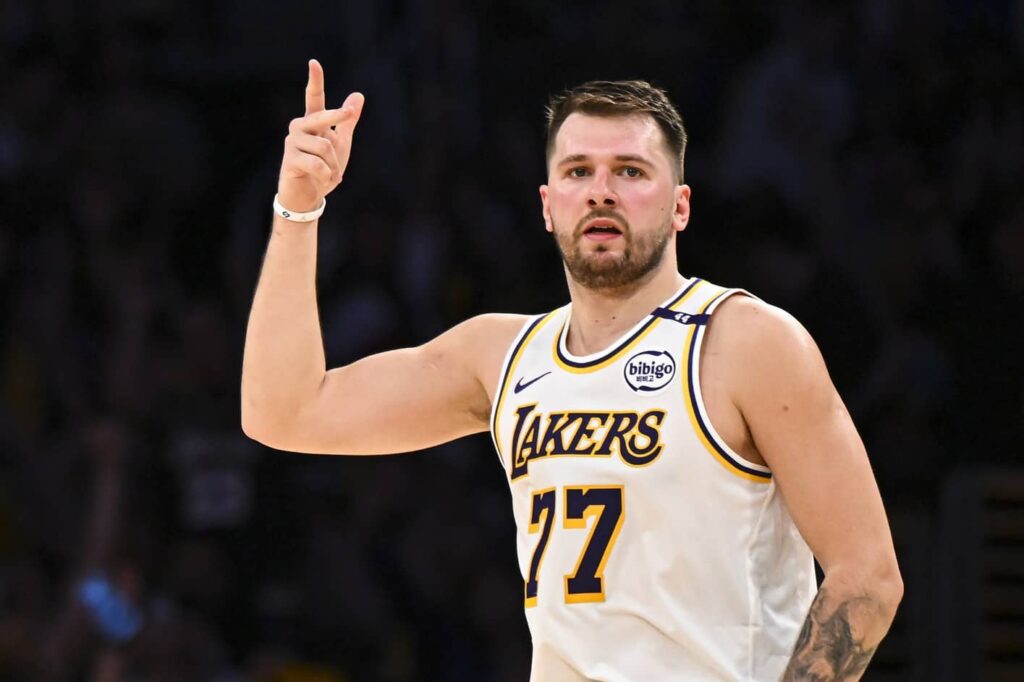
Trade Details
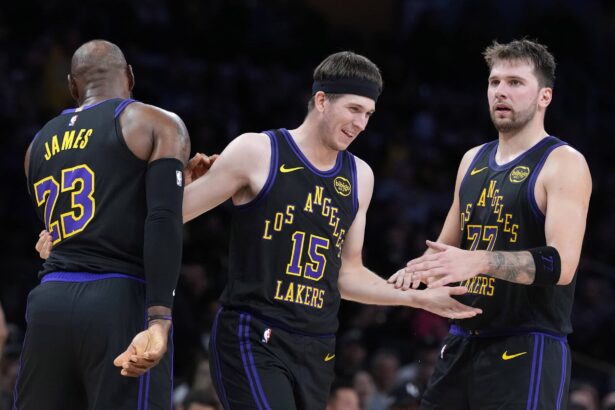
Los Angeles Lakers Receive: Luka Doncic, Maxi Kleber, Markieff Morris
Dallas Mavericks Receive: Anthony Davis, Max Christie, 2029 first-round pick (via Lakers)
This wasn’t “a blockbuster.” This was the kind of alert that makes you assume it’s fake for the first 30 seconds. No runway. No long rumor cycle. No slow leak where everyone starts connecting dots. At almost midnight in Dallas, it hit like a meteor because the Mavericks were trading a 25-year-old franchise pillar in his prime, midseason, without the player asking out, and without the public buildup that usually telegraphs a move of this magnitude. Marc Stein’s reporting was explicit on the key point: Doncic did not request a trade at all.
And then you get to the part that still makes people mad: the way it was handled. Nico Harrison went on record defending it as a “tough decision,” framing it like leadership, like something a serious organization has to do sometimes. He also gave the cleanest, most polarizing justification possible: defense. In the ESPN reporting, Harrison’s quote was basically the thesis statement for the whole thing, “I believe that defense wins championships.”
The problem is, when you trade a player like Luka Doncic, you’re not just changing a roster. You’re ripping out the identity of the franchise, and the burden of proof becomes insane. It was even worse that the Mavericks didn’t even shop Doncic, as they would’ve certainly been offered a haul of five, six first-rounders, more high-end players, and potentially the biggest haul in NBA history.
Instead, the Mavericks only got a future first-rounder, plus an injury-prone Anthony Davis, who is about to be traded just a year later for a very downgraded package, either at the deadline or in the offseason.
That’s why the fallout in the Mavericks’ world turned ugly fast. ESPN documented how quickly it spiraled into protests and backlash, with the organization stuck explaining a decision most fans didn’t even think was on the table. Even Adam Silver addressed the emotional blow for the fanbase in that same window, because the reaction wasn’t “debate the trade.” It was grief.
Then came the second wave, which looked like an anti-Doncic operation, because that’s exactly what it felt like: the post-trade smear campaign about Luka’s body. Within hours, the reporting focus shifted to conditioning, diet discipline, and looming supermax fears.
Tim MacMahon reported that the Mavericks were motivated in part by constant conditioning concerns and the looming commitment of another supermax extension. An ESPN report indicated frustration about conditioning, with mention that he was reportedly above 260 pounds at points early that season.
That’s what made it feel coordinated. The trade itself was shocking, then the narrative pivot tried to make it sound logical after the fact: “We didn’t trade Luka because we wanted to. We traded Luka because Luka forced our hand by being Luka.”
Reggie Miller basically called it what it looked like in real time, character assassination, and he wasn’t subtle about disliking the way those details were “floating” around after the deal.
The funniest part is that even if you buy the conditioning critique as fair basketball talk, the logic still lands weird when the return is an older star with his own durability history, plus one first. That’s why the trade never stopped feeling like a steal for the Lakers. It wasn’t “Did the Mavericks get talent?” Of course they did. It was, “How did the Lakers get Luka for that price in the modern NBA?”
Because once the ball started bouncing, it got even louder.
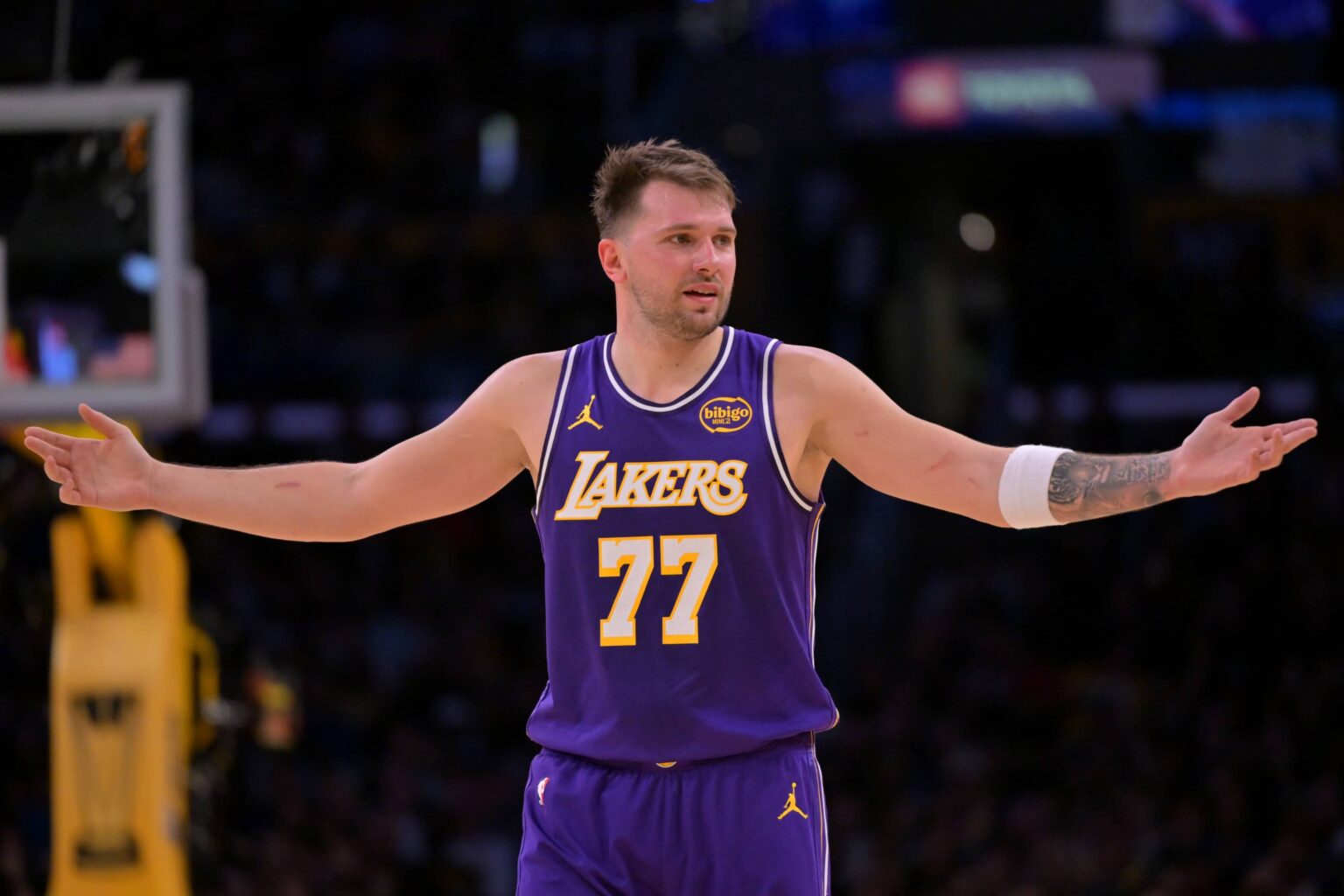
Doncic’s first Lakers run in 2024-25 was immediate takeover mode: 28.2 points, 8.1 rebounds, 7.5 assists in 28 games, with 43.8% from the field and 37.9% from three. The Lakers finished 50-32. The Mavericks finished 39-43 with Anthony Davis barely playing. So the initial “win-now defense” pitch already looked shaky when the standings weren’t screaming “validation.”
And now? It’s gone from shaky to brutal.
As of January 26, 2026, the Lakers are 27-17, sitting in the thick of the West with Doncic playing like the league’s nightly cheat code. He’s averaging 33.4 points, 7.8 rebounds, 8.7 assists this season, with 46.7% from the field, 33.4% from three, 79.0% at the line, and 60.8% true shooting. That’s not “he fit in.” That’s “the Lakers just imported an offense.”
The Mavericks, meanwhile, are 19-27. And every time these teams play, the trade gets re-litigated in real time because Luka treats it like a personal event. On January 25, he dropped 33 points with 11 assists and eight rebounds in a Lakers comeback win over the Mavericks, and he also became the youngest player to reach 1,500 career three-pointers in that game. This is what the trade did: it turned regular-season games into a recurring referendum.
Now loop back to the backlash campaign, because Luka’s response ended up being the ultimate counterpunch. The “he’ll never get in shape” angle didn’t just hang in the air, it became fuel. By July 2025, Men’s Health ran a major piece focused on his offseason training and body rebuild, explicitly framing it against years of conditioning criticism and noting he pushed to start the program immediately after the Lakers’ playoff exit.
That article didn’t just exist as lifestyle content, it landed like a receipt. You spent months hearing “this is why they traded him,” and then you saw Luka treating it like a mission statement.
So that’s why this is the easy No. 1.
It wasn’t just shocking because a superstar moved. It was shocking because it violated the usual NBA rules: the timeline, the secrecy, the return package, the immediate post-trade messaging, and then the on-court revenge loop that keeps making the deal feel crazier instead of normalizing it. The league has had surprises. This one still feels unreal even after the paperwork is old news.