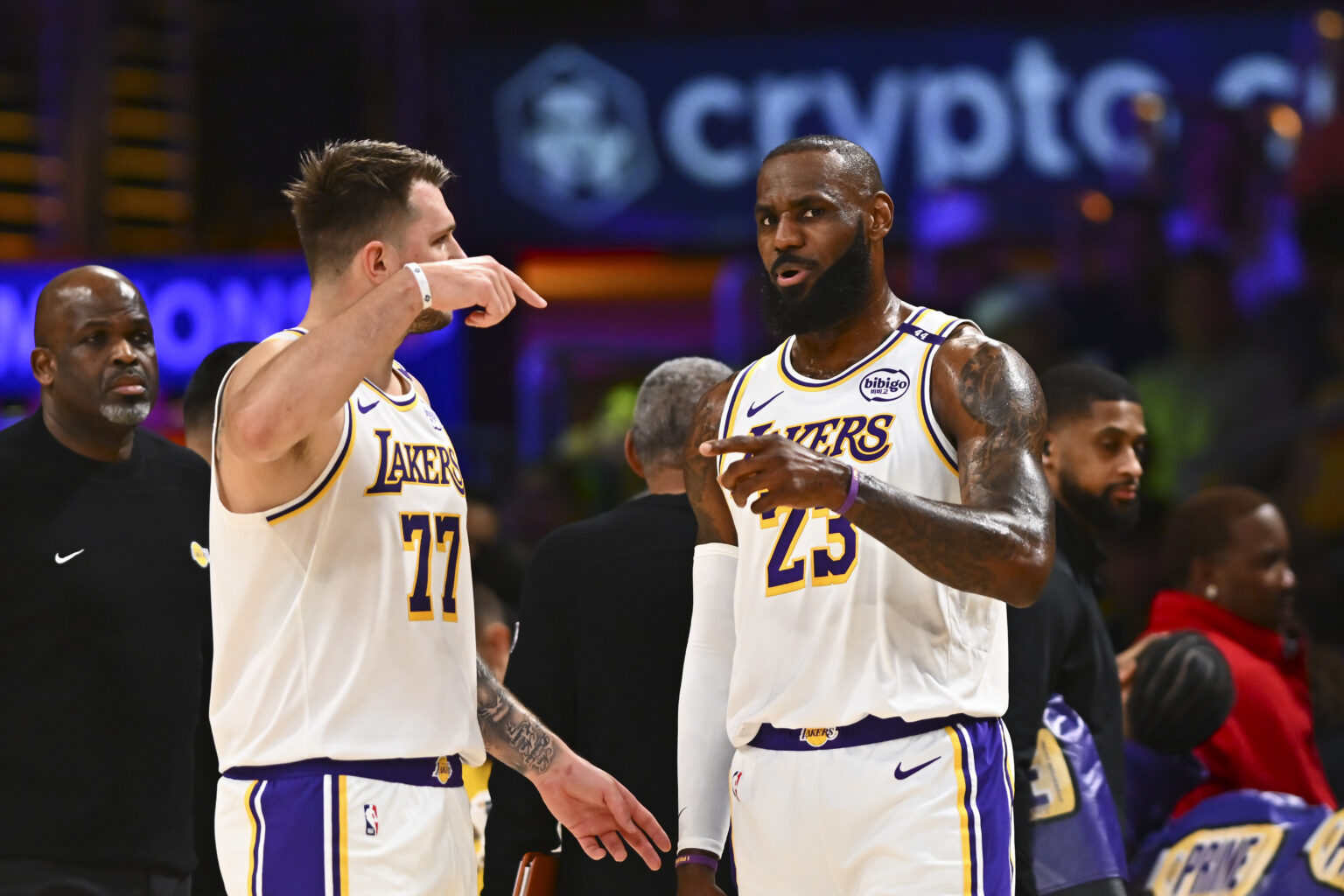
The Los Angeles Lakers are 19-8 and sitting 4th in the West, which is exactly why this trade deadline matters. They’re already winning enough games to talk themselves into a real run, but they’re also one cold shooting week away from looking very mortal in a playoff-style series.
And the league knows what the Lakers are shopping for. Multiple reports have pointed in the same direction: a legit 3-and-D wing, preferably someone young enough to fit the Luka Doncic and Austin Reaves timeline, not just a short-term rental. Marc Stein flat-out framed the Lakers as a team that wants to be in the 3-and-D market, and it also acknowledged the catch: it’s a limited market right now.
That’s where the Herb Jones dream comes in, and why it feels like the perfect fit and the biggest headache at the same time. Michael Scotto reported the Lakers are pursuing Jones, but the same reporting orbit has made it clear that the price point is steep, to the point where it’s widely viewed as out of the Lakers’ in-season range unless the Pelicans suddenly pivot hard.
So this ranking is basically the Lakers’ reality check. If the best guy costs a king’s ransom, who are the wings that actually make basketball sense, fit the need, and have at least some plausible path to becoming available?
That’s where other names come into play.
5. Royce O’Neale
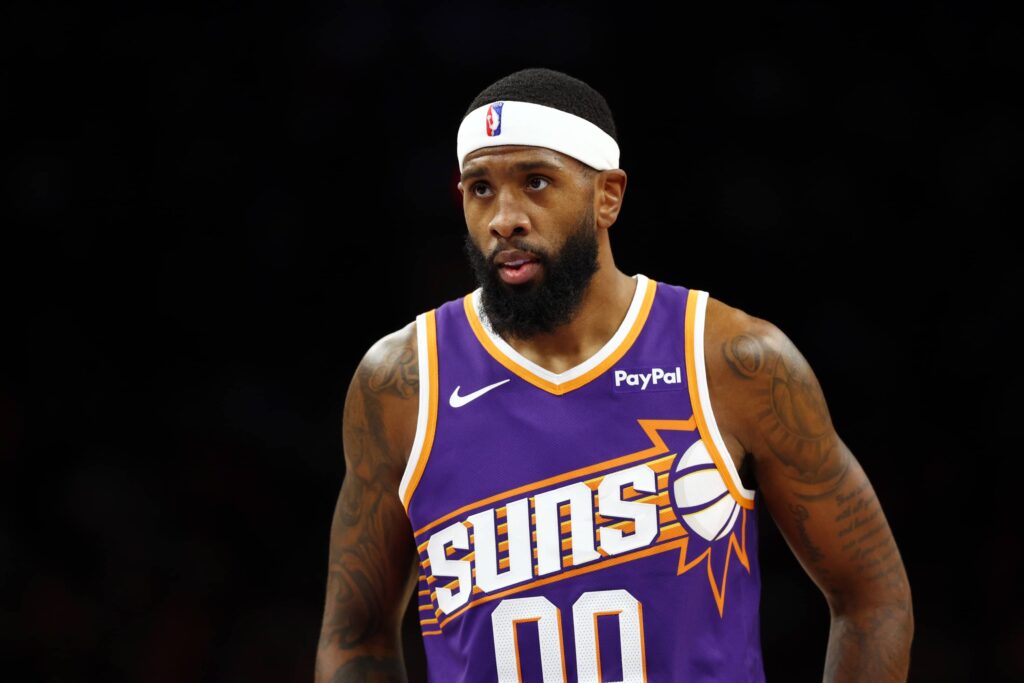
Royce O’Neale is the “boring” name that wins you possessions, and that’s exactly why he belongs on the Lakers’ wing board.
He’s having a real 2025-26 season for the Phoenix Suns, averaging 10.6 points, 5.3 rebounds, 2.8 assists, 2.9 threes, and 1.3 steals in 29.5 minutes. The shot profile is the selling point for the Lakers: he’s basically living behind the arc (his 3-point attempt rate sits in the 97th percentile), and he’s still converting at 40.5% from three. That’s the exact “don’t blink” gravity a roster needs when defenses start loading up on the ball.
The defensive value shows up in the role data too. He’s a mobile forward with high versatility and a positive defensive impact metric (65th percentile). In plain English, he’s not a highlight defender, but he’s reliable across matchups, he rotates on time, and he doesn’t need help babysitting every action. For a Lakers defense that has spent too many nights bleeding on the wing, that stability matters.
His defensive rating is 114.7 this season, which isn’t some “shutdown” number on its own, but it fits the idea of him being a system plug who doesn’t break coverages. He’s also not foul-happy, and he keeps mistakes low because he doesn’t try to do extra stuff he can’t do.
The contract angle is why he’s even in this ranking. O’Neale makes $10.1 million this season, which is the type of number you can actually trade for without detonating your entire rotation. It’s also the kind of salary teams move if they decide they want flexibility at the deadline.
Now, the only reason he’s fifth and not higher is ceiling. O’Neale isn’t Herb Jones. He’s not the guy you throw at the opponent’s best scorer for 40 minutes and feel amazing. He’s a smart connector wing who hits shots, defends within a scheme, and lets your stars breathe because the spacing stays honest.
If the Lakers want a realistic 3-and-D option who fits playoff basketball and doesn’t require a superstar-level price, O’Neale is one of the cleaner “win possessions” targets on the board.
4. De’Andre Hunter
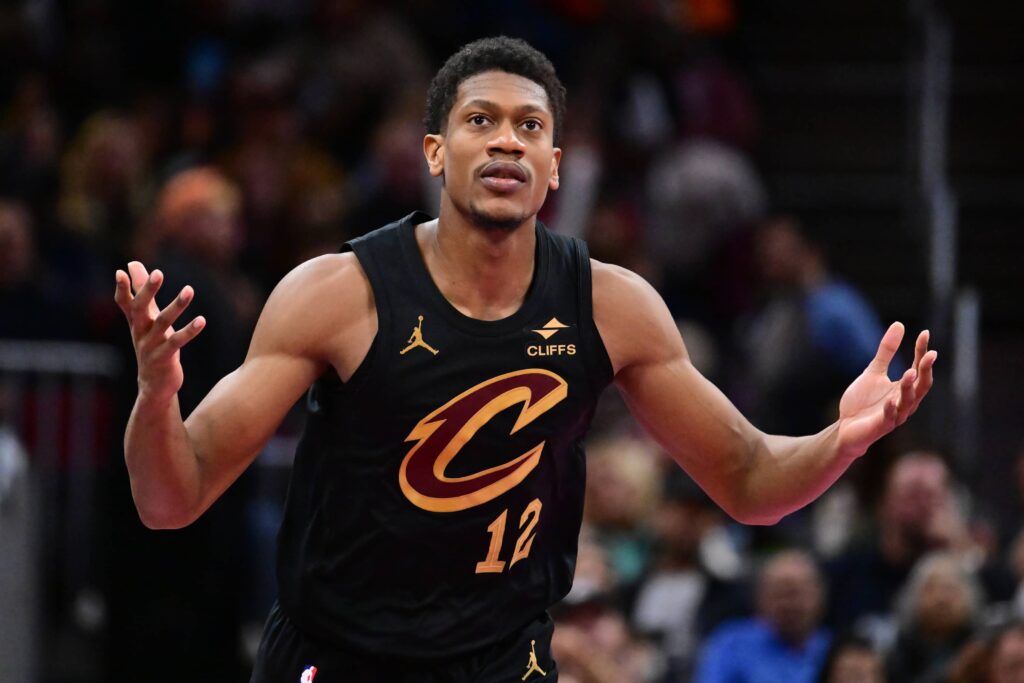
De’Andre Hunter lands this high because he checks the two boxes the Lakers keep chasing, size on the wing and a contract that can realistically sit in the middle of a bigger trade.
The rumor side is real too. Evan Sidery called Hunter a trade target to monitor for the Lakers as a fallback path if the Herb Jones chase stays priced into fantasy land.
On paper, Hunter’s season has been productive but messy. He’s at 15.1 points, 4.3 rebounds, and 2.2 assists while shooting 42.5% from the field. The shot diet still screams “wing scorer.” He’s taking 6.2 threes per game, and his 3-point attempt rate sits at 51.8%, which means he’s living on catch-and-shoot volume and quick triggers. The problem is the make rate has dipped, he’s at 30.3% from three.
That swing is exactly why Hunter isn’t higher than fourth in a super analytical 3-and-D ranking. The Lakers don’t just need “a guy who takes threes.” They need a wing who makes defenses pay consistently when the ball swings. Hunter’s efficiency has to rebound for him to become a true playoff spacing solution.
Defense is where the evaluation gets uncomfortable, because the name carries more reputation than the current metrics. His defensive rating is in the 117.6 range this season. Basketball Index grades him with solid versatility at 64.9 (68th percentile) and strong deflections at 3.7 (80th percentile), but his Defensive Plus/Minus sits at -1.3 (12th percentile).
Translation: he has tools and activity, but the impact hasn’t shown up as positive possession-to-possession defense in this sample.
So why does he still fit the Lakers? Because the archetype matters. Hunter can defend within a scheme without needing constant double help, he can take tougher wing minutes to reduce wear on the stars, and he has real on-ball scoring juice for bench units. Even with the 3-point dip, defenders still close out hard because of the volume, and that creates straight-line driving lanes, which is where the Lakers’ offense can feast.
The contract side keeps him realistic. Hunter makes $23.3 million this season, a clean mid-tier number that actually works for deadline math with Kleber and Vincent’s salaries.
If the Lakers miss on the premium wings, Hunter is the kind of “credible Plan B” that still upgrades size, keeps lineup flexibility, and doesn’t require a full roster reset.
3. Keon Ellis
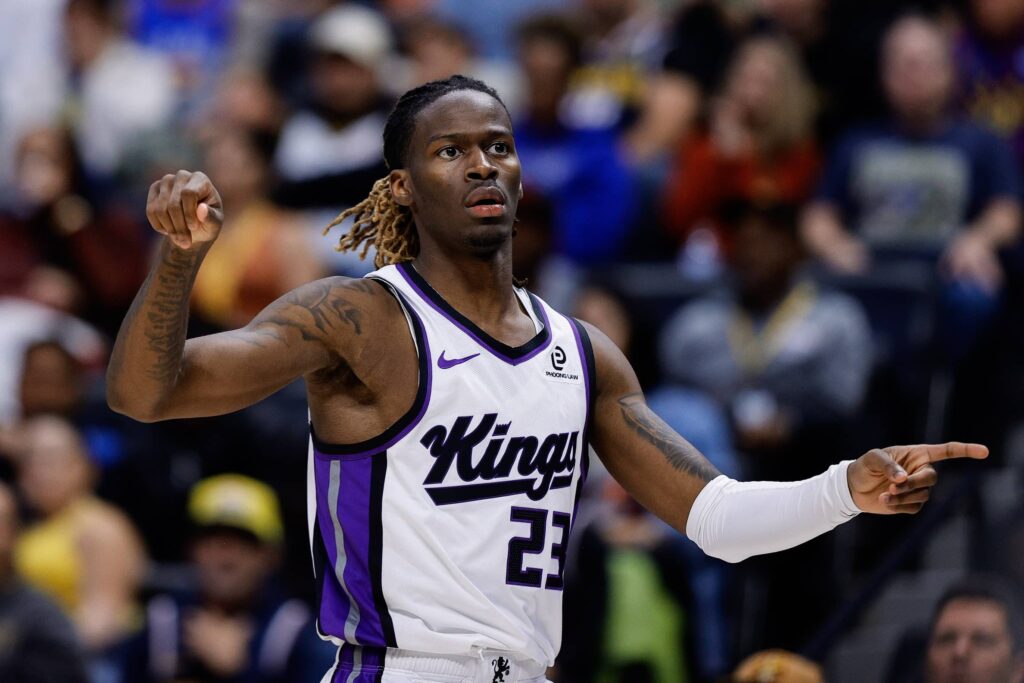
Keon Ellis is the exact type of target the Lakers should be prioritizing if the goal is “get tougher on the perimeter without paying a superstar tax.”
The Lakers’ need is obvious in the numbers. They’ve floated around the bottom third defensively, and even the recent coverage on the rumor cycle has pointed out they’ve been sitting 23rd in defensive rating while giving up over 118 points per game across their last five.
That’s not a “scheme tweak” problem. That’s a “you need more point-of-attack resistance and fewer weak links” problem.
Ellis fits that job description better than most “available” wings because his defensive impact shows up in tracking-style metrics, not just vibes. He’s in the 96th percentile in deflections (5.7) and 93rd percentile in forcing live-ball turnovers, with a strong overall defensive impact score (92nd percentile).
In plain terms, he’s disruptive. He’s the guy who turns a normal dribble handoff into a broken play or forces that one extra pass that bleeds the clock and ruins the possession.
Offensively, he stays inside the Lakers’ “3-and-D” requirement even in a down usage year. He’s at 5.1 points per game in 17.0 minutes, shooting 35.2% from three, and the biggest tell is the shot profile: 71.2% of his attempts are threes (94th percentile 3PA).
That’s the kind of role discipline the Lakers need around ball-dominant creators, because he’s not drifting into midrange stuff that gums up spacing. He’s basically signaling, “I’m here to defend and fire when you kick it.”
Now, the market part, which is where Ellis gets interesting. A report from The Stein Line noted that “at least half the league” has asked about him, and the same quote framed the appeal as plug-and-play defense plus the fact he’s cheap.
That cheap part matters for the Lakers because it keeps them from having to burn their best assets just to fix a role issue.
He’s making $2.3 million this season, which is basically the perfect salary slot for deadline creativity.
If the Sacramento Kings (7-22) decide to pivot toward asset collection, Ellis becomes a clean “value chip” they can flip without touching their bigger contracts.
If the Lakers miss on the premium wing tier, Ellis is the kind of move that doesn’t win the headline, but absolutely wins minutes in a playoff series.
2. Andrew Wiggins
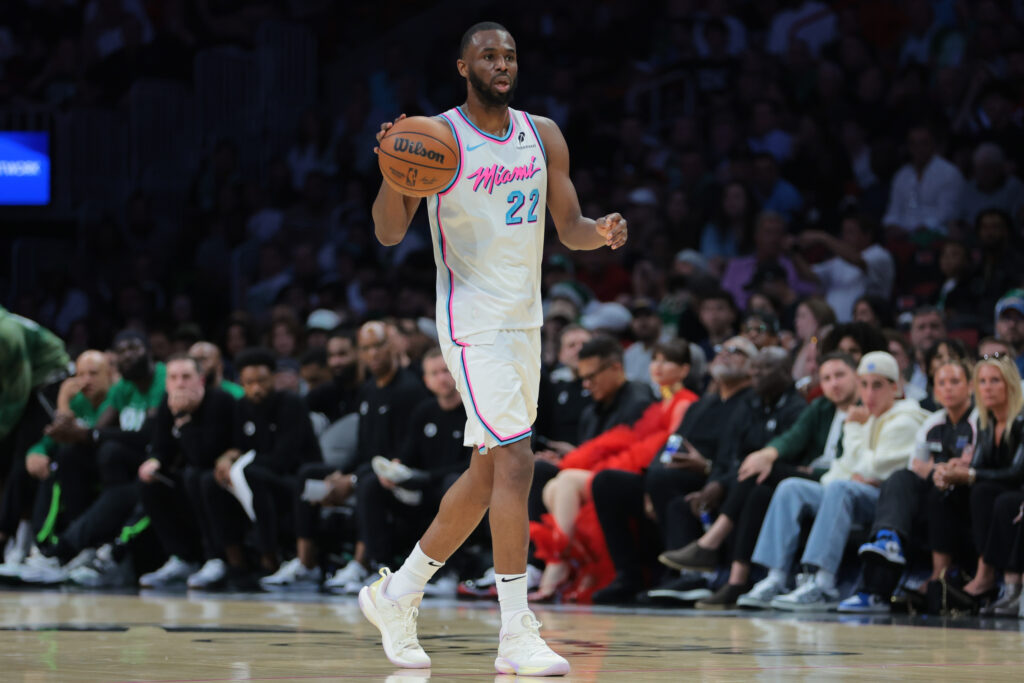
Andrew Wiggins is the classic “realistic upgrade that still moves the needle” because the skill set fits what the Lakers actually need, and the availability part isn’t just fan fiction anymore.
The market angle is the key. Michael Scotto reported the Miami Heat have gauged trade interest in Wiggins, which is basically league-speak for “we’re listening.”
When that door cracks open, the Lakers have to at least peek in, because wings who can defend up a position and still punish help defenses don’t hit the market often.
On the court, the profile is clean. Wiggins is at 16.9 points, 4.9 rebounds, 2.9 assists, 1.0 steals, and 1.1 blocks this season, shooting 48.7% from the field and 37.9% from three.
The efficiency is solid too, with a 57.1% true shooting mark. That’s the point with Wiggins. He doesn’t need the ball every trip, but if you leave him alone, he can make you pay, and if you put a smaller defender on him, he can get to the rim without needing a play called.
Defensively, this is where the Lakers benefit most. They don’t just need a “wing body.” They need a wing that can take the first contact, stay attached, and let everyone else keep their roles. Wiggins isn’t Herb Jones as a pure stopper, but he gives you size, mobility, and real “stocks” production. A wing averaging 1.0 steals and 1.1 blocks changes possessions, and the Lakers have needed more of that disruption from the perimeter spot all season.
The contract is the trade math that makes it feel doable. Wiggins makes $28.2 million this season, with a $30.2 million player option for 2026-27.
That’s not cheap, but it’s not “you need to gut your whole rotation” money either, especially if the Lakers frame this as consolidating multiple mid-tier pieces into one playoff wing. Having $22 million in expiring deals with Vincent and Kleber, the Lakers can make a deal while offering two barely rotation pieces.
Fit-wise, it’s simple. Next to Luka Doncic and LeBron James, Wiggins becomes a pressure-release wing who can hit spot-ups, attack closeouts, and soak up the toughest wing assignment so the Lakers don’t have to keep putting out fires with patchwork matchups.
If the Lakers can’t reach the Herb Jones tier without overpaying, Wiggins is the next best version of “two-way wing who actually plays starter minutes in the postseason,” and he’s one of the few names in this range with real smoke behind him.
1. Herb Jones

Herb Jones is No. 1 because he’s the cleanest answer to the Lakers’ biggest problem: they need a wing who can actually end possessions, not just survive them.
The rumor part is legit. Michael Scotto has connected the Lakers to Jones, and Marc Stein has been blunt about the reality check: the Pelicans’ asking price sits in “significant haul” territory, and it’s widely viewed as beyond what the Lakers can comfortably pay.
The Athletic’s Dan Woike said the Pelicans aren’t interested in moving Jones to the Lakers, and that a package built around expiring deals plus a single first-round pick wouldn’t get traction.
That “price problem” exists for a reason. Jones is still one of the league’s best disruption defenders, and the basic production shows it even before you touch the nerdy stuff. He’s at 1.7 steals per game, and he’s doing it while keeping his role clean offensively with 9.8 points and 2.3 assists.
Now for the more analytical part. Basketball Index paints Jones as the rare wing who wins in multiple defensive “jobs,” ranking in the 99th percentile in perimeter isolation defense, the 94th percentile in ball screen navigation, and the 89th percentile in passing lane defense.
That’s basically the full menu of what the Lakers need: hold up on an island, chase through actions, and blow up passes so teams can’t just run offense on rails.
And the contract is exactly why the league treats him like a premium asset. He’s making $13.9 million in 2025-26, which is absurdly low for an All-Defensive-level wing.
Offensively, the case is more nuanced right now. He’s shooting 40.1% from the field and 34.1% from three this season, so you’re not buying a lights-out shooter at the moment.
But you are buying the archetype and the history: an All-Defensive First Team season, and that he hit a career-best 41% from three in 2024.
That’s the whole pitch. If the shot stabilizes even back to “respected,” the defense becomes game-changing.
So yeah, Herb is the best fit… and also the hardest one to actually land. If the Pelicans even consider it, you’re talking multiple first-round picks or a real young impact player, not just “matching salary.” That’s why he’s No. 1 on this list and the least realistic one at the same time.