The Jazz came out of the NBA Draft Lottery with the No. 2 pick, and that immediately made them one of the most important teams of the 2026 draft cycle. The Wizards control the board at No. 1, but the Jazz sit in the next position, close enough to select a potential franchise player and powerful enough to turn the pick into a major trade package.
That is why Danny Ainge’s post-lottery stance matters. The Stein Line via Jake Fischer reported that Ainge did not close the door on moving down from the Jazz’s top selection.
“Ainge also told me he would consider trading down from Utah’s top selection. ‘We’re open,’ he said. ‘We’ll always listen.’ Something tells me you haven’t forgotten that Ainge was part of the Celtics’ brain trust, then spearheaded the rebuild in Utah…”
That line gives the Jazz a real offseason question. They can stay at No. 2 and choose between top prospects such as Darryn Peterson, Cameron Boozer, or another player near the top of their board. They can also use the pick as the center of a larger move for a proven star.
Ainge’s history makes the idea more serious. With the Celtics, he was part of the front office structure that moved down from No. 1 in 2017, watched the 76ers take Markelle Fultz, and still landed Jayson Tatum at No. 3. With the Jazz, he has already shown patience in collecting assets and waiting for leverage.
Now the question is simple: do the Jazz use No. 2 to draft a cornerstone, or does Ainge turn it into a star?
1. A Blockbuster Joel Embiid Move
Utah Jazz Receive: Joel Embiid
Philadelphia 76ers Receive: Walker Kessler (sign-and-trade), Jusuf Nurkic (sign-and-trade), Cody Williams, John Konchar, Svi Mykhailiuk, 2026 No. 2 pick, 2029 first-round pick, 2031 first-round pick
This would be the biggest possible use of the No. 2 pick. It is not a trade-down for depth. It is a trade-down only in draft position, while the real objective would be landing Joel Embiid and moving the Jazz into immediate playoff pressure.
The salary structure is difficult, but there is a path. Embiid is owed about $58.0 million in 2026-27. Walker Kessler would need a new sign-and-trade contract, projected here at four years and $112.0 million, with a first-year salary around $26.0 million. Jusuf Nurkic would also need a sign-and-trade, likely around $18.0 million in first-year salary. Cody Williams is at $6.0 million, John Konchar is at $6.2 million, and Svi Mykhailiuk is near $3.9 million. Kessler’s base-year compensation treatment would complicate the exact match, so the Jazz may need small adjustments or a third team, but this is the rough salary base for an Embiid deal.
The reason this can even be discussed is the 76ers’ situation. Tony Jones of The Athletic reported that Embiid did not see eye-to-eye with the front office and coaching staff as the season moved forward, including frustration around the Jared McCain trade to the Thunder and the lack of an immediate player coming back. Embiid also added uncertainty after the 76ers were swept by the Knicks, saying, “I don’t even know if I’m going to be here.” That is not a trade request, but it is not normal language from a franchise player after another failed playoff run.
For the 76ers, the offer is strong because it gives them a younger center, a top-two pick, two future first-round picks, and multiple roster pieces. Kessler averaged 14.4 points, 10.8 rebounds, 3.0 assists, and 1.8 blocks before shoulder surgery ended his season. He is not Embiid, but he gives the 76ers a real defensive center on a younger timeline. Williams gives them a wing prospect. The No. 2 pick is the central asset, because it can become a new high-end player next to their existing core of Tyrese Maxey and VJ Edgecombe.
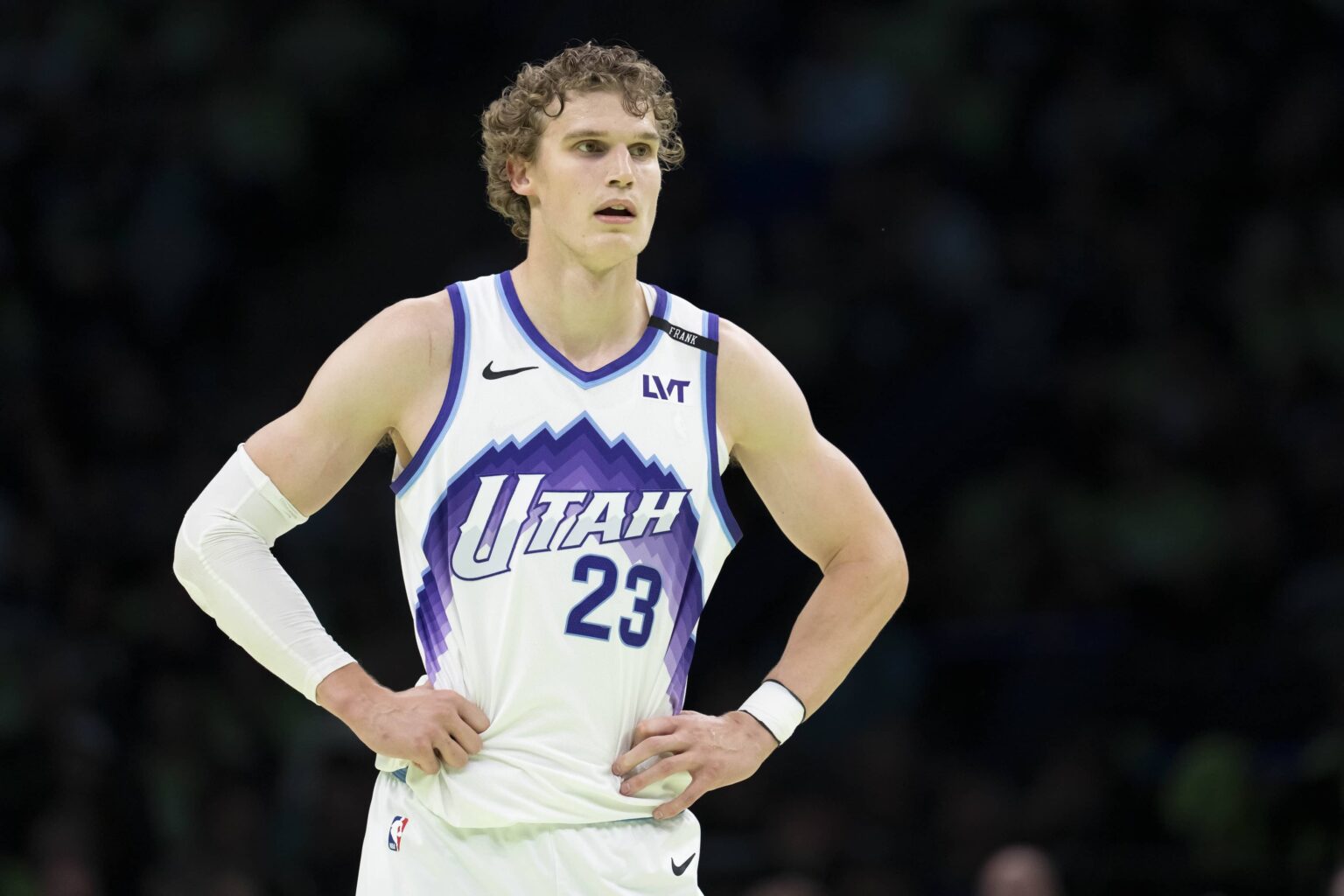
For the Jazz, the fit would be powerful and complicated. Embiid averaged 26.9 points, 7.7 rebounds, 3.9 assists, and 1.2 blocks while shooting 48.9% from the field. He is still a top-tier half-court scorer when available. Lauri Markkanen averaged 26.7 points and 6.9 rebounds while shooting 47.7% from the field, and his spacing is what makes this frontcourt possible. Jaren Jackson Jr. averaged 19.4 points, 5.7 rebounds, and 2.0 assists, with enough defensive range to operate away from the rim.
The Jazz would need clear roles. Embiid would be the center of the offense, not only a post scorer but the player who forces doubles and creates foul pressure. Markkanen would have to stay high-volume from three, attack mismatches, and avoid crowding the paint in a more small-forward role. Jackson would become the defensive release valve at the four spot, guarding in space, helping from the weak side, and protecting the rim when Embiid is higher on the floor.
The risk is obvious. Embiid is expensive, older, and has a long injury file. The Jazz would be giving up a major pick package and a young center for a player who may not give them 70-game seasons. But this is what a real star trade looks like. If Danny Ainge wants to turn the No. 2 pick into a win-now center instead of another prospect, Embiid is the biggest name that can justify the price.
2. Anthony Davis Becomes A Cleaner Star Bet
Utah Jazz Receive: Anthony Davis
Washington Wizards Receive: Walker Kessler (sign-and-trade), Jusuf Nurkic (sign-and-trade), Cody Williams, John Konchar, Svi Mykhailiuk, 2026 No. 2 pick, 2029 first-round pick
This is the better-fitting version of the star trade idea. Joel Embiid is the bigger offensive name, but Anthony Davis is the easier fit for the Jazz. He does not need the same post volume, he can defend more coverages, and he would fit more naturally next to Lauri Markkanen and Jaren Jackson Jr.
The offer would use the same Kessler structure from the Embiid framework, with Walker Kessler signing around four years and $112.0 million and starting near $26.0 million in first-year salary. Anthony Davis is set to make $58.5 million in 2026-27, so the Jazz would still need more outgoing money. Jusuf Nurkic would again be the larger sign-and-trade salary, while Cody Williams, John Konchar, and Svi Mykhailiuk help complete the matching structure. The No. 2 pick and the 2029 first-round pick are the real value pieces.
For the Wizards, this would only become realistic if Davis signals before the season that he does not want to stay. That should not be written as fact, but Chris Haynes claimed he could ask out if the roster is not competitive enough. It is the condition that makes the deal possible. The Wizards already own the No. 1 pick. If they moved Davis for this package, they would suddenly control the No. 1 and No. 2 picks in the 2026 NBA Draft.
That would be a franchise-changing position. They could draft AJ Dybantsa at No. 1 and still add Darryn Peterson, Cameron Boozer, or another top prospect at No. 2. Instead of trying to force a playoff push around an older, expensive frontcourt star who may not want to be part of the process, the Wizards would reset the roster around two elite draft assets, Kessler, Alex Sarr, and a deeper young core.
Kessler would also give the Wizards a direct center replacement. He is not Davis, but he gives them size, rim protection, rebounding, and a younger defensive identity. That is important if they are trying to build a sustainable roster instead of only collecting prospects. Williams gives them a wing development piece, and the future first-round pick adds another asset for later.
For the Jazz, Davis would raise the defensive ceiling immediately. A Markkanen-Davis-Jackson starting frontcourt would be huge, but not as awkward as it sounds. Markkanen is a spacing forward. Jackson can defend in space and protect from the weak side. Davis can anchor the paint, switch in shorter stretches, play as a lob threat, and operate as a short-roll passer.
That is the main difference between Davis and Embiid. Embiid would force the offense to play through him. Davis can dominate without needing the same number of touches. He can finish plays created by guards, punish smaller defenders, and cover defensive mistakes behind the action.
The risk is still serious. Davis is expensive, aging, and has a long injury history. The Jazz would be giving up the No. 2 pick and a strong young center for a player who cannot be treated as a guaranteed 70-game piece. But if the objective is to use the pick for a star who fits Markkanen and Jackson, Davis is one of the most logical names.
The Wizards would get two top-two picks.
The Jazz would get a defensive anchor.
That is the reason this framework works better than most veteran-star ideas.
3. A Jaylen Brown Trade Gives The Jazz A Real Wing Star
Utah Jazz Receive: Jaylen Brown
Boston Celtics Receive: Ace Bailey, Walker Kessler (sign-and-trade), Jusuf Nurkic (sign-and-trade), John Konchar, Svi Mykhailiuk, 2026 No. 2 pick, 2029 first-round pick, 2031 first-round pick, 2030 second-round pick
This is the cleanest star-wing idea for the Jazz because Jaylen Brown fits the roster without forcing Markkanen or Jackson out of position. It is still expensive, but it is less fragile than an Embiid or Davis swing. Brown is younger than both, more durable, and plays a position the Jazz need if they want to become serious quickly.
The offer would have to be large. Brown is set to make $57.1 million in 2026-27, so the Jazz need more than Ace Bailey and the No. 2 pick. Bailey is at $9.5 million, Konchar is at $6.2 million, and Mykhailiuk is around $3.9 million. Kessler would have to be part of the same sign-and-trade structure discussed before, likely starting around $26.0 million in first-year salary, though base-year compensation could complicate how much counts outgoing for the Jazz. Nurkic would also need to be structured as a sign-and-trade to help the match. The salary math is not simple, but the basketball value is clear: Bailey, Kessler, No. 2, two future first-round picks, and a second-round pick for Brown.
For the Celtics, this only becomes a discussion if they decide the current roster is too expensive and too fixed after another playoff failure. Brown had an excellent regular season, averaging 28.7 points, 6.9 rebounds, 5.1 assists, 1.0 steals, and 0.4 blocks while shooting 47.7% from the field and 34.7% from three. He also averaged 25.7 points in the playoffs. Trading him would not be about decline. It would be about cost, roster direction, and the chance to reset around younger pieces and premium picks.
Bailey is the main young player in the deal. He averaged 13.8 points, 4.2 rebounds, and 1.8 assists as a rookie while shooting 44.3% from the field and 34.4% from three. As a starter, he was better, putting up 15.3 points, 4.4 rebounds, and 1.9 assists in 61 games. He is 6-foot-9, still only 20 next season, and on a rookie-scale contract through 2028-29 with team control. That is a valuable asset for a team trying to get younger and cheaper.
Kessler is the centerpiece that makes the roster logic stronger. The Celtics would get a younger defensive big while also adding the No. 2 pick. That pick is the real prize. It could become Darryn Peterson, Cameron Boozer, or another top-tier prospect. Add two future first-round picks, and the Celtics would not be making a normal win-now trade. They would be turning one expensive star into a new young core.
For the Jazz, Brown would be a perfect pressure player next to Markkanen and Jackson. Markkanen can remain the power forward. Jackson can stay as the defensive anchor and weak-side rim protector. Brown would give them a powerful wing who can attack mismatches, defend strong perimeter players, and create offense when the game slows down.
That is the main appeal. The Jazz would not be building a strange frontcourt-only team. They would have a top wing scorer, a high-level spacing forward, and an elite defensive big. Brown also gives them playoff physicality. He can play through contact, score without needing perfect spacing, and defend multiple matchups.
The risk is the price. Giving up Bailey, Kessler, No. 2, and multiple picks is heavy. But if the Jazz already have Markkanen and Jackson, keeping every young piece is less important than building a real top-end lineup. Brown is the type of star who makes that argument serious.