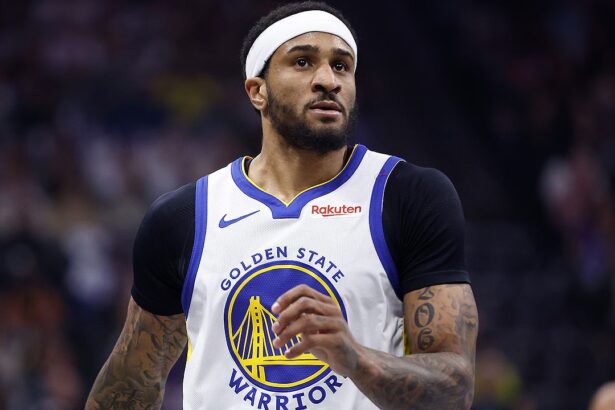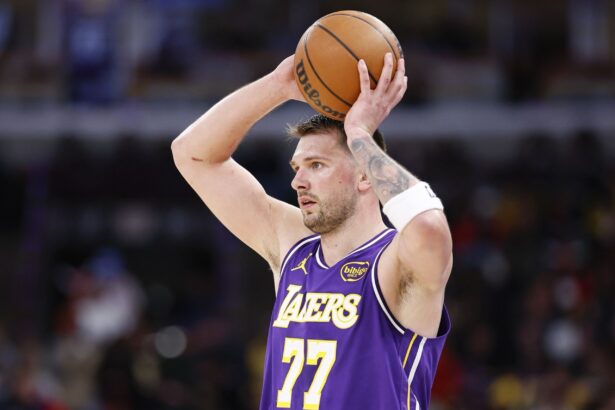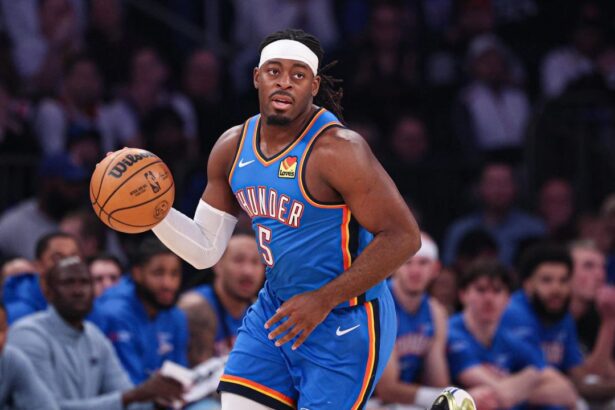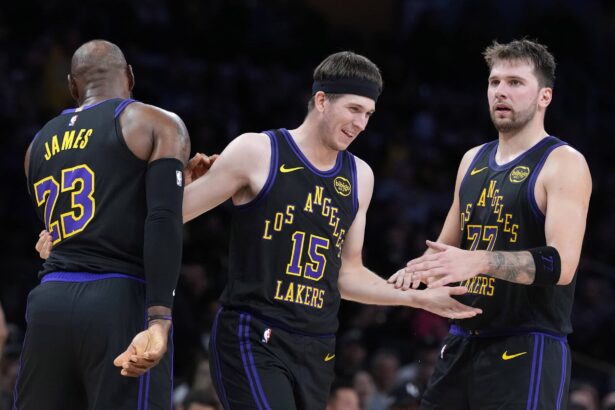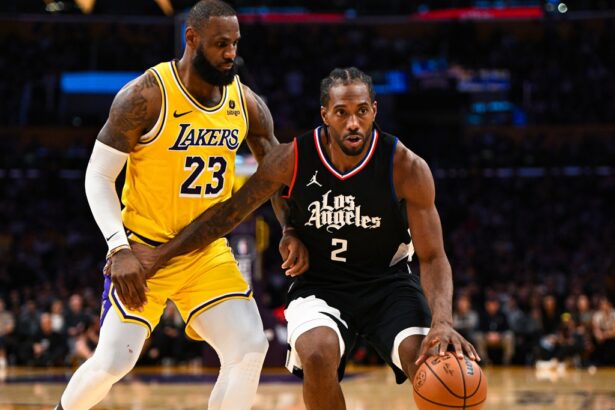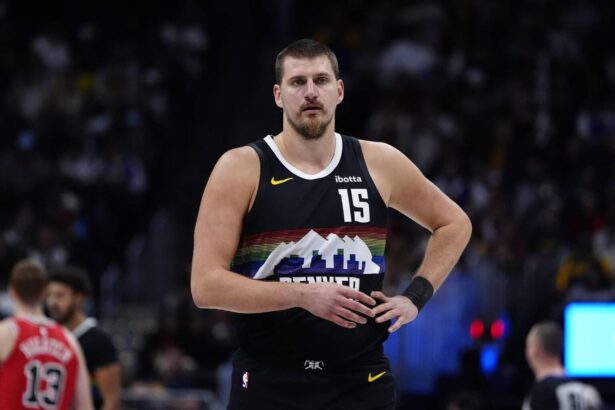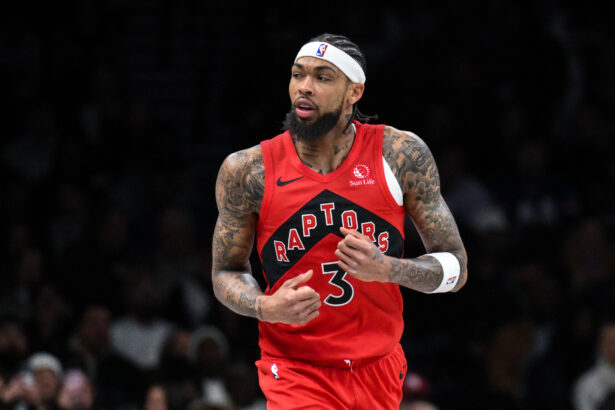
Shai Gilgeous-Alexander and Luka Doncic have basically owned the headline space for NBA point guards in 2025-26. Gilgeous-Alexander has been sitting on top of the NBA.com MVP Ladder at the All-Star break, and Doncic has been the main guard pushing closest to that level when healthy.
At the same time, the position has been hit by real attrition. Tyrese Haliburton, Damian Lillard, and Kyrie Irving will likely miss the entire 2025-26 season after Achilles and ACL surgery, which removed some of the league’s cleanest playmaking engines from the conversation.
That context matters because it opens space. A few established names have been more uneven this year than their peak versions, while younger guards are taking bigger roles and putting up real production.
So, who has been the best point guard this season? Here is a pyramid with different tiers, based on impact and performance in 2025-26.
The Best
Shai Gilgeous-Alexander, Luka Doncic
Shai Gilgeous-Alexander has been the cleanest point guard case for “best in the league” this season because the package is complete: volume scoring, efficiency, and two-way pressure. He is at 31.8 points, 4.4 rebounds, and 6.4 assists per game, while shooting 55.4% from the field and 39.0% from three. He is also at 89.2% from the line, which matters because so much of his scoring comes from living in the paint and forcing fouls.
The team context helps his case. The Thunder are 42-14 and sitting first in the West, which gives his production real weight. A lot of stars can put up numbers on average teams. This year, Gilgeous-Alexander is doing it while the Thunder win every week, and while defenses are clearly built to load up on him. They blitz, they show extra help early, they try to wall off the middle. He still gets to his spots, because his game is simple and hard to stop: pace changes, long strides, and a steady diet of mid-range pull-ups when the rim is taken away.
Even if you want to argue style, there is not much weakness to attack. He protects the ball well for his usage, he defends his position, and he has made the Thunder offense stable in close games. This season, he looks like the guard standard: high volume, high efficiency, and wins attached to it.
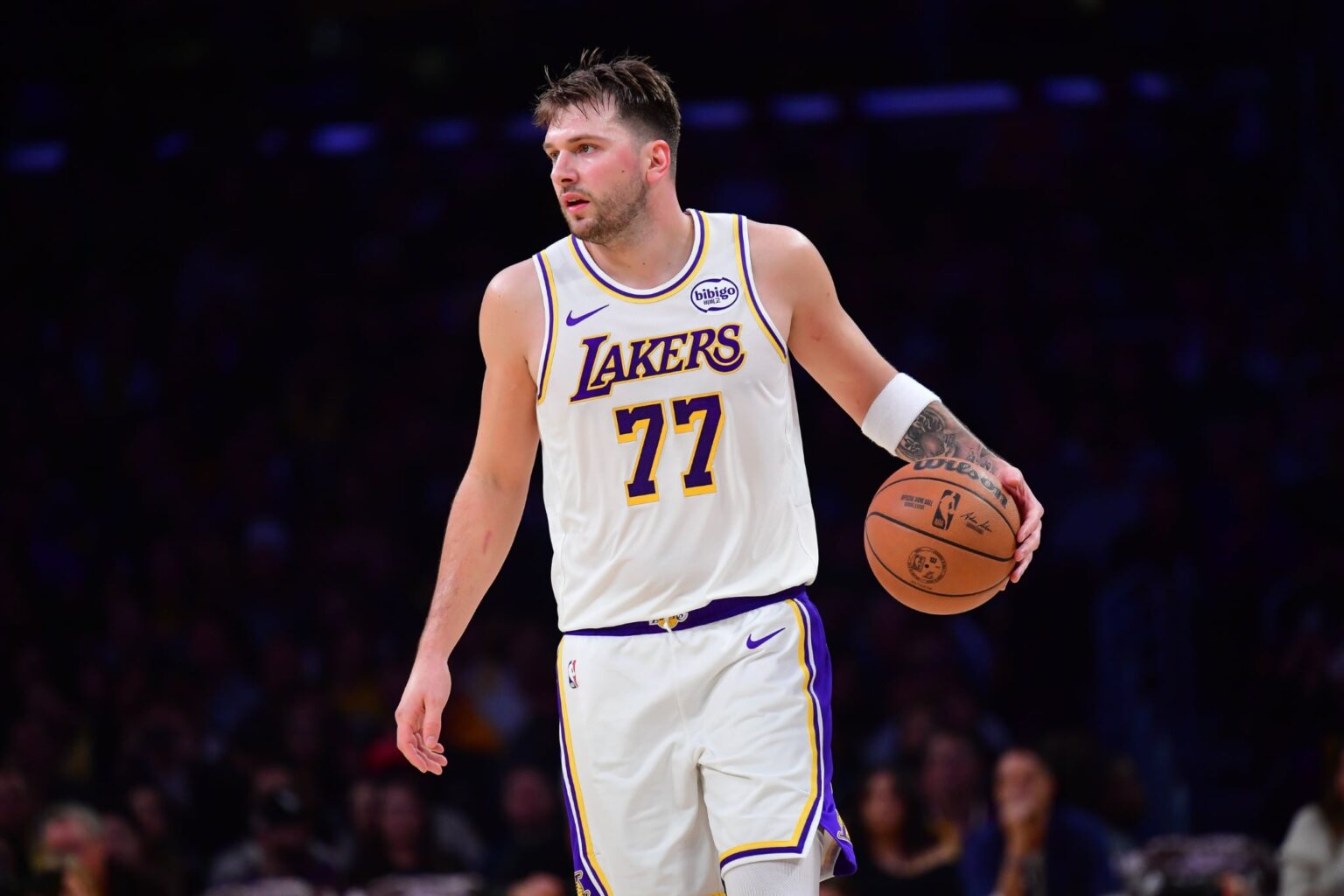
Luka Doncic has been the biggest scoring force at the position this season, and the numbers show it right away. He is at 32.8 points per game, with 7.8 rebounds and 8.6 assists. That is not “guard production.” That is an entire offense in one player. When he is on the floor, the game becomes a set of problems the defense has to solve every trip, because he can beat you with a step-back three, a bully drive, or a pass that hits the weak side before you can rotate.
The Lakers are 33-21 and fifth in the West, so his impact is not happening in a vacuum. They are in the mix, and they need his creation because the roster is built around spacing and finishing off advantages. Doncic is the one who creates those advantages. His 8.6 assists per game only tell part of it. He also creates the hockey assists, the rotation passes, the simple reads that turn a good defense into a scrambling defense.
The efficiency profile is different than Gilgeous-Alexander’s, but it matches his shot diet. Doncic is shooting 47.3% from the field and 34.5% from three, with 78.1% at the line. He takes a lot of hard shots: late-clock step-backs, pull-ups against switches, contested threes after dribbles. That lowers the raw field goal percentage, but it also explains why defenses still fear him. You can play perfect defense for 20 seconds and he can still hit a shot that feels unfair.
The only real knock this season has been availability. He has missed time with a hamstring issue, and the Lakers have had to survive stretches without his control. When he plays, though, the value is obvious: top-level scoring, top-level passing, and a style that forces teams to guard the whole floor. That combination is why he belongs at the very top tier of this season’s point guard pyramid.
Elite Stars
Stephen Curry, Cade Cunningham, Jalen Brunson, Tyrese Maxey
Stephen Curry has been an elite-level offensive guard again this season, even with missed time. He is averaging 27.2 points, 3.5 rebounds, and 4.8 assists in 31.3 minutes, with 46.8% from the field, 39.1% from three, and 93.1% at the line.
The Warriors have been more middle-of-the-pack in the standings than Curry’s numbers, sitting 29-26 and eighth in the West. That matters for tiering because the best guards usually pull their teams into the top few seeds. Still, Curry’s offensive profile remains unique. He is still generating high-volume threes at an elite percentage, and his efficiency staying this high at his usage is a strong signal that the shot quality he creates is real, not variance.
The main separator between Curry and the very top tier this year is availability. He has been dealing with a right knee issue and missed a significant chunk of games, including the All-Star weekend. When he is out, the Warriors’ offense loses spacing, gravity, and late-clock shot creation. When he is in, the entire defense has to stretch, and that opens the floor for everyone else.
In a pyramid, this season is a clear Elite Stars case: still a top-end scorer with clean splits, but without the full season of durability and team dominance that usually defines “The Best.”
Cade Cunningham has played like a true engine guard this season, and the production is not small. He is averaging 25.3 points, 5.6 rebounds, and 9.6 assists in 34.9 minutes, with 46.2% from the field, 33.0% from three, and 80.8% at the line. The assist number is the headline. It is the kind of volume that only a few guards touch, and it usually means the offense is built around your decisions every trip.
The Pistons have turned that into winning, sitting 40-13 and first in the East. That team context is a big part of why Cunningham lands in this tier. It is one thing to put up 25 and 10. It is another thing to do it while your team is leading the conference, with defenses treating you as the first problem to solve.
The splits show where the growth still needs to happen. He is not shooting like the very top guards from three, and the turnovers (3.7 per game) are the tradeoff that often comes with this kind of creation load. But the overall profile is elite: high usage, real playmaking, and enough scoring to punish single coverage.
If the three-point efficiency and late-game shotmaking stay stable through the spring, Cunningham has a path to jump a tier. For now, the combination of production and team results makes him one of the strongest Elite Stars guards of the season.
Jalen Brunson’s season has looked like a steady, high-volume lead guard year, with clean efficiency and reliable scoring. He is averaging 27.0 points, 3.3 rebounds, and 6.1 assists in 34.6 minutes, shooting 47.0% from the field, 37.4% from three, and 84.7% at the line. That is a strong scoring base without sacrificing spacing, and it fits the way the Knicks play: a lot of half-court possessions where the guard has to win with timing and footwork.
The Knicks are 35-20 and third in the East, which keeps Brunson’s season firmly in the “high-impact on a winning team” category. He is not just filling the box score. He is driving the team’s late-game offense and keeping the floor organized when games slow down. The 2.2 turnovers per game also stand out for a primary creator, because it signals control rather than risk.
What keeps Brunson out of the very top tier is scale. The top guards this season are either putting up bigger playmaking volume, bigger two-way impact, or both. Brunson’s profile is closer to “elite scorer who can run an offense” than “one-man system.” But that is still an Elite Stars tier player, especially when it is attached to a top-three seed and efficient shooting splits.
Tyrese Maxey has had one of the biggest scoring jumps at the position this season, and his overall line puts him right in this tier. He is averaging 28.9 points, 4.1 rebounds, and 6.8 assists in 38.6 minutes, with 46.9% from the field, 37.9% from three, and 88.9% at the line. That is elite guard scoring with strong shooting efficiency, and the minutes load shows how much the 76ers lean on him.
The 76ers are 30-24 and sixth in the East, which is good but not dominant. Maxey’s case is that he is doing star-level work in a season where his team has needed him to carry a lot of creation and pace. The assist number is not in the “table-setter” range, but it is high enough to show he is not just hunting shots. It is real lead-guard usage.
What separates Maxey from “The Best” tier right now is mainly team control. The best guards this season are shaping top-tier offenses and winning at the very top of the standings. Maxey’s production is there, and the shooting splits are there, but the team results sit more in the middle of the conference.
Still, as a pure season performance, this is an Elite Stars year: near-29 a night, efficient threes, high minutes, and enough playmaking to keep defenses honest.
Exceptional
James Harden, Jamal Murray, Keyonte George, De’Aaron Fox
James Harden has been a high-level offensive organizer all season, and the raw production still looks like a top guard. He is averaging 25.0 points, 4.9 rebounds, and 8.2 assists per game, with 42.0% from the field, 35.0% from three, and 90.2% from the line.
The context changed fast. Harden started the season in a Clippers uniform, but he has already had a real impact since landing with the Cavaliers. He was in just his second game with the Cavaliers when he posted 22 points and 10 rebounds in a comeback win over the Nuggets, which tells you how quickly he has been folded into their core rotation.
The Cavaliers are 34-21, fourth in the East, and playing like a real playoff team. That matters for Harden’s tier. He is not putting these numbers up on a team drifting toward the lottery. He is doing it while his team is winning, and while defenses still treat him as the main decision-maker when he is on the floor.
The reason he lands in Exceptional instead of the higher tiers is that the scoring efficiency is more uneven than the top guards this year, and his workload comes with turnovers (3.7 per game). But if you are ranking point guards strictly by this season’s value, Harden has been a real offensive engine: heavy touches, big assist volume, and enough scoring to punish single coverage every night.
Jamal Murray has played like a first-option guard more often than people want to admit, and the numbers back it up. He is at 25.7 points, 4.4 rebounds, and 7.6 assists per game, shooting 48.5% from the field, 42.5% from three, and 88.7% from the line. That is star production with elite shooting efficiency.
The Nuggets are 35-20 and third in the West, which gives Murray’s season real stakes. He is not just piling up points. He is doing it on a team trying to stay in the top half of the bracket, where every half-court possession matters more. On nights when defenses overload Nikola Jokic with extra bodies, Murray’s shot creation becomes the release valve: pull-up threes, mid-range work, and quick decisions off two-man actions.
The separator for him is consistency versus the very top guards. Murray has had some quieter stretches, and his value is tied to rhythm more than someone like Shai Gilgeous-Alexander. But when you combine his efficiency, his assist volume, and the team context, this is still an Exceptional season at the point guard spot.
Also important: this level of play earned him his first All-Star selection, which reflects how the league has viewed his season.
Keyonte George is the clearest “rise” guard in this tier list. He has put up 23.8 points, 3.9 rebounds, and 6.5 assists per game, with 45.8% from the field, 37.5% from three, and 89.4% from the line. For a young guard, that scoring-plus-playmaking combo is already real lead-guard production, not just empty usage.
The Jazz record is the obvious drag. They are 18-38, near the bottom of the West, and that limits how high you can place anyone from that team in a season pyramid. But the point of this tier is “exceptional season performance,” and George qualifies because the efficiency is legit and the responsibility is massive. He is getting guarded like a first option, and he is still producing.
Even with that, his season line has been one of the biggest guard surprises: real scoring volume, real shooting, and enough passing to keep the offense functional.
If the Jazz ever stabilize around him, this kind of stat profile is how a guard jumps tiers.
De’Aaron Fox is in a weird season: the Spurs are winning at a top level, but Fox’s personal production is more “strong starter” than “carry job.” He is averaging 19.4 points, 3.8 rebounds, and 6.3 assists per game, with 48.4% from the field, 35.3% from three, and 79.5% from the line.
The team context is the big positive. The Spurs are 38-16, second in the West, and they have been one of the best stories of the season. But Fox’s arrival turned the Spurs into a winning structure, without him putting up huge raw numbers. He pushes pace, gets downhill, and makes the simple reads that keep the offense on schedule.
There is also a clear signal that he has been valued around the league: he was selected as an All-Star injury replacement, which matters in a pyramid like this, because it reflects the combination of production and team impact.
He lands in Exceptional because he has been a winning guard on a top seed, even if he has not had the same scoring burst he showed in past peak stretches. On this season’s resume, it is more “high-impact piece” than “dominant centerpiece,” but it still belongs in this tier.
Quality Starters
Trae Young, Ja Morant, LaMelo Ball
Trae Young is the clearest example of how fast a point guard can fall in a single season when the scoring efficiency and the availability are not there. Young’s 2025-26 line sits at 19.3 points and 8.9 assists per game, but the shooting has been under his normal standard: 41.5% from the field and 30.5% from three.
The bigger issue is that this has not been a full-season sample. He has played only 10 games, which makes it hard to stack him against guards who have been on the floor every night. When you combine the small number of games with the drop in shot-making, it explains why he is not in the All-Star group this time around, even if he had played every game in the season.
The team context also shows why the conversation around him cooled. The Wizards are 14-39, last in the East, while he still hasn’t made his debut after moving from Atlanta. He is still a high-level passer, and 8.9 assists in a down year is real. But the scoring profile is closer to “good starter lead guard” than “All-Star lock,” and the missed time removes the margin for error.
Ja Morant being in a “Quality Starters” tier tells you what kind of season this has been for him. The numbers are not terrible, but they are not close to the level that used to make him an automatic All-Star conversation. Morant is at 19.5 points, 8.1 assists, and 3.3 rebounds per game, while shooting 41.0% from the field.
The first problem is availability. Morant has played 20 games. That is not enough volume to compete with guards who have been producing across 45 to 55 games, especially when his efficiency has been this shaky. And the efficiency drop matters because Morant’s game is built on pressure: rim attacks, paint touches, and forcing defenses to collapse. When the finishing is not elite, and the jumper is not scaring anyone, the whole profile looks smaller.
The team results have not helped him either. The Grizzlies are 20-33 and sitting 11th in the West. That is the type of record that usually kills fringe cases, and Morant has not had the dominant scoring stretch to override it.
This tier is basically the honest middle ground. Morant has still flashed the passing and burst that make him dangerous, and 8.1 assists show he is still creating. But this season, the combination of limited games, weak shooting efficiency, and a team outside the picture puts him closer to “good starter when available” than “elite guard season.”
LaMelo Ball has been productive enough to stay in the conversation, but the efficiency and the team context are the reasons he slides into this tier instead of the higher ones. Ball is averaging 19.3 points, 4.8 rebounds, and 7.4 assists per game. The issue is the shot profile: 40.1% from the field, which is a tough number for a high-usage lead guard.
Unlike Trae Young and Ja Morant, Ball has at least been on the floor a decent amount. He has played 45 games. That makes this less about “he did not play enough” and more about “his season has been uneven.” When your field-goal percentage sits around 40%, it usually means you are living on difficult jumpers and not getting enough easy points at the rim. Ball’s playmaking is still real, and 7.4 assists keep him in starter-plus territory. But the scoring impact is not as clean as it needs to be for All-Star tiers.
The Hornets have also been stuck in the middle. They are 26-29, ninth in the East, which is not bad, but it is not the kind of team story that pushes a guard into the event when the efficiency is shaky. And he didn’t make the 2026 All-Star roster, which matches how this season has felt: good box score nights, but not enough week-to-week dominance to force the vote.
Ball is still clearly a starting point guard who can run offense and create looks. This season just has not looked like the rising, clean, star-level version people expected. The production is there. The efficiency and the team level are what held him back.