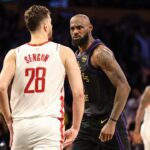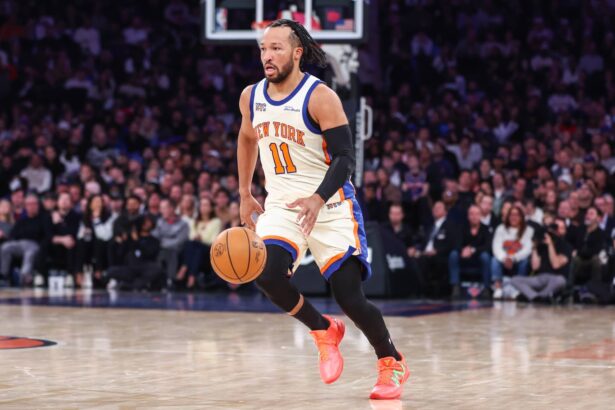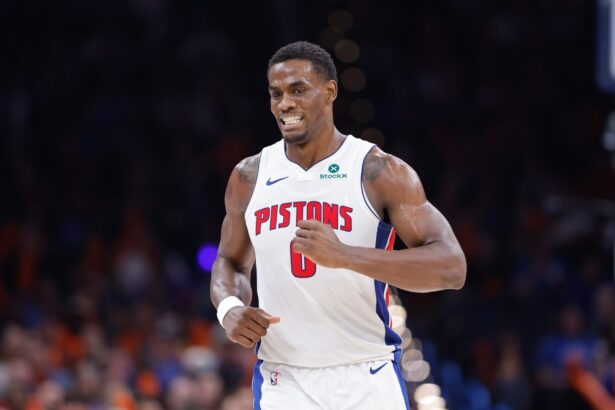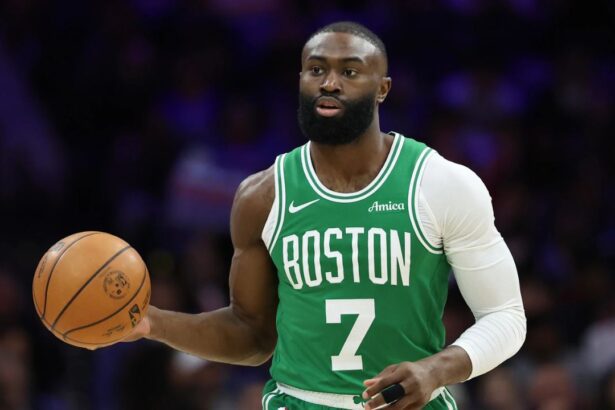
The Los Angeles Lakers had a chance to seize control of the series in Game 5, especially with Austin Reaves back in the lineup. Instead, it was the Houston Rockets who dictated the terms, grinding out a 99-93 win. This was a game built on who wanted it more, and it wasn’t the Lakers overall.
Even with strong individual efforts from LeBron James and Deandre Ayton, the Lakers never fully found rhythm offensively. On the other side, Houston played like a team that knew exactly who it was on both ends. The result? A huge win that shifts pressure squarely back onto the Lakers as they head to Houston in Game 6.
1. Houston’s Three-Point Edge Changed The Entire Game
This game was decided from beyond the arc more than anywhere else. The Rockets knocked down 14-40 threes (35.0%), while the Lakers struggled to just 7-27 (25.9%). That’s a +21 point differential from three-point range, and in a game decided by six points, it’s everything. Jabari Smith Jr. (4 threes) and Reed Sheppard (2 threes, 6 assists) consistently punished defensive lapses.
On the flip side, the Lakers simply couldn’t buy a shot. LeBron James went 0-6 from deep, while the team as a whole lacked spacing and confidence. Even good looks didn’t fall, and over time, that hesitation crept into their offense. Houston didn’t just shoot better – they made the Lakers pay for every mistake.
2. Turnovers And Sloppy Execution Killed The Lakers
If there’s one stat that perfectly sums up the Lakers’ night, it’s this: 15 turnovers leading to 18 Rockets points. That’s devastating. Marcus Smart alone had 6 turnovers, and even when the Lakers generated stops, they often gave the ball right back.
Meanwhile, Houston was far more composed with just 11 turnovers. Alperen Sengun played a huge role here, finishing with 8 assists and acting as a stabilizing hub offensively. The Rockets didn’t force things but just let the game come to them. That contrast in decision-making was glaring, especially in crunch time.
3. Austin Reaves Returned, But Rust Was Obvious
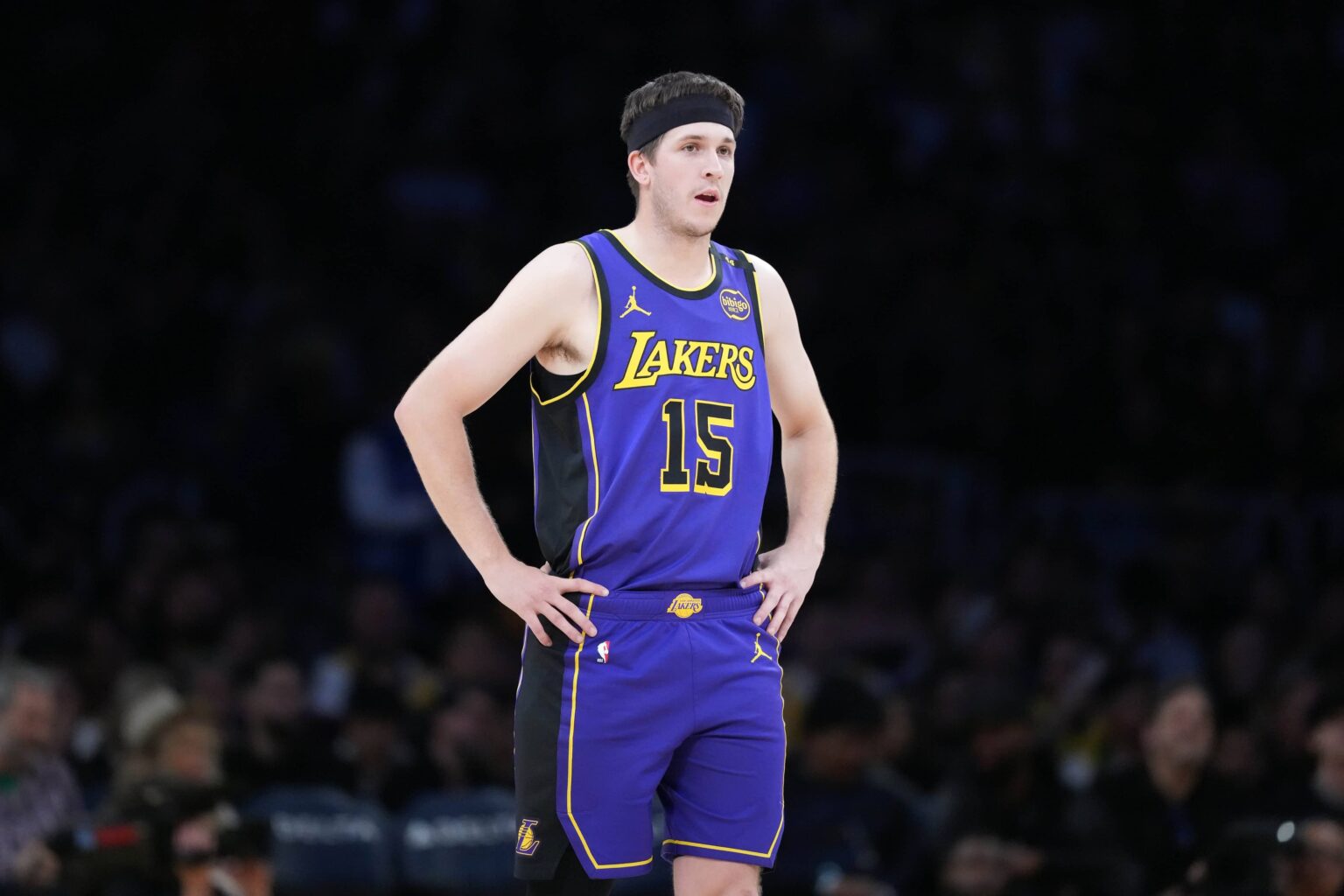
There’s no question the return of Austin Reaves gave the Lakers a boost offensively. He finished with 22 points, 6 assists, and 12-13 from the free-throw line, showing his ability to attack and draw contact. On paper, that looks like a strong performance.
But watching the game told a slightly different story. Reaves shot just 4-16 from the field and 2-8 from three, struggling to find rhythm after time away. There were moments where his timing felt off, especially in half-court sets. He competed, but this wasn’t peak Reaves, and against a locked-in Houston defense, that mattered.
4. Houston’s Defensive Pressure Set The Tone
The Rockets disrupted the Lakers. They racked up 10 steals compared to the Lakers’ 5, constantly getting into passing lanes and forcing uncomfortable possessions. Amen Thompson led the charge with 4 steals, while multiple players contributed to a team-wide defensive effort.
That pressure worked. Houston forced the Lakers into rushed decisions, late-clock situations, and contested looks. Even when Los Angeles tried to slow things down, the Rockets’ energy never dipped. Even if the Lakers missed a lot of shots they usually make, the Rockets made it very tough on them.
5. Lakers Won The Glass, But Couldn’t Capitalize
Statistically, the Lakers did some things right. They outrebounded Houston 41-34, including a dominant 13 offensive rebounds, with Deandre Ayton pulling down 17 boards (10 offensive). That’s usually a formula for success because these games are rare from Ayton.
But here’s the problem: they didn’t convert those chances well. Despite all those extra looks, they shot just 42.1% from the field and 25.9% from three. That loses playoff games. Winning the battle on the glass means nothing if you can’t turn it into points, and the Lakers learned that the hard way.