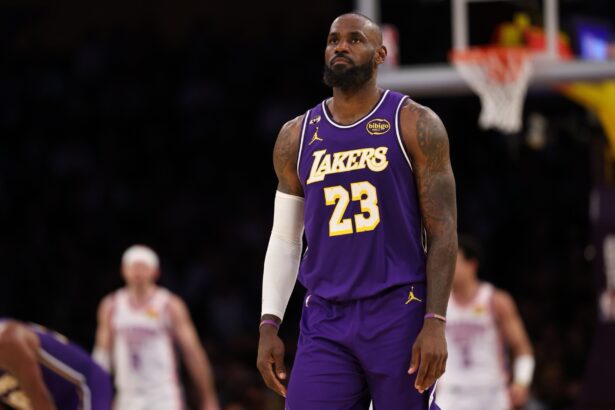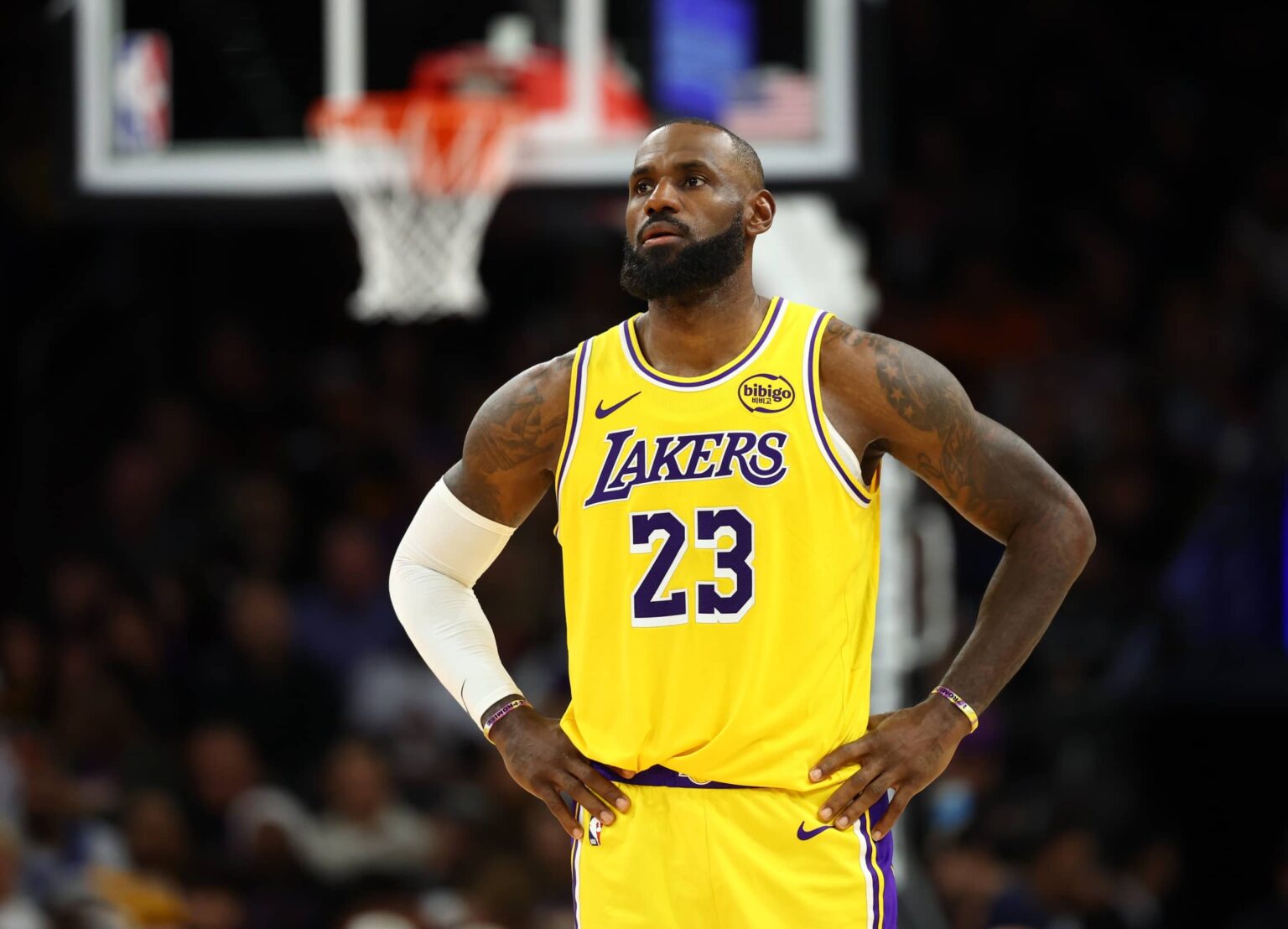
ESPN executives reportedly began internal discussions about preparing for LeBron James’ retirement earlier this season, a decision that now looks wildly premature given how the year has unfolded. That stretch drove the narrative. Internally, ESPN figures believed they were watching the beginning of the end.
On The Dan Patrick Show, Brian Windhorst revealed that there were conversations about starting content planning for LeBron’s retirement. The logic was simple. He looked slower, less explosive, and out of sync. For a player who had set an impossible standard for longevity, even a slight drop felt significant.
“I had a meeting with my bosses, and I said, you know, we may need to start our content planning for LeBron James retiring, because he looked, for the first time, like an old man who couldn’t compete. And he looked like that because he couldn’t really work out all summer.”
“He had no training camp. As the season went along, he got himself into better condition, and by the time spring came, when they really needed him, he was in great shape. Whatever he does in between these games to keep his back healthy and get himself into actual physical condition has been great.”
“Secondly, midway through this year, he took a step backwards or sideways, whatever you want to say, so that it could work better with Austin Reaves and Luka Dončić. So he took, even if he was feeling 100 percent and feeling like a 30-year-old, he significantly adjusted the way he played the game. And then in this last moment of the season, he shifts and has to go back to being normal LeBron again.”
“Like a lot of people on the Los Angeles Lakers are doing, they have their sleeves rolled up and are doing work here that is making this thing come together. But the story of LeBron’s season is really remarkable to watch. He has traits about him that are sometimes annoying.”
“But when you look at the actual thing that he’s doing, when you look at the actual accomplishment and take it for its value, it’s pretty remarkable. Not just that he’s 41, just what he’s doing this year, which has been unlike any season he’s had before.”
The concern was not random. Early in the season, LeBron did not resemble the player the league had grown used to for over two decades. He missed training camp and the first 14 games due to a lingering sciatica issue, which disrupted his conditioning and rhythm.
In his first 10 games back, he averaged 18.6 points, 7.5 assists, and 5.8 rebounds while shooting 46.9% from the field and 26.1% from three. For the first time, there were visible signs of decline. His long-standing streak of scoring at least 10 points in every game ended against the Toronto Raptors, adding to the growing concern.
However, that read did not hold for long. As the season progressed, LeBron rebuilt his conditioning and adjusted his role within the Los Angeles Lakers system. From the start of the new year, he averaged 21.2 points, 7.4 assists, and 6.5 rebounds, showing improved efficiency and control.
More importantly, he made a conscious shift in how he played. With Luka Doncic and Austin Reaves taking on larger offensive roles, LeBron stepped back. He focused on playmaking, pacing, and defensive positioning, allowing the Lakers to build chemistry and go on a strong run.
That adjustment sparked speculation of a different kind. Rumors surfaced suggesting tension within the roster and even the possibility of LeBron leaving Los Angeles. Those reports faded quickly as the team found rhythm. What looked like decline was, in reality, adaptation.
Then the season flipped again. Injuries to Doncic and Reaves forced LeBron back into a primary role late in the season and into the playoffs. The response has been immediate and dominant. Since those injuries, he has averaged 24.8 points, 10.7 assists, and 7.2 rebounds, controlling games in a way few expected at age 41. His performances have pushed the Lakers to a 2-0 series lead over the Houston Rockets, a result that almost no one predicted given the roster situation.
This stretch has reshaped the entire conversation. Instead of retirement planning, the focus has shifted back to how long LeBron can sustain this level. Rich Paul has stated that LeBron could play five more years, while Jeanie Buss has expressed a desire to see him retire as a Laker, even while acknowledging the decision is fully his. The early-season version of LeBron created doubt. The current version has erased it.
What ESPN executives saw in October looked like the end. What has followed looks like another reinvention. At 41, LeBron is not following a standard aging curve. He is rewriting it, again, in real time.