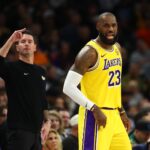
The narrative surrounding the Los Angeles Lakers and Klutch Sports has lingered for years, often framing the franchise’s biggest decisions as extensions of LeBron James’ influence. This week, that perception was directly addressed by Rich Paul, who pushed back on the idea that Klutch ever controlled the Lakers during the LeBron era.
“We never ran the Lakers, that was never a thing,” Paul said on the Game Over podcast. “If I ran the Lakers, I would’ve been a part of the deal and fit done if that money. The reality of it is, people are more concerned about everything else than an actual partnership. We had and continue to have a great partnership with the Lakers, but it’s not like you would think. I don’t want that responsibility.”
If James and Paul had it their way, the Lakers would probably look like a completely different team. They have been vocal about wanting a more balanced, win-ready roster for years, and the organization has often fallen short of surrounding LeBron with enough consistent help.
Still, speculation about LeBron’s influence has followed nearly every major Lakers move since his arrival in 2018. That narrative intensified after the Anthony Davis trade, a blockbuster deal widely viewed as LeBron-driven given Davis’ Klutch representation and the urgency with which the Lakers reshaped their roster. Around the league, the move became a reference point for critics who believed star power, rather than front office autonomy, was steering decisions in Los Angeles.
Behind the scenes, however, the relationship between LeBron and Lakers ownership has always been more nuanced. While the organization has valued LeBron’s voice and perspective, particularly given his stature and basketball IQ, decision-making authority has remained firmly with the front office, namely general manager and president Rob Pelinka. The Lakers have often balanced star input with long-term planning, even when those priorities did not fully align, creating tension between perception and reality.
That dynamic has shifted further in recent years. With roster turnover, front office changes, and a more structured chain of command, LeBron’s influence has naturally evolved. The partnership remains strong, but it no longer carries the same weight it once did during the championship push at the height of his tenure.
The arrival of Luka Doncic has accelerated that shift. As the Lakers pivot toward a new era built around a younger superstar, the balance of power has continued to change. At nearly 41 years old, LeBron remains a central figure, but the franchise’s future is no longer defined solely by his preferences. Paul’s comments underscore that reality, signaling a clear transition from the perception of control to a more traditional star-franchise relationship as the Lakers move forward.
So while he may not hold the same influence he once did, it does not change LeBron’s approach. He continues to play at his usual standard and remains determined to make the most of whatever pieces the Lakers put around him.
Ultimately, Rich Paul’s comments peel back the curtain on a relationship that has long been misunderstood. The Lakers and LeBron James may be closely aligned, but control has never rested in one place. As the franchise transitions into its next phase, that distinction matters more than ever. The era of perception-driven narratives may be fading, even if the scrutiny surrounding LeBron never truly will.