Power forward has quietly become one of the hardest positions to rank in 2025-26. The role changes team to team. Some fours are primary scorers who live in the midrange and punish switches. Others are modern big wings who defend across positions, rebound, and space the floor. And on a lot of contenders, the “power forward” is really a connector who keeps the offense moving while doing the dirty work.
This pyramid will follow the same structure as the point guards, shooting guards, and small forwards versions. It is not a career list. It is only about 2025-26 performance, with tiers based on production, availability, and impact on winning.
The Best
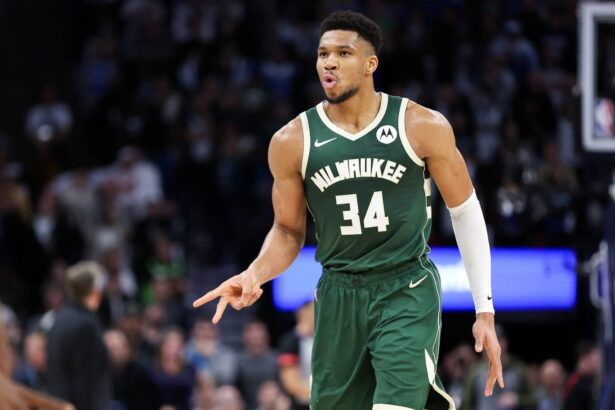
Giannis Antetokounmpo, Victor Wembanyama
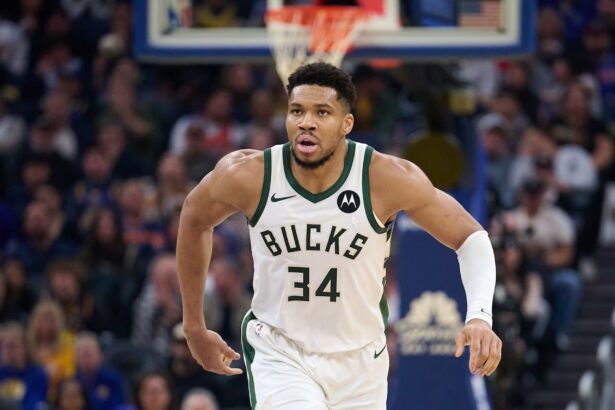
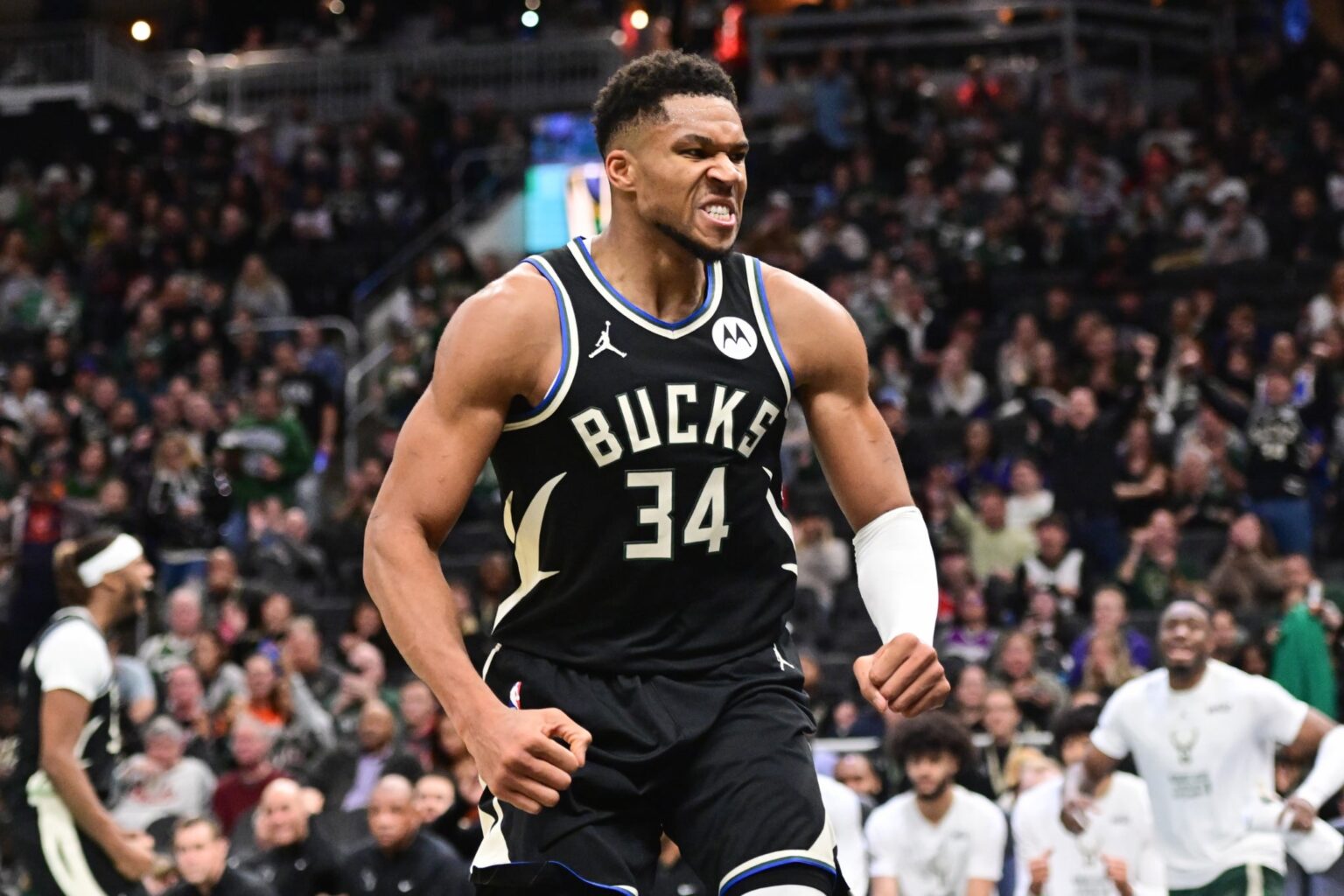
Giannis Antetokounmpo is still the cleanest “pressure player” at the position. The scoring is elite (28.0 points per game), the rebounding is still there (10.0), and the playmaking has stayed steady (5.6 assists) while he’s shooting an absurd 64.5% from the field.
What’s different this season is that the Bucks haven’t been able to ride that dominance into consistent winning. Their record sits at 23-30, and it has turned a lot of Giannis nights into survival basketball rather than cruise control. The top tier is usually “great player plus great team result.” Giannis has done his part, but the team context has been noisy, and that is what drove the trade rumors since the start of the season.
Still, the power forward value is obvious every time the game tightens. When opponents go small, he punishes the glass and the rim. When they pack the paint, he can still create clean looks because teams over-help, and he finds cutters. He’s still recovering from a calf strain, which fits the year: elite production, but a constant layer of physical maintenance around it.
Victor Wembanyama is the reason the “power forward vs. center” debate feels outdated. The Spurs are 38-16 and second in the West, and Wembanyama is at the center of it, even while technically being listed as a forward on NBA.com. His baseline is 24.4 points, 11.1 rebounds, and he’s the league’s blocks leader at 2.7 per game.
The most useful detail with Wembanyama is how many different ways he’s swinging games. It’s not only rim protection. It’s the way his length changes opponent shot selection, then he runs into early offense threes the other way. He had 29 points, 11 boards, six assists, and three blocks in a win over the Mavericks earlier this month, which is basically a full “best-player-on-the-floor” line.
He’s also had loud moments that match the standings. He scored a Spurs record 37 points in the first half against the Lakers on February 10. And at All-Star Weekend, he made a point to play with real intensity, which tracks with what the Spurs have been all season: a serious team, not a fun story.
Elite Stars
Lauri Markkanen, Pascal Siakam, Jalen Johnson
Lauri Markkanen has played like a top-shelf scorer at the four. He’s at 26.7 points and 7.0 rebounds, which is elite production for a forward who also spaces the floor and forces matchup choices. The Jazz part is messy right now without him or Jaren Jackson Jr., but Markkanen’s season has been straightforward: they need buckets, he gives them buckets, and defenses still have to guard him like a primary option.
This tier fits him because his impact is real, even when the results are not. When a power forward can score without living at the rim, it changes the opponent’s coverage rules. Markkanen’s value is that he makes “big” lineups viable without clogging spacing. That’s star-level leverage at the position, even if the team context has dragged his season narrative into trade and lottery talk.
Pascal Siakam belongs here because his output has stayed high while his role remains demanding. He’s at 23.7 points, 6.7 rebounds, and 3.9 assists on 48.0% shooting. The Pacers have needed him to be the stabilizer forward, the guy who can attack tilted defenses without turning every possession into an isolation.
The problem is availability right now. In a season-only ranking, being in and out matters, even when the per-game line is clean. When he’s on the floor, he’s still a star forward who can score, pass, and survive on defense across multiple matchups.
Jalen Johnson has been one of the biggest “this is real” forwards in the league. The stat line is almost guard-like: 23.3 points, 10.6 rebounds, and 8.2 assists on 50.2% shooting. That’s not normal power forward production. It’s “run offense through him” production, and it changes how opponents defend the Hawks because the creation can come from the frontcourt.
The All-Star validation matters here because it matches the on-court load. He just had his first All-Star Weekend, and that’s not a vibes award with this stat profile. Johnson’s tier placement is basically about one question: Can the Hawks translate his all-around dominance into a consistent winning structure? The player has been an Elite Star either way.
Exceptional
Julius Randle, Zion Williamson, Paolo Banchero, Chet Holmgren, Jaren Jackson Jr., Bam Adebayo
Julius Randle has had a strong, professional season at the four. He’s at 22.3 points, 7.0 rebounds, and 5.4 assists on 49.2% shooting. The part that keeps him in Exceptional instead of Elite is that his season has looked more like high-level “offense hub” work than a true top-tier two-way force. He can carry possessions, but the ceiling moments have been less frequent than the top tiers.
Where Randle still separates is the playmaking from the forward spot. When defenses load up on the first action, he can hit the short-roll pass or spray it out without panicking. That’s valuable in playoff-style games. He’s not here on reputation. He’s here because he’s been a consistent high-usage forward who can still create for others at a real rate.
Zion Williamson is an “Exceptional” case because the production is obvious, but the season has still felt incomplete. He’s at 21.6 points, 6.1 rebounds, and 3.5 assists while shooting 58.4% from the field. When Zion is right, the position doesn’t have answers for his first step and power. Teams end up choosing between letting him get to the rim or collapsing so hard they give up threes.
The reason he’s not higher is that the season hasn’t turned into full control, night after night. The Pelicans have been near the bottom of the West in the standings, and that always drags the value conversation into “how much does this translate to winning right now?” Zion’s efficiency is elite. The consistency of team outcomes has not matched it.
Paolo Banchero is in this tier because he’s doing the heavy work of a modern power forward: scoring, rebounding, and creating from the elbows. He’s at 21.3 points, 8.4 rebounds, and 4.8 assists. That’s a real do-everything forward line, and it fits the way the Magic play when they need a half-court possession they can trust.
The details matter, too. He had 19 points and 10 rebounds in a loss to the Spurs recently, which is basically the story of his season: good production, a lot of responsibility, and games decided by whether the supporting offense shows up. He’s Exceptional because the impact is clear, but the efficiency (45.4% from the field) still isn’t at the clean level you usually see from the top tier forwards.
Chet Holmgren sits here because he’s doing power forward damage with center efficiency. He’s at 17.4 points and 8.7 rebounds while shooting 56.0% from the field. On a Thunder team that’s been the best in the entire league, that kind of efficient secondary scoring plus rim protection value is exactly what contenders want from the frontcourt.
The recent game notes show his shape as a player. He ended up with a 16-point, 13-rebound double-double in a loss to the Bucks before the break, and another quieter night in a blowout win over the Suns. That’s Holmgren: he doesn’t need the ball to impact the game, but when the matchup allows it, he can still put up star-level lines.
Jaren Jackson Jr. would normally be a clean “Exceptional” two-way inclusion on production and defense alone, but this season has taken a turn. The Jazz found a PVNS growth in his left knee during a post-trade physical, and he’s set for surgery, with uncertainty around a timeline and reporting suggesting he will miss the rest of the season. Before that, he was at 19.2 points and 5.8 rebounds with the Grizzlies, and he averaged 22.3 points in his three games with the Jazz.
That’s exactly why he lands here instead of higher. The talent is top-tier, the defense is premium, but availability and continuity matter in a season pyramid. If he’s done for the year, the story becomes about what he was, not what he will do next month.
Bam Adebayo is in this tier because he’s still one of the most valuable defensive forwards in the league, even when the offense runs hot and cold. He’s at 18.4 points and 9.9 rebounds. That rebound number, plus his switchability, is why he remains a structural piece for the Heat.
The negative is the offensive efficiency. He’s shooting 44.3% from the field, which is low for a player who spends so much time near the paint. But his value isn’t only finishing. It’s screening, handoffs, short-roll reads, and defense that let the Heat play aggressively at the point of attack. That combination is still “Exceptional” impact at power forward.
Quality Starters
Anthony Davis, Karl-Anthony Towns, Jabari Smith Jr., Kristaps Porzingis, Draymond Green
This tier is basically “high-level names, but the season context is complicated.” Anthony Davis is the cleanest example. He was traded in a three-team deal that sent him to the Wizards, and he hasn’t played since early January due to ligament damage in his left hand, with reporting from Chris Haynes suggesting he’s not expected back this season.
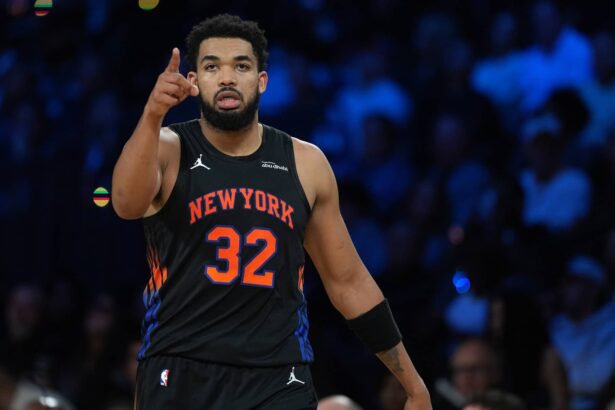
Karl-Anthony Towns has been productive (19.8 points, 11.9 rebounds), but the season reads more like strong starting-level production than dominant superstar control.
Jabari Smith Jr. has been a solid two-way role piece (15.2 points, 7.1 rebounds), including a recent game against the Hawks with five blocks and three steals in late January, which shows why teams trust him when games get physical.
Kristaps Porzingis has barely been available and is still working through Achilles tendonitis after being acquired at the deadline by the Warriors, so the season impact hasn’t matched the talent.
And Draymond Green remains a high-IQ connector (5.2 assists) whose value is terrific, but the scoring is low (8.6 points), and the season has been about managing his role and minutes more than starring at the four for a clear contender, as the team still navigates the Play-In spots.