The Portland Trail Blazers leaned on a monster performance from Deni Avdija to outduel the Phoenix Suns in a tightly contested 114-110 win. In a game that featured 224 total points and multiple momentum swings, Portland’s balance, shot-making, and timely defense ultimately proved to be the difference.
Despite Phoenix shooting a solid 49.4% from the field and getting big nights from Jalen Green (35 points) and Devin Booker (22 points), the Blazers countered with elite efficiency from Avdija and strong contributions across the rotation. Portland’s 17 made threes and +4 rebounding edge helped them survive a game that was essentially a coin flip deep into the fourth quarter.
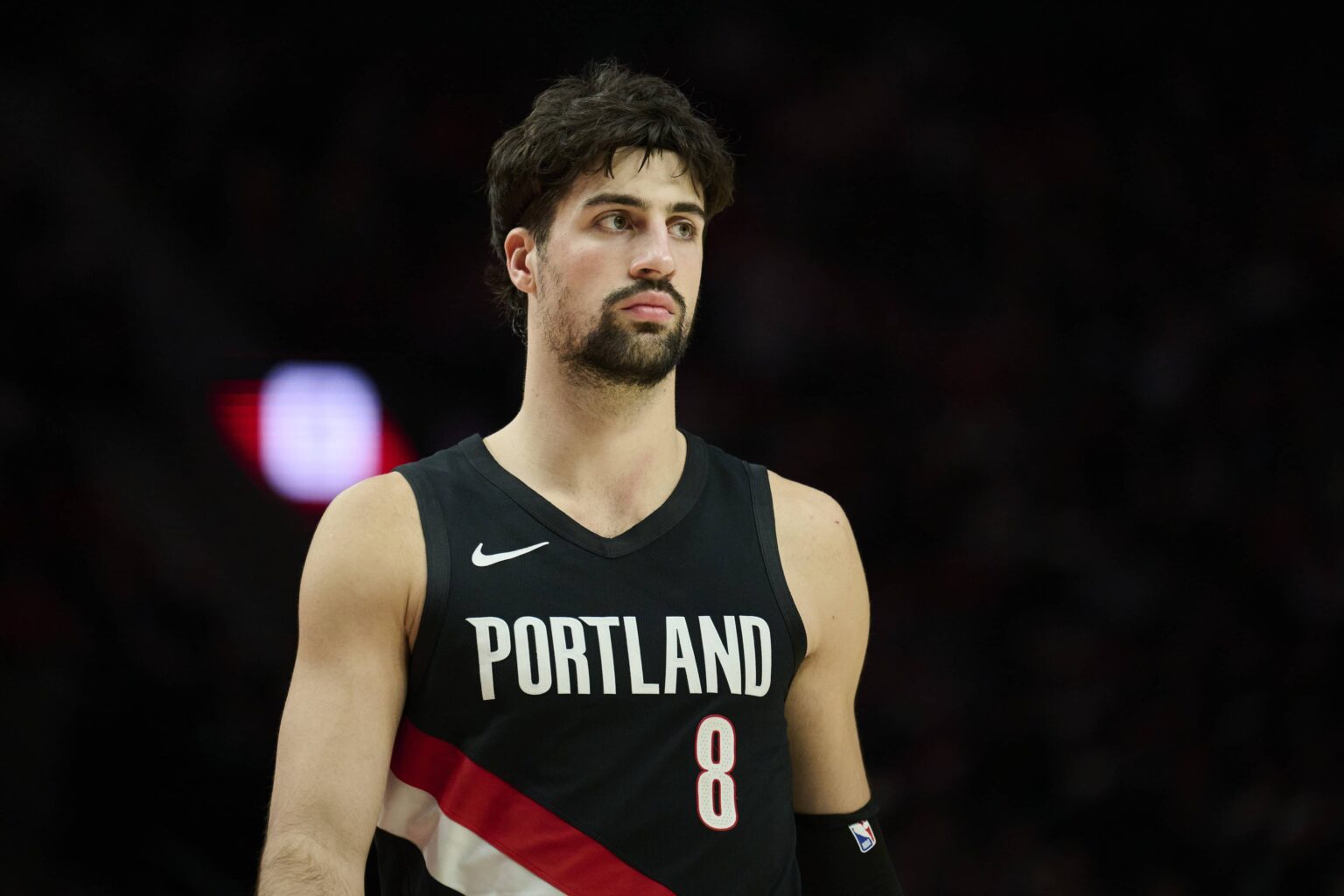
1. Deni Avdija Completely Took Over
Avdija delivered one of the most dominant individual performances of the season, finishing with 41 points on 15-22 shooting, along with 12 assists, 7 rebounds, and just enough control to dictate the entire game offensively. He shot 68.2% from the field and added 3-8 from three, repeatedly breaking down the Suns’ defense both as a scorer and playmaker.
What made his performance even more impressive was the versatility. He wasn’t just scoring in isolation – he created for others, constantly collapsing the defense and finding open shooters. Portland had 26 assists as a team, and Avdija accounted for nearly half of them. Every time Phoenix made a push, Avdija responded, whether it was a tough finish, a kick-out three, or a controlled possession to slow things down.
2. Portland’s Perimeter Shooting Swung The Game
The Blazers’ three-point shooting was a major difference-maker, knocking down 17-47 (36.2%) from beyond the arc compared to Phoenix’s 9-25 (36.0%). While the percentages were identical, the volume and timing favored Portland heavily, especially in key stretches.
Jerami Grant added 16 points with 4 threes, while Jrue Holiday chipped in 4-11 from deep for his 21 points. Portland spaced the floor effectively, forcing Phoenix into difficult rotations. Those extra eight made threes equate to a 24-point swing, which essentially offset Phoenix’s edge in free throws (23 made vs. 17).
3. Jalen Green Kept Phoenix Alive
Jalen Green was electric, finishing with 35 points on 14-29 shooting, adding 5 rebounds despite committing 5 turnovers. He consistently attacked Portland’s defense, scoring at all three levels and keeping the Suns within striking distance throughout the game.
However, efficiency down the stretch became an issue. While Green scored in bunches, Phoenix as a team struggled to generate clean looks late. The Suns finished with 20 assists compared to Portland’s 26, and that lack of ball movement showed when the offense stagnated in key moments.
4. Portland’s Defense Made Timely Plays
Although both teams had poor defensive execution, Portland was not as poor as Phoenix. They had the most impressive stats. Both teams measured the number of deflections in the game and synchronized it. The timing of Portland’s deflections was the most important and the most impressive.
Donovan Clingan held down the paint with 3 blocks and 11 boards, and Robert Williams III chipped in 7 rebounds and some paint defense off the bench. While Phoenix shot 49.4% from the field, they struggled to finish around the rim during crunch time, with only 36 points in the paint compared to Portland’s 40.
5. Balanced Production Gave Portland The Edge
Beyond Avdija’s explosion, Portland had five players score at least 9 points, including 21 from Jrue Holiday, 16 from Jerami Grant, and 12 from Shaedon Sharpe off the bench. That balance allowed them to maintain offensive pressure even when rotations shifted.
Phoenix, on the other hand, leaned heavily on Green and Booker. Outside of those two and Dillon Brooks (20 points), consistent scoring was harder to find. The Suns’ bench produced just 17 total points from key contributors, while Portland’s depth helped them stay steady across all four quarters.