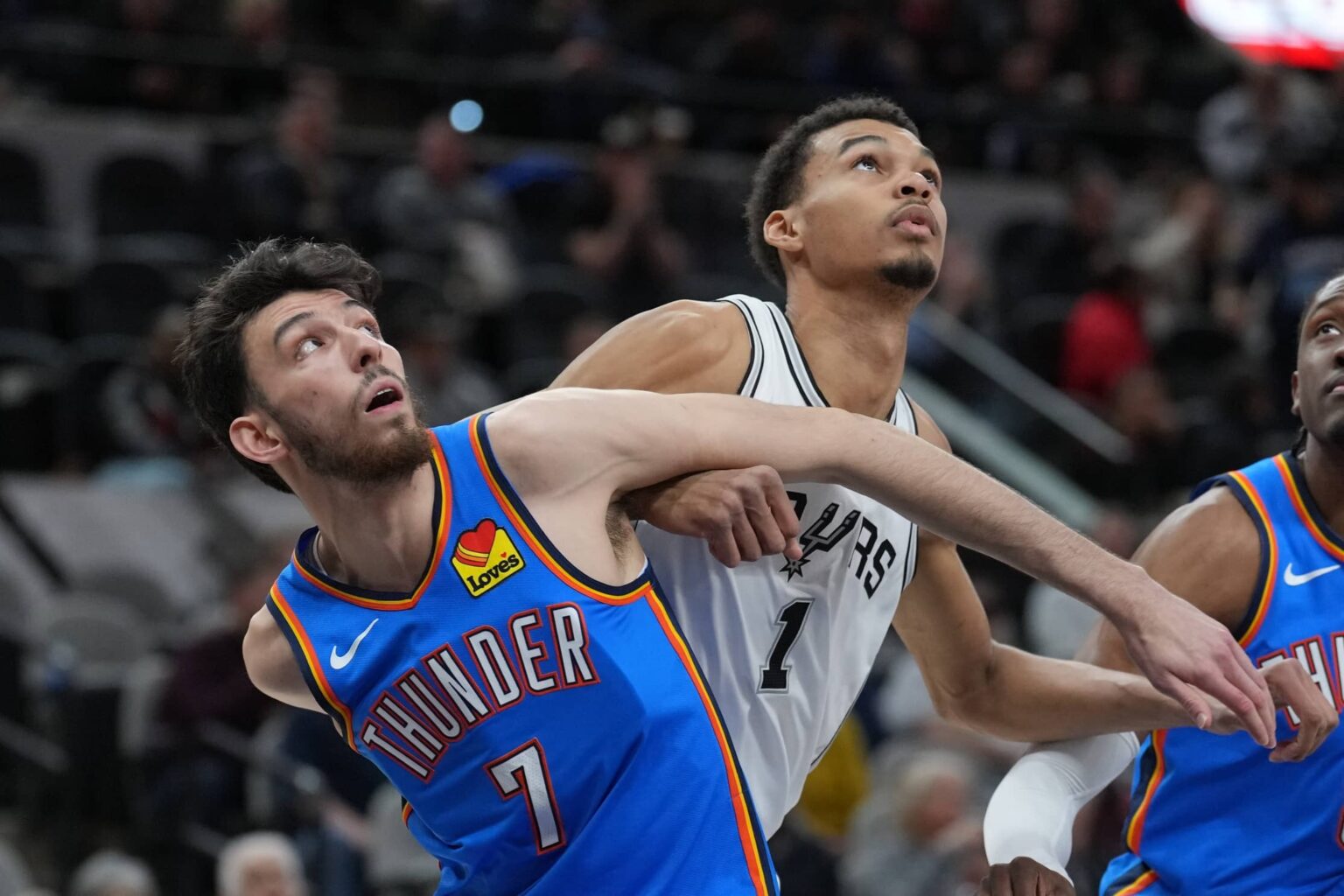
The Thunder and Spurs meet in the Western Conference Finals with the two best records in the West, the league’s most complete defending champion, and the fastest-rising young contender in the NBA. The Thunder enter as the No. 1 seed after a 64-18 regular season. The Spurs enter as the No. 2 seed after going 62-20. Game 1 is Monday, May 18, at Paycom Center at 8:30 p.m. ET, with Game 2 also at Paycom Center before the series moves to Frost Bank Center for Games 3 and 4.
The Thunder swept the Suns in the first round and the Lakers in the second round. They are 8-0 in the playoffs. The Spurs beat the Trail Blazers in five games, then beat the Timberwolves in six, closing that series with a 139-109 road win. The Thunder are more rested. The Spurs are more tested. That is the first real tension in the series.
The regular-season matchup gives the Spurs real confidence. They went 4-1 against the Thunder, including wins of 111-109, 130-110, 117-102, and 116-106. The Thunder’s only win came on Jan. 13, 119-98. That matters, but it does not decide the series. The Thunder are not just a dominant regular-season team. They are defending champions with the best record in the league, the reigning MVP, and a rotation that has already overwhelmed two playoff opponents without losing a game.
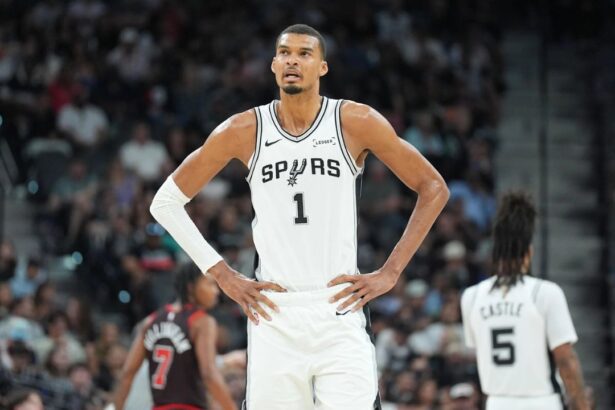
Shai Gilgeous-Alexander averaged 31.1 points and 6.6 assists during the regular season. He is also coming off his second straight MVP award. Victor Wembanyama averaged 25.0 points and 11.5 rebounds for the Spurs, then carried a playoff defense that has looked elite through two rounds. This series is not only about the two stars, but they set the ceiling. The Thunder have the best guard. The Spurs have the best defensive player.
Injury Report
Thunder
Thomas Sorber: Out for season (right knee ACL surgical recovery)
Spurs
De’Aaron Fox: Questionable (right ankle soreness)
Luke Kornet: Questionable (left foot soreness)
Jalen Williams is not listed on the Thunder injury report for Game 1 after missing the last six games with a left hamstring strain. That is a major swing because Williams gives the Thunder another scorer, defender, and ball-handler against a Spurs team with size everywhere.
Thunder Analysis For The Series
The Thunder enter with a dominant profile. Their playoff offense has been absurd. Through eight games, they own a 126.3 offensive rating, the best mark among playoff teams. Their 109.3 defensive rating ranks sixth, and their plus-17.0 net rating ranks second. That is not a team winning on a certain matchup. That is a team winning every part of the floor.
The biggest difference from last year is how many ways the Thunder can score without needing Gilgeous-Alexander to solve every possession. The Thunder have been slightly more efficient with Gilgeous-Alexander on the bench in the playoffs, scoring 126.2 points per 100 possessions without him compared to 124.6 with him. That is not a criticism of Gilgeous-Alexander. It is a statement about their depth.
Chet Holmgren is central to that. He is averaging 18.6 points and 9.1 rebounds in the playoffs, and he changes both ends of the matchup. On defense, he gives the Thunder a second elite rim protector behind the point-of-attack pressure from Lu Dort, Cason Wallace, Alex Caruso, and Williams. On offense, he forces Wembanyama to defend away from the rim. If Holmgren hits pick-and-pop threes, the Spurs cannot keep Wembanyama parked in the paint.
The Thunder also have the personnel to attack Wembanyama without being reckless. Gilgeous-Alexander leads the NBA in drives per game, and his pressure on the paint is the center of the Thunder offense. The Spurs are built to meet that with Stephon Castle at the point of attack and Wembanyama behind him, but that is still a possession-by-possession tax. If Gilgeous-Alexander forces help, the Thunder will create corner threes. If the Spurs stay home, he can live in the midrange and at the line.
Williams’ return is the other reason the Thunder should feel good. He averaged 20.5 points, 5.0 assists, 4.0 rebounds, and 1.0 steals in his two postseason appearances before the hamstring injury. He gives the Thunder another player who can punish switches and attack gaps when the Spurs overload toward Gilgeous-Alexander. Without him, the Thunder still swept the Lakers. With him, the rotation has fewer weak minutes.
The Thunder also protect the ball. Their 12.4 turnover percentage ranks second among playoff teams. That matters against the Spurs because live-ball mistakes feed Castle, Fox, Dylan Harper, and Wembanyama in transition. The Thunder cannot turn this into an open-floor series. Their half-court execution is better. Their late-clock shot-making is better. Their best path is simple: keep turnovers low, make Wembanyama defend in space, and make the Spurs’ young guards finish against length.
Spurs Analysis For The Series
The Spurs are not an underdog. They went 62-20, beat the Thunder four times in five tries, and have the best playoff defense left. Their 102.2 defensive rating ranks first among playoff teams. Their plus-15.2 net rating ranks third. This is not a young team getting carried by one player. This is a complete team with a historic defensive anchor and multiple downhill creators.
Wembanyama is the reason the matchup is different from anything the Thunder have seen in the first two rounds. In 10 playoff games, he is averaging 20.3 points, 10.7 rebounds, 4.1 blocks, and 2.4 assists while shooting 53.8% from the field, 34.1% from three, and 84.5% from the line. More important, the Spurs are scoring 118.3 points per 100 possessions and allowing only 96.4 with him on the floor. Their net rating is still positive when he sits, but the gap is 14.8 points per 100 possessions.
That is the whole series for the Spurs. They need to dominate Wembanyama’s minutes and survive the non-Wembanyama minutes. Luke Kornet has been useful, and the Spurs have outscored teams in his playoff minutes, but he is not Wembanyama. If Kornet is limited by his left foot issue, the Spurs lose size in the one area where they cannot afford a drop.
Fox’s ankle is just as important. De’Aaron Fox played through the issue against the Timberwolves, finishing Game 6 with 21 points, nine assists, and four rebounds in 24 minutes. The Spurs need his speed against the Thunder pressure. Castle and Harper can handle more, but Fox gives the Spurs their cleanest veteran creator late in the clock. If he is limited, the Thunder can crowd Wembanyama and force younger guards to make perfect reads.
The Spurs’ guard depth is a real weapon. Fox, Castle, and Harper combined for 68 points on 25-of-34 shooting and 19 assists in the Game 6 closeout against the Timberwolves. Castle had 32 points, 11 rebounds, and six assists. Harper added 15 points off the bench. That matters because the Thunder usually wear teams down with perimeter pressure. The Spurs have three guards who can attack the paint, pass on the move, and keep pressure on the rim.
The Spurs also have the one defensive structure that can test Gilgeous-Alexander without selling out. Castle can start the possession. Wembanyama can finish it. Devin Vassell, Keldon Johnson, and Julian Champagnie give them enough wing size to avoid constant small-small switches. The problem is fouling. Gilgeous-Alexander is too good at turning contact into free throws. If Castle or Fox gets into foul trouble, the Spurs’ defensive plan becomes thinner fast.
Key Factors
Shai Gilgeous-Alexander is the best offensive player in the series. His regular-season line of 31.1 points and 6.6 assists already proves that, but the playoffs have shown the next layer. He is averaging 29.1 points and 7.1 assists, and he has not needed to force shots for the Thunder to score at an elite level. That makes him more dangerous, not less.
The Spurs will not stop him with one defender. Castle will get the first assignment, but the real test is what happens behind the ball. If Wembanyama stays deep, Gilgeous-Alexander can work in the middle. If Wembanyama steps higher, Holmgren and Isaiah Hartenstein can punish the space behind him. Gilgeous-Alexander does not need 40 every night. He needs to control the help.
Chet Holmgren is the Thunder’s most important tactical player. He finished second behind Wembanyama in Defensive Player of the Year voting, and his playoff scoring gives the Thunder a clean answer to the Spurs’ size.
The Thunder need Holmgren to hit enough threes to pull Wembanyama away from the rim. If he does that, the Spurs lose their best defensive advantage. If he misses, Wembanyama can protect the paint, erase drives, and turn the Thunder into a jump-shooting team. Holmgren also has to defend without fouling. The Spurs will test his strength with Wembanyama seals, Fox drives, and Castle attacks.
Victor Wembanyama is the player who can bend the series away from the Thunder. The Thunder have more depth, more experience, and the best record. Wembanyama is the reason none of that feels final.
His rim protection changes shot selection before the shot happens. The Spurs allowed only 99.6 points per 100 possessions in his 126 regular-season minutes against the Thunder. That number is the Spurs’ best argument. If he turns the Thunder’s rim pressure into floaters and kickout threes under pressure, the Spurs can win the possession math.
De’Aaron Fox’s health can swing the series. The Spurs can survive one limited game from him, but they cannot survive a full series with Fox unable to pressure the rim. The Thunder defense is too aggressive. It eats teams that cannot beat the first defender.
Fox has to give the Spurs pace, paint touches, and late-clock offense. He also has to make Gilgeous-Alexander work defensively when possible. The Spurs cannot let the Thunder hide their best scorer on low-usage players for long stretches.
Series Prediction
The Spurs have the right formula to beat the Thunder. They have Wembanyama at the rim, multiple downhill guards, strong wing size, and real confidence from the regular-season series. They are not lucky to be here. They are ahead of schedule, but they are not fake.
Still, the Thunder are the better pick. They are undefeated in the playoffs, they have home-court advantage, they have the deeper rotation, and Williams’ return gives them back a major two-way piece. Their offense has been the best in the playoffs, their turnover control is elite, and their bench has not dropped games when Gilgeous-Alexander sits. That is the difference.
The Spurs can win this series if Wembanyama fully owns the paint, Fox is close to healthy, and Castle makes Gilgeous-Alexander work every possession. That is possible. It is not the most likely outcome. The Thunder have more ways to win four games. They can win with Gilgeous-Alexander scoring 35. They can win with Holmgren stretching the floor. They can win with depth. They can win with defense.
Winner: Thunder in 7