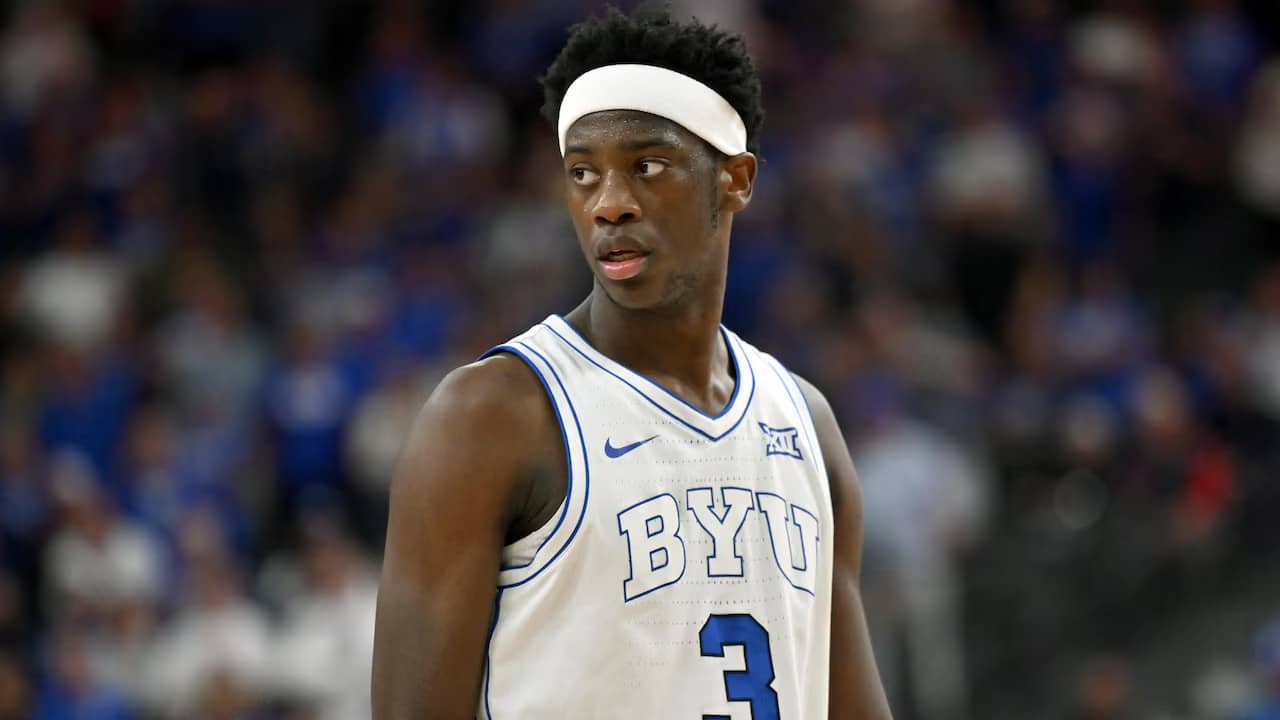
The 2026 NBA Draft order is finally set after the lottery, and the Wizards now control the board with the No. 1 pick. It is their first time landing the top selection since 2010, when they drafted John Wall, and it comes after a 17-65 season that made this lottery result feel like a necessary reset more than a luxury. The Jazz, Grizzlies, and Bulls complete the top four, while the Nets fell to No. 6 despite entering the lottery with strong odds.
After our previous mock draft, the picture is much clearer. Team needs matter more now. So do draft ranges, trade pressure, and which front offices can afford patience. This class has a real top tier, but the order creates interesting fits from the first pick through the back of the first round. With the Wizards landing No. 1, the 2026 draft now starts with one clear question: do they take the best prospect available, or the player who fits their rebuild fastest?
No. 1 Pick – Washington Wizards – AJ Dybantsa
2025-26 Season Stats: 25.5 PPG, 6.8 RPG, 3.7 APG, 1.1 SPG, 0.3 BPG, 51.0% FG, 33.1% 3PT
AJ Dybantsa stays at No. 1 because the Wizards need a real franchise wing, not another partial piece. The roster has players worth developing, but nobody who should stop them from taking the highest-upside scorer in the draft. Dybantsa gives them size, shot creation, transition pressure, and a clear first-option pathway.
His scoring volume was not empty. He led the nation at 25.5 points per game, got to the line, played through defensive attention, and still finished at 51.0% from the field. The 33.1% from three is not elite, but the touch, pull-up flashes, and free-throw profile give him enough shooting projection.
The Wizards should not overthink this. Dybantsa gives them the cleanest star swing in the class. For a team coming off 17 wins, that matters more than fit details.
No. 2 Pick – Utah Jazz – Darryn Peterson
2025-26 Season Stats: 20.2 PPG, 4.2 RPG, 1.6 APG, 1.4 SPG, 0.6 BPG, 43.8% FG, 38.2% 3PT
Darryn Peterson is the swing pick near the top. The Jazz need a guard who can bend the floor, punish switches, and create offense late in the clock. Peterson gives them that. He is not the safest player in the top three, but he might be the best pure perimeter scorer in the class.
The concern is availability. Peterson played only 24 games for Kansas, and his cramping issues became a major scouting topic. The recent explanation that high creatine levels were the cause helps his case, especially with no further issues after stopping it. Teams will still check everything medically, but the talent is top-two level.
His shot profile fits the modern NBA. Peterson hit 38.2% from three, created off the dribble, and had enough size at 6-foot-6 to defend bigger guards. For the Jazz, this is a bet on advantage creation.
No. 3 Pick – Memphis Grizzlies – Cameron Boozer
2025-26 Season Stats: 22.5 PPG, 10.2 RPG, 4.1 APG, 1.4 SPG, 0.6 BPG, 55.6% FG, 39.1% 3PT
Cameron Boozer falling to No. 3 would be a gift for the Grizzlies. He is the most polished player in the class and probably the safest top-three pick. The ceiling debate is real because he is not the same type of explosive wing creator as Dybantsa, but Boozer’s production is too strong to dismiss.
He gives the Grizzlies a frontcourt scorer who can pass, rebound, screen, post, shoot, and play through contact. That is valuable next to a guard-heavy core. Boozer is not just a college bully. He shot 55.6% from the field and 39.1% from three while carrying a massive offensive role at Duke.
The Grizzlies need more dependable half-court offense. Boozer solves part of that immediately. He can play as a connector, but he is too productive to be treated like only a connector.
No. 4 Pick – Chicago Bulls – Caleb Wilson
2025-26 Season Stats: 19.8 PPG, 9.4 RPG, 2.7 APG, 1.5 SPG, 1.4 BPG, 57.8% FG, 25.9% 3PT
Caleb Wilson makes sense for the Bulls because they need size, length, and a frontcourt player with real two-way range. This is not a perfect offensive fit yet because the three-point shot is behind the rest of his game. Still, his physical tools and production are strong enough for the No. 4 pick.
Wilson averaged 19.8 points and 9.4 rebounds while shooting 57.8% from the field. He also added 1.5 steals and 1.4 blocks, which matters for a Bulls team that needs more defensive playmaking. He can run, finish, pass in short actions, and cover ground defensively.
The swing skill is obvious. If Wilson becomes even an average three-point shooter, his value changes fast. If not, he still has a strong floor as an athletic forward who impacts both paint areas.
No. 5 Pick – Los Angeles Clippers, via Pacers – Keaton Wagler
2025-26 Season Stats: 17.9 PPG, 5.1 RPG, 4.2 APG, 0.9 SPG, 0.4 BPG, 44.5% FG, 39.7% 3P%
Keaton Wagler is a clean fit here because the Clippers need guard skill, size, and shooting more than another limited specialist. He gives them a 6-foot-6 handler who can play on the ball, work off screens, and punish defenses with pull-up shooting.
Wagler was not a major name before the season, but his jump at Illinois was too strong to ignore. The production is balanced, and the shooting profile looks real. He hit 39.7% from three and still created enough offense to average 4.2 assists. That matters for a Clippers team that must prepare for a different phase of its roster.
He is not a great athlete, and the defense is not the selling point. Still, big guards who shoot, pass, and avoid bad mistakes have real value. Wagler does not need to become a star to justify this pick. He needs to become a steady offensive piece.
No. 6 Pick – Brooklyn Nets – Kingston Flemings
2025-26 Season Stats: 16.1 PPG, 4.1 RPG, 5.2 APG, 1.5 SPG, 0.3 BPG, 47.6% FG, 38.7% 3P%
The Nets falling to No. 6 hurts, but Kingston Flemings gives them a real guard prospect with two-way value. This is not a consolation pick with no ceiling. Flemings has burst, defensive pressure, and enough playmaking to project as a primary or secondary creator.
His freshman season at Houston showed why teams should take him seriously. He averaged 16.1 points and 5.2 assists while shooting 47.6% from the field and 38.7% from three. That is strong efficiency for a guard who had to create against physical defenses. The 1.5 steals per game also matter because his defense is not just theoretical.
The main question is size. Flemings is 6-foot-3, so he has to keep proving he can finish, defend stronger guards, and create clean windows in the lane. For the Nets, the upside is worth it. They need a guard who can organize the offense, but also bring pressure on both ends.
No. 7 Pick – Sacramento Kings – Darius Acuff Jr.
2025-26 Season Stats: 23.5 PPG, 3.1 RPG, 6.4 APG, 0.8 SPG, 0.3 BPG, 48.4% FG, 44.0% 3P%
Darius Acuff Jr. is the best scorer left on the board. The Kings need more half-court creation, and Acuff gives them a guard who can score from three levels without needing perfect spacing around him.
His season at Arkansas was too loud to ignore. He averaged 23.5 points and 6.4 assists while shooting 44.0% from three. That combination is rare. He can beat switches, create off the dribble, and force defenses to guard higher on the floor. For a Kings offense that needs more pressure in late-clock possessions, that skill set has clear value.
The concern is defense and size. Acuff is 6-foot-2, and he will need to survive against bigger NBA guards. But this pick is about offensive value. Guards who score this much, shoot this well, and still pass at a strong level do not usually stay outside the top seven.
No. 8 Pick – Atlanta Hawks, via Pelicans – Mikel Brown Jr.
2025-26 Season Stats: 18.2 PPG, 3.3 RPG, 4.7 APG, 1.2 SPG, 0.1 BPG, 41.0% FG, 34.4% 3P%
Mikel Brown Jr. gives the Hawks another ball-handler with real creation skill. This is not a perfect defensive pick, but it is a strong offensive swing for a team that needs more guard depth and more long-term scoring flexibility.
Brown has good size for a lead guard at 6-foot-5, and that matters. He can see over smaller defenders, make passes out of pressure, and create threes without needing a clean advantage first. His efficiency was not elite, but the context matters because he played through a back issue and still produced at a top-lottery level.
The Hawks can use him as a secondary creator early. That is the better path. Brown does not need to control every possession right away. If his shot selection improves and his body holds up, this is the type of pick that can look better in two years than it does on draft night.
No. 9 Pick – Dallas Mavericks – Brayden Burries
2025-26 Season Stats: 16.1 PPG, 4.9 RPG, 2.4 APG, 1.5 SPG, 0.2 BPG, 49.1% FG, 39.1% 3P%
Brayden Burries is a simple fit for the Mavericks. He brings size, shooting, strength, and two-way reliability on the wing. This is not the highest-ceiling pick left, but it is one of the cleaner ones.
Burries was productive for Arizona and did not need empty usage to matter. He shot 49.1% from the field and 39.1% from three, which gives him a strong base as an NBA spacing piece. He also averaged 1.5 steals, so there is enough defensive activity to project him as more than a standstill shooter.
The question is creation. Burries is not a natural high-usage guard, and he does not have elite burst off the dribble. That limits the star upside. Still, the Mavericks do not need to chase a risky profile here. They need a wing who can stay on the floor, defend his position, make open shots, and punish bad closeouts.
No. 10 Pick – Milwaukee Bucks – Yaxel Lendeborg
2025-26 Season Stats: 15.1 PPG, 6.8 RPG, 3.2 APG, 1.1 SPG, 1.2 BPG, 51.5% FG, 37.2% 3P%
Yaxel Lendeborg is older than most lottery prospects, but the Bucks should care more about NBA readiness than age here. This roster needs players who can defend, pass, rebound, and contribute without needing three development seasons.
Lendeborg gives them a strong forward with real two-way value. He shot 37.2% from three, moved the ball well, and defended with activity. The 3.2 assists per game are important because he is not only a finishing big. He can operate from the elbows, attack closeouts, and keep the offense connected.
The age lowers the ceiling discussion, but it also raises the floor. The Bucks are not in a position where a long project makes much sense. Lendeborg can enter a rotation early, defend different frontcourt matchups, and give them physical minutes next to more established scorers.
No. 11 Pick – Golden State Warriors – Nate Ament
2025-26 Season Stats: 16.7 PPG, 6.3 RPG, 2.3 APG, 1.0 SPG, 0.6 BPG, 39.9% FG, 33.3% 3P
Nate Ament gives the Warriors the kind of long forward swing they should take at this point of the draft. The offense still needs polish, but his combination of size, ball skill, and shooting touch is hard to find outside the top 10.
Ament is not ready to be a major creator on an NBA team. His shot selection was loose at times, and the 39.9% from the field shows how much work remains. Still, the Warriors can develop him without forcing him into a heavy role right away. He can start as a movement forward, attack closeouts, space from the corners, and defend multiple spots while his body gets stronger.
The Warriors need more size on the wing, especially with their roster moving toward a new phase. Ament gives them upside without needing to change the identity of the team immediately. If the shot becomes stable, this pick can age very well.
No. 12 Pick – Oklahoma City Thunder, via Clippers – Labaron Philon Jr.
2025-26 Season Stats: 22.0 PPG, 3.5 RPG, 5.0 APG, 1.2 SPG, 0.2 BPG, 50.1% FG, 39.9% 3P
Labaron Philon Jr. fits the Thunder because he gives them another guard who can create pressure without breaking the structure of the offense. That is important for a team with several creators already in place. Philon can score, pass, and play in different guard combinations.
His season was one of the strongest guard profiles in this range. He averaged 22.0 points and 5.0 assists while shooting 50.1% from the field and 39.9% from three. That is not only volume. It is efficient production with real shot-making value.
The concern is defensive size. Philon is not a big guard, and the Thunder already have several perimeter options. But his offensive skill is too strong to ignore at No. 12. He can run bench units, play next to bigger handlers, and give the Thunder another scoring option when the game slows down.
No. 13 Pick – Miami Heat – Karim Lopez
2025-26 Season Stats: 11.9 PPG, 6.1 RPG, 1.9 APG, 1.2 SPG, 1.0 BPG, 49.4% FG, 32.2% 3P
Karim Lopez feels like a Heat pick. He is young, physical, versatile, and already played professional basketball against older players. That matters. He is not coming from an easy development environment.
Lopez is not a polished scorer yet, but the baseline is strong. He rebounds, defends, runs the floor, and has enough shooting touch to project as a modern forward. The 32.2% from three is not high, but it is workable because he does other things. He can stay involved without needing plays called for him.
The Heat need more frontcourt athleticism and two-way depth. Lopez gives them both. He will need time with the ball and more consistency as a shooter, but his defensive tools and motor fit the identity of the team. This is not a safe offensive pick. It is a strong development pick.
No. 14 Pick – Charlotte Hornets – Jayden Quaintance
2025-26 Season Stats: 5.0 PPG, 5.0 RPG, 0.5 APG, 0.5 SPG, 0.8 BPG, 57.1% FG, 0.0% 3P
Jayden Quaintance is a difficult evaluation because the 2025-26 sample was very small. Still, the Hornets need defensive size, and Quaintance has one of the strongest defensive ceilings in this range.
The appeal is not scoring. Quaintance is a rim protector, rebounder, lob target, and switchable frontcourt athlete. When healthy, he changes possessions with length and timing. That gives the Hornets something they badly need next to their young guards and wings.
The risk is clear. He played only four games this season, and his offensive game is still limited. He is not a floor spacer, and he will not fix half-court scoring. But at No. 14, the Hornets can take the swing. If the medicals are clean, this is the type of defensive big man who can outperform his draft slot.
No. 15 Pick – Chicago Bulls, via Blazers – Chris Cenac Jr.
2025-26 Season Stats: 9.5 PPG, 7.9 RPG, 0.7 APG, 0.8 SPG, 0.5 BPG, 48.5% FG, 33.3% 3P
Chris Cenac Jr. gives the Bulls a long-term frontcourt piece with size, rebounding, and some shooting growth. The production was not loud, but the role at Houston was not built for empty numbers.
Cenac started 36 of 37 games and led Houston in rebounding. That matters because his value starts with physical work. He can screen, rebound, defend in the paint, and make simple finishes. The three-point number is interesting, too. He shot 33.3% from deep, which is not enough to call him a stretch big, but it gives the Bulls something to build on.
The Bulls need more size with defensive range. Cenac is not ready to carry big minutes right away, but he gives them a developmental center-forward with a real NBA body and a clear role if the shooting keeps improving.
No. 16 Pick – Memphis Grizzlies, via Suns – Tounde Yessoufou
2025-26 Season Stats: 17.8 PPG, 5.9 RPG, 1.6 APG, 2.0 SPG, 0.6 BPG, 46.5% FG, 29.3% 3P
Tounde Yessoufou gives the Grizzlies another physical wing after already landing Cameron Boozer at No. 3. That matters because this roster needs more size on the perimeter, more defensive force, and more players who can play through contact.
Yessoufou is not a clean shooter yet. The 29.3% from three is the main concern, and it keeps him outside the top 10 in this mock. Still, the rest of the profile is strong. He averaged 17.8 points, got downhill, defended with pressure, and produced 2.0 steals per game.
The Grizzlies can live with the shooting risk because the athletic base is strong. Yessoufou can guard wings, run in transition, and bring real energy to bench units early. If the jumper becomes average, this pick has major value.
No. 17 Pick – Oklahoma City Thunder, via 76ers – Koa Peat
2025-26 Season Stats: 14.1 PPG, 5.6 RPG, 2.6 APG, 0.6 SPG, 0.7 BPG, 52.8% FG, 35.0% 3P
Koa Peat is the type of forward the Thunder can take without forcing him into a big role right away. He is strong, young, physical, and has already played with real responsibility for Arizona.
The production does not look explosive, but the profile is useful. Peat shot 52.8% from the field and showed enough passing feel to average 2.6 assists. He is not a pure spacer, but 35.0% from three gives him a chance to become playable in NBA lineups with more skill around him.
The Thunder can develop him slowly and use his strength in matchup-based minutes. He fits as a forward who can screen, pass, rebound, and guard stronger players. The upside is not built on flash. It is built on body, feel, and two-way usefulness.
No. 18 Pick – Charlotte Hornets, via Magic – Cameron Carr
2025-26 Season Stats: 18.9 PPG, 5.8 RPG, 2.6 APG, 0.9 SPG, 1.3 BPG, 49.4% FG, 37.4% 3P
Cameron Carr gives the Hornets a scoring wing with size, shooting, and defensive activity. After taking Jayden Quaintance at No. 14, this pick should go toward perimeter offense.
Carr made a clear jump at Baylor. He scored efficiently, shot 37.4% from three, and added 1.3 blocks per game, which is unusual production for a 6-foot-5 guard. That matters for a Hornets team that needs more two-way wings around its main creators.
This is not only a shooting pick. Carr can attack closeouts, finish above the rim, and make enough secondary reads to stay involved. He is still thin, and stronger NBA wings will test him. Still, the scoring package is strong for this range. The Hornets need more players who can make shots without stopping the offense.
No. 19 Pick – Toronto Raptors – Hannes Steinbach
2025-26 Season Stats: 18.5 PPG, 11.8 RPG, 1.6 APG, 1.1 SPG, 1.2 BPG, 57.7% FG, 34.0% 3P
Hannes Steinbach makes sense for the Raptors because he gives them size, rebounding, and offensive touch. This roster has length, but it still needs more reliable frontcourt production.
Steinbach was one of the most productive bigs in college basketball. He averaged 18.5 points and 11.8 rebounds while shooting 57.7% from the field. The 34.0% from three is not high-volume proof, but it gives him a real development path as a spacing big.
The Raptors can use him as a physical center who cleans the glass and finishes efficiently. He will need to prove he can defend in space because NBA teams will test him in ball screens. Still, at No. 19, the production and size are too strong. This is a floor pick with some shooting upside.
No. 20 Pick – San Antonio Spurs, via Hawks – Bennett Stirtz
2025-26 Season Stats: 19.8 PPG, 2.6 RPG, 4.4 APG, 1.4 SPG, 0.2 BPG, 47.7% FG, 35.8% 3P
Bennett Stirtz is older, but the Spurs should not ignore a guard who can shoot, pass, and run an organized offense. They already have enough long-term ceiling pieces. This pick can be about skill and decision-making.
Stirtz averaged 19.8 points and 4.4 assists while shooting 47.7% from the field. The three-point number is solid, not elite, but his touch and free-throw shooting make the jumper believable. He plays with pace control and does not need to dominate the ball to help structure possessions.
The Spurs need guards who can make simple reads and punish defenses for overhelping. Stirtz fits that. He is not a high-end athlete, and that limits the defensive ceiling. But his shooting, passing, and maturity make him a strong late-lottery-to-mid-first value.
No. 21 Pick – Detroit Pistons, via Timberwolves – Morez Johnson Jr.
2025-26 Season Stats: 13.1 PPG, 7.3 RPG, 1.2 APG, 0.7 SPG, 1.1 BPG, 62.3% FG, 34.3% 3P
Morez Johnson Jr. fits the Pistons because he gives them interior force without demanding touches. His role is simple, but it has value at this stage of the draft. He rebounds, finishes through contact, screens with purpose, and brings a stronger physical base than many younger bigs in this range.
The 62.3% from the field is the foundation of the case. Johnson does not waste many possessions. He knows where his shots come from and plays inside that structure. The three-point volume is low, so the 34.3% number should not be treated as proof of spacing, but the touch is worth tracking.
The Pistons can use him as a rotation frontcourt piece behind their main young players. His ceiling is not star-level, but his path to minutes is easier than most late-first prospects.
No. 22 Pick – Philadelphia 76ers, via Rockets – Aday Mara
2025-26 Season Stats: 12.1 PPG, 6.8 RPG, 2.4 APG, 0.4 SPG, 2.6 BPG, 66.8% FG, 30.0% 3P
Aday Mara is a logical swing for the 76ers. He is 7-foot-3, protects the rim, finishes efficiently, and gives them a different kind of frontcourt prospect. Late in the first round, that kind of size becomes difficult to ignore.
Mara’s case starts with efficiency and rim protection. He shot 66.8% from the field and averaged 2.6 blocks in only 23.5 minutes. That is strong production. He also showed enough passing feel to avoid being a static center on offense. He can hit cutters, play from the high post, and punish smaller defenders near the rim.
The concern is mobility. NBA guards will test him in space. Still, the 76ers can take this bet because Mara has one skill that translates immediately: he changes shots at the basket.
No. 23 Pick – Atlanta Hawks, via Cavaliers – Tarris Reed Jr.
2025-26 Season Stats: 14.7 PPG, 9.0 RPG, 2.3 APG, 0.9 SPG, 2.0 BPG, 60.7% FG, 0.0% 3P
Tarris Reed Jr. is not a modern stretch big, but the Hawks can use his size, toughness, and paint production. This is a pick built on the floor rather than theory. Reed already plays like a center who understands his lane.
He averaged 14.7 points and 9.0 rebounds while shooting 60.7% from the field. The scoring is mostly interior-based, but it is not accidental. Reed has real hands, strong positioning, and enough touch to finish over length. His 2.0 blocks per game also give him defensive value beyond rebounding.
The offensive spacing is the issue. He did not make a three-pointer this season, so lineups around him need shooting. Still, the Hawks need more reliable frontcourt depth. Reed gives them a physical center who can defend the paint and win possession battles.
No. 24 Pick – New York Knicks – Allen Graves
2025-26 Season Stats: 11.8 PPG, 6.5 RPG, 1.8 APG, 1.9 SPG, 0.9 BPG, 51.2% FG, 41.3% 3P
Allen Graves is the kind of forward the Knicks should target. He does not need usage to help a good team, and that is important for a roster already built around established creators.
Graves shot 51.2% from the field and 41.3% from three. That combination is the selling point. He can space, finish, cut, and defend without needing the offense to stop for him. His 1.9 steals and 0.9 blocks also show real defensive activity. He has enough length to guard forwards and enough feel to play within a disciplined scheme.
This pick is not about upside theater. It is about adding a player who can survive playoff-style basketball if the shot holds. The Knicks need depth that fits their current timeline. Graves fits that profile better than a rawer project.
No. 25 Pick – Los Angeles Lakers – Isaiah Evans
2025-26 Season Stats: 15.0 PPG, 3.2 RPG, 1.3 APG, 0.7 SPG, 0.7 BPG, 43.3% FG, 36.1% 3P
Isaiah Evans gives the Lakers a wing scorer with size and shooting touch. That is the correct direction for a team that always needs more perimeter shot-making around its main offensive pieces.
Evans is thin, and that will be tested quickly. He needs more strength to finish through contact and defend physical wings. Still, the scoring talent is clear. He averaged 15.0 points and made 2.7 threes per game at Duke. His jumper is difficult to contest because of his release point and length.
The Lakers do not need him to be a lead creator. They need shooting, movement, and a wing who can punish weakside help. Evans has that skill set. The frame is the risk. The shot is the reason he belongs in this range.
No. 26 Pick – Denver Nuggets – Dailyn Swain
2025-26 Season Stats: 17.3 PPG, 7.5 RPG, 3.6 APG, 1.6 SPG, 0.3 BPG, 54.2% FG, 34.4% 3P
Dailyn Swain is a strong Nuggets pick because he brings size, passing, and defensive range. He is not only a wing scorer. He can operate as a connector, which is important for a team that values quick decisions and positional size.
Swain’s 17.3 points came on 54.2% shooting, so the efficiency is legitimate. He also added 7.5 rebounds and 3.6 assists, giving him one of the more complete statistical profiles available here. The 34.4% from three is acceptable, but not enough to remove all shooting questions.
The Nuggets should like the versatility. Swain can guard multiple positions, rebound from the forward spot, and move the ball without holding it. His NBA role depends on the jumper. If it stabilizes, he becomes a very useful rotation forward.
No. 27 Pick – Boston Celtics – Henri Veesaar
2025-26 Season Stats: 17.0 PPG, 8.7 RPG, 2.1 APG, 0.6 SPG, 1.2 BPG, 60.8% FG, 42.6% 3P
Henri Veesaar gives the Celtics a skilled frontcourt option with shooting range. For a team that asks its bigs to space, pass, and defend within a structured system, this is a practical selection.
Veesaar was efficient at North Carolina. He shot 60.8% from the field and 42.6% from three, while also producing 8.7 rebounds and 1.2 blocks. That profile is rare. He can finish inside, step out to the arc, and keep the ball moving from the frontcourt.
The defensive projection needs work. He is not an elite vertical athlete, and stronger centers can move him. But the Celtics can manage that if the shooting translates. Late in the first round, a 7-foot big man with real touch and positional skill is worth the pick.
No. 28 Pick – Minnesota Timberwolves, via Pistons – Luigi Suigo
2025-26 Season Stats: 8.5 PPG, 5.3 RPG, 0.9 APG, 0.5 SPG, 1.0 BPG, 55.8% FG, 30.0% 3P
Luigi Suigo is more projection than production. That is fine at No. 28. The Timberwolves can take a long-term center prospect because their current roster does not need a late first-round pick to carry immediate responsibility.
Suigo’s size is the draw. He is a massive interior target with good hands, finishing touch, and enough mobility to be more than a stationary big. The numbers were modest, but he shot 55.8% from the field and averaged 1.0 block in limited minutes. That gives scouts a base to work with.
The development curve could be slow. His strength, defensive reads, and offensive range all need time. Still, bigs with this frame and coordination rarely last into the final picks of the first round.
No. 29 Pick – Cleveland Cavaliers, via Spurs – Christian Anderson Jr.
2025-26 Season Stats: 18.5 PPG, 3.6 RPG, 7.4 APG, 1.5 SPG, 0.2 BPG, 47.2% FG, 41.5% 3P
Christian Anderson Jr. gives the Cavaliers a guard who can shoot, pass, and control tempo. His size is not ideal, but his skill level is too strong to drop much further.
Anderson averaged 18.5 points and 7.4 assists while shooting 41.5% from three. That is a serious offensive profile. He can run pick-and-roll, play off the ball, and punish defenders who go under screens. He also played heavy minutes, which says something about trust and conditioning.
The Cavaliers already have guards, but late in the first round they should prioritize talent and skill. Anderson can become a strong second-unit organizer. If he defends well enough to stay on the floor, his shooting and passing give him a real NBA role.
No. 30 Pick – Dallas Mavericks, via Thunder – Amari Allen
2025-26 Season Stats: 11.4 PPG, 6.9 RPG, 3.1 APG, 1.0 SPG, 0.7 BPG, 44.6% FG, 34.1% 3P
Amari Allen closes the first round because the Mavericks need bigger wings who can handle different responsibilities. Allen is not a finished shooter or scorer, but his frame, passing feel, and rebounding make him a reasonable bet.
His Alabama role showed a useful all-around profile. He averaged 6.9 rebounds and 3.1 assists, which is strong for a wing. He can rebound and push, make the extra pass, and defend with size. The 34.1% from three is not a guarantee, but it is enough to project improvement.
The Mavericks should not chase a narrow specialist here. They need developmental wings with enough skill to grow into a real role. Allen has that type of foundation. At No. 30, that is the correct kind of risk.