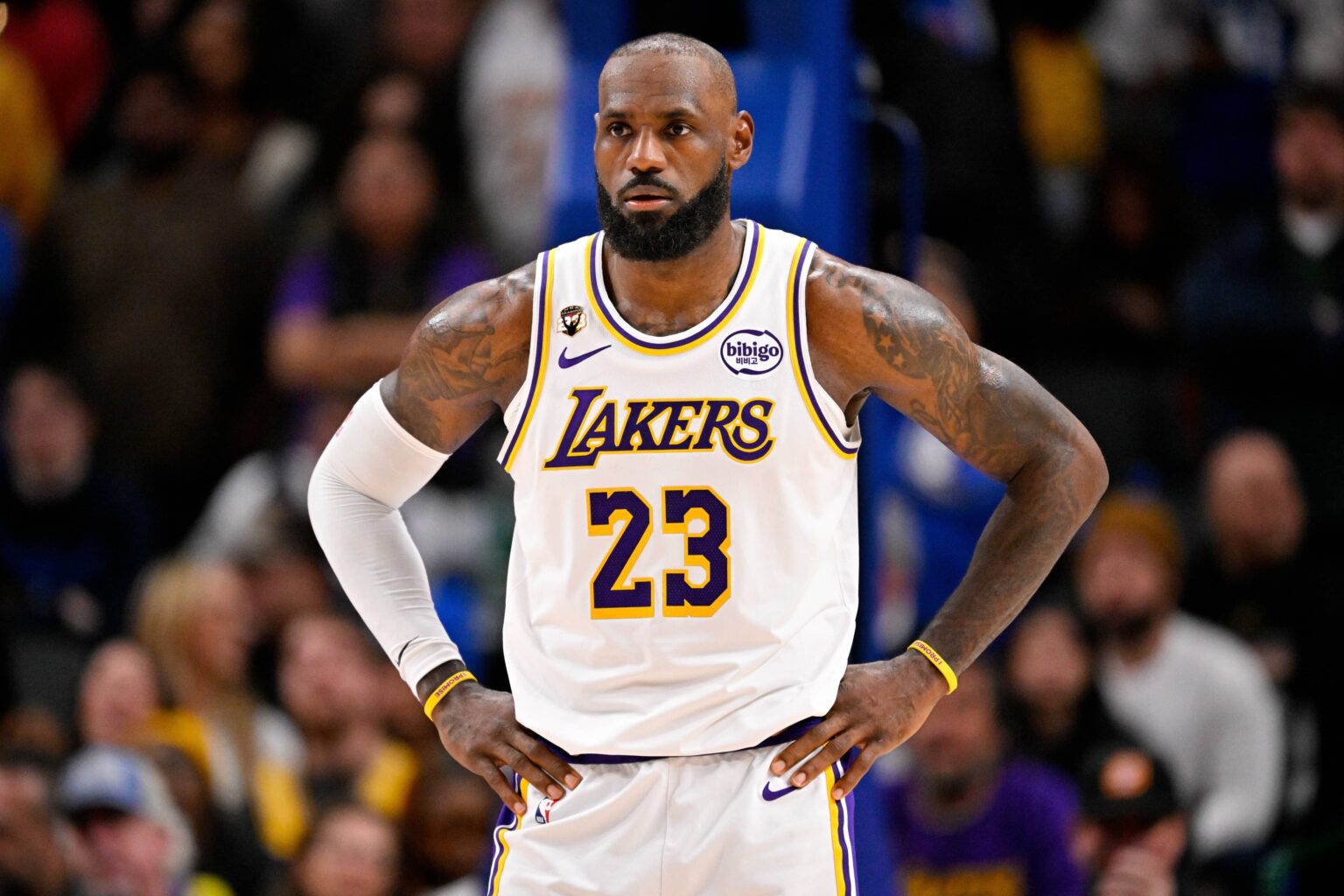
The Los Angeles Lakers completely overwhelmed the Utah Jazz in a 131-107 rout that felt over long before the final buzzer. From the opening tip, the Lakers dictated pace, controlled the glass, and shredded Utah’s defense with ruthless efficiency. They shot a blistering 51-93 (54.8%) from the field and 15-34 (44.1%) from three, while piling up 37 assists in a performance that screamed playoff readiness.
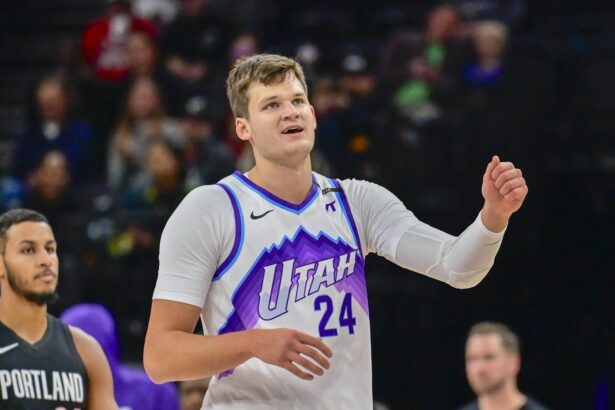
Meanwhile, the Jazz simply couldn’t keep up. Despite shooting 41-94 (43.6%), they went just 7-34 (20.6%) from deep and turned the ball over 16 times, leading to 26 points conceded off those mistakes. Even a dominant 17-rebound effort from Oscar Tshiebwe couldn’t swing momentum, as the Lakers led for 99% of the game and built a lead as large as 30.
1. LeBron James Still Controls Everything
LeBron James continues to defy logic at this stage of his career. In just 17 minutes, he dropped 18 points on 6-15 shooting while adding 6 assists, 4 rebounds, and 3 steals. His +14 plus/minus barely captures his true impact – every meaningful run started with him orchestrating the offense or igniting transition opportunities.
What stood out wasn’t just the production, but the control. The Lakers assisted on 37 of their 51 made field goals, and LeBron was the engine behind that ball movement. Even with 4 turnovers, his ability to dictate tempo ensured Utah never found rhythm. This was about command, and LeBron had the game firmly in his hands from start to finish.
2. Frontcourt Dominance Sets the Tone
The Lakers’ interior presence overwhelmed Utah in every phase. Deandre Ayton was dominant, finishing with 22 points on 10-14 shooting along with 10 rebounds and 3 blocks. He controlled both ends, punishing mismatches offensively while protecting the rim defensively.
Alongside him, Rui Hachimura added 22 points and 10 rebounds on an efficient 8-12 shooting, creating a two-headed problem Utah simply couldn’t solve. The Lakers outscored the Jazz 60-50 in the paint and outrebounded them 49-42. Even when Utah grabbed 17 offensive boards, it didn’t matter – the Lakers’ efficiency neutralized second-chance opportunities.
3. Elite Shooting Buried Utah Early
The Lakers buried the Jazz with elite shot-making. They knocked down 15 threes at a 44.1% clip, compared to Utah’s 7-34 (20.6%). That 24-point gap from beyond the arc essentially decided the game.
Dalton Knecht was a major spark, going 5-6 from deep for 17 points in just 12 minutes, while Luke Kennard added 19 points on 6-12 shooting. The spacing created by these shooters opened everything else up – driving lanes, post touches, and transition opportunities. Utah’s defense simply couldn’t rotate fast enough to contest.
4. Bench Production Kept the Pressure On
Even when the starters sat, the Lakers didn’t let up. Their bench unit came in firing, maintaining intensity and extending the lead rather than just holding it. Bronny James contributed 11 points on 4-7 shooting, while Nick Smith Jr. added 12 points.
The Lakers’ depth showed in the numbers: multiple bench players posted positive plus/minus figures, and the team never lost momentum. Utah, on the other hand, got inconsistent production outside of a few contributors, with several bench players finishing deep in the negatives. That disparity in depth turned a comfortable lead into a blowout.
5. Defense and Transition Sealed the Blowout
Defense fueled everything for the Lakers. They racked up 12 steals and forced 16 turnovers, converting those into 26 points. Marcus Smart added 10 assists and helped anchor perimeter pressure, while multiple players disrupted passing lanes.
In transition, the Lakers dominated 20-17, but it felt even more lopsided because of how quickly those opportunities came. Utah struggled to get back, often scrambling after live-ball turnovers. Combine that with the Lakers’ efficient half-court execution, and it created an avalanche effect the Jazz couldn’t stop.