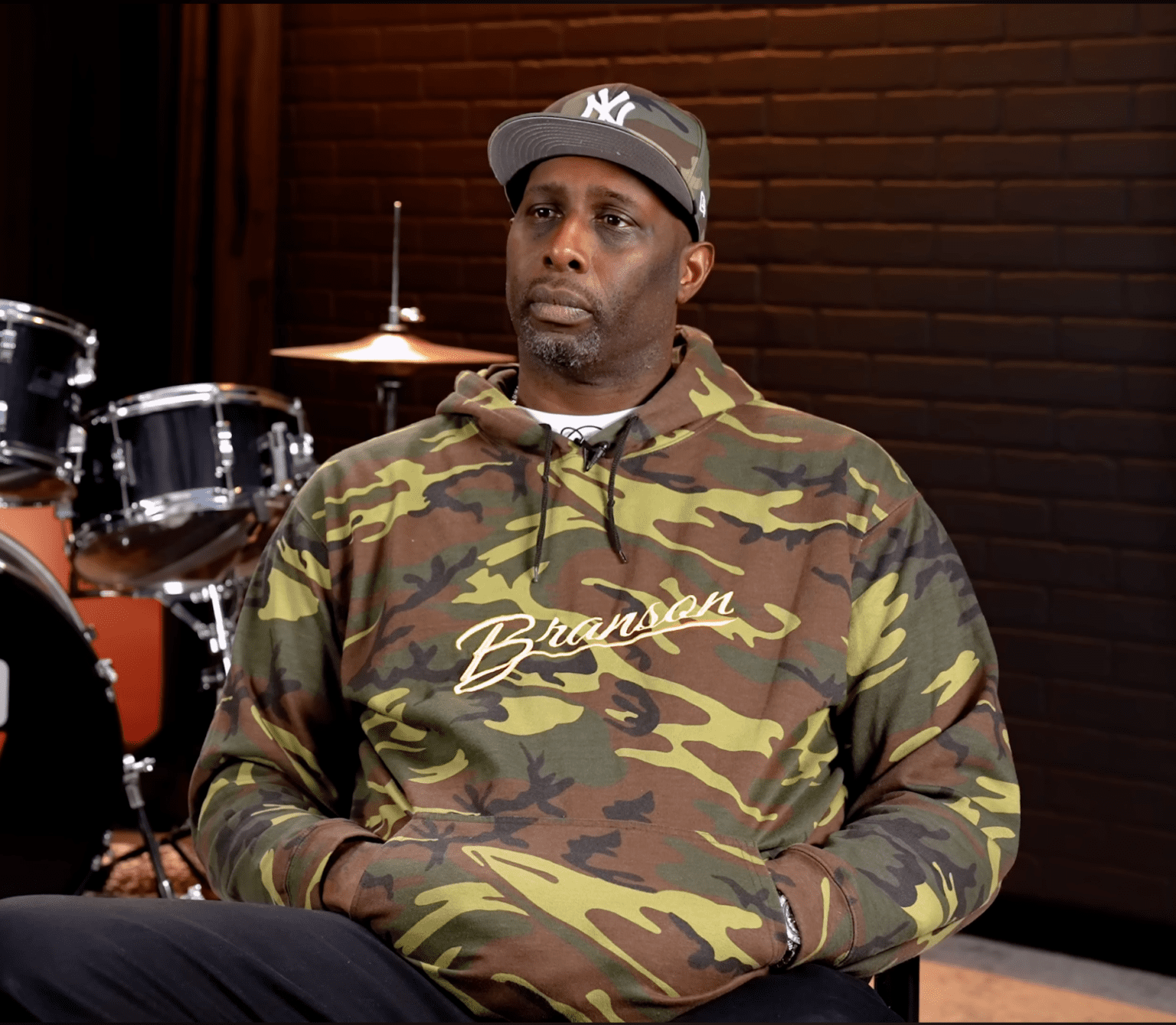
Former NBA forward Tim Thomas recently shared a remarkable story about the financial decisions he faced as a teenager, revealing that he turned down an $18 million shoe deal and massive college incentives before entering the NBA.
Speaking on Vlad TV with DJ Vlad, Thomas explained that the recruiting landscape during the 1990s was far different from today’s era of Name, Image, and Likeness deals. According to him, money and incentives were already circulating around elite prospects long before NIL made athlete compensation legal.
DJ Vlad: “So now you’re in the college draft, and you go to Villanova, and you know these days you hear about the NIL deals and everything else like that, but you were actually getting money back then. Under the table?”
Tim Thomas: “Of course. Of course. I mean, that started at AAU. It was the wild, wild west. The era before me and during my era, it was definitely the wild, wild west. That started at AAU.”
“But in college, there was nothing, there was no reason for me to take any money because I was already a pro. My senior year in high school I had $18 million on the table with Adidas. If we went pro, all of us were going to be Adidas athletes because we came up under that. Me, T-Mac, Kobe, Jermaine O’Neal. We all came up under that umbrella of ABCD camp.”
DJ Vlad: “So you’re telling me as an 18-year-old with a single mom and five kids, you passed up $18 million guaranteed just to go pro, plus your NBA salary, plus whatever other perks go along with that, to go to college and potentially hurt yourself and not go to the NBA?”
Tim Thomas: “Yeah. That was the risk.”
DJ Vlad: “That’s a real conversation there. Because you said one college team offered you $3 million, a $2 million home, and four different vehicles.”
Tim Thomas: “Man, yeah.”
DJ Vlad: “That’s crazy. How do schools funnel that type of money?”
Tim Thomas: “So now when you look at the NIL stuff, like you just said, the boosters and stuff like that. I’m assuming it was like that back then because those guys are still actively donating to the school or whatever. And now the kids also can get paid from the universities, so the universities can come out and do it themselves.”
DJ Vlad: “Well, not everyone. It’s just the kids at the very top, the superstars. In general, everyone else is pretty much getting nothing.”
Tim Thomas: “But what’s the chances of that 15, 20 years ago when you had guys that were paving the way?”
DJ Vlad: “Okay, so you were the Big East Freshman of the Year, top three in every major category, but you’re saying you weren’t actually taking money at this point?”
Tim Thomas: “No, no. Nova was a safe place. It was a safe place. And again, the reason why I went there was obviously not being on the board as top 10. Going to Nova, what made it easy for me was I had two guys that were there that were going to also be on the board, Alvin Williams and Jason Lawson.”
“So I could go there and kind of learn from them and get a little stronger, get a little better for that one year, so I could be top 10 the following year. Because the whole thing was the money thing was different. The shoe deal is one. If you get in as top 10, you know you’re going to double that. That’s the thing. So when you talk about the risks there, you’re rolling the dice. You’re betting on yourself. And I knew I was that good to bet on myself.”
At the time, these types of arrangements were illegal under NCAA rules. However, Thomas suggested the system worked through boosters and donors connected to the universities, something that now resembles the NIL structure that exists today.
Despite those offers, Thomas chose to play college basketball for the Villanova Wildcats. He had a strong freshman season and was named Big East Freshman of the Year while ranking near the top of several statistical categories.
His gamble paid off when he declared for the 1997 NBA Draft and was selected seventh overall by the New Jersey Nets.
Thomas went on to enjoy a lengthy NBA career spanning more than a decade. During his time in the league, he played for several teams, including the Philadelphia 76ers, Milwaukee Bucks, New York Knicks, Chicago Bulls, Phoenix Suns, Los Angeles Clippers, and Dallas Mavericks.
Across his career, Thomas averaged 11.5 points, 4.1 rebounds, and 1.5 assists per game while establishing himself as a versatile forward capable of scoring and stretching the floor. One of his most memorable moments came during the 2006 playoffs when he hit a dramatic three-pointer for the Suns against the Los Angeles Lakers to force overtime in a crucial series game.
Financially, Thomas still did quite well. Over the course of his NBA career, he earned $97.8 million in player salaries. Today, his net worth is estimated to be $38 million.
Looking back, Thomas’ story highlights just how different the basketball landscape was before NIL deals and modern recruiting transparency. At a time when much of the money existed in the shadows, he chose to bet on his talent and wait for the NBA to deliver the payday.