Jalen Duren played like a franchise center during the regular season. He averaged 19.5 points, 10.5 rebounds, and 2.0 assists while shooting 65.0% from the field, helping the Pistons finish as the No. 1 seed.
The playoffs have been a different story.
Duren has averaged only 10.5 points, 8.5 rebounds, 2.1 assists, 1.2 blocks, and 2.2 turnovers in 30.5 minutes across 13 playoff games, shooting 52.0% from the field. Against the Magic, he averaged 10.6 points and 9.4 rebounds on 52.8% shooting. Against the Cavs, his impact has been even more uneven, with too many empty minutes for a player about to enter restricted free agency.
That is the problem. Duren is eligible for a deal worth around $239.0 million, with a possible path toward $287.0 million if escalators apply. That is massive money for a non-shooting center who has not looked reliable enough in the postseason.
The Pistons should avoid that number. Duren has value, but paying him like a franchise player after this playoff run would be a bad bet. A sign-and-trade may be the cleanest way to protect their cap sheet and turn his regular-season value into a more balanced roster around Cade Cunningham.
Here are three potential blockbuster sign-and-trade deals the Pistons could explore to avoid a massive long-term commitment to Jalen Duren.
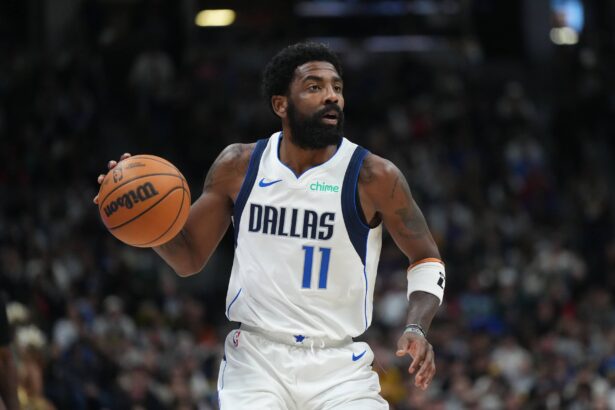
1. The Mavericks Bet On Jalen Duren As Cooper Flagg’s Long-Term Frontcourt Partner
Detroit Pistons Receive: Daniel Gafford, P.J. Washington, 2029 first-round pick
Dallas Mavericks Receive: Jalen Duren
The Mavericks would be taking the aggressive side of the Jalen Duren debate. They would not be ignoring his playoff problems. They would be betting that those issues look different in a new structure, especially next to Cooper Flagg.
Flagg already changed the direction of the franchise. He won Rookie of the Year after averaging 21.0 points, 6.7 rebounds, 4.5 assists, 1.2 steals, and 0.9 blocks in 70 games. For a team that finished 26-56, that matters. The Mavericks now have a young No. 1 option on a rookie-scale contract, and that gives them a clear reason to chase a younger, stronger frontcourt before the roster gets too expensive.
Duren would fit that timeline. He would not need to be a featured scorer. His job would be direct: screen, roll, rebound, finish above the rim, and give Flagg a physical interior partner. The Mavericks need more force inside because Dereck Lively II has become difficult to trust from an availability standpoint. He played only seven games this season before undergoing season-ending right foot surgery, and ESPN noted he has played only 98 of 185 possible regular-season games in his career.
The salary framework is tight but workable. Duren would sign with the Pistons first, then move in the sign-and-trade. A clean structure would be a five-year deal starting around $41.2 million, worth roughly $239.0 million with 8.0% annual raises. Gafford is owed $17.3 million in 2026-27, and Washington is owed $19.8 million, combining for about $37.1 million outgoing from the Mavericks. That almost matches Duren’s projected first-year salary directly.
For the Pistons, the appeal is balance. Daniel Gafford gives them a lower-usage center who can protect the rim, finish plays, rebound, and stay in his role. He averaged 9.5 points, 6.9 rebounds, 1.1 assists, and 1.3 blocks in 21.7 minutes, shooting 65.5% from the field. He does not have Duren’s upside, but he also does not force the Pistons into a near-max decision at center.
P.J. Washington is the more important piece. He averaged 14.2 points, 7.0 rebounds, 1.8 assists, 1.0 steals, and 1.1 blocks in 31.0 minutes, shooting 45.0% from the field and 32.5% from three. He gives the Pistons a bigger forward who can defend, rebound, and play next to Cade Cunningham and Ausar Thompson without making the floor as tight. He is not an elite shooter, but he is a more flexible playoff piece than another traditional big.
The first-round pick is required because Duren still has real value. The Pistons would be moving a 22-year-old starting center, not dumping a bad salary.
This trade would be simple in purpose: the Mavericks bet on Duren’s tools next to Flagg, while the Pistons turn a dangerous contract decision into two rotation players, a future asset, and a cleaner roster around Cunningham.
2. The Pelicans Move Off The Zion Williamson Era
Detroit Pistons Receive: Zion Williamson
New Orleans Pelicans Receive: Jalen Duren, 2029 first-round pick
This is the most intriguing version of the Pistons avoiding a long-term Jalen Duren mistake.
Zion Williamson is not a safe target. That is clear. His body, availability, contract, and fit all carry risk. But if the Pistons are going to move a 22-year-old center before restricted free agency, they should aim higher than a normal rotation package. Zion gives them a real star-level swing.
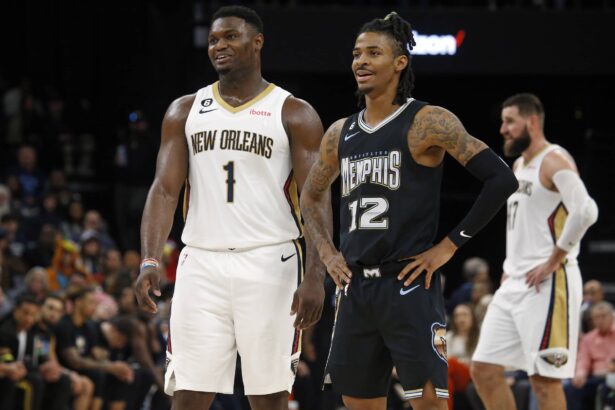
The Pelicans have publicly pushed back against the idea of trading Zion, with Joe Dumars saying the team had “no intentions” of moving him. That makes this a hypothetical framework, not a potential negotiation. Still, the Pelicans finished 26-56, missed the playoffs, and remain stuck between patience and reality. At some point, the question becomes whether they want to keep building around a player who has not given them enough stability.
For the Pistons, Zion would change the offensive structure. He averaged 21.0 points, 5.7 rebounds, and 3.2 assists while shooting 60.0% from the field. He is not a shooter, but he is an elite paint-pressure player. That is different from Duren. Zion can create his own rim pressure, attack mismatches, force help, and give Cade Cunningham a second player who bends the floor with the ball.
That is the upside. Cunningham would still control the offense, but Zion would give the Pistons a second high-end advantage creator. The Pistons have enough defensive size with Ausar Thompson and other long wings to try to cover the spacing issues. It would not be perfect, but the ceiling would be much higher than paying Duren like a franchise player and hoping his playoff impact catches up.
The salary framework is perfect for the article. Zion is owed around $42.2 million in 2026-27. Duren’s sign-and-trade could start around $41.2 million and reach $54.4 million in the last year, which comes almost exactly matching Zion’s salary in a clean offseason structure. The important part is not the exact cap detail. It is that the Pistons would be turning Duren’s potential $239.0 million commitment into a star gamble instead of locking into a non-shooting center at near-max money.
For the Pelicans, the return would be a reset around a younger timeline. Duren would give them a physical center with regular-season production, rebounding, and long-term upside. The first-round pick would be the price for the Pistons getting the better player and taking the risk.
This is not the safest trade. It is the clearest star bet. If the Pistons no longer believe Duren is worth max-level money after his playoff struggles, Zion is the kind of swing that at least gives them a higher ceiling around Cunningham.
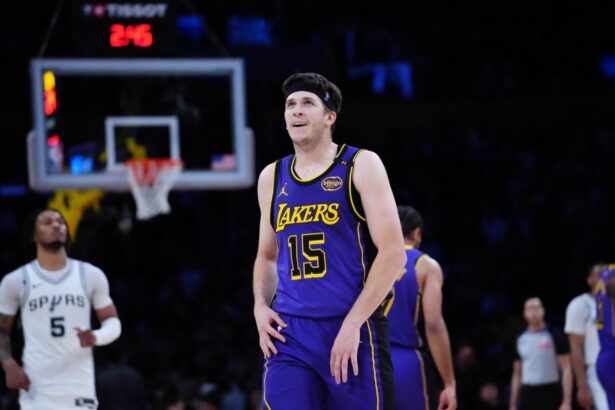
3. Lakers Turn Austin Reaves’ Next Contract Into Jalen Duren
Detroit Pistons Receive: Austin Reaves, 2031 first-round pick
Los Angeles Lakers Receive: Jalen Duren
The Lakers have already been connected to Jalen Duren. Jovan Buha reported that the Lakers inquired about Duren before shifting to Mark Williams at the 2025 trade deadline, but the Pistons were not willing to move him at the time. The Lakers have already looked at Duren as a center target before.
The difference now is Austin Reaves’ contract situation. Reaves has a $14.9 million player option for 2026-27 that he is widely expected to decline, and rival executives have predicted he could command around $40.0 million per season in free agency. That is a massive number for a guard who is very good, but not a true No. 1 option.
That creates the opening for this deal. If the Lakers do not want to pay Reaves like a near-max player, they could turn his next contract into a younger interior anchor. Reaves’ new salary could start around $40.0 million, which closely matches Duren’s potential $41.2 million first-year number. That makes the basic salary framework clean enough for an offseason sign-and-trade.
For the Lakers, the basketball logic is clear. They need a real center who can run the floor, finish lobs, rebound, and give them a stronger interior presence. Duren would not fix every spacing issue, and his playoff struggles would still matter, but his age and physical tools make him the kind of long-term swing the Lakers usually chase when they believe the market is depressed.
The key question is how they replace Reaves’ creation. He averaged 23.3 points, 5.5 assists, and 4.7 rebounds this season, so losing him would remove a major secondary ball-handler. But that type of player is easier to find in pieces than a 22-year-old center with Duren’s physical profile. The Lakers could use exceptions, minimums, and smaller trades to add another secondary playmaker. They do not have to replace Reaves with one player.
For the Pistons, Reaves is the clean offensive fit. He gives Cade Cunningham another guard who can handle, pass, shoot, and attack closeouts. He is not the same type of athlete as Duren, but he directly addresses a more important playoff need: perimeter creation.
The first-round pick is needed because the Lakers would be getting the younger player with more long-term upside. Still, this deal is easy to justify for the Pistons. Instead of paying Duren a massive contract after an ugly playoff run, they would turn him into a proven offensive guard, a future first-round pick, and a cleaner roster structure around Cunningham.