Untouchable is a strong word in the NBA because almost every player has a price. Teams say one thing in public, listen to everything in private, and only draw lines when the player is too important to their present, their future, or both.
That is what makes this offseason interesting. The league is loaded with aggressive front offices, expensive rosters, second-apron pressure, and teams that know standing still can be dangerous. Some contenders need one more star. Some young teams need patience.
This list is not only about the best player on every roster. In some cases, that is obvious. In others, the most untouchable player is younger, cheaper, harder to replace, or more connected to the team’s long-term plan. Contract value, age, role, ceiling, team control, and franchise direction all count here.
Every team would answer trade calls. That is the job. But for these 30 players, the answer should be almost automatic: no.
Atlanta Hawks: Jalen Johnson
Jalen Johnson is the easy answer here, and it is not because the Hawks lack other good pieces. It is because Johnson now gives them the type of player every front office is trying to find: a big forward who can score, rebound, pass, push in transition, and run offense by himself.
Johnson put up 22.5 points, 10.3 rebounds, and 7.9 assists while shooting 48.9% from the field and 35.2% from three. That is a franchise-shaping season from a 24-year-old forward. He also made the All-NBA Third Team, which should remove any doubt about his place in the Hawks’ future.
The contract is also a huge part of this. Johnson is on a five-year, $150.0 million deal, with a $30.0 million yearly salary. For a player producing like a near triple-double forward, that is not a problem contract. That is a team-building advantage. In this new apron era, players who give star-level production without taking up a full supermax slot are gold.
The Hawks finished 46-36 this season and earned the No. 6 seed, so this is not a roster that has to reset from zero. They need to build better around Johnson, not put him in trade talks. He is their best long-term bet, their best two-way-sized creator, and the player who makes the post-Trae Young version of this team easier to understand.
Boston Celtics: Jayson Tatum
The Achilles injury makes this less automatic than it was one year ago, but it still shouldn’t change the answer for a second. Jayson Tatum is the player the Celtics built this whole era around. Trading him now wouldn’t make sense at all. Stranger things have happened, but it won’t here.
Even in a weird season, Tatum gave the Celtics 21.8 points, 10.0 rebounds, and 5.3 assists. The efficiency was down at 41.1% from the field, but the all-around base is still elite for a 6-foot-8 wing who can be the first option, rebound like a power forward, and create late in games.
The money is heavy, of course. Tatum just started a five-year, $313.9 million deal, with a $54.1 million salary in 2025-26. But that is the cost of having a real franchise player. The Celtics can move other pieces, given the Jaylen Brown rumors. Tatum should be the one name they don’t touch.
Brooklyn Nets: Egor Demin
This one needs honesty first: the Nets don’t really have a true untouchable. They went 20-62, finished 13th in the East, and are still looking for the player who can give the rebuild a real face. Egor Demin is more of a “don’t sell too early” guy than a locked-in star.
That is still enough for this roster. Demin put up 10.3 points, 3.2 rebounds, and 3.3 assists as a rookie, and the big part is the frame and skill mix. A tall guard who can pass is worth time, especially for a team with no reason to chase short-term wins.
His rookie deal also helps the case. Demin is on a four-year, $31.3 million contract and made $6.9 million in 2025-26. That is cheap enough to keep developing him without pressure. The Nets shouldn’t pretend he is untouchable like Tatum, but he is the one young piece they should protect first.
Charlotte Hornets: Kon Knueppel
For the Hornets, this is about keeping the one rookie who already looks easy to build with. Kon Knueppel didn’t need three years of patience to show the idea. He stepped in and gave the Hornets shooting, size, and real production right away.
Knueppel finished with averages of 18.5 points, 5.3 rebounds, and 3.4 assists while shooting 47.5% from the field. He also made the All-Rookie First Team and was second in scoring among first-year players behind Cooper Flagg, the Rookie of the Year. That is not just a nice rookie year. That is a core-piece season.
The shooting and upside is what makes him hard to move. Knueppel became the first rookie in NBA history to lead the league in made 3-pointers with 273, and that skill fits any version of the Hornets’ future. He is young, under team control, and already useful without needing the ball every trip. That is exactly the type of player teams shouldn’t trade.
LaMelo Ball has been linked to trade noise more than once, and it wouldn’t be a total shock if the Hornets moved him at some point. It might still be the wrong call, because Ball is their best pure talent. But the fact that his name can even enter those conversations says a lot about where the roster is.
Chicago Bulls: Matas Buzelis
The Bulls don’t have a no-doubt franchise player yet. That is why Matas Buzelis is the best answer. He is not untouchable because he is already a star. He is untouchable because he is the one young player on the roster who can still change the direction of the team.
His second season showed a real jump. Buzelis put up 16.3 points, 5.8 rebounds, and 2.1 assists while shooting 46.3% from the field. For a 6-foot-8 forward, that mix of scoring growth, athletic finishing, and defensive flashes is exactly what the Bulls need to keep feeding.
The Bulls can move rotation pieces. They can listen to offers for almost anyone else, but moving Buzelis now would be selling before they even know what they have. For a team stuck between rebuilding and pretending to compete, he is the one piece who actually points forward alongside Josh Giddey.
Cleveland Cavaliers: Donovan Mitchell
Evan Mobley has a strong case here, but Donovan Mitchell is still the better answer. The Cavaliers can talk about size, defense, and long-term balance, but Mitchell is the player who gives them contention hopes every postseason. That is the hardest skill to replace.
He just made the All-NBA Second Team after putting up 27.9 points, 4.5 rebounds, and 5.7 assists while shooting 48.3% from the field. The Cavaliers won 52 games, and Mitchell was still the one player they trusted most when the offense got tight.
That is why trading him would be a step backward, not a reshuffle. The Cavaliers can adjust the roster around him, especially if the current core keeps hitting the same playoff wall. But Mitchell is the player who keeps them in the contender tier. He should be the last name they discuss.
Dallas Mavericks: Cooper Flagg
This is the easiest one on the board. After the Luka Doncic trade, the Mavericks can’t even pretend Cooper Flagg is available. He is the new face of the team, the rebuild, and the whole basketball plan.
Flagg’s rookie season backed it up fast. He finished with averages of 21.0 points, 6.7 rebounds, and 4.5 assists, won Rookie of the Year, and made the All-Rookie First Team. The three-point shot still needs work, but the base is already too strong: size, creation, defense, passing, and star usage at 19.
The Mavericks already made one franchise-altering trade. They can’t make another one with the player who is supposed to clean up the damage. Flagg is not just the best young player they have. He is the reason the Mavericks can still sell a real future.
Denver Nuggets: Nikola Jokic
There is no real debate here. The Nuggets can lose depth, change starters, move expensive pieces, or rework the bench. None of that touches Nikola Jokic. He is the system, the offense, and the reason every role player on that roster looks more useful.
Jokic just had another absurd season: 27.7 points, 12.9 rebounds, and 10.7 assists on 56.9% shooting from the field. He was also a unanimous All-NBA First Team pick, which says enough about where he still stands in the league. This is not a star who needs perfect conditions to be elite. He creates the conditions.
The Nuggets shouldn’t even entertain calls unless the league sends them a fake trade that breaks basketball logic. A center who scores like a first option, passes like the best point guard in the league, and controls playoff tempo is not replaceable. Jokic is the franchise.
Detroit Pistons: Cade Cunningham
The Pistons finally got out of the rebuild zone, earned the No. 1 seed in the East, and Cade Cunningham is the reason everything improved for this team. They are not just collecting young players anymore. They have a lead guard who controls the game, makes others better, and gives them an incredible offensive presence.
Cunningham finished with averages of 23.9 points, 5.5 rebounds, and 9.9 assists on 46.1% shooting from the field. He also made the All-NBA First Team and helped the Pistons finish with the best record in the East. That is a massive shift from where this franchise was not long ago.
There are other good young pieces here, but none of them have the upside and dominance like Cunningham. Jalen Duren, Ausar Thompson, and the rest can all fit around him. Cade is the one who makes the rebuild feel done. The Pistons shouldn’t pick up the phone.
Golden State Warriors: Stephen Curry
This is not only about basketball value. It is about identity. Stephen Curry is 38, so any front office can make the cold argument about timelines, picks, and starting over. But the Warriors are not a normal case. Curry built this entire era.
The production is still too strong to treat him like a farewell-tour player. Curry put up 26.6 points, 3.6 rebounds, and 4.7 assists while shooting 46.8% from the field and 39.3% from three. The Warriors also went 13-26 without him, which says what the roster looked like when he wasn’t there to hold the offense together.
Could a Curry trade bring back real assets? Of course. But that is not the point. Unless he asks for it, moving him would be the Warriors ending their own story in the ugliest way possible. Curry should remain untouchable because he is still their best player and still the face of everything they are.
Houston Rockets: Amen Thompson
The Rockets have bigger names, but Amen Thompson is the player they should protect first. Kevin Durant, Alperen Sengun, and Jabari Smith Jr. are all important, but after the first-round loss to the Lakers, it is normal that the front office gets calls and has hard talks. Amen should be different.
This is not just about potential anymore. Amen Thompson gave the Rockets 18.3 points, 7.8 rebounds, and 5.3 assists this season, and his offense looked much more polished with Fred VanVleet out. The handle still gets loose, the jumper is not fully there, but the athletic pressure, cutting, passing, and rim attacks are already enough to build with.
The defense is the reason he feels close to untouchable. A wing who can defend guards, forwards, and some bigs at that level is not normal. He already had a First Team All-Defensive season before, and even after missing out this year, the DPOY-type ceiling is easy to see. If the offense keeps growing, Thompson can be an All-Star in 2026-27. The Rockets should pay the big extension when it comes time.
Indiana Pacers: Tyrese Haliburton
The Pacers got the answer without him. Tyrese Haliburton missed the entire 2025-26 season after surgery to repair a torn right Achilles, and the team completely fell apart. This was a Finals team with him. Without him, it turned into a lost season.
That is why this one stays simple. Haliburton is not the strongest scorer every night, and he is not a normal ball-dominant superstar, but he is the whole offensive structure for the Pacers. The pace, early passing, hit-ahead reads, pick-and-roll control, and spacing all start with him. When he is gone, their identity is gone too.
Before the injury, he was coming off a 2024-25 season with 18.6 points, 9.2 assists, 3.5 rebounds, and 1.4 steals on 47.3% shooting from the field. The Pacers don’t need to overthink this because of one injury year. Haliburton is the player who took them to the Finals. He is still the one who gives them a real ceiling.
Los Angeles Clippers: Darius Garland
The Clippers are already in the middle of a new era. James Harden and Ivica Zubac are gone, Kawhi Leonard is entering the final year of his deal, and there are already several Leonard trade ideas after the season. That makes Darius Garland the most logical player to lock into the next version of this roster.
Garland just got there, and that is exactly the point. He is 26, still young enough for a retool, and gives the Clippers a real point guard for the next phase. He put up 18.8 points, 2.4 rebounds, and 6.7 assists this season while shooting 46.0% from the field. Garland is a lead guard with playoff experience and will get his chance to command his own team, eventually.
Kawhi Leonard can still be great when healthy, but his timeline is different now. Garland fits the younger group better, especially with Bennedict Mathurin already there and the Clippers moving away from the older star build. The front office can still chase talent, but Garland should be the guard they keep while everything else gets rebuilt.
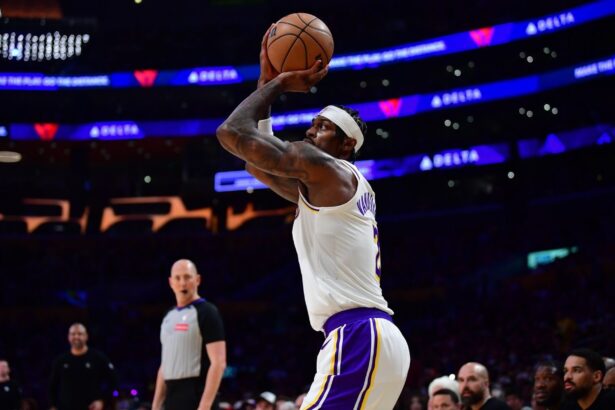
Los Angeles Lakers: Luka Doncic
This one doesn’t need drama. The Lakers already made the franchise-changing move when they got Luka Doncic. After that, everything else became secondary. LeBron James can still be great, Austin Reaves is very good, but Doncic is the player who sets the next five years.
He just led the NBA in scoring with 33.5 points per game, added 7.7 rebounds and 8.3 assists, and made the All-NBA First Team in his first full season with the Lakers. That is the whole argument. A 27-year-old jumbo creator who can be the best offensive player in the league is not a trade chip.
The Lakers can change the center spot, move salary, chase defense, or reshape the rotation. But Doncic is the line. If anything, the second-round exit only made it clearer. They need more around him, not a new face of the team.
Memphis Grizzlies: Cedric Coward
Ja Morant is still the bigger name, but he is not in a safe spot anymore. The Grizzlies have already moved Desmond Bane and Jaren Jackson Jr., and Morant’s future is now a real offseason topic, not just fan noise.
That opens the door for Cedric Coward. He is not close to Morant as a star today, but he fits the new timeline better. Coward put up 13.6 points, 5.9 rebounds, and 2.8 assists as a rookie, started 47 games, and made the All-Rookie First Team. For a team that went 25-57, that is the type of young wing worth protecting.
The Grizzlies need to stop pretending this is the same build. It isn’t. If Morant gets moved, Coward becomes even more important because he gives them size, shooting flashes, defense, and a real two-way base. He shouldn’t be used to clean up the old era.
Miami Heat: Bam Adebayo
The Heat can talk themselves into almost any trade idea. That is how they operate. Tyler Herro can be in deals. Young players can be in deals. Picks can move. Bam Adebayo is different because he is still the player who keeps their identity from falling apart.
The offensive year was not perfect, even with a record-breaking 83-point game, but the full line is still strong: 20.1 points, 10.0 rebounds, and 3.2 assists in 73 games. Adebayo also made the All-Defensive Second Team, so the two-way base is still there even when the half-court offense gets ugly.
There has been trade interest around him in the wider NBA rumor cycle, but there are no credible signs that the Heat want to move him. That matches the logic. The Heat need another high-end scorer next to Adebayo, not a rebuild where they lose the one player who holds the defense together.
Milwaukee Bucks: Ryan Rollins
The Giannis Antetokounmpo era is probably ending this summer. Shams Charania reported that the Bucks’ top decision-makers had come to terms with the likelihood of an Antetokounmpo trade this offseason, and that changes the whole roster map. If Giannis leaves, the Bucks can’t treat Ryan Rollins like just another movable guard.
Rollins is not a franchise star, but he is the best bridge into whatever comes next. He is 23, he just broke out as a real starter, and he gave the Bucks 17.3 points, 4.6 rebounds, and 5.6 assists. That is not empty production for a team with no clear young core.
The Bucks can move veterans, take calls, and start building again. That part is fine. But Rollins should stay because he gives them a young guard who can score, pass, defend enough, and grow with a new roster. His contract also makes this even easier: three years, $12.0 million, with only a $4.0 million salary in 2025-26. For a team that may need cheap rotation value after a Giannis reset, that is a steal.
Minnesota Timberwolves: Anthony Edwards
There is no need to make this one a mystery. Anthony Edwards is the Timberwolves’ untouchable player, and it is not close. He is the face of the team, the best scorer, the best big-game shot creator, and the one player who can still lift this group into a higher tier.
Edwards put up 28.8 points, 5.0 rebounds, and 3.7 assists this season as a four-time All-Star with one All-Star Game MVP already on the resume. He is 24, but he already carries himself as if the whole building belongs to him.
The Timberwolves can argue about Julius Randle, Rudy Gobert, Naz Reid, money, spacing, and playoff matchups. None of that touches Edwards. Every serious roster decision should be about making his life easier. Trading him would be the type of mistake that ends a front office.
New Orleans Pelicans: Derik Queen
The Pelicans paid too much for Derik Queen to act unsure now. They traded the No. 23 pick and an unprotected 2026 first-round pick to move up to No. 13 for him, and that 2026 pick ended up at No. 8. That is a brutal price, but it also tells you how much the front office believed in him.
Queen’s rookie year backed up enough of the idea. He gave the Pelicans 11.7 points, 7.1 rebounds, and 3.7 assists, made All-Rookie Second Team, and showed the passing touch that makes the “baby Jokic” label at least understandable. He is not at that level, obviously. But as a big who can score inside, rebound, and pass from the middle, he gives them a different offensive base.
Zion Williamson is still the bigger name, and Joe Dumars said the Pelicans don’t plan to trade him. But Zion also has real trade noise around him every year, and his injury woes support those ideas. Queen feels like the player meant to take over the next version of the frontcourt if the Pelicans finally turn the page.
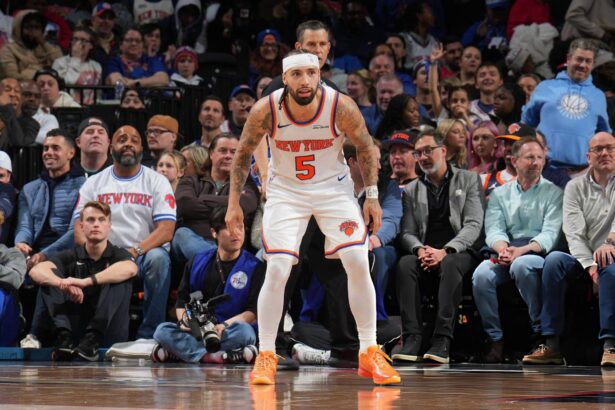
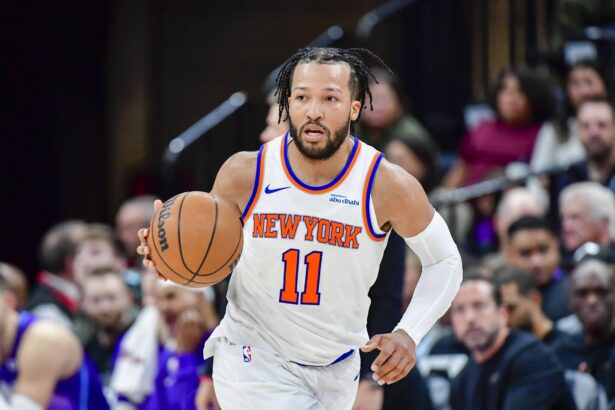
New York Knicks: Jalen Brunson
The Knicks have a great situation with Karl-Anthony Towns, OG Anunoby, Mikal Bridges, depth, money, and other young players. Jalen Brunson is not part of that group. He is the player who turned the Knicks from a broken team into a real East powerhouse since he set foot in New York.
Brunson put up 26.0 points and 6.8 assists, made All-NBA Second Team for the third straight season, and pushed the Knicks to 53 wins in the regular season, and is one win away from reaching the NBA Finals. That is not just star production. That is franchise-control production from a guard who already owns the offense in playoff games.
The size will always be the only thing people bring up with him, but that argument is old now. Brunson gets to his spots, wins late possessions, takes charges, controls tempo, and gives the Knicks a real identity. They can move pieces around him. They can’t move him.
Oklahoma City Thunder: Shai Gilgeous-Alexander
This one is as obvious as Jokic for the Nuggets. Shai Gilgeous-Alexander is the Thunder’s best player, best scorer, best late-game option, and still the main reason their whole build works. The depth is great, but Shai is at the top.
Gilgeous-Alexander just won his second straight MVP, made All-NBA First Team as a unanimous pick, and finished with 31.1 points, 6.6 assists, and 4.3 rebounds on 55.3% shooting from the field. That is absurd guard efficiency with superstar usage.
The Thunder can keep developing Chet Holmgren, Jalen Williams, and the rest, but nobody changes the defensive plan like Shai. He gets two feet in the paint, lives at the rim, punishes switches, and still doesn’t rush. He is not just untouchable. He is the reason the Thunder are still the standard.
Orlando Magic: Franz Wagner
Paolo Banchero is still the best talent on the Magic. He has the higher ceiling, the bigger body, and the stronger star profile. But for this specific question, Franz Wagner is the one I would protect first because his game is easier to place next to other stars.
Banchero’s season was not bad, but it was uneven for the level expected from him. He finished with 22.2 points, 8.4 rebounds, and 5.2 assists, but shot 45.9% from the field and 30.5% from three. With his five-year, $239.0 million extension starting soon, the Magic need him to be more efficient if he is going to own that much usage.
Wagner is less explosive, but the fit is simpler. He gave the Magic 20.6 points, 5.2 rebounds, and 3.3 assists on 48.1% shooting from the field, and he doesn’t need the whole offense built around him to be useful. He can cut, attack closeouts, defend wings, run secondary offense, and play next to almost any star. That is why, even if Banchero has more upside, Wagner feels like the safer untouchable piece right now.
Philadelphia 76ers: Tyrese Maxey
The 76ers have lived too long inside the same question: Can Joel Embiid stay healthy when the season gets serious? That is why Tyrese Maxey feels like the safer untouchable player now. Embiid is still the best player when everything is right, but Maxey is the one who keeps giving the team real stability.
His jump was not small. Maxey put up 28.3 points, 4.1 rebounds, 6.6 assists, and 1.9 steals, at 46.2% shooting from the field, 36.7% from three, and 89.2% from the line. He also made the All-NBA Third Team, which is a big line to cross for a guard who was once seen more like Embiid’s second option than a true franchise guard.
The 76ers can’t trade the player who gives them speed, scoring, shot creation, and a future beyond Embiid’s health. Maxey is not just the guard next to the star anymore. He is the one player they can build the next version around without lying to themselves.
Phoenix Suns: Devin Booker
The Suns are still Booker’s team. That has been tested a lot already, through the Kevin Durant trade, the Bradley Beal build, the retooling, the playoff exits, and the constant noise around what this roster should be. Devin Booker is the one piece that still makes the whole thing feel serious.
Booker gave the Suns 26.1 points, 3.9 rebounds, and 6.0 assists while shooting 45.6% from the field. The Suns were also much better with him on the floor, going 37-27 when he played and 8-10 without him. That is not perfect superstar control, but it is still the difference between a team with direction and a team searching for one.
There can be fair questions about whether Booker is enough to be the best player on a title team. But that is not the same as making him available. The Suns can move veterans, change the frontcourt, or chase another star. Booker should stay as the player everything starts from.
Portland Trail Blazers: Deni Avdija
This is the one where the contract has to be part of the answer. Deni Avdija is not only the Trail Blazers’ best all-around player right now. He is also on one of the best non-rookie deals in the league, and that changes how the front office should see him.
The production jumped hard. Avdija put up 24.2 points, 6.9 rebounds, and 6.7 assists, became an All-Star, and even finished as the highest-voted player who missed All-NBA. For a 6-foot-8 forward who can handle, pass, rebound, get to the line, and defend multiple spots, that is a real lead-wing profile.
The deal makes it almost impossible to justify moving him. Avdija is on a four-year, $55.0 million contract, with salaries of $14.4 million, $13.1 million, and $11.9 million left through 2027-28. That is insane value for a player producing close to an All-NBA level. The Trail Blazers can listen on almost anyone else, but Avdija is the one player whose value to them is probably higher than what most trade offers would show.
Sacramento Kings: No. 7 Pick
The Kings don’t have an untouchable player. That is the problem. Devin Carter has not shown enough to get that label. Keegan Murray is already expensive after the extension, and just played only 23 games. Zach LaVine is injury-prone and expected to pick up a player option worth just under $49.0 million. DeMar DeRozan is old, and Russell Westbrook is old, too. Domantas Sabonis also keeps showing up in trade noise, and that makes sense because he is expensive, not a real No. 1, and hard to build a top-level defense around. There is no franchise piece hiding here. It is just a bad roster with names people recognize.
That is why the No. 7 pick is the answer. The Kings fell to seventh in the 2026 NBA Draft lottery after finishing with the fifth-worst record in the league, as LaVine, Sabonis, and Murray all missed more than half the season. This is not a core that needs one more veteran. This is a group that already proved it can be expensive, old, hurt, and still terrible.
The Kings should not trade this pick to make the roster look “competitive” for three months. That would be insane. The pick is the only asset here with a clean path to real upside. Everyone else should be available at the right price, because nobody on this roster has earned the right to stop a reset.
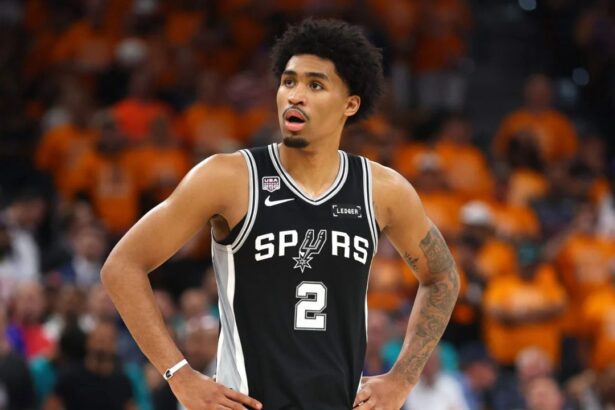
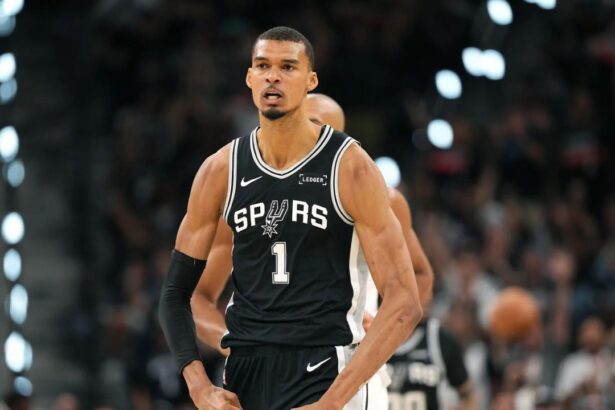
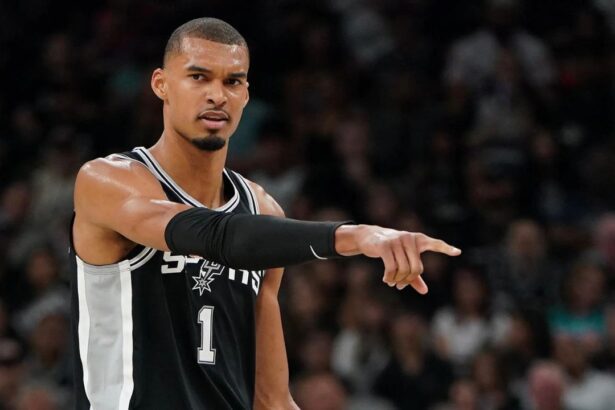
San Antonio Spurs: Victor Wembanyama
There is no trade package for Victor Wembanyama. Not a normal one, not a crazy one, not a fake internet one. The Spurs have a 7-foot-4 player who can protect the rim like a generational defender and still be the offensive center of a playoff team.
Wembanyama put up 25.0 points, 11.5 rebounds, and 3.1 assists this season while shooting 51.2% from the field. He also won Defensive Player of the Year unanimously, made All-Defensive First Team unanimously, and led the league with 197 blocks. That is not a future star. That is already a league-shaping player.
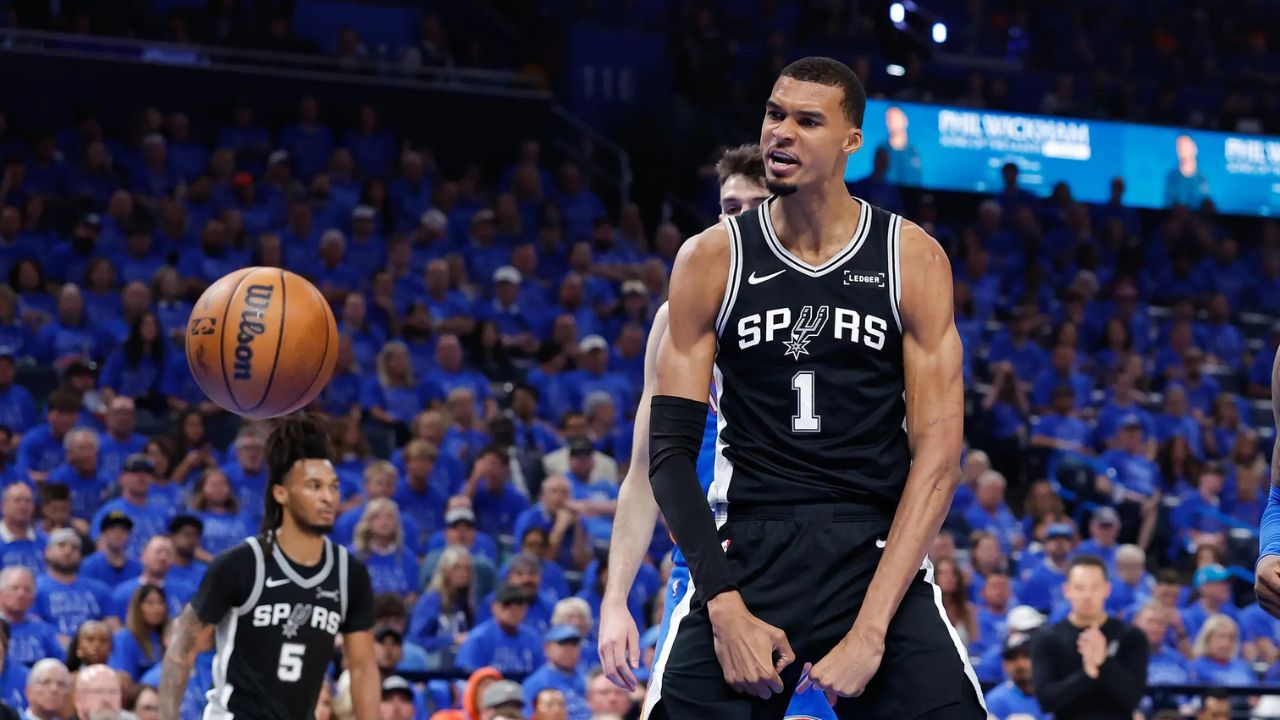
The playoff run only made it louder. Wembanyama just had 33 points, eight rebounds, five assists, three blocks, and two steals in Game 4 of the Western Conference Finals to tie the series against the Thunder. The Spurs are already ahead of schedule, and he is the whole reason. He is the easiest untouchable in the league.
Toronto Raptors: Scottie Barnes
The Raptors have good competitive pieces, but Scottie Barnes is still the center of the whole build. He is not a perfect scorer, and the jumper still comes and goes, but the full skill set is too valuable to put in trade talks.
Barnes finished with 18.1 points, 7.5 rebounds, and 5.9 assists while shooting 50.7% from the field. He also played 80 games, which is important for a roster that needed stability. Add the defense, and the case gets stronger: he made All-Defensive Second Team and gave the Raptors real versatility at 6-foot-8.
The Raptors can build with Barnes because he doesn’t have to be only one thing. He can guard wings, handle in transition, pass from the elbows, rebound, and play next to different types of guards and bigs. The scoring polish still has to improve, but he is the player who gives the Raptors the best mix of floor, ceiling, and identity.
Utah Jazz: Keyonte George
The Jazz are not a rebuild anymore. That changed once they added Jaren Jackson Jr. next to Lauri Markkanen, and it changes even more with the No. 2 pick coming in. This team is not only collecting assets now. The Jazz are trying to be a threat in the West next season, and that makes Keyonte George more important, not less. With his age, ceiling, and rookie-scale contract, he’s probably the safest player in any talks.
George is the guard who can connect that whole thing. He finished with averages of 23.6 points, 3.7 rebounds, and 6.1 assists while shooting 45.6% from the field. That is a massive jump for a young lead guard, especially on a team that was still changing direction during the season. The Jazz don’t need him to be the only star now. They need him to organize offense, attack closeouts, punish weak guards, and make life easier for Markkanen, Jackson, and whoever comes at No. 2.
That is why George should be the protected player here. Markkanen is great, Jackson is a huge defensive piece, and the No. 2 pick could bring another major talent. But George is the one young guard already showing he can run NBA possessions with real usage. For a Jazz team trying to jump from bad to dangerous fast, trading that type of player would make no sense.
Washington Wizards: Alex Sarr
The Wizards are a strange case because they just traded for Trae Young and Anthony Davis, and they also own the No. 1 pick. They finished 17-65, landed the top pick, and had already acquired Young and Davis earlier this year before the deadline. That’s a sign of contention dreams, not just enduring a rebuild.
Still, Alex Sarr should be the safest player on the roster. Young and Davis are stars, but they are not long-term answers in the same way. Davis is older and always tied to health questions. Young is expensive and has already been moved once. The No. 1 pick is massive, but the Wizards have reportedly been open to moving it, which makes Sarr feel like the more stable young piece.
Sarr’s second season gave them a real base: 16.3 points, 7.4 rebounds, 2.7 assists, and 2.0 blocks while shooting 48.2% from the field. He is not a finished star, but a mobile 7-footer who can protect the rim, pass a little, finish, and grow next to different types of creators is exactly the type of player the Wizards can’t throw into another rushed trade.