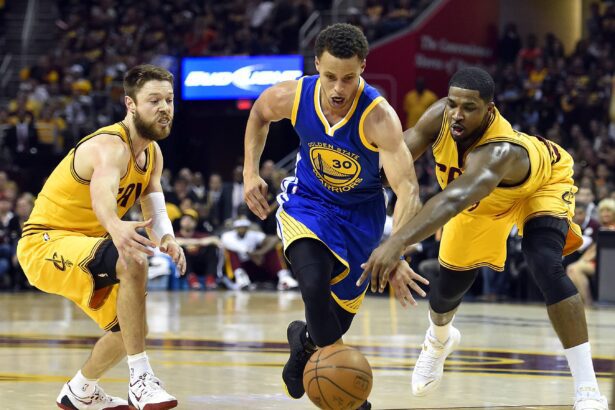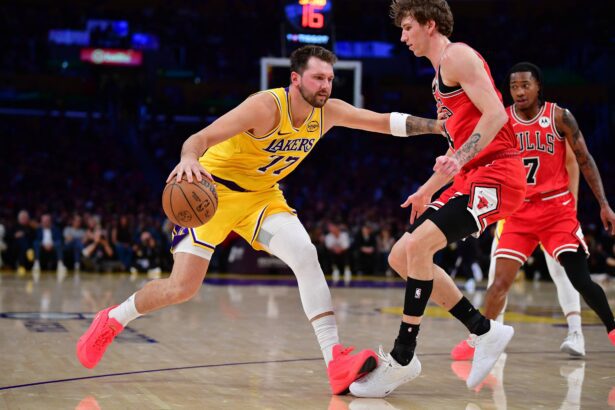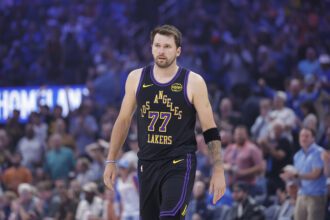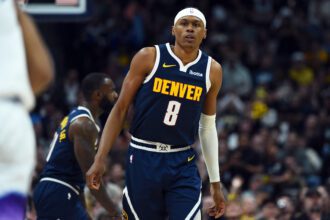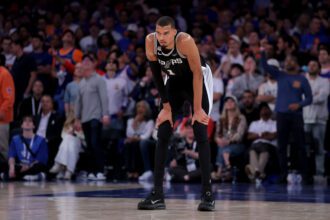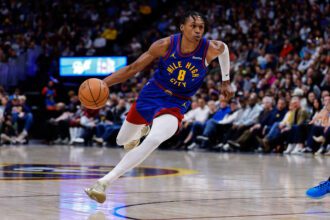
For years, the NBA All-Star Game had become a glorified shootaround; high scores, no resistance, and very little pride. That changed in 2026. With three teams, Team World, Team Stripes, and Team Stars, battling through a four-game mini-tournament, this felt closer to playoff basketball than a midseason exhibition.
Team Stars ultimately came out on top, with brash superstar Anthony Edwards capturing All-Star Game MVP by edging out hometown hero Kawhi Leonard in a lopsided finale. Overall, this was a night to truly remember.
There was an edge. There was trash talk. There were defensive possessions that actually mattered. And by the end of the night, it was clear that this new era of All-Star basketball may have officially arrived.
1. Competitiveness Was At An All-Time High
Credit where it’s due: Adam Silver nailed this format. Splitting the league into Team World, Team Stripes (veterans), and Team Stars (young superstars) injected something the event desperately needed: pride.
The Americans didn’t want to lose to the international contingent. The veterans didn’t want to get run off the floor by the kids. And the rising stars wanted to prove the league already belongs to them.
You could feel it in every close finish, especially the overtime opener and the physical tone set in Game 3. Rotations tightened. Defensive intensity picked up. Bodies hit the floor. For the first time in years, players weren’t just trying to entertain, they were trying to win.
That subtle shift changed everything. Victor Wembanyama set the tone to start, and then Anthony Edwards and Kawhi Leonard ran with it until the end. Credit has to specifically go to these three stars tonight.
2. Kawhi Leonard Has Still Got It
At Intuit Dome, his building, Kawhi reminded everyone who he is. The “fun guy” exploded for a dominant stretch that felt like a time machine back to his Toronto Raptors championship run days. Efficient and completely unbothered by the moment, he looked like the most controlled player on the floor.
For years, health has been the only thing standing between Leonard and sustained dominance. But this season, he looks as sharp as he has since 2019, and his All-Star performance reinforced that reality.
If not for Anthony Edwards’ late-game fireworks, Kawhi would likely be holding the MVP trophy. The talent never left; it just needed the stage again.
3. Anthony Edwards Must Embrace Being The Face Of The League
When Edwards walked away with All-Star Game MVP, it didn’t just feel like an award; it felt symbolic. The veterans had their moment. The international stars made their push. But in the end, it was the 24-year-old who slammed the door shut and owned the spotlight.
Edwards has the charisma, the edge, and the fearless mentality the league craves. He talks. He competes. He wants the big shot. But now comes the next step: fully embracing that this could be his league. Not deflecting it. Not downplaying it. If he leans into that responsibility, this weekend may be remembered as the official passing of the torch.
4. LeBron James Is Still The Greatest Of The Veterans
There were plenty of big names on Team Stripes, Kevin Durant, Jaylen Brown, and more, but LeBron James’ impact stood above the rest. He controlled tempo, made the right reads, and delivered timely baskets in high-leverage stretches. Even without overwhelming scoring totals, his fingerprints were on winning possessions.
If this ends up being one of his final All-Star appearances, fans were lucky to witness it. At 41, he still bends the game to his will in short bursts. Durant had a few moments, but LeBron’s all-around influence, the rebounding, the playmaking, the defensive communication, reminded everyone why he’s still the gold standard among those nearing retirement.
5. Luka Doncic and Nikola Jokic Might Not Belong
Earlier in the week, Kevin Durant publicly challenged the effort level of certain stars in past All-Star Games. While he didn’t hold back in spirit, the conversation inevitably circled around Luka Doncic and Nikola Jokic, two generational talents whose laid-back All-Star approaches have drawn criticism before.
Their absence this time opened space for hungrier players to seize the moment. The new format rewarded pace, defense, and emotional investment. Doncic and Jokic are methodical maestros, not exactly known for defensive urgency in exhibitions.
Would they have competed harder under these stakes? Maybe. But one thing was clear: the game didn’t suffer without them. If this competitive structure sticks, every star, no matter how accomplished, will have to decide whether they’re willing to match that intensity.