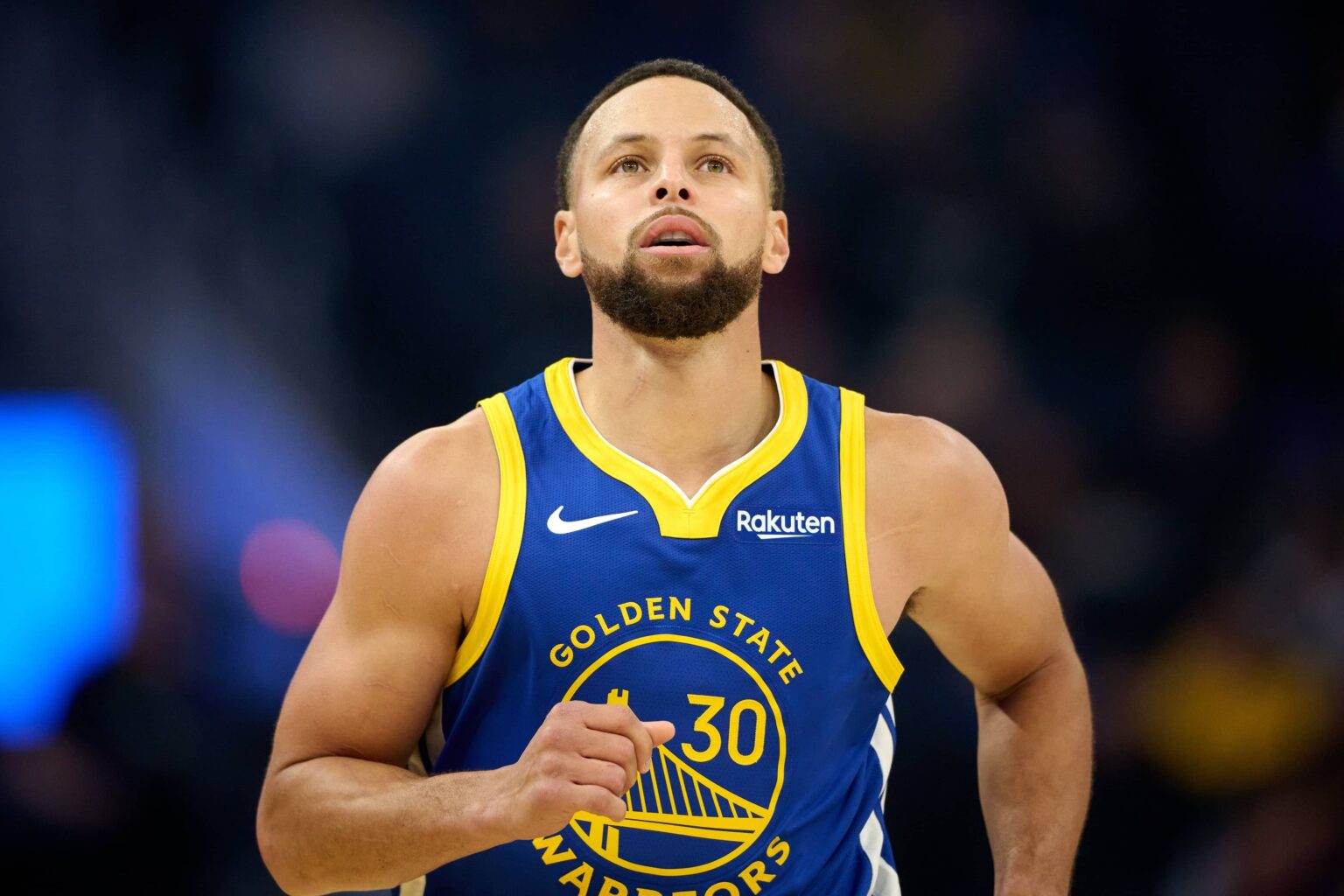
Stephen Curry did not point to shooting mechanics, ball-handling, or conditioning when asked about the smallest detail that separates him from the rest of the league, instead he went in a direction most players rarely discuss, identifying breathing as a skill he has deliberately trained and refined over the last several years of his career.
Speaking to Slam Magazine, Curry explained how his longtime skills coach, Brandon Payne, emphasized breathing as a controllable edge:
“Probably breathing. My skills coach, Brandon Payne, always talks about breathing as a skill. I think for young kids, it’s beneficial, but they can get away with it because they’re so energetic and young. They don’t even need to warm up. They just go out there and hoop.”
“But the deeper you get into your career, being able to control your breathing, recovery, controlling your nerves, all those things, I’ve really tried to master that in the last five or six years. That’s probably something nobody would know you’re doing when you’re doing it, just connecting that.”
“And that’s an all-the-time thing. It doesn’t matter if it’s in my training sessions, training camp, preseason, regular season, or the Finals. That’s always a fine detail of mastering the game.”
That insight carries more weight when placed against Curry’s physical profile and career arc, because unlike many all-time greats, he has never relied on size or overwhelming athleticism to dominate, standing at 6-foot-2 and around 185 pounds, which places him at a disadvantage compared to bigger and more physically imposing stars, yet he has built one of the most efficient offensive games in league history through precision, movement, and stamina.
Breathing ties directly into that style of play, since Curry’s game depends heavily on constant off-ball movement, sharp cuts, and rapid changes of direction, all of which demand elite conditioning and recovery within possessions, not between them, and the ability to control breathing allows him to sustain that movement without losing efficiency late in games or during high-pressure sequences.
When he relocates after a pass, sprints through screens, or resets for another shot attempt, that control becomes a hidden advantage that defenders cannot easily track or disrupt.
Even at 38, Curry continues to produce at an elite level, averaging 26.6 points, 3.6 rebounds, and 4.7 assists while shooting 46.8% from the field and 39.3% from three-point range in a season limited to 43 games due to injuries, numbers that reinforce how his skill set continues to translate despite physical wear and team struggles.
The Golden State Warriors finished 37-45 and failed to make the playoffs after losing in the play-in tournament, which adds uncertainty around the franchise’s direction, especially with questions surrounding Steve Kerr and comments from Draymond Green hinting at potential changes.
Amid that instability, Curry remains the central figure, and reports continue to link the Warriors to potential star additions as they try to extend their competitive window, yet his individual approach shows why he has sustained excellence regardless of roster shifts. His focus on breathing reflects a broader understanding of longevity, where marginal gains compound over time and small adjustments create separation at the highest level.
The detail itself is simple, but the discipline behind it is not, because mastering breathing requires awareness, repetition, and consistency across every environment, from training sessions to game situations, and Curry’s commitment to that process highlights how elite performance often depends on factors that remain invisible to most observers.