The Lakers finished 53-29 and won their first-round series against the Rockets in six games, but the season ended in a very ugly way. The Thunder swept them 4-0 in the second round and showed that the roster still isn’t close enough to the best team in the West.
Luka Doncic is now the main player of the franchise, so every offseason decision has to be made around him. The Lakers need more defense, athleticism, shooting, and a real rim protector. They can’t only bring back the same group and hope the result changes next year.
The front office also has a long list of contract decisions. LeBron James, Rui Hachimura, Luke Kennard, Maxi Kleber, and Jaxson Hayes can enter unrestricted free agency, while Austin Reaves, Deandre Ayton, and Marcus Smart have player options.
Reaves is clearly the biggest priority because he is younger, fits next to Doncic, and could receive a huge contract on the open market. LeBron’s future is more complicated because he is 41, still productive, and probably won’t return for a small salary. The choices involving Hachimura, Ayton, Smart, and Kennard will also decide how much flexibility the Lakers have to chase outside help.
Not every player should return. Some still have a role around Doncic, while others would only use cap space or roster spots without solving the main problems.
Here is every Lakers offseason decision, who they should re-sign, and who they should let go.
1. LeBron James
Status: Unrestricted Free Agent
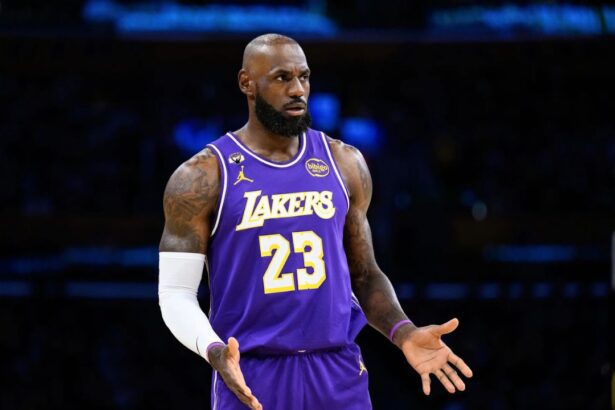
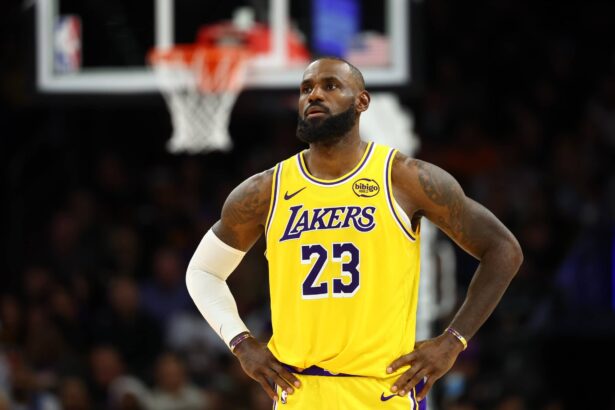
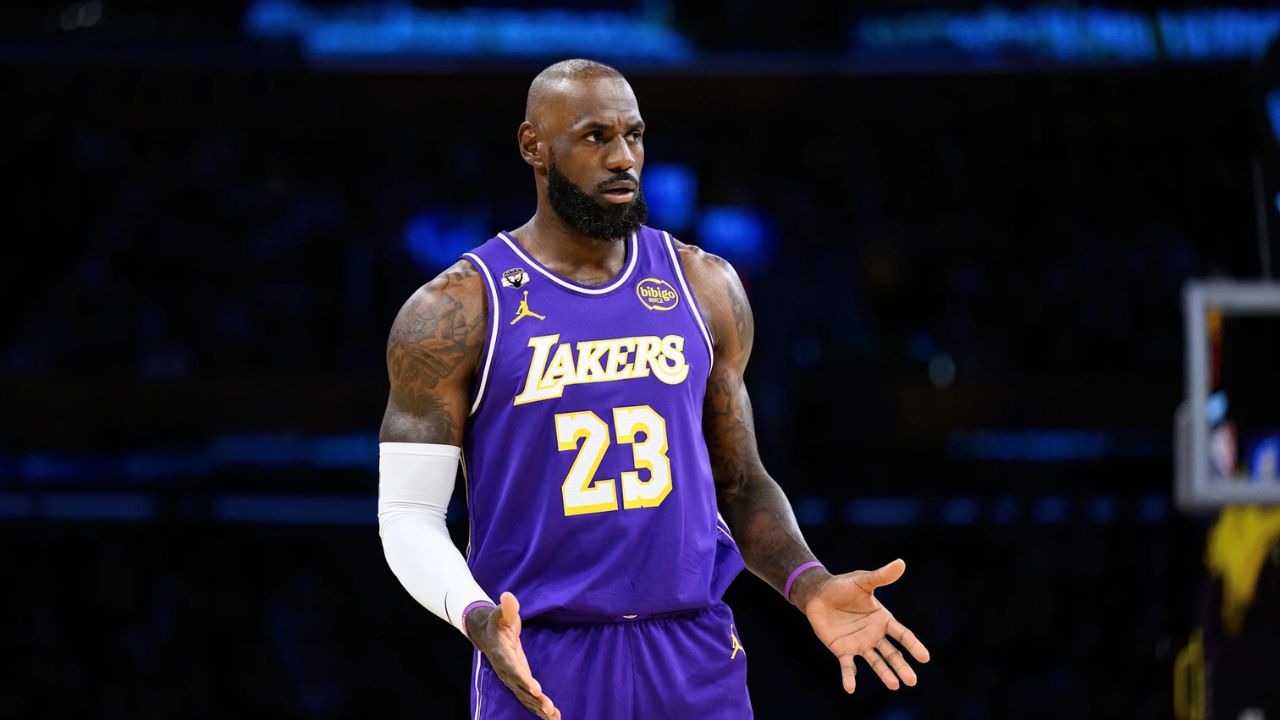
LeBron James isn’t the main player of the Lakers anymore, but he is still much better than a normal 41-year-old should be. He averaged 20.9 points, 6.1 rebounds, and 7.2 assists while shooting 51.5% from the field across 60 games. His production improved in the playoffs, where he gave them 23.2 points, 6.7 rebounds, and 7.3 assists per game.
The role is also more reasonable now. Luka Doncic controls the offense, so James doesn’t need to carry every possession or create 30 points every night. He can attack mismatches, run in transition, pass from the frontcourt, and save more energy for the playoffs. That worked at times, but the Lakers still saw the age problem. James can’t defend at full speed for 35 minutes every night, and the roster needs younger athletes around him.
The real issue is money. James made $52.6 million this season, and his free-agent cap hold is around $59.5 million. Keeping that hold on the books would destroy most of the Lakers’ projected cap space. They need a quick decision. ESPN’s Bobby Marks suggested a one-year, $30.0 million deal with a full no-trade clause, which feels fair for both sides.
At that number, James remains one of the best second or third options in basketball without taking up superstar money. The Lakers could still use part of their cap room on a center, wing defender, or another shooter. A one-year contract also keeps the future open around Doncic.
The Lakers shouldn’t give James another deal near $60.0 million only because of his name. That would make improving the roster almost impossible. They also shouldn’t let him leave if he accepts a more reasonable number. He still helps them win, he played better in the postseason, and replacing his production wouldn’t be easy.
The decision should be to re-sign James for one year at around $30.0 million. Anything much higher starts becoming a problem for the rest of the offseason.
2. Austin Reaves
Status: $14,898,786 Player Option
Austin Reaves will decline this option. There is almost no debate about that part. He is coming off the best regular season of his career after averaging 23.3 points, 4.7 rebounds, and 5.5 assists on 49.0% from the field. Accepting $14.9 million would leave a crazy amount of money on the table.
Reaves is also the most important free agent for the Lakers. He is 28, fits the Luka Doncic timeline, and can play with or without the ball. Reaves can run pick-and-rolls, attack weak defenders, get to the line, and punish teams that send too much help toward Doncic. His scoring also gives the Lakers a second creator when Doncic sits.
The defense is the main concern. A Doncic-Reaves backcourt can become a target against fast and physical teams. The Thunder attacked both guards and showed why the Lakers still need elite defenders around them. That problem is real, but letting a 23-point scorer walk doesn’t fix it. The answer is adding better defensive players at the other three positions.
ESPN’s Bobby Marks suggested four years and $155.0 million. Other scouts and executives projected something closer to five years and $200.0 million, below the full five-year max of around $239.0 million. That is a huge contract, but Reaves has real leverage after improving his scoring every season.
The Lakers also have a cap advantage. Reaves has a cap hold of only around $20.9 million. They can keep that smaller number on the books, use their remaining space first, and officially sign him later through Bird rights. The order matters because signing him immediately would remove most of that flexibility.
The Lakers shouldn’t give Reaves the full max without negotiating, but they can’t lose him for nothing either. A contract around five years and $190.0 million to $200.0 million, between $35.0 and $40.0 million per year, feels like the realistic zone.
The decision is easy. Reaves should decline the option, and the Lakers should re-sign him as one of the main long-term pieces next to Doncic.
3. Rui Hachimura
Status: Unrestricted Free Agent
Rui Hachimura had a strange season. His basic production dropped to 11.5 points, 3.3 rebounds, and 0.8 assists per game, partly because his role became smaller and he moved to the bench for a stretch of the season. Still, he shot 51.4% from the field and a career-high 44.3% from three.
That shooting is the biggest reason to keep him. Luka Doncic needs forwards who can stay ready in the corners and punish defenses for helping. Hachimura doesn’t need many dribbles or complicated plays. He can catch, shoot, cut, or attack a smaller defender in the post.
He also improved when the games became more important. Hachimura averaged 17.5 points during the playoffs and made 56.9% of his threes. He scored 21 points with five threes in the Game 6 win over the Rockets and was one of the few Lakers role players who consistently punished open space.
The weaknesses are still the same. Hachimura isn’t a strong rebounder for a 6-foot-8 forward, and his defense can become a problem against quicker wings. He averaged only 3.3 rebounds, which isn’t enough for someone with his size. The Lakers need more athleticism and defensive versatility, so they can’t pay him like a two-way forward.
Hachimura’s cap hold is around $27.4 million, much higher than the $18.3 million he earned this season. Keeping that hold would reduce the Lakers’ room, so they need to agree on a new deal early or renounce his rights. ESPN’s Bobby Marks suggested four years and $64.0 million, equal to $16.0 million per season.
That is a reasonable price. Hachimura is 28, already understands the system, and gives them elite spot-up shooting. Replacing that skill with the same money wouldn’t be the easiest of tasks.
The Lakers should re-sign him at around $15.0 million to $17.0 million per season. If another team offers more than $20.0 million annually, they should let him go and use the space on a better defender.
4. Deandre Ayton
Status: $8,104,000 Player Option
Deandre Ayton gave the Lakers a decent season for only $8.1 million. He played 72 games and averaged 12.5 points, 8.0 rebounds, and 1.0 blocks while shooting 67.1% from the field. He didn’t need many touches and became an easy lob option for Luka Doncic, which was basically the role the Lakers needed from him.
There were still frustrating parts. Ayton didn’t always play with enough physicality, especially against stronger centers. His rebounding numbers were fine, but not huge for a seven-footer with his athletic tools. He also doesn’t stretch the floor or create much offense outside simple finishes, short jumpers, and offensive rebounds.
The playoffs showed both sides. Ayton had 19 points and 11 rebounds in Game 1 against the Rockets, then added 18 points and 17 rebounds in Game 5. He also grabbed 16 rebounds in the Game 6 win. Against the Thunder, his influence became much smaller, and the Lakers couldn’t depend on him to change the series defensively.
The contract makes this easy from the Lakers’ side. If Ayton accepts the $8.1 million option, they should keep him. That is below normal starting-center money, and his salary could also become useful in a future trade. Finding another center who gives 12 points, eight rebounds, and elite finishing for the same price wouldn’t be simple.
The Lakers shouldn’t give him a large multi-year deal if he declines. They need a stronger rim protector and a center who plays with more force every night. Walker Kessler or another defensive center would make more sense as a serious long-term investment.
Ayton is useful, but he isn’t the center the Lakers should build around. The best result is that he accepts the option and returns on the same cheap contract. If he declines and asks for $15.0 million or more per season, they should let him test the market.
Decision: Keep him if he opts in. Let him go if he wants a major raise.
5. Marcus Smart
Status: $5,390,700 Player Option
Marcus Smart gave the Lakers exactly what they hoped for when he signed. He averaged 9.3 points, 2.8 rebounds, and 3.0 assists in 62 games, but his value was much bigger than those basic numbers. He defended the best opposing guard, fought through screens, organized teammates, and gave the roster more energy.
The Lakers’ defense was around nine points better per 100 possessions with Smart on the floor. Opponents also scored more than seven fewer points per 100 possessions during his minutes. That is a huge difference for a team built around Doncic, Austin Reaves, and an older LeBron James.
His shooting remains the problem. Smart made only 33.1% from three and shot 39.5% from the field. Defenses will still leave him open in important playoff possessions. He can also take some bad shots and force passes that aren’t there. At 32, those issues probably aren’t changing much.
Still, his fit is valuable because the Lakers already have enough players who need the ball. Smart can defend, move it quickly, attack a closeout, and handle some backup point guard minutes. The Doncic-Reaves-Smart trio posted a +22.1 net rating, the best mark among all three-man combinations last season.
Smart will probably decline the $5.4 million option because he can earn more on a new deal. The Lakers should try to keep him, but they shouldn’t go crazy. A two-year contract around $18.0 million to $20.0 million total would be fair, with the second year partially guaranteed or a team option.
Paying much more would create another issue. Smart has played over 62 games only once since 2018-19, and his offense can disappear. The Lakers need younger wings, so they can’t spend all their available money on an older defensive guard.
The decision should be to re-sign Smart on a short contract. His defense, leadership, and toughness are too useful around Doncic and Reaves. The Lakers just need to keep the annual salary below $10.0 million.
Decision: Re-sign him for two years at the right price.
6. Luke Kennard
Status: Unrestricted Free Agent
Luke Kennard became one of the Lakers’ best midseason moves. After arriving in the Gabe Vincent trade, he averaged 9.0 points, 2.7 rebounds, and 2.5 assists across 32 regular-season games. His shooting gave the offense something it badly needed around Doncic and James.
Kennard finished the full season at 8.4 points while shooting 53.3% from the field. Before the trade, he was leading the NBA at 49.7% from three. He has now made 44.2% of his threes across his career, so this wasn’t one random hot month. He is one of the most reliable shooters in the league.
He became even more important in the playoffs. Kennard averaged 11.5 points, 3.5 rebounds, and 2.3 assists while shooting 47.4% from three across 10 games. In Game 1 against the Rockets, with Doncic and Reaves unavailable, he scored 27 points on 9-of-13 shooting and made all five of his threes.
That type of shooting changes how teams defend the Lakers. A defender can’t leave Kennard to help against Doncic. If the defense traps, Kennard becomes an easy pass away from an open three. He also showed he can attack hard closeouts and make the next pass instead of only standing in one corner.
The defense is the reason his price has to stay reasonable. Kennard isn’t quick enough to handle elite guards, and a Doncic-Reaves-Kennard lineup can become very weak at the point of attack. He should be used as a specialist and secondary creator, not as a 35-minute starter.
Kennard made $11.0 million this season, and his cap hold is $13.2 million. The Lakers should try to bring him back around two years and $20.0 million, possibly with a team option in the second season. That keeps an elite shooter without using too much flexibility.
The Lakers shouldn’t lose him over a small difference. Shooters this accurate make Doncic much harder to defend, and Kennard already proved he can produce in playoff games.
Decision: Re-sign him on a short deal around $10.0 million per season.
7. Jaxson Hayes
Status: Unrestricted Free Agent
Jaxson Hayes remained useful this season. He averaged 7.5 points, 4.1 rebounds, and 0.9 assists while giving the Lakers vertical spacing, speed, and easy finishes around the rim.
The problem is that Hayes still isn’t a reliable starting center. He can finish lobs and run the floor, but stronger big men move him near the basket. His rebounding also isn’t good enough for a seven-footer, and he doesn’t provide the level of rim protection the Lakers need behind their offensive guards.
Hayes made $3.4 million this season and has a $4.5 million cap hold. The Lakers shouldn’t keep that hold if they want to maximize cap space. They can renounce him and still try to bring him back later on another minimum contract.
That should be the only real option. Hayes is fine as a third center or an athletic bench option for certain matchups. He shouldn’t receive guaranteed rotation money before the Lakers solve the starting-center position.
Decision: Re-sign him only for the minimum after the main offseason moves are finished.
8. Maxi Kleber
Status: Unrestricted Free Agent
Maxi Kleber’s time with the Lakers should end. He averaged only 2.0 points, 2.0 rebounds, and 0.6 assists in 43 games while playing 10.7 minutes per night. His role became very minimal, and he didn’t give the Lakers enough shooting, defense, or rebounding to justify keeping him.
The idea behind Kleber still sounds useful. A big forward who can defend centers and make threes should fit next to Doncic. The actual player is now 34, has dealt with several injuries, and doesn’t move the same way he did during his best years with the Mavericks.
The financial side makes the decision even easier. Kleber earned $11.0 million this season, and the Lakers obviously can’t carry that number into free agency when they are trying to create space for Reaves, a center, and younger defenders.
A minimum return still wouldn’t be necessary. The Lakers already have younger forwards who need minutes, and Kleber’s availability has become too unreliable. They need more athleticism, not another older frontcourt player with physical problems.
Decision: Renounce his rights and let him go.
9. Nick Smith Jr.
Status: $2,511,009 Team Option
Nick Smith Jr. gave the Lakers some useful scoring when injuries opened minutes. He averaged 6.2 points in a limited role and showed that he can create a quick shot, make open threes, and play with confidence even after spending most of the year on a two-way contract.
The Lakers converted Smith to a standard two-year deal before the playoffs. His next season is controlled by a team option and is mostly non-guaranteed, so there is almost no financial risk. A $2.5 million contract for a 22-year-old former first-round pick is exactly the type of cheap roster spot a team with several expensive stars needs.
Smith still has clear limits. He is only 6-foot-2, doesn’t create much for others, and can become a defensive target. He also won’t receive many minutes if Doncic, Reaves, Smart, and the rest of the backcourt return.
Still, the Lakers shouldn’t throw away a young scorer on a minimum-level deal. Smith can compete for backup minutes, spend more time developing, or become a small contract in a later trade.
Decision: Pick up the team option and keep him for training camp.
10. Drew Timme
Status: Restricted Free Agent
Drew Timme averaged only 3.4 points, 1.2 rebounds, and 0.9 assists in limited NBA minutes, but his G League production was much stronger. He put up 23.7 points, 8.5 rebounds, and 5.0 assists while shooting 56.3% from the field.
Timme has real offensive skill. He can score inside, pass from the post, use screens, and punish smaller defenders. The problem is defense. He isn’t a strong rim protector, he doesn’t move very well against guards, and the Lakers already need more athleticism in the frontcourt.
There is no reason to give him a guaranteed standard contract now. Still, keeping his restricted rights costs almost nothing, and another two-way deal would be fair if he is eligible and accepts it.
Decision: Keep him only on another two-way or training-camp deal.
11. Chris Manon
Status: Restricted Free Agent
Chris Manon didn’t receive a real NBA role, but he was one of the best defenders in the G League. He averaged 10.3 points, 5.6 rebounds, 2.2 assists, and 1.9 steals while earning a place on the All-NBA G League Defensive Team.
That defensive profile is worth keeping around. Manon is 6-foot-5, plays with energy, pressures the ball, and can defend several perimeter positions. The Lakers need cheap defenders around Luka Doncic and Austin Reaves, so his skill set makes more sense than another small scoring guard.
His offense is still limited, and he hasn’t shown enough shooting or creation for a standard roster spot. The Lakers shouldn’t overcomplicate it.
Decision: Extend the qualifying offer and keep him on another two-way contract.