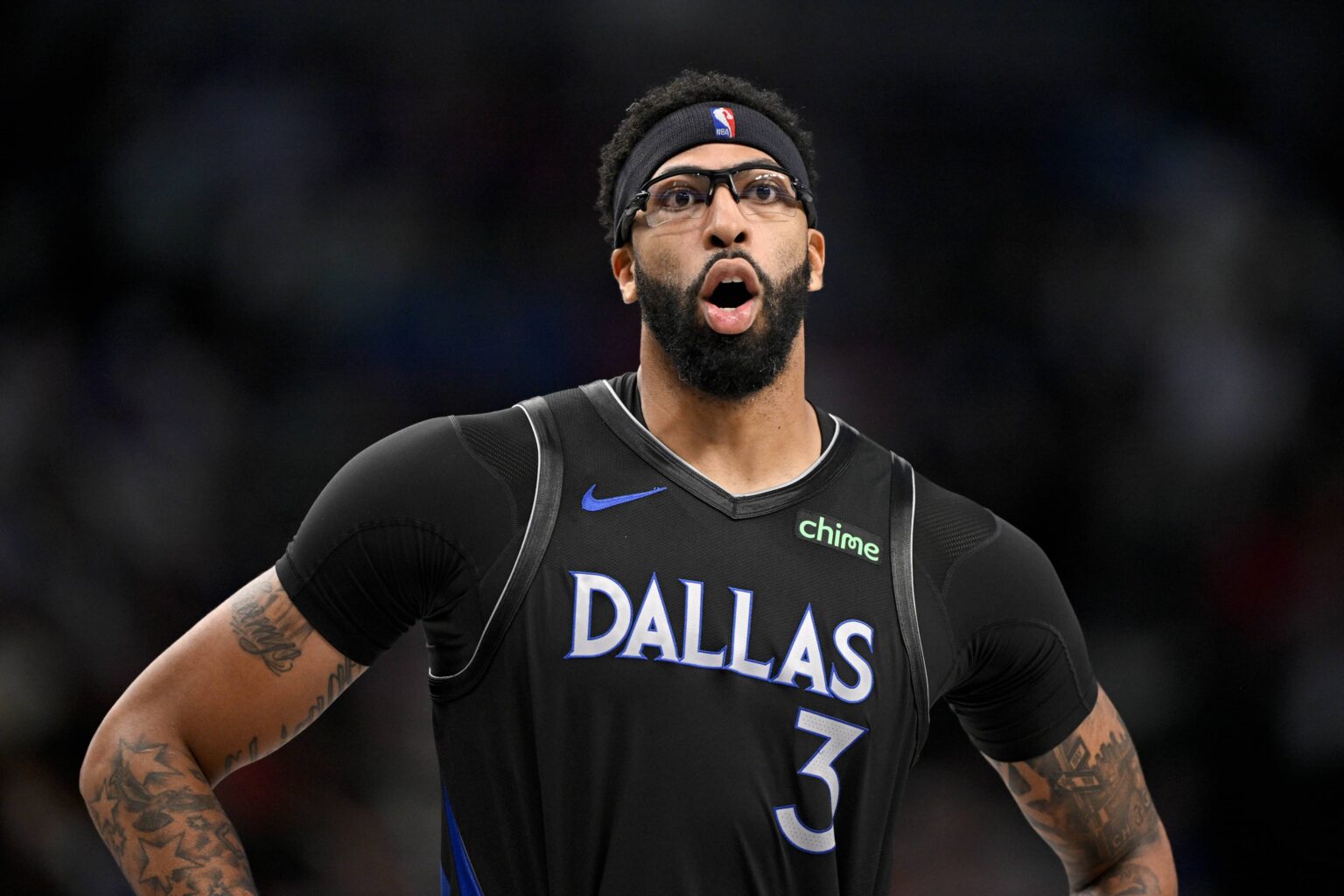
The Mavericks are 13-23, and that uneven start is why Anthony Davis trade rumors have followed this team from the opening weeks of the season. This hasn’t felt like a deadline-only storyline. Around the league, there’s been a steady belief that if the Mavericks decide to shift direction, Davis is the piece that could reshape everything.
That idea got sharper once Tim MacMahon reported that while Davis would prefer to stay with the Mavericks and sign an extension this summer, his camp is focused on one condition above all else. If a trade happens, his agent, Rich Paul, will want Davis sent to a team willing to give him a long, lucrative extension.
That’s the real filter here, not fit, not market size, but long-term financial commitment. Davis becomes eligible this summer for a four-year extension projected around $275 million, meaning any team trading for him has to be comfortable paying superstar money deep into his mid-to-late 30s.
That context is why only a few rumors feel real. The Hawks have been consistently mentioned as a team pushing closest to a deal, while the Warriors angle has centered on real contact and real interest, even if the salary math is messy. This isn’t about who can trade for Anthony Davis.
It’s about who should trade for him and immediately commit to the extension he’s seeking. Here are five teams that fit that exact profile.
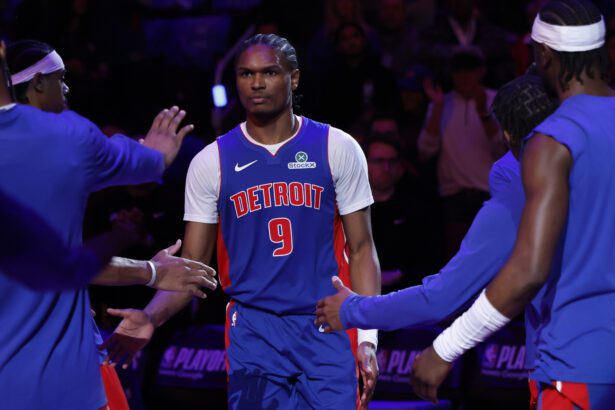
1. Detroit Pistons
This is the cleanest “we’re finally done rebuilding” swing in the league, and it’s the kind of swing a team with real momentum should actually consider. The Pistons are 27-9 and sitting on the top seed in the East.
They’re not some cute story either. They score 118.8 points per game, give up 112.7, and they’re ripping defenses apart with a 54.7% team FG% and 38.0% from three. They’re also living in the elite neighborhood with a +6.9 net rating.
Now plug Anthony Davis into that. Cade Cunningham is playing like a top-shelf engine, putting up 26.7 points and 9.7 assists. Jalen Duren is already a monster finisher at 17.9 points and 10.6 boards.
The Pistons don’t need Davis to be “2020 title run” Davis every night. They need him to be the playoff cheat code: erase mistakes at the rim, switch late-clock actions, and punish teams that try to go small.
The basketball fit is nasty. Cade lives in pick-and-roll. Davis is still one of the best short-roll decision makers and mid-post scorers alive. He gives Cade a release valve that isn’t just “spray it to shooters and pray.”
And defensively, the Pistons already force ugly possessions. Davis would turn those into full-on nightmares because he cleans up everything that leaks through.
The extension pitch is also easier in Detroit than people want to admit. The Pistons haven’t won a title in 22 years, and this roster is good enough right now to justify an aggressive risk.
This is the “we’re not waiting for perfect, we’re taking the puncher’s chance” moment. And if you’re Davis, you can look at the Pistons’ trajectory and believe you’re not signing up for two years of misery before the next contract.
A realistic framework looks like Jaden Ivey plus multiple mid-sized contracts (Tobias Harris, Duncan Robinson) to match Davis’ money, plus at least one first-round pick, with the Pistons positioning it as a win-now consolidation.
Why they hesitate is obvious: you don’t casually trade away depth when your whole identity is coming in waves, and Davis’ health risk is the one thing that can nuke a magical season. But if you believe the Pistons are for real, you go get the best playoff defender-big on the market and you don’t blink.
2. Chicago Bulls
This is the “stop being scared of the middle” team. The Bulls are 17-19 and sitting ninth in the East, which is basically the NBA’s purgatory zip code.
And the wild part is, the offense isn’t even the real issue. They’re scoring 117.8 points per game and hitting 37.0% from three. The real sickness is defense and structure. They’re allowing 121.6 points per game. That’s not a “tweak it” problem, that’s a “you don’t have an anchor” problem.
That’s where Davis changes your life. You can’t fake rim protection in the playoffs, and you can’t fake a backline communicator when possessions tighten up. Davis immediately gives the Bulls an identity that isn’t just vibes and hot shooting. He gives them a scheme. He gives them a real reason to believe a late-season surge is more than a random heater.
And it’s not like the Bulls have nothing to build around. Nikola Vucevic is still productive at 16.4 points, 9.1 rebounds, and 3.6 assists, while hitting 39.4% from three. Matas Buzelis has popped into a legit two-way forward path at about 14.7 points and 5.3 rebounds with 1.3 blocks, and he’s not afraid to let it fly.
But the Bulls need a defensive centerpiece so Buzelis can grow without carrying the whole “save us” burden.
The extension angle is why this even works. The Bulls can’t sell a short-term rental to their fanbase anymore. But if the Bulls can look Davis in the eye and say, “We’re trading for you and we’re paying you,” that changes the whole pitch.
It turns the move from desperation into a plan: Davis as the foundational star through his age-36 season, and Buzelis as the long-term wing running mate.
A realistic framework looks like Vucevic plus another starter-level salary (Patrick Williams), plus at least two first-round picks attached, with the Bulls treating it as a full-on direction change.
The Bulls have shown they can spread production across the roster when healthy, and they’ve already leaned into physical, turnover-punishing basketball in stretches. Davis would be the one guy who makes those stretches sustainable because the stops become automatic.
Why they hesitate is the fear the Bulls always have: “What if it blows up and we’re stuck?” But that’s exactly why you demand the extension commitment up front. You don’t trade for Davis unless you’re comfortable being married to the risk. And honestly, the Bulls have been inactive for so long that swinging big might be the only way they ever escape the treadmill.
3. Atlanta Hawks
The Hawks are the perfect storm for this idea because the franchise is basically screaming for a hard pivot. They’re 17-21. They’re scoring 118.5 a night but giving up 119.9, which is the kind of math that makes every game feel like a coin flip.
And the Trae Young situation adds gasoline: The Hawks and Young are mutually exploring trade options, with Trae missing 28 of 38 games and averaging 19.3 points and 8.9 assists.
Here’s the twist: the Hawks might already have their new franchise centerpiece, and his name is Jalen Johnson. He’s at 23.7 points, 10.4 rebounds, and 8.4 assists. That’s not “nice breakout,” that’s “build your whole offense around this guy.” Put Davis next to that, and you’ve got a frontcourt that can play bully ball, switch, pass, and still protect the rim.
The Hawks also have a roster path that makes Davis make sense from a spacing standpoint. The team added shooters and creators, and even swung a big trade for Kristaps Porzingis, which shows they’re willing to play the “big moves” game.
Davis in Atlanta is basically the “we’re done waiting” button. If you want a title shot in the East, you need someone who can win the paint and win late-clock defense. Davis still does both when he’s right.
A realistic framework looks like the Hawks sending a premium young piece like Zaccharie Risacher plus Kristaps Porzingis, matching salaries, and a 2026 first-round pick, with the Hawks selling the Mavericks on youth and flexibility.
With the Mavericks truly looking at their timeline through the lens of a younger core, the Hawks are one of the few teams that can offer real blue-chip youth while still staying competitive.
The extension piece is the whole point. If Davis is entering this with “I want the long bag,” the Hawks have to treat him like the co-star, not a temporary patch. You promise the future money, you sell the stage, and you lean into the fact that a Johnson-Davis pairing can be elite on both ends.
Why they hesitate is simple: Davis is 32, Johnson is on the upswing, and giving up too much youth for an older star can age your whole roster overnight. But if the Hawks are already flirting with a Trae reset, then going all-in on a Johnson-era contender is the boldest, clearest new identity they can pick.
4. Golden State Warriors
This is the most obvious “championship math” fit, even if it’s messy emotionally. The Warriors are 19-18. They’re still a high-assist team at 29.5 per game, but they also cough it up 15.2 times, and they’ve lived in that annoying middle where nights look amazing, then the next night looks like the wheels fell off.
The reason it works is Stephen Curry. He’s still doing absurd stuff: 28.7 points per game, 4.8 threes per game, and 39.2% from deep on massive volume. Jimmy Butler III has been a real second engine too at 19.7 points, 5.5 rebounds, and 4.9 assists, while shooting 51.1% overall. But the Warriors still need a true defensive eraser who also finishes plays like a monster. That’s Anthony Davis. Curry plus Davis is the kind of two-man game that forces teams to pick their poison and hate every option.
And the funniest part is, this isn’t even a crazy scenario. There’s already noise that the Mavericks reached out to the Warriors on a potential Davis trade, with interest in Jonathan Kuminga, and the reporting notes the salary mismatch problem because Kuminga’s $22.5 million doesn’t come close to Davis’ $54.1 million.
Here’s my take: if the Warriors are serious about giving Curry a fair shot at ring No. 5, they need to stop being sentimental. Draymond Green is a franchise legend, but Davis is a better ceiling-raiser for this specific version of Golden State. Davis protects the rim behind all that switching, he finishes in space, he punishes small lineups, and he gives Curry a vertical threat that doesn’t require perfect timing to work.
A realistic framework looks like Kuminga plus Draymond to match, potentially with draft equity attached, and likely as a multi-team construction because the numbers are brutal. The Warriors can stomach the spending, they always have, and Davis’ camp would actually respect that the organization is willing to pay for stars.
Why they hesitate is also obvious: health risk, age, and the fact that swapping core pieces can blow up chemistry. But this is the NBA, not a scrapbook. Curry is still elite. Davis is still elite when available. If you want the highest-upside pairing that doesn’t require a full roster teardown, this is it.
5. Boston Celtics
This is the coldest option, and that’s why it’s so interesting. The Celtics are 22-12, and they’ve been elite on both ends statistically, with 117.8 points per game scored and only 110.5 allowed. They protect the ball too, just 11.9 turnovers a night.
But the context is brutal: Jayson Tatum ruptured his Achilles last postseason, and that kind of injury changes the whole short-term plan. What’s kept the Celtics afloat is Jaylen Brown going full supernova. He’s at 29.6 points per game with 6.3 rebounds and 4.9 assists, shooting 36.3% from three.
Derrick White has been huge too at 18.4 points with 5.3 assists and 1.5 blocks. And Anfernee Simons gives them another shooting threat, even if his season role has been smaller statistically.
So why Davis? Because the Celtics need a frontcourt star who can anchor a defense and create offense without needing a heliocentric setup. Davis is a plug-and-play defensive ecosystem. Pair him with Brown and suddenly you’ve got a two-star structure that can survive ugly playoff possessions. You can win games 104-99 again, and the Celtics already have the discipline to play that way.
The trade is the hard part, and it’s why this is the “risk it” team. A realistic framework looks like the Celtics using Derrick White plus Anfernee Simons expiring deal plus a pick (or two first-rounders) to get into the Davis tier, while betting that Davis’ presence preserves their title window while Tatum rehabs.
Now the extension piece. The Celtics cannot do this as a rental, period. Davis is on $54.1 million this season and has a 2027-28 player option, so if you’re trading real assets, you need a long-term handshake or a formal extension path that convinces him he’s not just passing through.
And if you’re the Celtics, the pitch is clean: “Be our defensive backbone now, and we’ll pay you into your mid-30s, then you can decide how you want to finish your career.”
Why they hesitate: apron rules, the cost, and the fact that White is the kind of connective piece contenders hate losing. Plus, Davis’ availability risk gets scarier when you’re already dealing with a Tatum-sized injury cloud.
But if you’re asking who actually has the guts and the infrastructure to absorb a high-variance star and still look like a contender, it’s the Celtics. They don’t need Davis to save them. They need him to keep them dangerous.
Final Thoughts
The whole Davis thing comes down to one question: who’s actually willing to pay him like the final piece, not treat him like a one-year rental with a giant medical file. That “long, lucrative extension” line is the giveaway. Davis and Rich Paul want security first, then they’ll worry about the fit.
If I’m picking the smartest swing, it’s the Pistons. They’re already winning, they’ve got the young engine, and Davis gives them the one thing you can’t fake in the playoffs, a defensive cheat code who also punishes switches. It’s the cleanest “add star, raise ceiling” situation on the list.
If I’m picking the most desperate team that should still do it anyway, it’s the Bulls. They’ve lived in the middle forever. Davis is the type of move that finally forces a direction, and it instantly fixes their biggest problem, which is getting stops that actually matter.
If I’m picking the most fun, it’s the Warriors. Curry with a real elite big is unfair basketball, and if they’re serious about ring No. 5, they can’t keep acting like every core piece is untouchable. Davis is the kind of bet you make when the window is loud and obvious.
And the Celtics are the high-IQ gamble. If they do it, it means they’re choosing to survive the Tatum injury timeline by building a new short-term championship core around Brown and a defense-first superstar big. That’s risky, but it’s also the kind of ruthless contender move they’ve never been afraid to make.
Bottom line: if Davis hits the market and an extension is the price of admission, the teams that hesitate are the teams that should not even call.