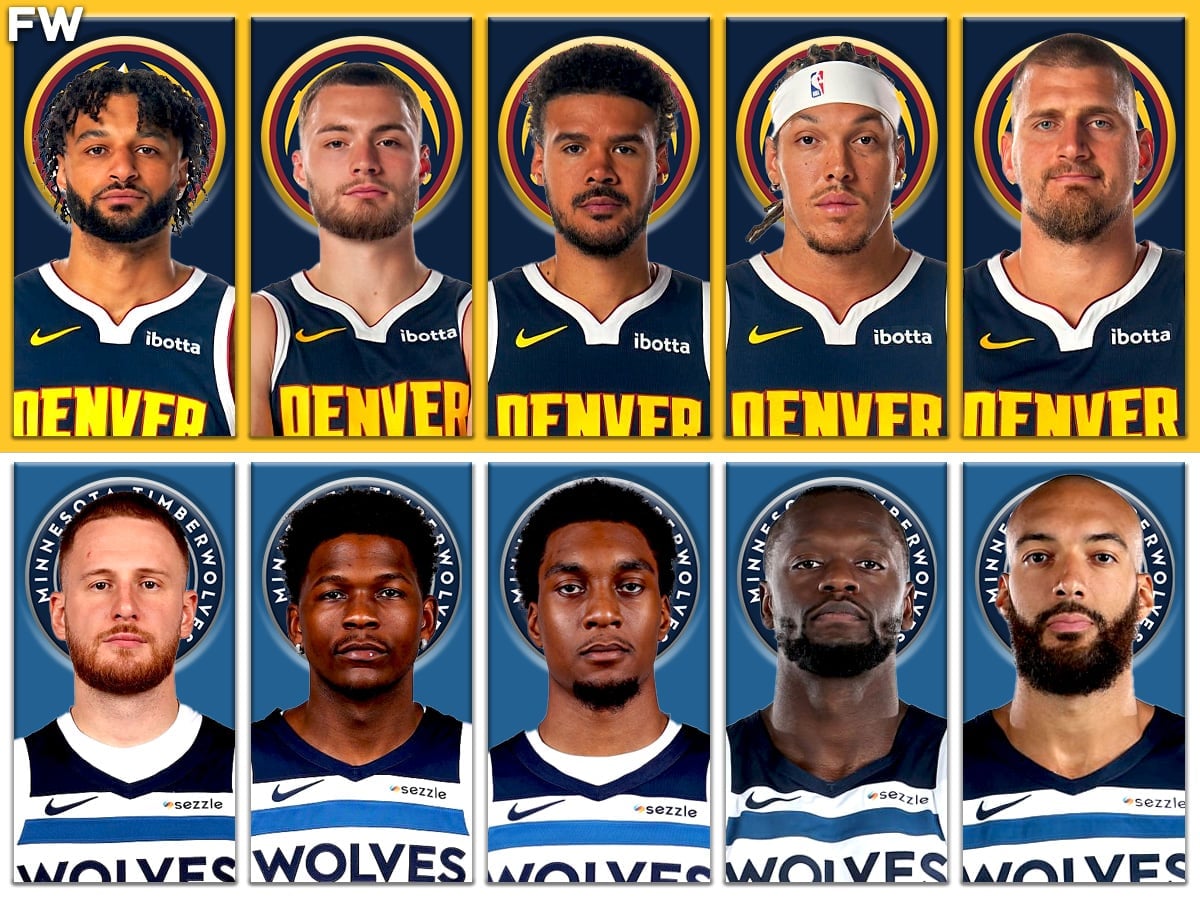
The Denver Nuggets host the Minnesota Timberwolves in Game 1 of their first-round series on Saturday, April 18, at 3:30 PM ET at Ball Arena. The Nuggets finished 54-28 and claimed the West’s No. 3 seed, while the Timberwolves went 49-33 and landed at No. 6. The Nuggets were 28-13 at home this season, and the Timberwolves went 23-18 on the road.
The regular-season head-to-head leaned clearly toward the Nuggets. They won three of the four meetings, taking the first three on October 27, November 15, and December 25 before the Timberwolves answered with a 117-108 win on March 1. That split is a useful starting point, but it does not fully capture the playoff version of this matchup because both teams spent the late stretch of the season juggling injuries and lineup interruptions.
The Nuggets bring the cleaner top-end statistical profile into the series. Nikola Jokic closed the regular season with 27.7 points, 12.9 rebounds, and 10.7 assists while becoming the first player in league history to lead the NBA in rebounds and assists per game in the same season. Jamal Murray put together the best regular season of his career, finishing with 25.4 points, 7.1 assists, and 4.4 rebounds while shooting 48.3% from the field and 43.5% from three.
The Timberwolves still have enough high-end scoring to make this dangerous. Anthony Edwards posted 28.8 points, 5.0 rebounds, and 3.7 assists while shooting 48.9% from the field and 39.9% from three. Julius Randle added 21.1 points, 6.7 rebounds, and 5.0 assists on 48.1% shooting. That gives the Timberwolves two real shot creators, which is always the baseline requirement against a team built around Jokic.
Health is the biggest swing entering Game 1. Anthony Edwards’ right knee and Jaden McDaniels’ left knee patella tendinopathy are the main Timberwolves concerns after both missed time late in the regular season.
Anthony Edwards, Jaden McDaniels, and Naz Reid are listed as game-time decisions for the Timberwolves, while Christian Braun, Cameron Johnson, Peyton Watson, and Tim Hardaway Jr. are game-time decisions for the Nuggets.
Nuggets Analysis For The Series
The first thing to know about the Nuggets is simple. This is the best offense in the league. They finished the regular season first in offensive rating at 122.6, scored 122.1 points per game, shot 49.6% from the field, 39.6% from three, and posted a 57.5% effective field goal percentage. They also protected possessions well, with an 11.6 turnover percentage, which is a major reason their offense feels so clean in the half-court.
That system starts with Jokic, but it becomes truly difficult to guard because of the Jokic-Murray pairing. Murray delivered 170 assists to Jokic in the regular season, the most from one player to a single teammate in the league, while Jokic returned 147 assists to Murray. Tracking data showed the Nuggets scoring 127.8 points per 100 possessions in the 1,706 minutes those two shared the floor. That is the heart of the series. If the Timberwolves do not bend that two-man game, they will spend too many possessions reacting instead of dictating.
This matchup has also looked comfortable for Jokic in the regular season. He put up 35.8 points, 15.0 rebounds, and 11.3 assists in the four meetings, with shooting splits of 65.3% from the field, 50.0% from three, and 93.2% from the line. Murray was excellent too, scoring 31.5 points per game against the Timberwolves. When the Nuggets won three of the four meetings, it was not because they found one lucky coverage. It was because their two best offensive players consistently got to their spots.
The Nuggets also come in with real momentum. They beat the Spurs 128-118 in the regular-season finale, finished on a 12-game winning streak, and secured home court for this series in the process, as their Finals path looks incredibly difficult. Over a long playoff series, that is not just cosmetic. Home court matters less than health and talent, but for a team whose offense relies on rhythm and timing, starting with two games at Ball Arena is a real edge.
The concern is on the other side of the ball. The Nuggets were elite offensively, but their defense finished at 116.9, 21st in the league, and their full-season net rating was 5.1, good but not dominant at the 7th spot. This is not a team that overwhelms people with stops. If the Timberwolves can get Edwards downhill, force Jokic into multiple screening actions, and make the Nuggets defend on the second and third effort of a possession, the series gets more volatile than the 3-1 season series might suggest.
Health is the other reason this is not a simple first-round call. Aaron Gordon missed 40 games with a right hamstring issue, Cameron Johnson missed more than 20 games, Peyton Watson also missed more than 20, and Jokic himself sat out 14 games because of a bruised left knee while also dealing with right wrist management. Several Nuggets rotation pieces are listed as game-time decisions. The Nuggets have the better offense and the better matchup history, but they are not entering this series with a quiet injury sheet.
Timberwolves Analysis For The Series
The Timberwolves do not enter with the stronger overall profile, but they do enter with a style that can still bother the Nuggets. They finished 49-33 with a 116.8 offensive rating, a 113.5 defensive rating, and a 3.3 net rating. They were also sixth in the league in three-point percentage at 37.0%. That gives them a useful playoff mix: enough scoring to stay in games, enough defense to make a favorite uncomfortable, and enough shooting to punish late help.
Edwards is still the ceiling raiser. He finished with 28.8 points a night, and if he is healthy enough to attack without hesitation, he is the one player in this matchup who can bend the Nuggets’ defense on pure force. The issue is that the health discussion around him is enough to scare the team. He missed 11 of the final 14 regular-season games because of right knee issues and injury management, which puts a lot of pressure on his first-step burst entering the series. If that burst is there, the Timberwolves can generate real trouble. If it is not, their offense gets much easier to contain.
Randle is the second piece that can change the texture of the series. His 21.1 points, 6.7 rebounds, and 5.0 assists gave the Timberwolves another half-court creator, which they badly needed. When the Timberwolves are at their best, Edwards gets the headlines, but Randle is the one who keeps possessions from becoming too star-dependent. He can attack smaller defenders, pass out of pressure, and keep the floor organized when Edwards sits or sees two defenders early.
The most encouraging stat for the Timberwolves came from the Gobert minutes in this matchup. The Timberwolves allowed just 108.6 points per 100 possessions in Rudy Gobert’s 121 minutes on the floor against the Nuggets during the regular-season series. That number is important because it shows there is a workable defensive formula here. If Gobert stays on the floor, controls the glass, and keeps the Nuggets from getting easy interior finishes after the first action, the Timberwolves have a path to turning this into an upset.
The problem is what happens once that formula breaks. They got torched when Gobert went to the bench. That lines up with the eye test. Their defensive shell is strongest when Gobert can anchor the paint, and McDaniels can handle the toughest defensive work on the perimeter. If either one is compromised physically, or if foul trouble forces the Timberwolves into smaller lineups for too long, the Nuggets’ cutting, screening, and handoff game can skyrocket fast.
There is also a real execution problem to solve. The Timberwolves lost the season series 3-1, and the Nuggets’ offense was simply sharper in those meetings. That does not mean the Timberwolves are overmatched. It means they have less room for drift. They need Edwards healthy, Gobert on the floor, McDaniels available, and their role players hitting enough shots to keep the Nuggets from loading toward the paint. The route is there, but it is much narrower than the Nuggets.
Key Factors
Christian Braun could end up deciding one of the middle games if this series gets physical and ugly. He finished the regular season with 12.0 points, 4.8 rebounds, and 2.7 assists in 44 games while shooting 51.9% from the field. His three-point volume is not huge, but the more important part of his role is the connective work. Braun cuts hard, runs the floor, and gives the Nuggets another body to throw at Edwards on secondary possessions. If his ankle is good enough for him to play his normal minutes, he gives the Nuggets one more reliable two-way piece around Jokic and Murray, which is exactly what playoff series usually come down to.
Aaron Gordon is another major swing player because he changes the series on both ends without needing high usage. He finished with 16.5 points, 5.9 rebounds, and 2.6 assists while shooting 50.0% from the field and 39.4% from three. That shooting number is the key here. If Gordon is spacing properly, cutting behind overplays, and defending with enough force to switch across frontcourt actions, the Nuggets become much harder to break on offense. He also has the size to survive against Randle, which gives the Nuggets more defensive flexibility than they had in some of these matchups in the past.
Jaden McDaniels feels central for the Timberwolves because he is one of the few players in this series who can help at both ends without the ball sticking. He finished with 14.8 points, 4.2 rebounds, and 2.7 assists while shooting 51.5% from the field and 41.2% from three. Those numbers show the Timberwolves do not just need defense from him. They need clean offense, too. If McDaniels can defend Murray or switch onto larger matchups, then punish the Nuggets as a spot-up shooter and straight-line driver, he gives the Timberwolves a real bridge between their stars and their collective work.
Naz Reid is the other Timberwolves piece I keep coming back to because his range can flip a playoff game in a hurry. He finished with 13.6 points, 6.2 rebounds, and 2.2 assists in 77 games, but his shooting tailed off badly after the All-Star break, dropping from 38.5% from three before the break to 27.8% after it. That is a huge series variable. If Reid looks like the early-season version, the Timberwolves get bench offense and five-out pressure that can pull the Nuggets into tougher decisions. If the shot is still shaky, the Timberwolves lose one of their best counters once Gobert sits.
Prediction
This should be competitive because the Timberwolves still have the personnel to make the Nuggets work. Edwards can be the best downhill scorer in a given game, Gobert has already shown he can anchor decent defensive possessions against this opponent, and the Timberwolves have the recipe from last year’s Game 7 upset. But the series still points toward the Nuggets. They won the season series 3-1, they have home court, they closed the regular season on a 12-game winning streak, and they bring the No. 1 offense in the league into a matchup where Jokic and Murray already shredded the coverage during the regular season. I think the Timberwolves can defend their home court, but over seven games, the Nuggets have more stable answers.
Winner: Nuggets in 6