Yesterday, we went team by team and projected the eight players every franchise would protect if the NBA held an expansion draft right now. That exercise was built off the fresh momentum around expansion after Shams Charania reported that the league’s Board of Governors is set to vote March 24-25 on formally exploring Seattle and Las Vegas as expansion markets, with the 2028-29 season now viewed as the target for those franchises to begin play.
Today, the exercise changes. This is not about current rosters or current protection lists. This is a mock expansion draft built from the perspective of summer 2028, using 2028-29 salary situations, contract control, age curves, and the kind of roster context that will matter once those two teams are actually preparing to enter the league.
The exact calendar is not official yet, but for this mock, we are treating the expansion draft as a post-2028 NBA Draft event, with both new franchises building around the players left exposed by the other 30 teams. Expansion teams historically have also been folded into the regular draft process, and ESPN has already outlined what a 2028-29 expansion setup could look like from a cap and roster-building standpoint.
This is the fun part now: projecting who Seattle and Las Vegas would actually take once the league stops talking about expansion and starts building two real teams.
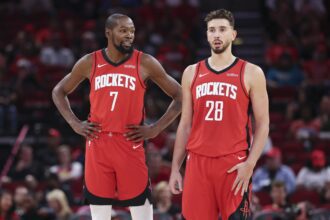
1st Round Pick – Seattle – Kevin Durant
If the Sonics get the first pick in this mock, Kevin Durant is the cleanest choice on the board. The deal only makes sense if there is a one-year extension lined up for 2028-29, because by then he’d be a free agent that summer, and would not be draft eligible. Durant is still 37 and still producing at a star level right now, averaging 25.8 points, 5.5 rebounds, and 4.4 assists in 64 games this season.
Durant was drafted No. 2 overall by the Seattle SuperSonics in 2007, which makes this the easiest full-circle play in the entire mock, and the main reason the Rockets would not protect him. If the league brings the Sonics back, starting with Durant would immediately connect the new team to the old one. Even at that age, one year of Durant as the face of the franchise would be worth more than a safer but less meaningful first selection.
1st Round Pick – Las Vegas – Ja Morant
Vegas should swing bigger here, and Ja Morant is the right bet. In this mock, he reaches the expansion pool because the Grizzlies no longer treat him as the automatic centerpiece and instead protect the cleaner long-term core around him. If that happens, Vegas should not overthink it.
Morant is still only 26, and even in a stop-start season, he has averaged 19.5 points, 8.1 assists, and 3.3 rebounds in 20 games. His current extension runs through 2027-28, which means Vegas would likely make this pick if he works out at least a one-year extension. The risk is obvious, especially with the missed games. The upside is bigger. Expansion teams need identity fast, and Morant gives one immediately. He is the kind of star who can make a new franchise feel relevant the second he walks in.
2nd Round Pick – Seattle – Mikal Bridges
This pick is about money, timeline, and fit. Mikal Bridges is 29 right now and averaging 14.8 points, 4.1 rebounds, and 3.9 assists, which is a clear step down from the level the Knicks thought they were buying. Recent reporting around the team has centered on his post-All-Star slump and even some late-game benchings, which only adds to the idea that he could become the odd man out in a future crunch.
The contract is the bigger part of the argument. Bridges agreed to a four-year, $150.0 million extension that includes a 2029-30 player option, and he is at about $38.8 million for 2028-29, followed by that $41.5 million option. Jalen Brunson has a $43.3 million player option for 2028-29, and OG Anunoby has a $48.4 million player option for the same year. In that context, losing Bridges in an expansion draft could look like a massive financial release valve for a team already carrying expensive top-end talent.
For Seattle, though, this is a great swing. He would be 32 entering 2028-29, still in his prime range, and still valuable as a two-way wing who can start on day one.
2nd Round Pick – Las Vegas – Derrick White
Derrick White is the kind of expansion pick that makes sense even if it feels cold from the Celtics’ side. He is 31 right now and still playing at a very high level, averaging 17.4 points, 4.5 rebounds, and 5.7 assists this season. But his extension runs through 2028-29, when he would be 34 and due $32.7 million in salary with a $34.8 million cap hit. That is a lot to carry for a smaller guard deep into his 30s, even one as good as White is today.
That is where the roster context matters. The Celtics are already paying Jayson Tatum and Jaylen Brown superstar money, and Payton Pritchard has broken out this season with 16.7 points and 5.3 assists per game. In this mock, that makes White vulnerable. If the Celtics believe Pritchard can handle an even bigger role by then, they may not want to keep paying more than $30.0 million for a 34-year-old White on top of everything else.
For Vegas, though, this is easy. Expansion teams need adults, defense, and playoff credibility. White would bring all three immediately, even if the back end of the contract is what scares the Celtics off.
3rd Round Pick – Seattle – Immanuel Quickley
Immanuel Quickley makes sense as the kind of expansion pick that looks expensive but playable. He is 26 right now and averaging 17.1 points, 4.1 rebounds, and 6.0 assists, with splits of 44.4% from the field and 37.5% from three. His deal runs through 2028-29 at a flat $32.5 million salary, so he would still be under contract and expansion-draft eligible in this scenario. By then, he would be 29, which is not old for a lead guard, and Seattle could sell itself on him as a ready-made starting point guard instead of a pure development swing.
From the Raptors’ side, the case for leaving him exposed is not hard to build. The contract has already drawn criticism. Spotrac listed Quickley among its 2026 worst-value contracts, and much of the trade conversation around him still centers on whether the five-year, $162.5 million deal was an overpay. If that deal still looks heavy by 2028, the Raptors could decide the financial relief is worth it. Seattle, meanwhile, would be betting that a 29-year-old starting guard on a fixed contract is still a useful first-rotation building block.
3rd Round Pick – Las Vegas – Myles Turner
Myles Turner is the type of pick a brand-new team should seriously consider. He is 29 right now and averaging 12.2 points, 5.4 rebounds, 1.5 assists, and 1.5 blocks per game while shooting 38.6% from three. He has a 2028-29 player option worth $29.1 million, which means he would be draft eligible if that option is exercised. By then, he would be 32, so this would not be a long-term upside play. It would be a stability play. Vegas would be getting a proven stretch big who can protect the rim, space the floor, and start from day one.
The Bucks’ side is where it gets interesting. They would have to decide whether a 32-year-old Turner at $29.1 million is still worth protecting while Giannis Antetokounmpo remains on a supermax-level number (if he stays) and the rest of the roster keeps getting more expensive. Turner is still useful, but he has been underwhelming so far, facing lower-body issues. In a tight protection crunch, that is the kind of veteran contract a contender could talk itself into exposing. For Vegas, though, that is exactly the kind of player worth grabbing.
4th Round Pick – Seattle – Alex Caruso
An expansion pick that makes more sense than the box-score line suggests is clearly pointing to Alex Caruso. He is 32 right now and averaging just 6.6 points, 2.8 rebounds, and 2.0 assists, but that is also because he is playing a specialist role on a loaded Thunder roster rather than being asked to carry the offense. More importantly for this mock, his four-year, $81.1 million extension runs through 2028-29, so he would still be draft-eligible, with that final-year salary at about $22.4 million. By the start of that season, he would be 34.
From the Thunder side, this is the veteran a deep contender could leave exposed once the younger core gets priority. Shai Gilgeous-Alexander, Chet Holmgren, Jalen Williams, Cason Wallace, Jared McCain, and the rest of that pipeline would almost certainly take up most of the protection slots, and Caruso’s age would make him easier to sacrifice than one more young piece.
For Seattle, though, the appeal is obvious. He would not be a face-of-the-franchise pick, but he would give an expansion team instant defense, playoff experience, and one of the smartest guards in the league on an expensive deal, not crippling.
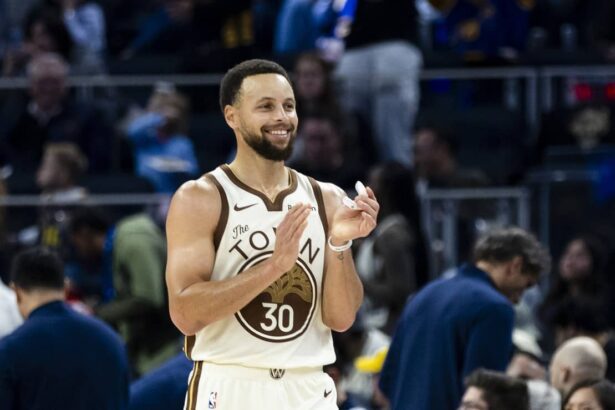
4th Round Pick – Las Vegas – Paul George
This pick only works if Paul George signs an extension first, because his current 76ers deal ends after 2027-28. He’ll be at $54.1 million in 2026-27 and $56.6 million in 2027-28, then off the books as a free agent in 2028-29. So if Vegas is drafting him here, it means George has already agreed to one more year. And honestly, that extension should be nowhere near star money. Based on where he is now, a mid-level type number, or even lower, is the only version that really makes sense. That is projection, not reporting.
The reason is obvious. George is already 35, and the decline has been ugly. He is averaging 16.0 points, 5.1 rebounds, and 3.7 assists this season, a far cry from the level expected from a max player making $51.7 million. By 2028-29, he would be 38. With Tyrese Maxey still in his prime and Joel Embiid’s deal also sitting at monster numbers, the 76ers would have every reason to avoid carrying another big George contract into that stage of his career. Vegas could still take the swing if the extension is cheap enough, but this would be a reputation play, not a bet on star-level production.
5th Round Pick – Seattle – Luke Kornet
Luke Kornet is a player that expansion teams should love. He is not a star, but he is cheap, useful, and already under contract for 2028-29, so unlike some of the bigger names in this mock, Seattle would not need any extension trick to make him draft eligible. His Spurs deal runs through 2028-29, with that final season guaranteed at $9.35 million. That is a very clean number for a rotation center. Right now, Kornet is 30 and averaging 6.7 points, 6.2 rebounds, and 1.8 assists for the Spurs, and by 2028-29, he would be 33, which is still a reasonable age for a backup or low-end starting five.
The appeal is simple. Expansion teams need playable size without killing their books, and Kornet checks that box. He sets screens, finishes easy plays, rebounds, and gives you a stable frontcourt body at a salary that does not hurt roster flexibility. That also makes him easy to expose from the Spurs’ side. If they are protecting Victor Wembanyama, De’Aaron Fox, Stephon Castle, Dylan Harper, and the rest of their real core, Kornet is exactly the type of solid veteran center that can get squeezed out. For Seattle, though, he is a smart value pick.
5th Round Pick – Las Vegas – Jonathan Isaac
Jonathan Isaac is a pure upside-and-risk expansion bet. He is 28 right now and barely producing in raw numbers, averaging 2.6 points, 2.6 rebounds, and 0.4 assists, but the contract is what makes him interesting here. His deal runs through 2028-29, when he would be on a $15.0 million salary, and the Magic’s multi-year sheet notes that the final year becomes guaranteed if he plays 52 games in 2027-28 or reaches one day after the 2028 moratorium. That means this pick only works if he gets to that point and is still officially on the books.
Why would the Magic expose him? The answer is simple: age, role, and health. Isaac has missed time this season with ankle, hamstring, and knee issues, and he is already out again with a left knee sprain. With the Magic choosing between younger core players and a 31-year-old Isaac on a conditional $15.0 million deal, he is the kind of defender they will let go. For Vegas, though, this is exactly the sort of gamble worth making. If he is healthy enough, he gives you elite defensive tools at a manageable number.
6th Round Pick – Seattle – Grayson Allen
This pick only works if Grayson Allen signs a new deal for 2028-29, because his current Suns contract ends after a 2027-28 player option worth $19.4 million. If that extra year is in place, he makes real sense for Seattle. Allen is 30 right now and averaging 17.2 points, 3.0 rebounds, and 4.1 assists this season, so the appeal is obvious: instant shooting, instant spacing, and a veteran guard who can start or close games without needing the ball all night.
But by 2028-29, he would be 32, so this is not a long-term bet. It is a clean roster-building bet. In this mock, the logic is a short extension in the $12 million range, not another big commitment. That number is my projection, but it matches where older shooting specialists usually land once they move out of their prime. The Suns could easily leave him exposed if Booker, Jalen Green, Ryan Dunn, Khaman Maluach, Oso Ighodaro, and the rest of the younger core take priority. For Seattle, though, Allen would be a very useful plug-and-play piece.
6th Round Pick – Las Vegas – Terance Mann
Same rule here. Terance Mann is not draft-eligible unless he signs an extension first, because his current deal runs only through 2027-28. If that extra year exists, Vegas could justify this as a cheap veteran-wing pick. Mann is 29 now and averaging 7.5 points, 3.1 rebounds, and 3.2 assists, which is not flashy, but he still brings size, connective passing, and defensive flexibility.
By 2028-29, he would be 31, and this is exactly the kind of player a new team can steal if his current club decides the age curve is flattening out. The Nets already have a bunch of younger pieces to think about protecting, including Egor Demin, Nolan Traore, Ben Saraf, Danny Wolf, Drake Powell, and Noah Clowney, so an older role wing could get squeezed. In this mock, the extension would have to be modest, probably closer to $8 million for one year. That fits a player whose offensive ceiling looks limited and whose value is mostly about being solid, not special.
7th Round Pick – Seattle – Dennis Schroder
Dennis Schroder needs to sign an extension for 2028-29 in order to be drafted. His current deal runs through 2027-28, when he is set to make $15.5 million, so without one more year, he would hit free agency and be out of the expansion pool. That is the key starting point here. Right now, Schroder is 32 and averaging 11.4 points, 2.8 rebounds, and 5.0 assists in 25.2 minutes per game, while shooting 40.5% from the field and 33.7% from three. By 2028-29, he would be 35, so this would not be a long-term upside swing. It would be a short-term floor play.
For Seattle, the appeal is simple. Expansion teams need bench ball-handling, pick-and-roll reps, and a veteran guard who can organize a second unit. Schroder would give them that, assuming the extension is modest. Something around the low-to-mid figures for one year would make sense as a bridge contract, not a big commitment. From the Cavaliers’ side, a 35-year-old guard on an extra year is exactly the kind of veteran contract a contender could leave exposed once younger pieces take priority.
7th Round Pick – Las Vegas – Patrick Williams
Patrick Williams is a very different case because he is already lined up to be expansion-draft eligible. He has a five-year, $90.0 million contract that includes a 2028-29 player option worth $18.0 million, and with that option likely to be picked up, he is in the pool. He is 24 right now, and the production is still underwhelming: 6.9 points, 2.8 rebounds, and 1.4 assists in 19.6 minutes per game, while shooting 38.2% from the field and 37.3% from three. He would still be only 27 in 2028, which is what keeps the idea alive at all.
The Bulls’ side is easy to understand. They already showed openness to moving him before, with the Sun-Times reporting in January 2025 that the front office was more than open to trading Williams if the right situation came along. With the development still stuck by 2028, losing that $18.0 million number could be viewed as a positive. For Vegas, this would be a reclamation bet, not a safe one. The size and age would still be interesting, but the contract would only make sense if the expansion team believes there is still a real starter in there.
8th Round Pick – Seattle – Duncan Robinson
This pick only works if Duncan Robinson signs a new deal for 2028-29, because his current Pistons contract ends after 2027-28, when he becomes a free agent. His present deal pays $16.8 million in 2025-26, $16.0 million in 2026-27, and $15.2 million in 2027-28, so by the time Seattle could draft him, the realistic version is a short, cheaper extension, probably in the $8.0 million to $10.0 million range for one year.
Robinson is 31 right now and averaging 11.9 points, 2.7 rebounds, and 2.0 assists. At 34 years old at that time, this would be a specialist pick, not a foundational one. But expansion teams need shooting badly, and few role players bend a defense faster than Robinson if he is still moving well. The Pistons would easily leave him exposed as Cade Cunningham, Ausar Thompson, Jalen Duren, Ron Holland II, and the younger core take priority. For Seattle, though, a veteran floor spacer on a modest one-year deal would be clean value.
8th Round Pick – Las Vegas – Dorian Finney-Smith
Dorian Finney-Smith is easier, because he is already set up to be expansion-draft eligible. His contract includes a 2028-29 player option at $13.3 million. Still, he’d have to be traded previously, as Seattle would have already taken Kevin Durant first overall, so no more Rockets players could be included in the draft. That scenario is absolutely realistic right now.
He is 32 this season and, in a very limited Rockets role, is averaging 3.3 points, 2.7 rebounds, and 1.0 assists. He would be 35 then, which is why this is not a sexy pick, and why the Rockets will completely try to move him before the expansion.
Vegas would be drafting a veteran wing defender on a manageable number, not a scorer. If Finney-Smith’s offense keeps slipping, any team would have every reason to live with losing a 35-year-old role player at $13.3 million. For Vegas, though, that is a perfectly reasonable price for a low-maintenance defender who can start, switch, and do the dirty work.
9th Round Pick – Seattle – Zeke Nnaji
This pick only works if Zeke Nnaji signs an extension first. His current Nuggets deal runs through 2027-28, with a $7.5 million player option that year, and then he is off the books before 2028-29. So if Seattle is drafting him here, it means there is already another year attached. That is the appeal. Nnaji is still only 25 right now, and even though the production has been light at 3.8 points and 2.7 rebounds per game, this is the kind of expansion gamble that makes sense on a cheap number. He is young for this stage of the mock, he has size, and he would not need to be more than a rotation big.
The Nuggets’ side is easy to understand. They already have massive money tied up in Nikola Jokic, Jamal Murray, and Aaron Gordon, with more roster decisions coming around the younger core. If Nnaji still has not turned into a real every-night piece by then, they could easily live with exposing him, especially if the extension is modest. For Seattle, though, this is a low-cost upside bet on a still-young frontcourt player rather than an older veteran with no runway left. That is a perfectly reasonable swing in the middle of an expansion draft.
9th Round Pick – Las Vegas – T.J. McConnell
TJ McConnell is a much different case because his current extension already reaches 2028-29. He has a club option in his deal, with that season carrying $5.0 million in guaranteed money if the option is exercised and then becoming fully guaranteed around the 2028 draft calendar. That means he can still be part of this pool, and if he is, Vegas would have a strong case to take him. McConnell is 33 right now and averaging 9.3 points and 5.0 assists while shooting 52.4% from the field, which is still absurdly efficient for a backup guard. By 2028-29, he would be 36, so this would not be a long-term pick. It would be a culture pick.
That is also why the Pacers might be fine letting him go. A veteran backup point guard in his mid-30s is useful, but not usually someone you burn a protection slot on when younger pieces need to be covered. Vegas, on the other hand, would need exactly this kind of player. McConnell would give an expansion roster control, organization, and instant credibility at guard, and the contract would be cheap enough that the age risk would not be crushing. It would be one of the safest short-term picks in the whole mock.
10th Round Pick – Seattle – Precious Achiuwa
Precious Achiuwa is the kind of late expansion pick that actually makes sense. He is still only 26, and this season he has given the Kings 9.2 points, 6.3 rebounds, and 1.3 assists while shooting 53.0% from the field. That is not star production, but it is real rotation value, and for an expansion team, that matters. Seattle would not be drafting a project here. It would be taking a frontcourt player who can already rebound, defend multiple spots, and survive real minutes.
The key is timing. Achiuwa is currently on the books through 2026-27, with no 2028-29 money attached right now, so he would need another deal in place by then to even enter this pool. If that happens, he would still be just 29 for the 2028-29 season, which is a perfectly reasonable age for Seattle to bet on. He is not the sort of player a team bends over backward to protect, but he is absolutely the sort of player an expansion team should be happy to grab at this spot because he can help without locking up the books.
10th Round Pick – Las Vegas – Jock Landale
Jock Landale fits this slot better because he is a more believable expansion-team center bet. He is 30 right now, playing for the Hawks, and he has quietly given them solid backup production this season with 10.8 points, 5.8 rebounds, and 1.6 assists while shooting 51.5% from the field. That is a useful rotation value, especially for a new team that is not going to fill out its frontcourt with stars.
The contract part still matters. Landale is on a one-year minimum deal right now at about $2.3 million, so he would not naturally reach the 2028 expansion pool unless he signs another contract before then. Why would the Hawks leave him exposed after resigning him this summer? Because by 2028, he would be 32, and backup centers are usually the easiest rotation players to sacrifice in a protection crunch. For Vegas, though, that is exactly the appeal: size, experience, and a playable big on a modest number.
11th Round Pick – Seattle – Xavier Tillman
Xavier Tillman is more of a utility pick than a splash move. He is 27 right now, and his 2025-26 season has been quiet with just 1.6 points, 1.6 rebounds, and 0.4 assists per game after bouncing to the Hornets. That said, expansion drafts are not only about upside swings. Sometimes they are about finding a playable big man who can defend, rebound a little, and survive spot minutes without needing touches. That is the lane here.
The contract part is what makes this one less clean than most of the other names. Tillman’s current deal only runs through 2025-26 at about $2.5 million, so for him to even be available in a 2028 expansion draft, he would need to sign another contract that reaches 2028-29. If that happens, Seattle could view him as a cheap back-end center bet rather than a long-term piece. He would still be just 29 entering that season, which is young enough for this kind of flyer to make sense.
11th Round Pick – Las Vegas – Caleb Martin
Caleb Martin is a much more believable expansion target because he still looks like the type of veteran wing a new team could use right away. He is 30 now, and his 2025-26 numbers have dipped hard to 3.9 points, 2.5 rebounds, and 1.4 assists per game with the Mavericks, which is exactly why he could become vulnerable in a protection crunch. If the production keeps sliding, the Mavs will talk themselves into using those spots elsewhere.
There is one catch. Martin is only under contract through 2027-28, with that final year coming on a $9.4 million player option, and he is currently lined up to hit unrestricted free agency after that. So if Vegas is drafting him in this mock, it means there is already another year on the books. That would still be a reasonable bet. By 2028-29, he would be 33, which is not ideal, but wings with size and playoff experience usually stay useful longer than small guards. For an expansion team, that matters.
12th Round Pick – Seattle – Gary Payton II
This one is not about long-term upside. It is about story, identity, and fit. Gary Payton II is 33 right now and averaging 6.6 points, 3.4 rebounds, and 1.6 assists, so by the time the 2028-29 season starts, he would be 35 and clearly in the late stage of his career. He also is not currently on a deal that would naturally carry him into that season, so this pick only works if there is already a short extension in place with the Warriors, likely for a minimum. That is the setup.
The reason Seattle still does it is obvious. Payton just said this week he would “probably request a trade immediately” if Seattle gets a team back because he wants to wear a Sonics jersey before his career ends. Add in the family angle, with his father being one of the iconic players in franchise history, and this becomes an easy call. He would not be a major on-court piece by then, but he would give Seattle defense, edge, local roots, and one of the cleanest symbolic picks in the whole draft.
12th Round Pick – Las Vegas – Vit Krejci
Vit Krejci is the opposite kind of bet. This would be a value play. He is only 25 now and has quietly put together a solid season, averaging 8.6 points, 2.3 rebounds, and 1.6 assists while shooting 44.8% from the field and 39.1% from three. He is under contract through 2027-28, so Vegas would need one more year added to get him into the 2028-29 pool, but that is easy to picture because his contract has been viewed as one of the better low-cost deals around.
By then, he would be 28, still in a good age range, and probably still cheap enough that the Blazers might leave him exposed with more expensive stars and younger blue-chip pieces taking the priority slots. For Vegas, though, this would be exactly the kind of smart roster pick that helps fill out a real rotation.
Final Rosters
Seattle Roster
Point Guard – Immanuel Quickley
Shooting Guard – Alex Caruso
Small Forward – Mikal Bridges
Power Forward – Kevin Durant
Center – Luke Kornet
The bench would be Dennis Schroder as the backup point guard, with Grayson Allen as the backup shooting guard. Duncan Robinson and Gary Payton II would fill the reserve wing minutes, while Precious Achiuwa would be the top backup at power forward. In the frontcourt, Zeke Nnaji and Xavier Tillman would give Seattle extra center depth behind Kornet.
This would be a pretty solid expansion team. Durant would still be the offensive engine, Bridges gives them a real two-way wing, and Quickley is good enough to run the team from day one. Caruso helps cover a lot defensively, and the bench at least has real NBA players instead of pure filler. The problem is obvious, though. The center rotation is not strong enough, and a lot of the group would depend on older veterans still holding up. Even so, Seattle would not look like a disaster. This team could be competitive enough to hang around the play-in mix if Durant is still productive and the shooting holds up.
Las Vegas Roster
Point Guard – Ja Morant
Shooting Guard – Derrick White
Small Forward – Paul George
Power Forward – Jonathan Isaac
Center – Myles Turner
The bench would be T.J. McConnell as the backup point guard, with Terance Mann and Vit Krejci handling the reserve guard and wing minutes. Patrick Williams and Caleb Martin would be the backup forwards, Dorian Finney-Smith would give them another defensive forward option, and Jock Landale would be the backup center behind Turner.
This roster has more volatility, but also a little more upside. Morant gives the team a real star identity right away, White is a perfect backcourt partner, and Turner is the kind of center every expansion team would want. Isaac, Finney-Smith, Mann, and Martin would give them real defensive size all over the floor. The swing factor is George. If he is totally washed by then, this team gets thin fast on offense. If he still has something left, Las Vegas could be respectable much quicker than most expansion teams usually are.