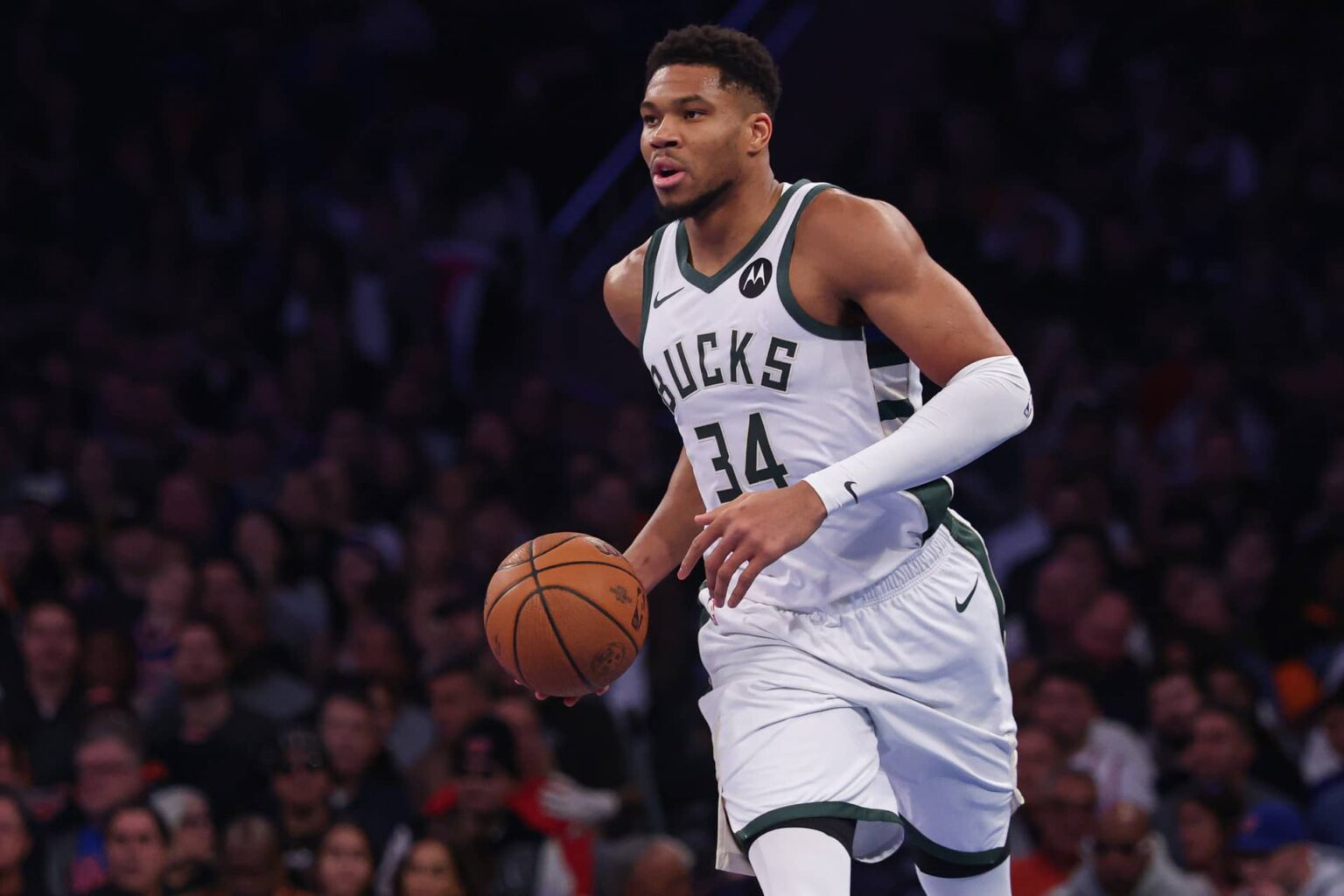
Giannis Antetokounmpo is still dominant enough to reshape the NBA trade market by himself. He averaged 27.6 points, 9.8 rebounds, and 5.4 assists in 36 games this season, and his production near the rim remains elite. The Bucks’ problem is that the season around him collapsed. They finished 32-50, missed the playoff field, and now enter the offseason with the biggest roster decision in the league.
The contract is just as important as the player. Antetokounmpo is owed $58.5 million in 2026-27 and has a $62.8 million player option for 2027-28. The Bucks can offer him a four-year, $275.0 million extension in October, and Bucks co-owner Jimmy Haslam said he wants Antetokounmpo’s future settled before the NBA Draft. That means any team trading for him must already be thinking about the next contract, not only the trade package.
That is the line for this article. This is not only about who is better today. Antetokounmpo is better right now than several players on this list. But teams trade through age curves, playoff creation, contract control, medical risk, and roster structure. A 31-year-old Antetokounmpo on a massive salary is still worth a major offer. He is not worth every franchise player in the league.
These are the 10 players I would not trade for him.
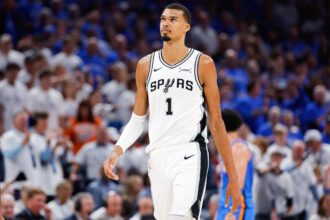
1. Victor Wembanyama
Victor Wembanyama is not available. The Spurs should not take the call.
Wembanyama averaged 25.0 points, 11.5 rebounds, and 3.1 assists this season at 22 years old. That is already superstar production, and the defensive impact is larger than the box score. He changes shot selection before opponents get into the paint. He forces guards into floaters, stops lob windows, erases weak-side drives, and gives the Spurs a defensive base without needing a perfect perimeter group in front of him.
The contract is the other reason this is not a debate. Wembanyama is still on his rookie deal and is set to make $16.9 million in 2026-27. For a player already producing like a top-tier big and defending at a Defensive Player of the Year level, that is the best type of team-building value in the NBA.
The playoff situation only strengthens the argument. The Spurs went 62-20, finished with the No. 2 seed in the Western Conference, eliminated the Trail Blazers in the first round, and are now tied 1-1 with the Timberwolves in the Western Conference semifinals. Wembanyama set an NBA single-game playoff record with 12 blocks in Game 1 against the Timberwolves, then had 19 points and 15 rebounds in a 133-95 Game 2 win.
Antetokounmpo is more prepared for a seven-game series today. He is stronger, more experienced, and more proven as the best player on a title team. It still does not change the answer. Wembanyama is younger, cheaper, more positionally unique, and gives the Spurs a longer title window.
The Spurs should be using assets to build around Wembanyama. They should not use Wembanyama as the asset.
2. Shai Gilgeous-Alexander
Shai Gilgeous-Alexander is the exact player the Thunder spent years building toward.
Gilgeous-Alexander averaged 31.1 points, 4.3 rebounds, and 6.6 assists this season for a Thunder team that went 64-18 and finished with the best record in the NBA. He is a prime perimeter engine who creates efficient offense without needing perfect spacing, a perfect screen, or a broken defense. He gets to his spots, controls pace, draws fouls, and wins in the middle of the floor.
His contract is also manageable for one more season before the supermax money arrives. Gilgeous-Alexander is set to make $40.8 million in 2026-27, then his four-year, $285.4 million supermax extension starts and runs through 2030-31. That extension is massive, but it is attached to a 27-year-old guard in his prime on a team already built to win.
The Thunder also do not need to chase a different identity. They swept the Suns in the first round and entered the second round against the Lakers with home-court advantage. Their roster is already built around Gilgeous-Alexander’s half-court creation, Chet Holmgren’s two-way frontcourt value, Jalen Williams’ secondary scoring, and a deep group of defenders.
Antetokounmpo would give the Thunder more frontcourt power, transition force, rebounding, and defensive size. But trading Gilgeous-Alexander would remove the player who controls their offense. That is the wrong exchange. The hardest piece to find in the playoffs is a guard who can generate good shots when the game slows down.
The Thunder already have that player. They should not move him.
3. Luka Doncic
Luka Doncic is one of the few offensive players in the league who can turn any roster into a playoff offense instantly.
Doncic averaged 33.5 points, 7.7 rebounds, and 8.3 assists in his first full season with the Lakers. He led the league in scoring, carried the Lakers’ shot creation, and remains one of the best matchup hunters in the sport. He forces switches, punishes smaller defenders, reads the weak side, and creates high-value shots without needing pace.
The contract is expensive, but it is appropriate for his value. Doncic is set to make $49.5 million in 2026-27, and his current deal has $160.4 million guaranteed and a $53.5 million average annual salary. That is franchise-player money for a player who still sits in the middle of his prime.
His health situation is complicated because of the left hamstring strain. Doncic has not played in the postseason after suffering a Grade 2 left hamstring strain on April 2. The Lakers still beat the Rockets 4-2 in the first round without him, then entered the Thunder series down 0-1 with Doncic still not back to contact work.
That injury does not make him tradable for Antetokounmpo. It makes the Lakers’ roster-building job harder, but the long-term answer remains the same. Antetokounmpo would give the Lakers defense, size, rebounding, and violent rim pressure. He would not replace Doncic’s late-clock passing and shot creation.
The Lakers should be trying to add defensive size and shooting around Doncic. Trading Doncic for Antetokounmpo would remove the player who gives them their best offensive path.
4. Nikola Jokic
Nikola Jokic should not be traded for anyone.
Jokic averaged 27.7 points, 12.9 rebounds, and 10.7 assists this season. He is the best offensive center ever and still the most complete half-court hub in the NBA. The Nuggets can run offense through him at the elbow, in the post, as a trail big, in dribble handoffs, in delay actions, and as a short-roll passer.
His contract is enormous, but he is worth it. Jokic is set to make $59.0 million in 2026-27 and has a $62.8 million player option for 2027-28. That is the price of a top-five player who can be the entire offensive system without needing another elite creator next to him.
The Nuggets went 54-28 and finished third in the Western Conference, but the Timberwolves eliminated them in the first round. That failure does not put Jokic in a trade discussion. It puts pressure on the Nuggets to rebuild the rotation around him, especially with Jamal Murray and Aaron Gordon also carrying major salaries.
Antetokounmpo is better defensively. He is faster, stronger in transition, and more disruptive as a weak-side defender. Jokic is still more valuable to the Nuggets because he creates offense in ways Antetokounmpo cannot. He makes cutters better, shooters more efficient, and half-court possessions less dependent on isolation.
The Nuggets need to fix the roster. They do not need to move Jokic.
5. Anthony Edwards
Anthony Edwards is the first player on the list where the debate is uncomfortable. I would still keep him.
Edwards averaged 28.8 points, 5.0 rebounds, and 3.7 assists this season. He finished third in scoring, and his shot profile is built for the playoffs: pull-up threes, downhill drives, isolation possessions, transition attacks, and late-clock self-creation.
The Timberwolves’ contract commitment is already set. Edwards is on a five-year, $244.6 million designated rookie extension and is set to make $48.9 million in 2026-27. That is a major salary, but he is still only 24 and already the lead scorer for a playoff team.
His postseason has also shown both his value and the risk of building around a high-usage guard. Edwards suffered a hyperextended left knee and bone bruise in Game 4 against the Nuggets, missed time, then returned for Game 1 against the Spurs and scored 18 points off the bench in a 104-102 win. The Timberwolves eliminated the Nuggets in the first round and are tied 1-1 with the Spurs in the second round.
Antetokounmpo is better right now. He has the MVP resume, the title resume, the defensive edge, and the interior efficiency. But Edwards plays a more difficult postseason role to find. Young perimeter stars who can create their own shot against playoff defenses are rare.
The Timberwolves would become bigger and more physical with Antetokounmpo. They would also lose the player who gives them their best late-clock perimeter offense. That is why I would not do it.
6. Jayson Tatum
Jayson Tatum belongs in this group because big wing creation is still the safest roster foundation in the playoffs.
Tatum averaged 21.8 points, 10.0 rebounds, and 5.3 assists after returning from Achilles surgery. The scoring was not at his peak level, but the profile remains valuable: forward size, three-level scoring, defensive versatility, rebounding, and the ability to play next to another high-usage star without damaging the spacing.
The contract is one of the largest in the league. Tatum is set to make $58.5 million in 2026-27 as part of a five-year, $313.9 million designated veteran extension. That is not easy money to carry, but the Celtics already built a championship-level roster around him and Jaylen Brown.
The medical and playoff context has to be included. The Celtics went 56-26 and earned the No. 2 seed in the Eastern Conference, but they blew a 3-1 lead and lost to the 76ers in the first round. Tatum played the first six games, averaged 24.8 points through the first four, suffered a setback, and was ruled out before Game 7 because of knee stiffness during his Achilles comeback process.
That is a concern. It does not make him expendable for Antetokounmpo. Tatum is younger, easier to build around in modern spacing, and plays the playoff wing role every contender needs. He can run pick-and-roll, space off the ball, guard multiple positions, and close games without forcing a full offensive reset.
Antetokounmpo would bring more rim pressure and defense. Tatum gives the Celtics a more flexible playoff build. I would keep Tatum.
7. Cade Cunningham
Cade Cunningham has moved into the no-trade tier because big lead guards are almost impossible to find.
Cunningham averaged 23.9 points, 5.5 rebounds, and 9.9 assists this season. He ranked second in assists and gave the Pistons a true offensive organizer. That is the most important part of his profile. He is not just a scoring guard. He is the player who gets the Pistons into their offense, sees over pressure, and creates shots for others.
The Pistons already paid him like a franchise player. Cunningham is set to make $50.1 million in 2026-27 on a five-year, $269.1 million designated rookie extension. That is a heavy number, but it is also the cost of controlling a 6-foot-6 lead creator entering his prime.
The playoff step is also important. The Pistons finished 60-22, secured the No. 1 seed in the Eastern Conference, came back from a 3-1 deficit against the Magic, and won their first playoff series in 18 years. Cunningham had 32 points and 12 assists in Game 7, then opened the second round with 23 points and seven assists in a 111-101 Game 1 win over the Cavaliers.
Antetokounmpo is clearly better today. But he does not replace Cunningham’s position or function. The Pistons would still need a lead guard if they made that deal. That is the issue. Trading Cunningham for Antetokounmpo would give them a better individual player and a worse offensive structure.
The Pistons should build around Cunningham. They finally have the player who organizes the roster. He should not be the outgoing piece.
8. Cooper Flagg
Cooper Flagg is not as proven as the other names. He is still untouchable in this specific trade.
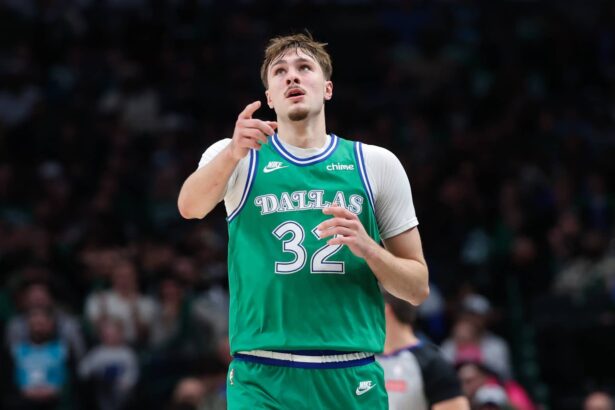
Flagg averaged 21.0 points, 6.7 rebounds, and 4.5 assists as a rookie for the Mavericks. He is 19, a No. 1 pick, and already produced like a future franchise forward. The shooting and handling still need work, but the base is obvious: size, scoring touch, defensive activity, passing feel, rebounding, and transition ability.
The Mavericks’ situation makes a Giannis trade even less logical. They finished 26-56 and missed the playoffs. That is not a team one Antetokounmpo move away from a title if Flagg is the outgoing piece. They would become older, more expensive, and still short on perimeter creation.
This is where timeline beats star name. Antetokounmpo would make the Mavericks better immediately, but not enough to justify moving a 19-year-old forward with franchise-player upside. Flagg gives the Mavericks time. Antetokounmpo would give them urgency without enough roster support.
The Mavericks should not trade Flagg for Antetokounmpo. They should rebuild the roster around Flagg.
9. Tyrese Haliburton
Tyrese Haliburton is the hardest name on the list because the injury risk is significant. I would still keep him.
Haliburton averaged 18.6 points, 3.5 rebounds, and 9.2 assists in 2024-25, then missed the entire 2025-26 season after rupturing his right Achilles tendon in Game 7 of the NBA Finals. His value is not based on raw scoring. It is based on passing speed, transition control, low-turnover creation, and the way he powers the Pacers’ offensive identity.
The contract is already a max commitment. Haliburton is set to make $48.9 million in 2026-27 on a five-year, $244.6 million designated rookie extension. That is a major risk coming off Achilles surgery, but it is also tied to a 26-year-old lead guard who has already taken the Pacers to the Finals.
The Pacers’ 2025-26 season showed what happens without him. They went 19-63 and finished near the bottom of the Eastern Conference after their Finals run the year before. That does not mean the roster is hopeless. It means Haliburton is the offensive system.
Antetokounmpo is better in isolation. He is better defensively. He is more physically dominant. But the Pacers would be trading away the player who gives them their pace, passing map, and offensive organization. They would then need to rebuild the roster around a frontcourt star without the guard who made their offense special.
This is a medical-confidence decision. If the Pacers believe Haliburton can return close to his pre-injury level, he should not be moved. He is younger than Antetokounmpo and plays the position the Pacers cannot replace.
10. Stephen Curry
Stephen Curry is the exception that has to be added. In pure asset terms, he is not in the same category as Wembanyama, Gilgeous-Alexander, Doncic, Jokic, Edwards, Tatum, Cunningham, Flagg, or Haliburton because of age. He will be 38 during the 2026-27 season and is owed $62.6 million in the final year of his contract. That is not a long runway. It is a short title window.
But the Warriors should still not trade him for Antetokounmpo. Curry is the franchise. He averaged 26.6 points, 3.6 rebounds, and 4.7 assists this season while shooting 46.8% from the field, 39.3% from three, and 92.3% from the line in 43 games. Even at this stage, he is still one of the only players in the league who can bend an entire defense without touching the paint. His shooting gravity changes every coverage, every help responsibility, and every possession around him.
The Warriors’ season ended badly. They missed the playoffs after losing 111-96 to the Suns in the Play-In Tournament, with Curry held to 17 points on 4-of-16 shooting. That result showed the roster is no longer strong enough around him, not that Curry should be used as trade salary. The Warriors need a reset around Curry, not a reset away from Curry.
A Curry-for-Antetokounmpo trade would also make little sense for both sides. The Bucks would not trade Antetokounmpo for a 38-year-old guard unless the deal was built around a very different package, and the Warriors would be removing the player who gives their offense its identity. Antetokounmpo is younger, bigger, and better defensively. Curry is still the reason the Warriors’ system exists.
Players Who Could Be Moved For Giannis
This is where the board gets more flexible. The no-trade group is small. After Wembanyama, Gilgeous-Alexander, Doncic, Jokic, Edwards, Tatum, Cunningham, Flagg, and Haliburton, almost everyone has to be discussed if Antetokounmpo is actually available.
Jaylen Brown is the first major name I would put on the table. Brown is a championship-level wing, but he is not a top-tier franchise engine. If the Celtics could build around Tatum and Antetokounmpo, the talent upgrade is too big to ignore.
The Magic should take the call on Paolo Banchero. He has size and scoring upside, but he is not efficient enough or complete enough to be protected in this kind of discussion. Antetokounmpo is a clear tier above him.
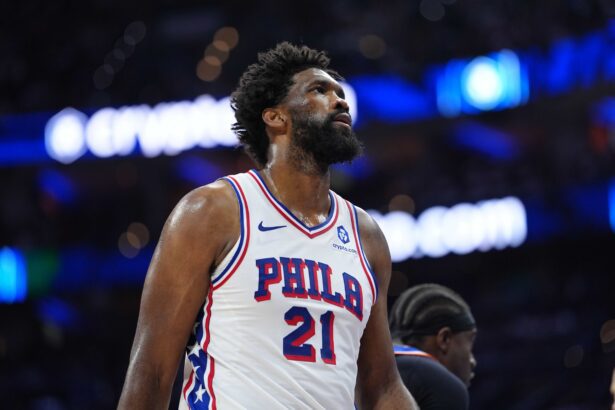
Tyrese Maxey is a much tougher call. The 76ers should view him as a long-term cornerstone because his speed, shooting, and guard creation give them a real offensive base. I would not call him untouchable, but moving him for Antetokounmpo only works if the roster still has enough perimeter creation after the deal.
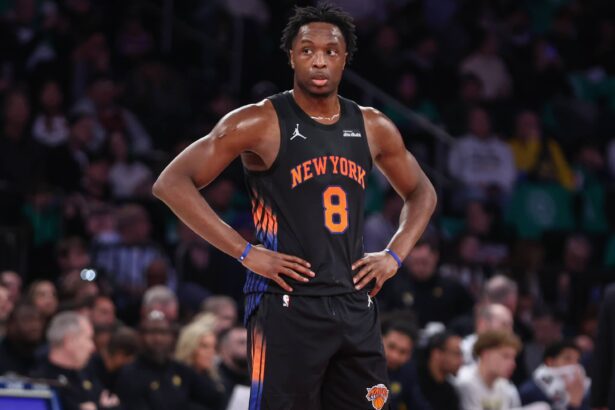
Jalen Brunson is complicated for a different reason. The Knicks should want Brunson next to Antetokounmpo, not going out for him. That pairing would be elite in the playoffs. But Brunson is not young enough to be fully protected, so if he is the only path to Antetokounmpo, the Knicks have to study the full roster after the deal.
LeBron James and Austin Reaves should be an easy yes for the Lakers. Doncic is the protected piece. If the Lakers can put Antetokounmpo next to Doncic by moving James and Reaves, they should do it immediately.
Donovan Mitchell belongs in the discussion, even if the Cavaliers’ roster would get awkward. Antetokounmpo with Mobley and Jarrett Allen would create size, but not enough offensive balance or spacing. In value terms, I would do it. But the Cavaliers would need another move.
LaMelo Ball should not block an Antetokounmpo deal. The talent is high, but the injuries, defense, and Hornets timeline make him impossible to protect over a proven MVP. The issue is whether Antetokounmpo would make sense there without a long-term commitment and another major move.
Kevin Durant is an easy call. Durant is still an elite scorer, but Antetokounmpo is younger, more physical, better defensively, and a stronger franchise bet from this point forward.
Kawhi Leonard is another easy call because of availability. His playoff ceiling is still huge when healthy, but the injury risk is too high to protect him in an Antetokounmpo trade.
Devin Booker is in the Brunson-Maxey group. He makes more sense as Antetokounmpo’s partner than as the outgoing star. If the Suns trade Booker for Antetokounmpo, they still need another creator or the offense gets too thin.
Zion Williamson cannot be protected over Antetokounmpo. His rim pressure is special, but the availability risk is too large. Antetokounmpo is the better and more dependable version of that frontcourt force.
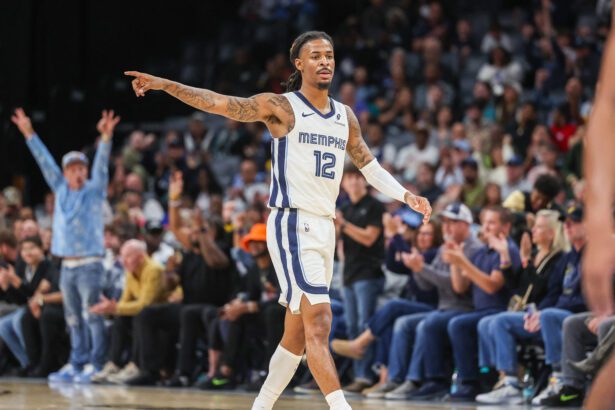
Ja Morant has the talent to make it uncomfortable, but not enough to say no. His downhill pressure and passing still matter, but the durability and off-court questions keep him out of the protected tier. The Grizzlies are on a different timeline now, but in a contending landscape, I’d do the trade.
Final Thoughts
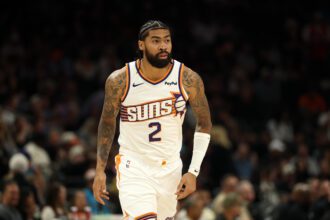
The no-trade group is small: Victor Wembanyama, Shai Gilgeous-Alexander, Luka Doncic, Nikola Jokic, Anthony Edwards, Jayson Tatum, Cade Cunningham, Cooper Flagg, Tyrese Haliburton, and Stephen Curry.
That is the line.
Antetokounmpo is still a superstar. He averaged 27.6 points, 9.8 rebounds, and 5.4 assists while shooting elite percentages at the rim, but he played only 36 games. His season included a low-grade left groin strain, a right calf strain, a left ankle issue, and a left knee hyperextension with a bone bruise.
That injury history is not a small footnote for any team trading for him. Antetokounmpo is 31. His game is built on force, first step, paint pressure, transition speed, and vertical finishing. If a team gives up a franchise player, multiple picks, and a salary filler, it has to believe his body can still handle a deep playoff workload for several years.
The contract creates the second issue. Antetokounmpo’s $58.5 million salary in 2026-27 and $62.8 million player option in 2027-28 mean a trade cannot be separated from an extension conversation. A team trading for him would need some level of confidence that he will sign beyond the current window. Otherwise, the acquiring team risks paying a massive price for one guaranteed season and one player option.
That is why the answer is not simply “trade anyone for Giannis.” That version of the argument ignores the current NBA. Teams are now operating under stricter apron rules, larger supermax deals, and thinner margins for roster mistakes. Antetokounmpo is still worth a huge package. He is not worth sacrificing every franchise cornerstone.