The Golden State Warriors‘ dynasty has been fading for years. While last season’s Jimmy Butler trade injected life into the franchise, it hasn’t been enough. A second-round playoff exit only delayed the inevitable conversation. Now, the Warriors are struggling to stay afloat in the play-in picture.
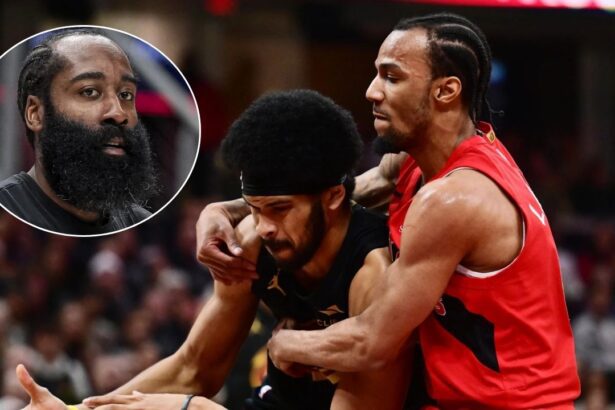
Through 32 games, Golden State sits at an uninspiring 16-16, a .500 record weighed down by avoidable losses. Moments like yesterday’s collapse against the Raptors are the latest example. Steve Kerr himself has acknowledged the obvious, admitting this roster no longer resembles the title-winning versions of the past.
Even Stephen Curry, still producing at an elite offensive level, has publicly pointed to the team’s glaring weaknesses, from defensive lapses to a lack of reliable secondary creation. Around the league, even analysts like Charles Barkley openly dismiss the Warriors as anything more than a nostalgic side.
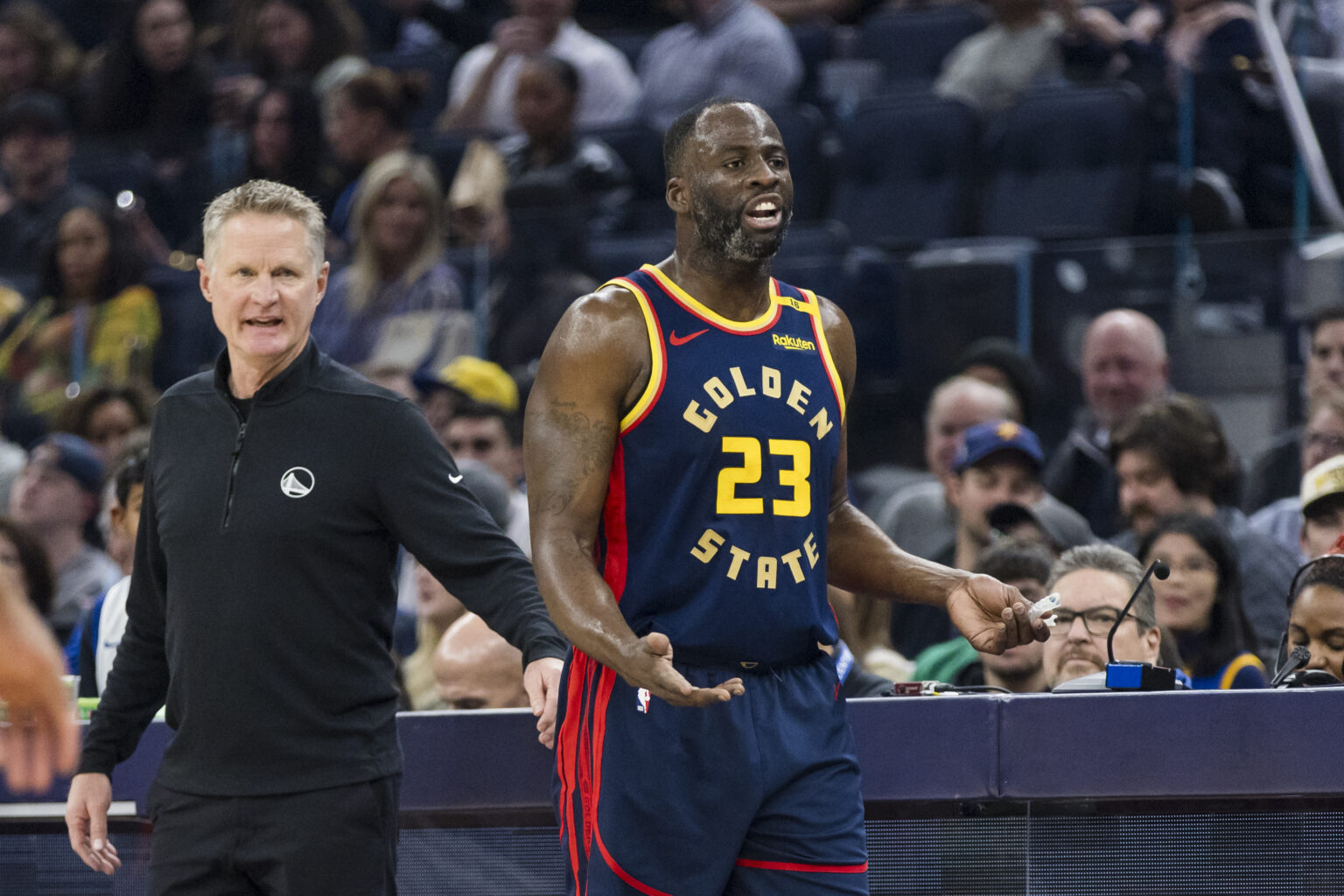
There is also the off-court tension that has chipped away at the Warriors’ foundation. Jonathan Kuminga’s inconsistent role and frequent benchings have raised questions about player development, while the highly visible on-court confrontation between Draymond Green and Kerr, which ended with Green storming off before later apologies, was a reminder that cracks exist even at the core.
Apologies aside, that kind of dysfunction doesn’t inspire confidence in a team already fighting uphill. So while Curry continues to do his part, the wins aren’t following, and the bigger picture is impossible to ignore. We have analyzed and broken down who is to blame for what can be labeled a very disastrous season, considering their expectations, and also how they can fix it.
Culprit Number One: Steve Kerr
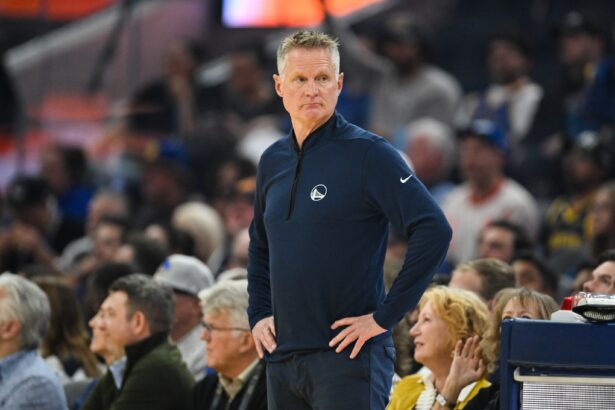
There is no disputing Steve Kerr’s legacy. He is a Hall of Fame-level coach who revolutionized the pace-and-space era with four championships. His emphasis on ball movement, unselfishness, and humbleness changed the league and maximized the primes of Stephen Curry, Klay Thompson, and Kevin Durant.
But legacy doesn’t win games in the present, and Kerr’s decisions this season have increasingly felt out of step with the league he’s coaching in. Kerr’s handling of personnel has become the loudest critique. Benching Curry during critical stretches, public friction with Draymond Green, and the continued issues with Jonathan Kuminga have all fueled questions about adaptability.
Kuminga is the Warriors’ best rim-attacker, most explosive athlete, and arguably their most valuable trade asset, yet Kerr has alienated him, stunting his growth and value. Rotations have been inconsistent, defensive urgency has disappeared, and the team consistently looks flat.
Offensively, the decline is even harder to ignore. Golden State’s attack often devolves into one plan: Steph Curry sprinting around screens, hoping to generate just enough space to bail them out. That system worked when Curry had prime Klay Thompson and Kevin Durant. It does not work now.
Teams simply trap and double Steph, daring anyone else to create. Jimmy Butler, while still impactful, is older and no longer capable of consistently carrying the offense as he did with the Heat. For a revolutionary coach, Kerr might have lost his touch.
Culprit Number Two: Front Office
If Kerr bears responsibility for his rotations, the front office deserves equal blame for roster construction. The most glaring question: why re-sign Jonathan Kuminga if the head coach clearly doesn’t trust him? Holding onto young, valuable players only to suppress their role is a losing formula.
The Warriors appear stuck between eras, unwilling to give the youngsters a chance to shine or fully rebuild around the veterans.
Golden State is overloaded with players who can shoot but contribute little else: Moses Moody, Buddy Hield, Brandin Podziemski, Quinten Post, Gui Santos, Pat Spencer, and others blend together without solving the team’s athletic or defensive issues. Adding a 39-year-old Al Horford to an already aging core only reinforced how disconnected the vision has become.
The NBA is faster and more athletic than ever: just look at the Thunder, Spurs, Pistons, and Rockets. Speed, length, and rim pressure define the modern game. The Warriors are slow, one-dimensional, and their best athlete, Kuminga, is essentially exiled.
Culprit Number Three: Draymond Green And The Veterans
Draymond Green is the vocal leader of the Warriors, but he has become erratic in terms of play and behavior. His defensive intelligence and playmaking are still there, yet the volatility continues to hurt more than it helps. The public confrontation with Kerr that resulted in Green walking off the court wasn’t just a bad look; it signals something.
Apologies came later, but championship teams don’t air those kinds of fractures in real time, especially not ones fighting just to stay relevant. Beyond Draymond, the veteran core must shoulder responsibility as well.
Curry has held up his end offensively, but leadership also means lifting others, setting defensive standards, and demanding consistency. Curry is the least one to blame among the veterans for the issues, but as the best player, there has to be accountability. Butler has aged, but he hasn’t been the player the Warriors believed he would be as of yet.
Too often, Golden State’s veterans look exhausted, mentally and physically, and unable to sustain effort on both ends. The veterans are the leaders, so naturally, they have to take the blame.
There Is Only One Way To Save The Dynasty: Trading For Giannis Antetokounmpo
There is one, literally only one way to save the season: trade for Giannis Antetokounmpo. Nothing else will work. Giannis is a system on his own, and he will change everything for the Warriors.
His presence would immediately correct the Warriors’ lack of athleticism, interior scoring, transition dominance, and defense: four areas where this team is consistently exposed. From a basketball-fit standpoint, Giannis would simplify everything Steve Kerr has struggled to overthink.
Instead of forcing an offense built around constant off-ball movement, Kerr could lean into the most devastating inside-out pairing imaginable: Giannis dominating inside and on the break while Stephen Curry stretches them beyond the arc.
Jimmy Butler would naturally slide into a third-option role, exactly where he thrives, focusing on late-game shot-making, playmaking, and perimeter defense. The trickle-down effect would be massive: better roles, more focus, and a reset in the locker room.
Defensively, Giannis would be a game-saver as well. Golden State’s inability to protect the rim or consistently clean the glass has forced them into scrambling too often in big moments. Giannis becomes the anchor overnight.
The cost, of course, would be enormous. Any Giannis package would start with Jonathan Kuminga, Brandin Podziemski, and likely include additional young pieces, picks, and potentially even Draymond Green. But they will get the best two-way player in the NBA. That alone minimizes any risk.
As long as Stephen Curry, Giannis Antetokounmpo, and Jimmy Butler share the floor, the Warriors are back to relevance. No other player on the market can change the Warriors as quickly as he can. Is it too single-minded to say one player can change everything for a dynasty? Possibly. But it is not about the player; it is about the mindset, culture, and change that Giannis would bring, beyond his talent.