The Heat’s season ended the way too many of their recent seasons have felt: close, tense, and still not good enough. The Heat lost 127-126 in overtime to the Hornets on Tuesday night in the 9-10 Play-In game, turning a 43-39 season into an early exit.
That is why this offseason should not be about minor adjustments. The Heat still have structure, toughness, and enough competent players to stay respectable. What they do not have is the kind of superstar who can carry an offense when the game slows down, and every possession becomes important.
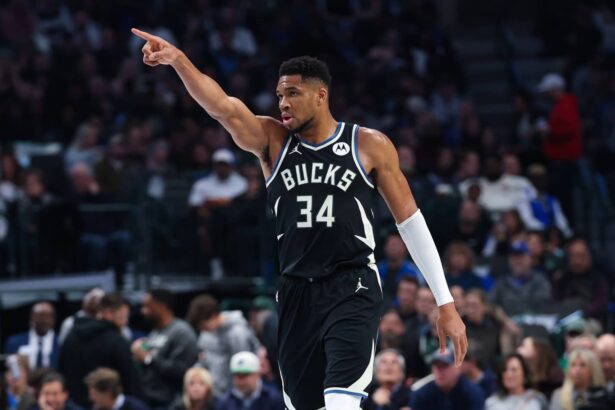
The Heat hold the No. 13 pick in June, sit $33.2 million below the luxury tax, and still have two trade exceptions to work with. ESPN also reported before the deadline that the Heat were among the teams that checked in on Giannis Antetokounmpo. After another season that ended short of the real playoff bracket, the message feels simple: the Heat need to think bigger. This summer should be about chasing a true star.
Here are five potential trade offers the Heat could make to finally land another superstar to the roster before 2026-27 comes around.
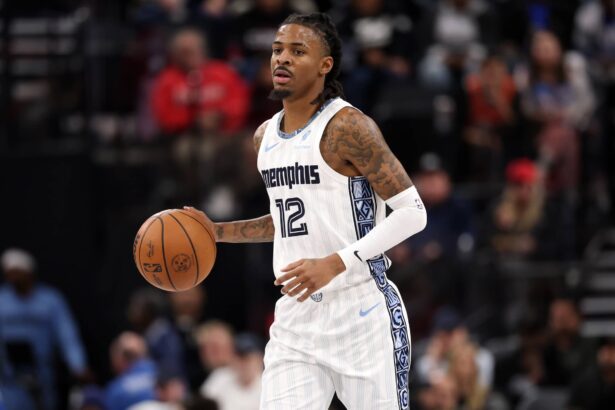
5. The Heat Land A Superstar Point Guard
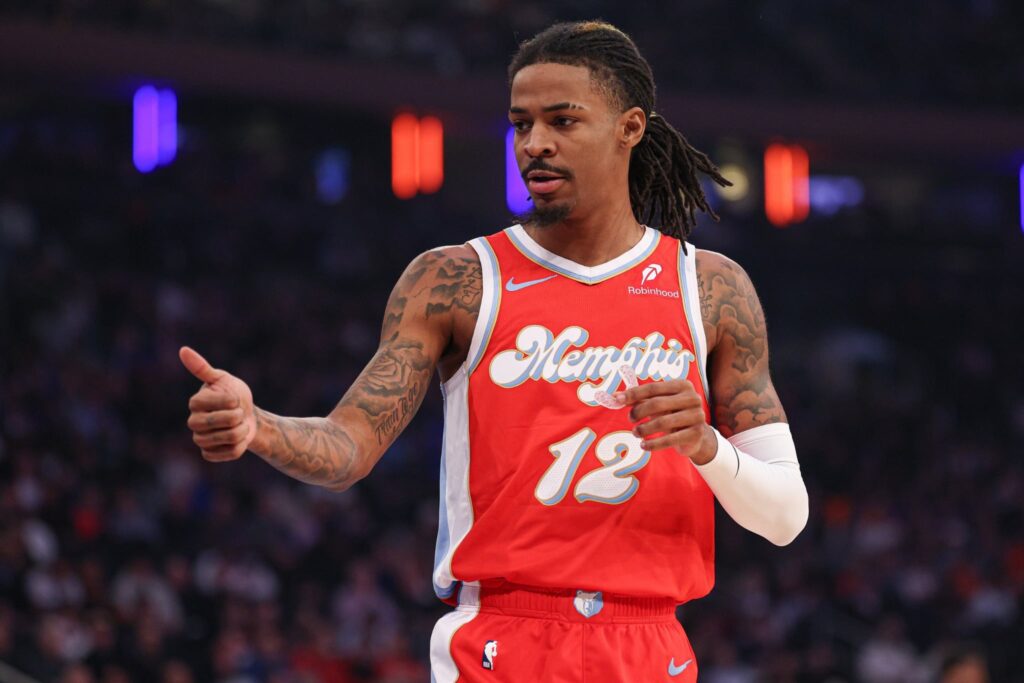
Miami Heat Receive: Ja Morant
Memphis Grizzlies Receive: Tyler Herro, Simone Fontecchio, 2029 First-Round Pick
This is the kind of swing the Heat should be thinking about after another season that ended without enough top-end offense. Ja Morant is risky, but he is still the highest-upside guard who could realistically shake loose this summer. ESPN reported in January that the Grizzlies were entertaining trade offers for Morant, and Bobby Marks wrote this week that the team again faces a decision on his future after exploring deals before the deadline.
That matters even more now because the Grizzlies finished 25-57, 13th in the West, after a year that already saw them move Desmond Bane and Jaren Jackson Jr. out of the core. This is no longer a team trying to patch around the edges. It looks like a real reset, and Morant could be the biggest piece left to move.
From the Heat side, the fit is obvious. Morant played only 20 games this season, but he still averaged 19.5 points and 8.1 assists. Even in a down year, he gives the Heat something they simply do not have enough of: real paint pressure, burst off the dribble, and a guard who can bend the whole defense. Bam Adebayo would immediately become the best pick-and-roll partner Morant has had in years, and that alone makes this idea interesting.
The Heat were good enough to finish 43-39 and reach the Play-In, but not dynamic enough to scare serious contenders. Morant changes the shape of the offense in a way a smaller move never could. If the goal is to land a true star, this is closer to the real thing than just adding another high-level scorer on the wing.
The financial side also works much better than it looks at first. Morant made $39.4 million this season and is set for a $42.2 million cap hit in 2026-27. Tyler Herro made $31.0 million this season and is lined up for $33.0 million next year, while Simone Fontecchio is at about $8.3 million. That is close enough to build a framework without turning the whole roster inside out. The bigger question is value.
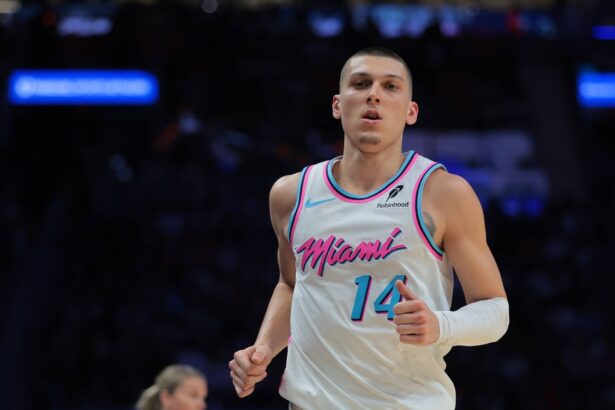
Herro is a really good player. He averaged 20.5 points, 4.8 rebounds, and 4.1 assists in 33 games this season, and just one year earlier, he made his first All-Star team after averaging 23.9 points, 5.5 assists, and 5.2 rebounds in 77 games. So this is not a salary dump. It is a real asset offer plus a first-round pick.
For the Grizzlies, the logic is simple enough. Herro is younger, healthier lately than Morant, and easier to fit into a rebuild because of his shooting and secondary creation. Fontecchio is useful salary ballast, and the 2029 first-round pick matters because the Heat still control it outright.
For the Heat, though, this is about ceiling. Herro is good. Morant, if healthy and stable, is a different tier of offensive engine. That is why this deal makes sense as a blockbuster. It is not safe, and it is not cheap. But if the Heat want a real superstar point guard, this is the type of gamble worth making.
4. The Heat Add A High-Level Scoring Forward
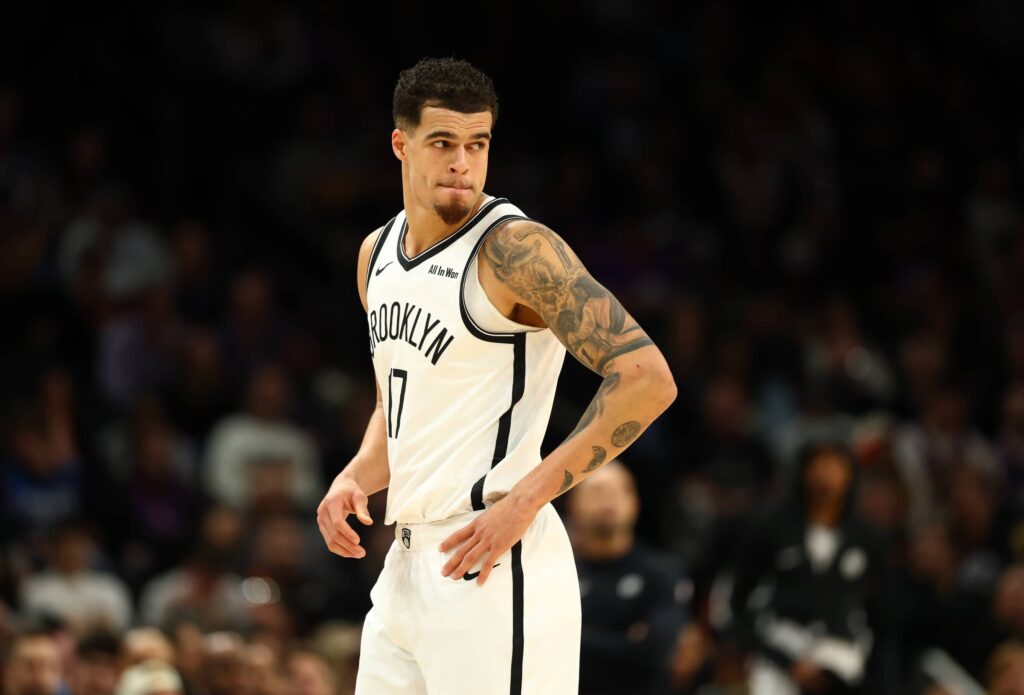
Miami Heat Receive: Michael Porter Jr.
Brooklyn Nets Receive: Andrew Wiggins, Nikola Jovic, 2029 First-Round Pick
This one is not as flashy as a Ja Morant swing, but it might be cleaner on the court. Michael Porter Jr. just averaged 24.2 points, 7.1 rebounds, and 3.0 assists for the Nets while shooting 46.3% from the field, and he did it on a team that finished 20-62 and 13th in the East. That is a key aspect, because the Nets are still deep in rebuild mode and have to decide whether Porter fits their real timeline or whether he is better used as a trade asset while his value is high.
He’s been the Nets’ top performer as the front office remains noncommittal about his long-term place, even with Porter publicly saying he wants to stay. If the Nets want younger pieces and another first-round pick, this is the kind of offer that should at least get their attention.
From the Heat side, the fit is easy to see. Porter is one of the best movement shooters in the league at his size, and he would give the Heat badly needed spacing without needing the ball every possession. That is why he works next to Bam Adebayo much more naturally than some other bigger-name stars. He can play off dribble creation, punish help, and raise the floor of the half-court offense just by being on the wing.
Andrew Wiggins still had a useful year, averaging 15.4 points, 4.8 rebounds, and 2.7 assists, but he is a lower-ceiling scorer. Nikola Jovic is younger and more flexible stylistically, but he averaged just 7.3 points, 3.3 rebounds, and 2.2 assists while shooting 36.6% from the field. Porter is simply the best player in this deal, and that is usually where the Heat should start if they want a real offensive upgrade.
The money is big, but it actually lines up pretty well. Porter is entering the final year of his deal at $40.8 million in 2026-27. Wiggins is at $30.2 million after opting in, and Jovic’s rookie extension starts at $16.2 million, which puts the outgoing salary at roughly $46.4 million. That gives the Heat a legal path to absorb Porter without needing to throw in three or four smaller contracts just to make the math work.
It also matters that Porter is only 27 and extension-eligible, while Wiggins is already 31, and Jovic, while still interesting, is not close to Porter’s current level as a scorer. For the Nets, the attraction is not only the pick. It is the flexibility. Wiggins is shorter money, Jovic is still a development swing, and the 2029 first-round pick gives the Nets another future asset while they keep building through the lottery.
The only real question is how much the Heat believe in Porter holding up physically and sustaining this level in meaningful games. He finished the season out with a hamstring strain, and durability will always follow him a bit. But on pure basketball logic, this is a very good bet. The Heat would not need Porter to be a primary initiator. They would need him to do what he already does at a high level: score efficiently, stretch the floor, and make life easier for everyone else.
If the front office cannot get to a true top-10 superstar, then adding a 24-point wing on an expiring contract is still a serious swing. And for this roster, it might be one of the smartest ones available.
3. The Heat Gamble On Anthony Davis
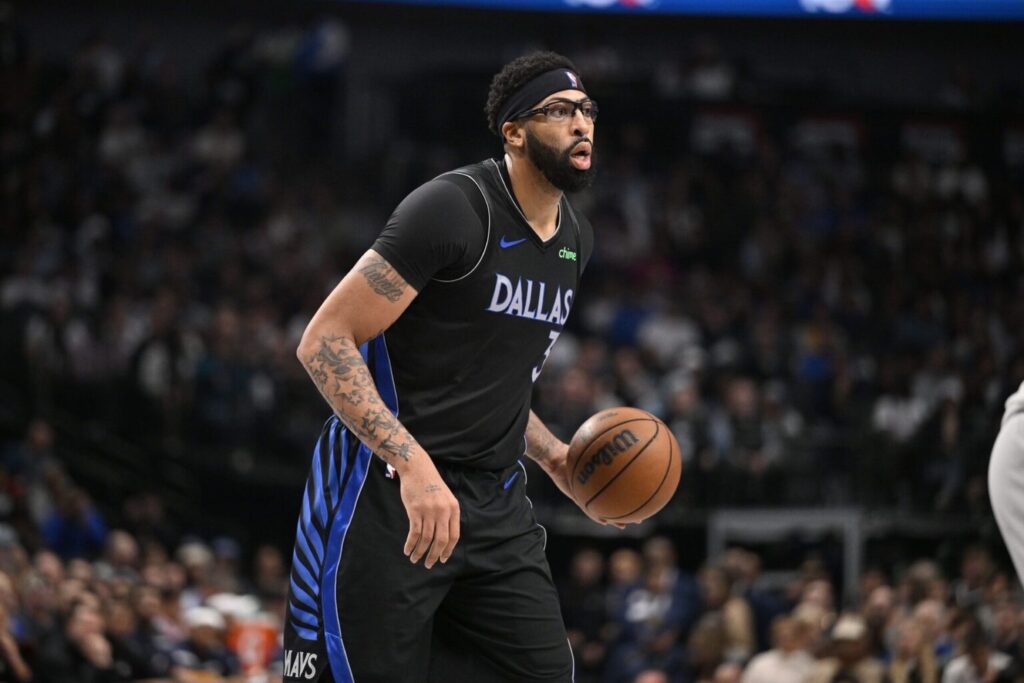
Miami Heat Receive: Anthony Davis, Jaden Hardy
Washington Wizards Receive: Tyler Herro, Andrew Wiggins, 2029 First-Round Pick
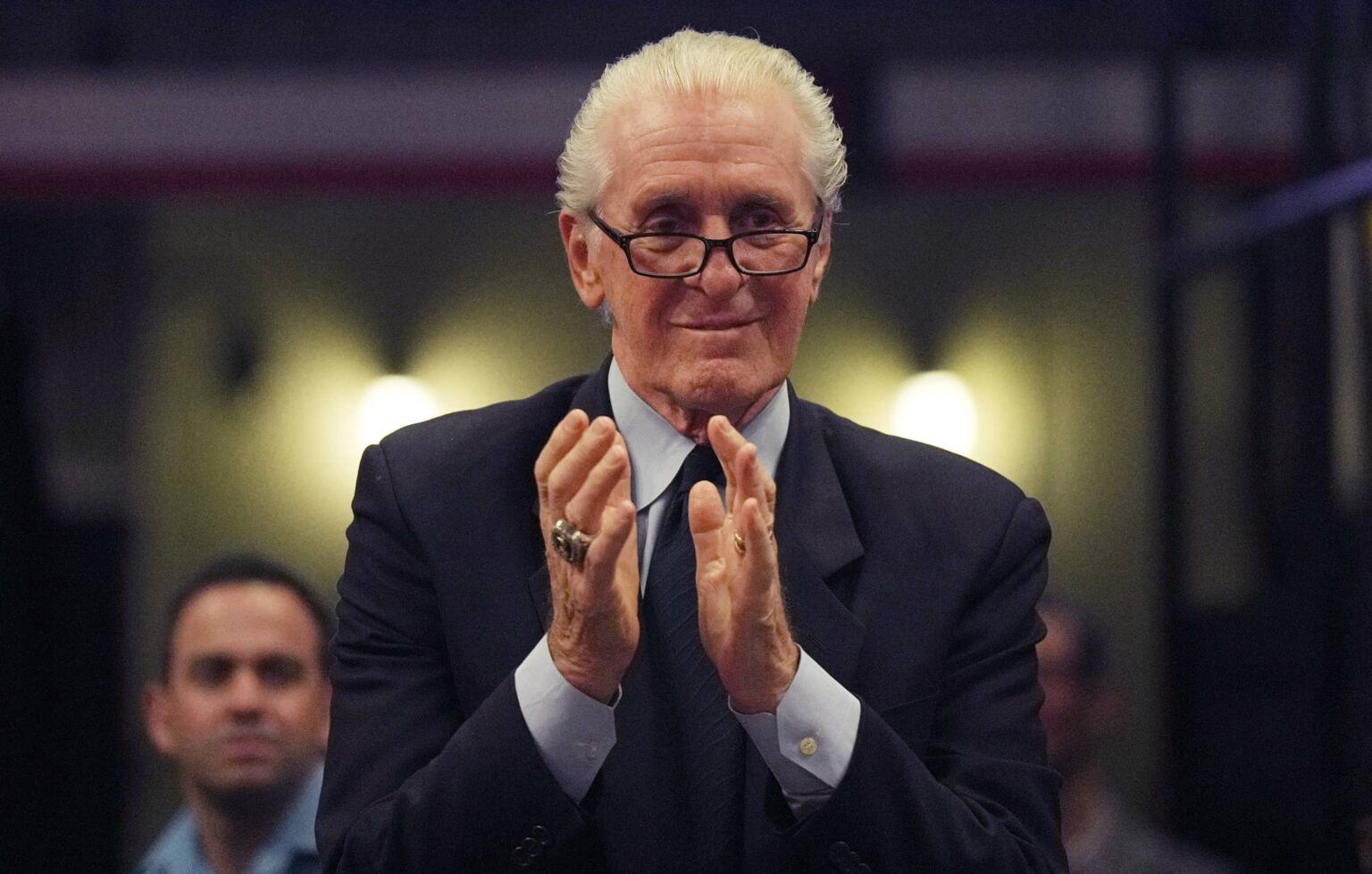
This is the kind of move that only makes sense if the Heat believe the Anthony Davis situation could get uncomfortable fast. To be clear, Davis has not asked for a trade. But Davis said he wants to hear a real championship plan from the Wizards before fully buying into the future there. That is enough uncertainty for the Heat to make a call. The team just finished 17-65, worst in the league, and if Davis looks at that roster over the summer and decides it is too far from serious contention, this is exactly the kind of window Pat Riley should try to attack.
From the Heat side, the appeal is easy to understand. Davis played only 20 games this season, but he still averaged 20.4 points, 11.1 rebounds, 2.8 assists, and 1.7 blocks. Even with the injuries, he remains one of the best defensive bigs in basketball and still gives you real scoring inside. Put him next to Bam Adebayo, and the Heat would have the most intimidating defensive frontcourt in the conference.
There would be spacing questions, yes, but there would also be a clear identity. The Heat would become huge, physical, and very hard to score on. Jaden Hardy is a useful add-on, too. He averaged 12.9 points in 22 games with the Wizards and shot 41.8% from three, so he gives the second unit some needed shot creation and a little offensive juice in the backcourt.
The outgoing package is big, but that is the price of going star hunting. The Wizards would not just be taking on money. They would be getting a real scoring guard in Herro, a steady two-way wing in Wiggins, and a 2029 first-round pick that the Heat still control. Financially, it is close enough to work, too. Herro is at $31.0 million and Wiggins at $28.2 million this season, while Davis is at $54.1 million and Hardy at $6.0 million. That is blockbuster money, but it is workable blockbuster money.
The real question is risk tolerance. Davis is 33 next season, carries a $58.5 million cap hit in 2026-27, and has a $62.8 million player option for 2027-28. That is massive money for a player with a long injury history. But this is also the point of these trades. Safe moves are not enough anymore. If the Heat want a true ceiling-changing piece, Davis still qualifies when healthy.
Herro is younger and cleaner as an asset, and there is a fair argument that the Wizards would rather keep the bigger star and try to build around him. But if Davis starts pushing for a more competitive situation, this package gives the Wizards scoring, flexibility, and a future first. For the Heat, it is a swing on talent over comfort. And that is exactly the kind of swing this offseason should be about.
2. The Heat Bet On Kawhi Leonard’s Final Year
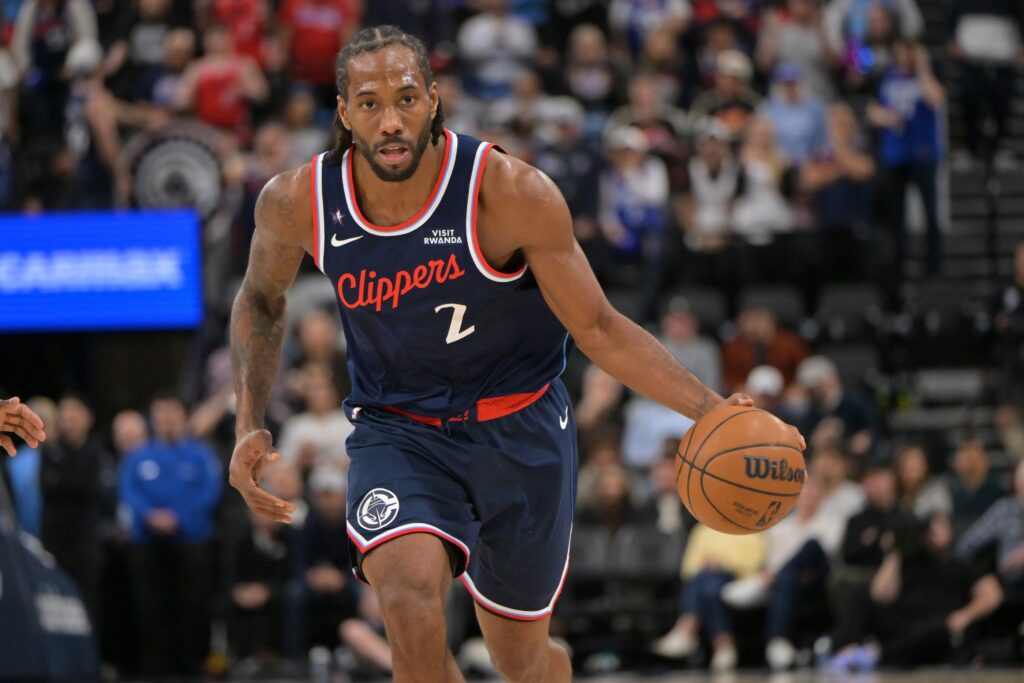
Miami Heat Receive: Kawhi Leonard, Brook Lopez
Los Angeles Clippers Receive: Tyler Herro, Andrew Wiggins, 2029 First-Round Pick
This idea starts with the simplest point: the Clippers may be getting close to a decision point with Kawhi Leonard. ESPN reported last week that the NBA’s investigation into the Aspiration endorsement deal is still ongoing, and the Clippers have publicly said that process has not changed how they operate.
But even if the team says the investigation is not affecting decisions, the uncertainty is still there, and Leonard is also entering the final guaranteed season of his contract at $50.3 million in 2026-27. That does not mean a trade is coming, but there have been rumbles earlier in the year about the team being ‘done’ building around him, and that they wouldn’t want to resign him after his deal ends. The Clippers also finished only 42-40 and ninth in the West, so this is not some dominant contender that has to keep doubling down no matter what.
From the Heat side, the appeal is obvious. Leonard still looked like a superstar this season, averaging 27.9 points, 6.4 rebounds, and 3.6 assists in 65 games while shooting 50.5% from the field and 38.7% from three. That is real first-option production, not reputation. Brook Lopez is a useful part of this, too. He averaged 8.5 points, 3.6 rebounds, and 1.2 blocks while shooting 36.0% from deep, so he gives the Heat a stretch-five option and another veteran big who can help protect the rim.
Leonard would give the Heat the exact kind of player they have missed in late-game offense, a wing scorer who can create his own shot without needing the entire system built around him. Lopez would help keep the frontcourt stable and would fit neatly next to Bam Adebayo in bigger lineups or behind him in more traditional bench groups.
Financially, the framework works. Herro sits at $33.0 million and Wiggins at $30.2 million for 2026-27, while Leonard is at $50.3 million and Lopez at $9.2 million if the Clippers pick up his club option. That gets both sides into the right salary neighborhood, and the 2029 first-round pick matters because the Clippers gain much-needed flexibility.
The main question is whether the Clippers would prefer one more run or a controlled pivot. Leonard was good enough this season to justify another push, so there is a fair case for standing pat. But if the front office looks at the age of the roster, the ongoing noise around the investigation, and the fact that Leonard’s contract is almost up, this package would make a lot of sense. Herro gives them a younger scoring guard under team control, Wiggins gives them a plug-and-play wing, and the pick adds a future asset.
For the Heat, this is exactly the sort of all-in move that fits the moment. Leonard is older and carries real injury risk, but when he is right, he still changes a franchise’s ceiling. And that is what this offseason should be about.
1. The Heat Go All-In For Giannis Antetokounmpo
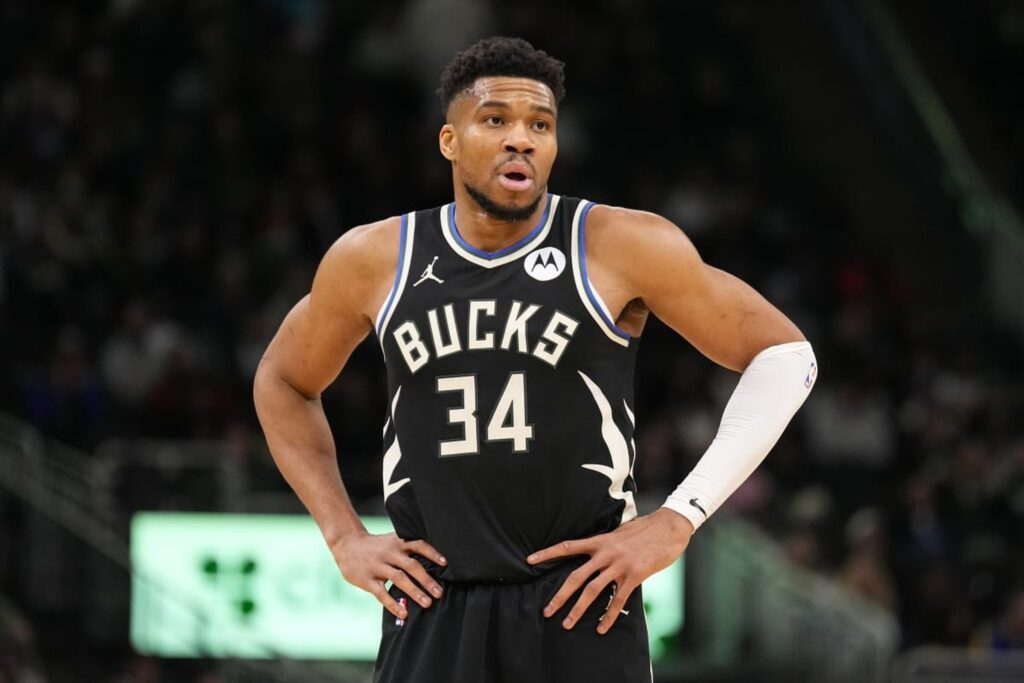
Miami Heat Receive: Giannis Antetokounmpo
Milwaukee Bucks Receive: Tyler Herro, Nikola Jovic, Kel’el Ware, 2029 First-Round Pick, 2031 First-Round Pick, 2032 First-Round Pick Swap
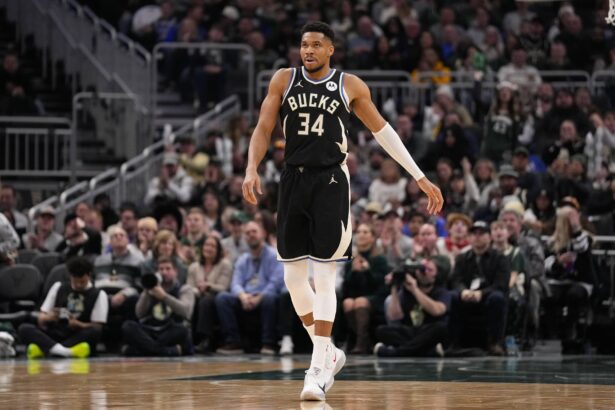
This is the dream swing, and it is also the one that makes the most sense if the Bucks finally accept that their window has closed. The Bucks just finished 32-50 and missed the playoffs, which is not where a Giannis Antetokounmpo team is supposed to be. Giannis did not fully shut down questions about his future, saying he was not sure whether he had played his final game with the franchise.
There is also a buildup behind a Giannis-to-Heat idea. ESPN reported that the Bucks and Heat had trade dialogue in February before the deadline, with talks centered on a package that included Tyler Herro, Kel’el Ware, multiple other players, and multiple first-round picks and swaps. ESPN also reported the Bucks did engage in Giannis trade talks before the deadline, but ultimately chose not to move him.
So this is not some made-up offseason fantasy. The two sides already had a framework of interest, and if the Bucks decide this summer that the roster is not fixable, the Heat should be right back in that conversation.
From the Heat side, the fit is obvious. Giannis played only 36 games this season, so he missed the 65-game line by a mile, but the production was still superstar-level: 27.6 points, 9.8 rebounds, and 5.4 assists per game. He still bends the floor in transition, still puts nonstop pressure on the rim, and still gives a defense a true anchor when he is right. Put him next to Bam Adebayo, and the Heat would instantly have one of the nastiest defensive frontcourts in the league. Offensively, it would finally give them the kind of force they have been missing. Tyler Herro is a real outgoing piece here, too. Nikola Jovic and Kel’el Ware are more upside than proven value, but those are still real young assets because of their size, age, and skill set.
The reason this package works as an article idea is simple. The Bucks would not move Giannis for a shallow return. They would want a proven scorer, a young developmental forward, and major draft control. That is exactly what this framework tries to give them. And from the Heat side, that pain would be worth it. Safe trades do not matter anymore. Not after another season that ended without a true top-five player on the roster. Giannis is one of the few stars in the league who would change the entire direction of the franchise overnight.
The financial side is huge, but it is still the kind of superstar swing the Heat can build around in the offseason. Giannis is due about $58.5 million in 2026-27, while Tyler Herro is at $33.0 million and Nikola Jovic is at $16.2 million, so the base of the package already gets close fast, with Kel’el Ware’s $4.7 million rookie-scale number helping on the margins without needing to be the focus of the deal. More importantly, the Heat are not financially boxed in. Spotrac projects them roughly $40.9 million below the first apron for next season, as the roster carries a ton of flexibility with many salaries off the books. So even if this would still be a massive trade, it is not some impossible cap puzzle.
The biggest risk is obvious: if the Heat empty out too much of the supporting cast, they could end up with Giannis and not enough around him. But that is a better problem than the one they have now. The Heat have enough structure, enough coaching stability, and enough defensive identity to make a superstar bet worth it. If Giannis ever truly becomes available, this should be the type of package they put on the table without overthinking it. It is expensive. It is uncomfortable. It is exactly the level of move this franchise should be chasing.