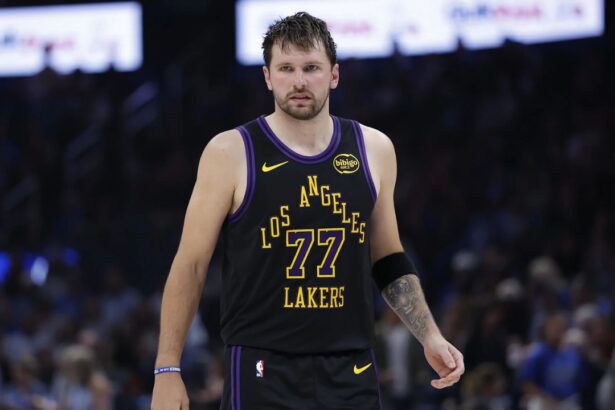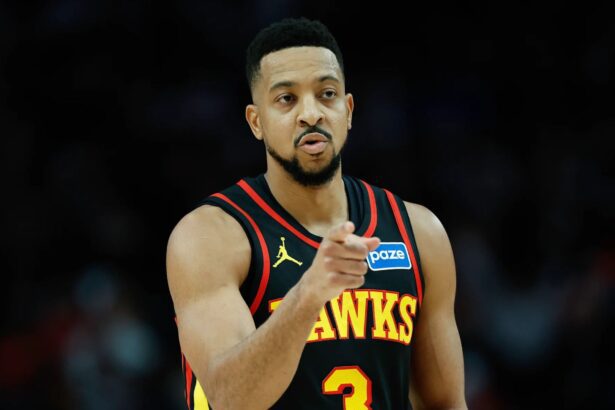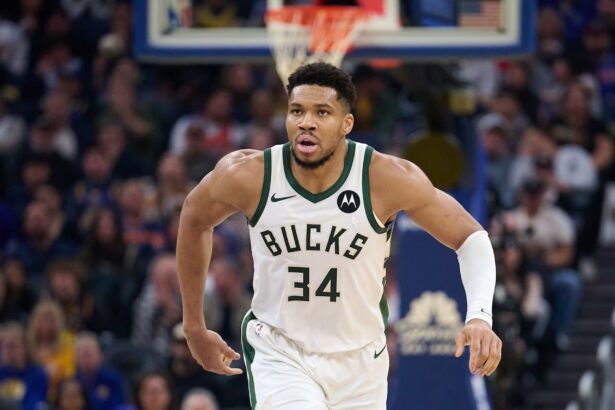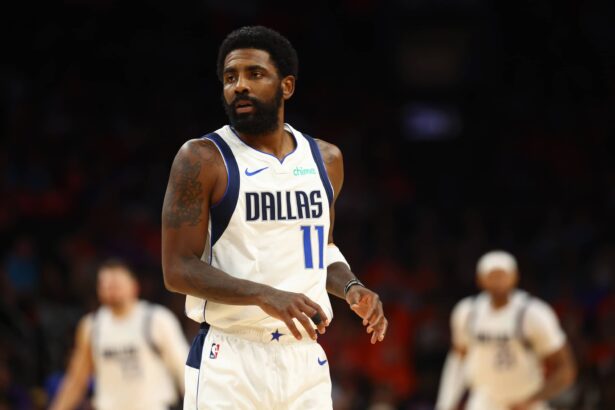
This NBA free-agent class is not super deep, but it is still interesting. There are older stars, restricted free agents, players who probably will not take their player options, and role players who can get paid because they had good seasons.
But free agency is not only about who is the best player. It is also about Bird rights, cap space, age, injuries, offer sheets, and which teams really can pay. That is why some famous names are not on this list. James Harden is not here unless he declines his player option. This list is based on real unrestricted free agents, already opt-out players, and restricted free agents who have good market value.
The order is based on star power, current production, age, contract leverage, reports, and how much the player can change a team’s offseason.
10. Rui Hachimura
Status: Unrestricted Free Agent
Rui Hachimura is not a star player, but he is still an important free-agent name because big forwards who can score usually get money.
He averaged 11.5 points and 3.3 rebounds while shooting 51.4% from the field. His best stat is from NBA tracking. He made 93 of 170 pull-up two-point shots, which is 54.7%. That was second out of 98 players with at least 100 attempts. He really has a good mid-range game for his improved 44.3% from deep.
The Lakers can keep him, but the money situation is not simple. They have LeBron James, Austin Reaves, and maybe they also want to chase a center. If they try to get Walker Kessler in a sign-and-trade, Hachimura can be the player who has to leave.
My prediction is the Bulls on a 3-year, $48.0 million deal, around $16.0 million per year. They need more forward size and scoring, not only another small guard. Hachimura is 6’8”, has playoff experience, and can play with younger players without needing many shots.
This is not a huge signing, but it feels like a normal Bulls move. Useful, a bit expensive, but easy to understand for a team that will have one of the biggest amounts of money to spend on a free agent.
9. CJ McCollum
Status: Unrestricted Free Agent
CJ McCollum is old now, but he is still productive enough to be in the top 10.
McCollum averaged 18.7 points, 3.3 rebounds, and 3.9 assists while shooting 45.5% from the field and 37.5% from three. He is 34 and will turn 35 in September, so the contract should be short. But still, getting 18.7 points per game with real shot creation is not easy.
His playoff numbers also helped him. McCollum averaged 19.2 points, 3.0 rebounds, and 2.0 assists against the Knicks. He scored 32 points in Game 2 and 23 points in Game 3, and the Hawks won both games. His three-point shooting was not great at 30.3%, but he still gave them late-game scoring.
NBA.com had the Hawks 13.2 points per 100 possessions better when he was on the court after he arrived. That is a big difference. Michael Scotto also reported that the Hawks want to re-sign him.
I think the Hawks sign him on a 2-year, $38.0 million deal, around $19.0 million per year. Maybe the second year has a team option or is only partly guaranteed, because giving a full two-year contract to a 35-year-old guard is risky. But keeping him makes more sense than trying to replace his playoff shot-making with a cheaper random guard.
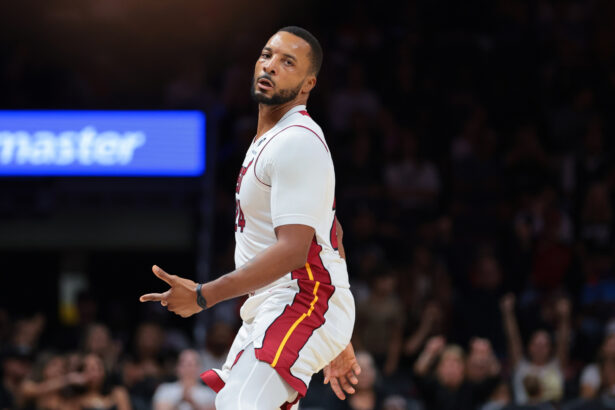
8. Norman Powell
Status: Unrestricted Free Agent
Norman Powell feels like one of those free agents who could get squeezed out because of a bigger move, not because he stopped being useful.
He just averaged 21.7 points for the Heat, and that still has weight. Powell isn’t some empty scorer who needs 25 shots to help a team. NBA.com had him at 0.48 points per touch, third among 426 players with at least 500 touches. That fits him perfectly. He doesn’t waste much time.
The issue is the Heat’s bigger picture. If they trade for Giannis Antetokounmpo, then Powell probably becomes too expensive to keep. It’s not even really about him. It’s just the money. Once the Heat have Giannis, Bam Adebayo, and the rest of the roster to deal with, paying Powell big money at 33 gets much harder.
And Powell shouldn’t be expected to take a cheap deal. This might be his last real chance to get paid, and teams always need scoring. He isn’t a long-term building block anymore, but he’s still coming off an All-Star season for a near-playoff team.
The prediction is the Magic on a 3-year, $66.0 million deal, around $22.0 million per year. They make sense because they already have size, defense, and young stars, but they still need an easier offense. Paolo Banchero and Franz Wagner can create, but the Magic can’t go into another season asking them to carry every half-court possession. Powell gives them a veteran scorer who doesn’t need to be the main guy.
The final year should be a team option because of his age. But for the Magic, this is a smart win-now move. It isn’t flashy, but it’s practical. They need someone who can score in a real playoff game, not another young player who may help two years from now.
7. Ayo Dosunmu
Status: Unrestricted Free Agent
Ayo Dosunmu is the type of free agent who does not look as flashy as older names, but he should still get paid.
Dosunmu averaged 14.7 points, 3.5 rebounds, and 3.6 assists while shooting 51.4% from the field. He sat at 19.6 points per 36 minutes with a career-best 63.0% true shooting. That is the main case for him. He is 26, efficient, athletic, and not only a bench guard doing random things.
His Timberwolves sample made his value even stronger. After the trade, he averaged 14.4 points, 4.2 rebounds, and 3.5 assists in 24 regular-season games. In the playoffs, he averaged 15.6 points, 3.6 rebounds, and 4.1 assists with a 43-point explosion. That is exactly how a player can raise his market.
The Timberwolves also have good reasons to keep him. Donte DiVincenzo had an Achilles injury in April, and Mike Conley is entering free agency again. They need more guards around Anthony Edwards, not fewer.
My prediction is the Timberwolves on a 4-year, $76.0 million deal, around $19.0 million per year. That is a lot for a guard who is not a star, but he is 26, efficient, and already fits next to Edwards. The Wolves have his Bird rights, so keeping him is easier than replacing him.
6. Peyton Watson
Status: Restricted Free Agent
Peyton Watson isn’t the biggest name in this class, but his free agency situation is genuinely dangerous for the Nuggets, and they know it.
He averaged 14.6 points, 4.9 rebounds, and 2.1 assists while shooting 49.1% from the field and 41.1% from three, and that three-point number completely changed his value. Before this season, he was more of a defensive wing with upside.
Now, he looks like a real two-way player. The late-season split is what really stands out. Over his final 24 games, Watson averaged 19.5 points with a 26.1% usage rate.
Before that stretch, he was at 10.7 points and 15.3% usage. That’s a massive role change, and he handled it really well. He’s 23 years old, he can defend, he can run, and now he can shoot. That profile gets expensive very fast in this league.
My prediction is the Nuggets on a 5-year, $110.0 million deal, around $22.0 million per year. Because he is restricted, the Nuggets can match any offer sheet. Another team can try to make them nervous, but the Nuggets should not let him go unless the offer is completely crazy.
5. Walker Kessler
Status: Restricted Free Agent
This is where things get genuinely interesting. Walker Kessler reportedly turned down a five-year, $140.0 million offer from the Jazz, and Sam Amick reported he’s at odds with the Jazz front office over how they handled his extension and restricted free agency situation.
That’s real tension, not just offseason noise, and it matters a lot for where this ends up. The injury part is worth acknowledging. Kessler barely played last season because of a shoulder injury, which complicates things.
But the career numbers are still strong: 9.5 points, 9.3 rebounds, and 2.4 blocks per game, with 3.35 blocks per 36 minutes, second among active players with at least 3,000 career minutes. That’s a real shot-blocking presence.
My prediction is the Lakers through a sign-and-trade on a 4-year, $112.0 million deal, around $28.0 million per year. That is basically close to the Jazz offer he rejected, but with a new team and better situation. Since he is restricted, he cannot just leave. The Jazz would need to get assets back instead of making the situation messier.
4. Jalen Duren
Status: Restricted Free Agent
Honestly, the Pistons keeping Jalen Duren should be one of the easier decisions of this entire offseason. He averaged 19.5 points, 10.5 rebounds, 2.0 assists, 0.8 steals, and 0.8 blocks while shooting 65.0% from the field in 28.2 minutes per game. That’s big production from a 22-year-old center, and the All-NBA Third Team selection changed the contract conversation.
His usage rate jumped from 16.1% last season to 23.1% this year, which was the sixth-biggest increase among players with at least 500 minutes in both seasons. So it wasn’t just easy dunks and lobs.
The playoffs hurt him a little bit. His bad postseason probably keeps him away from the full 30.0% max. That is fair. He still has defensive questions, and he is not a shooter.
But the Pistons actually ran offense through him a lot more, and he handled it. The playoffs weren’t perfect, and the defensive questions are still fair, but the Pistons were the No. 1 seed in the East with this guy as their center. You don’t let that walk in restricted free agency.
My prediction is the Pistons on a 5-year, $190.0 million deal, around $38.0 million per year. That is below the full max but still very big. The Pistons were the No. 1 seed in the East. A young team with a 22-year-old double-double center should not let him leave in restricted free agency.
3. Trae Young
Status: Unrestricted Free Agent
Trae Young is the strangest star on this list. Marc Spears reported that Young declined his $48.9 million player option, so he is a real unrestricted free agent.
The timing is not perfect for him. He averaged only 17.9 points and 8.0 assists in 15 games because injuries ruined his year with the Hawks and Wizards. He played only five games for the Wizards after the January trade because of back and quad problems.
That hurts his market, but it does not erase who he is. Young has career averages of 25.1 points and 9.8 assists. When he is healthy, he is still one of the best passers in the NBA.
I think Young stays with the Wizards on a three-year, $156.0 million deal, around $52.0 million per year. He’s eligible for more from Washington, but after an injury season that wiped out most of his year, locking in three years of security at a high number feels more realistic than chasing the full max.
The Wizards can still offer the most money and the most years, so staying there is the most logical ending.
2. Austin Reaves
Status: Unrestricted Free Agent
Austin Reaves technically has a $14.9 million player option, but nobody actually thinks he’s taking that. He averaged 23.3 points, 4.7 rebounds, and 5.5 assists this season, and that isn’t $14.9 million value. That’s big guard money, and everyone in the league knows it.
Reaves has increased both his points per game and points per 36 minutes in every single season of his career. That’s genuinely crazy for an undrafted player. Every year, more responsibility, every year more scoring. The trajectory has never gone in the wrong direction.
The market is going to be real. The Nets and Pistons can put serious pressure on the Lakers, and while they can offer up to a projected five-year, $239.3 million deal using Bird rights, outside teams can push four-year max money too. So this won’t be a quiet negotiation by any stretch.
The Lakers get him on a five-year, $210.0 million deal, around $42.0 million per year. That isn’t the full projected max, but it’s still a massive contract. Luka Doncic wants him there, the Lakers have his Bird rights, and Reaves has never really acted like someone who wants out.
He’ll decline the option, let the market do its thing, and ultimately get paid to stay exactly where he is.
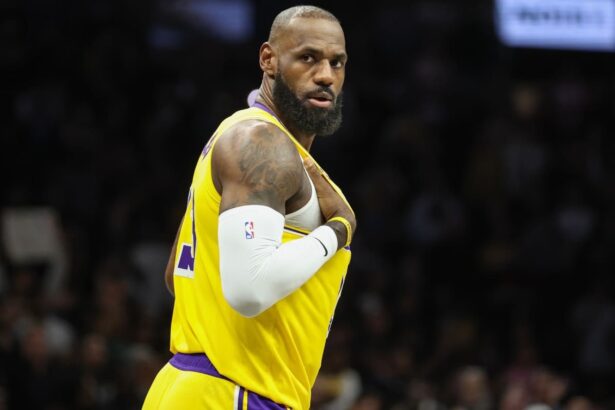
1. LeBron James
Status: Unrestricted Free Agent
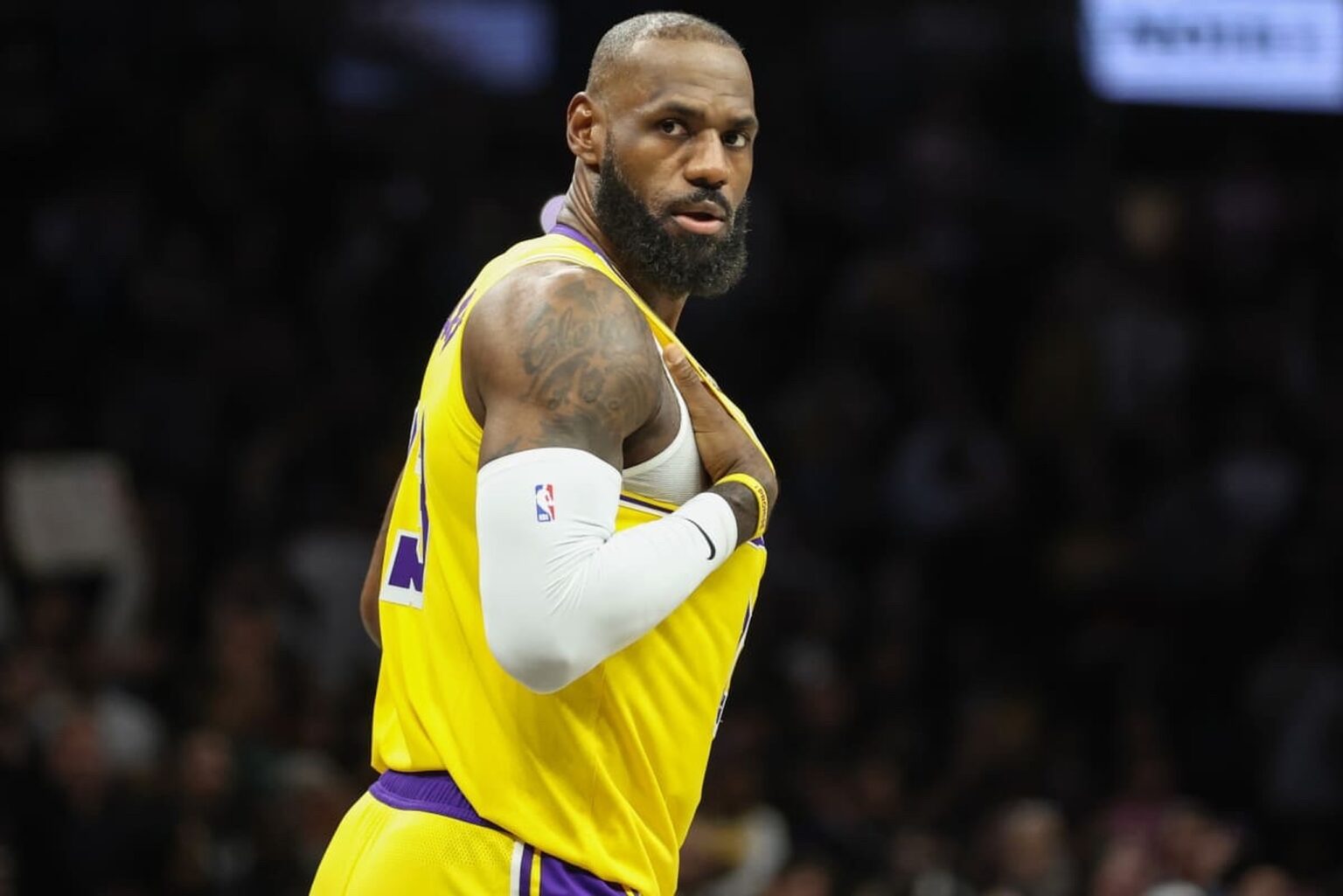
LeBron James is No. 1 because he is LeBron James. That part is still very simple.
He is 41, and he still averaged 20.9 points, 6.1 rebounds, and 7.2 assists. NBA.com also had him leading the league with 5.7 fast-break points per game. At 41, that is ridiculous. Most players at that age are retired or playing small minutes. LeBron is still producing like an All-Star.
Nobody is giving him a five-year deal. But this article is about the biggest free agents, and there is no bigger free agent than LeBron.
The Lakers can pay him almost $58.0 million. Other teams like the Warriors would need big cap moves, or they would only have something like the $15.0 million non-taxpayer mid-level exception. That makes the Lakers the clear favorite.
My prediction is the Lakers on a 1-year, $52.0 million deal. Bobby Marks mentioned one year, $30.0 million as the deal he would offer, but LeBron probably gets more if he wants it. A full $58.0 million number is possible, but $52.0 million gives the Lakers a little more room and still pays him like the star he is. The drama will be loud, but the ending should be boring.